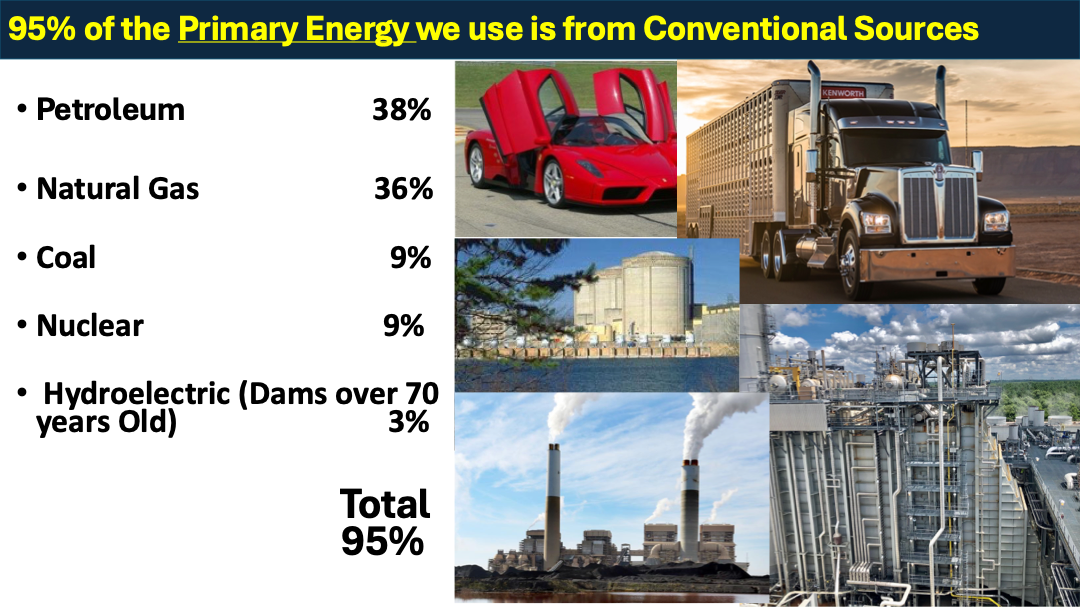
The Developed world and the Developing countries depend on energy to run. Developing countries need reliable PRIMARY Energy to progress from muscle power to machines and the Developed countries, including China and India require lots of reliable primary energy to sustain their quality of life. I am one of the few people who focus on PRIMARY energy and the crucial part coal plays in providing up to 25% of our needed primary energy. Dependable, affordable primary energy is what makes the world really work. Over 80% of the primary energy needed comes from four conventional sources:
I (so has NERC, FERC and other reputable orgs) have been warning of electric power shortages for years. This year could be the year that matters.
The Iranian War and closing of the Straits of Hormuz is a huge problem for LNG supplies to the world. Especially to Europe, South Korea and Japan. The foolish Net Zero Carbon path that western countries have adopted (S.C. too) has forced dependence on natural gas fuel. I wrote a blog post a couple years ago on the enormity of primary energy that America uses. The average American only understands the importance of energy in his or her life when a major weather disaster such as a hurricane makes gasoline, Diesel and electricity scarce for a few days or a week. Many are too young to remember the Oil Embargoes of 1973-1974 and 1978-1979.
Well, the Shale Gas Revolution in the U.S. nearly killed coal but it makes the U.S. mostly energy independent. Here is an excellent article by Giacomo Prandelli on the world impact of LNG supplies. Not so much of a big deal in May but likely a critical energy supply issue come next winter.
Primary energy is important. Remember this statement next December and January.
The S.C. Legislature had two choices: 1. Keep Electricity prices reasonable to keep low electricity costs for citizens plus, attract more industry or 2. Transition to Solar, Wind, Batteries, Natural Gas and create significantly higher electric bills. They chose option 2. just as most U.S. Blue states did…
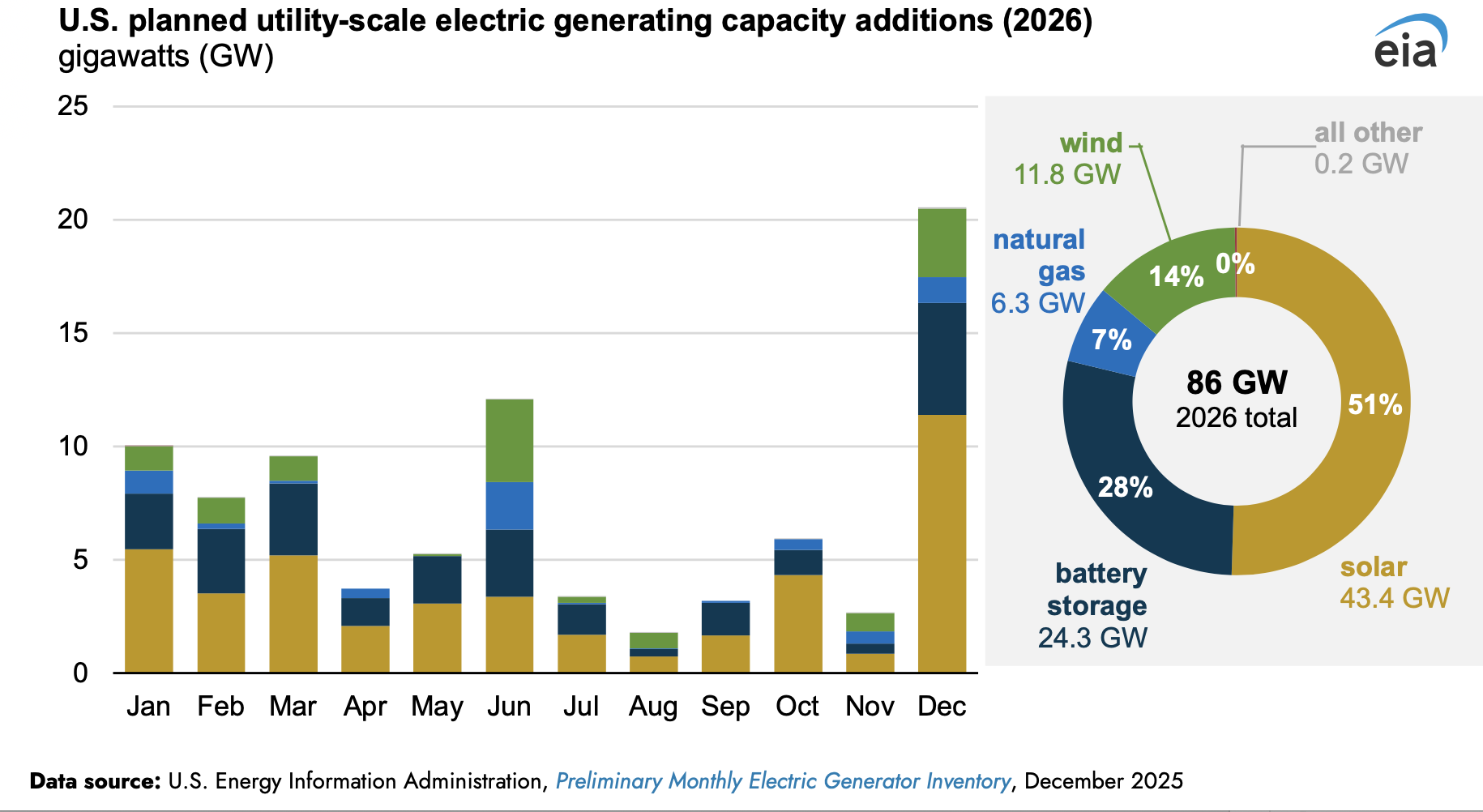
The experiences of most countries and U.S. states that have “transitioned” to renewable energy has caused electricity prices to sharply rise and caused de-industrialization. Yet, the U.S. policymakers continue the “War on Coal”by implementing harmful Net-Zero Carbon policies. The Green New Deal/Inflation Reduction Act policy momentum continues into 2026. Investments in new electricity generation for fiscal year 2026, according to the EIA is still over 90% renewables. That’s right, not one Dispatchable or Base Load coal or nuclear plant is planned for construction in 2026, according to the EIA as of January 2026.
South Carolina although believed to be a very Conservative state, the energy policy is just as Blue as California or Massachusetts. The South Carolina law (S.C. Code Ann. §58-37-40) directs the retirement of coal-fired generation:
Part 1 of this article covered Winter Storm Fern and the importance of coal to provide over 80% of the low country’s electricity production.
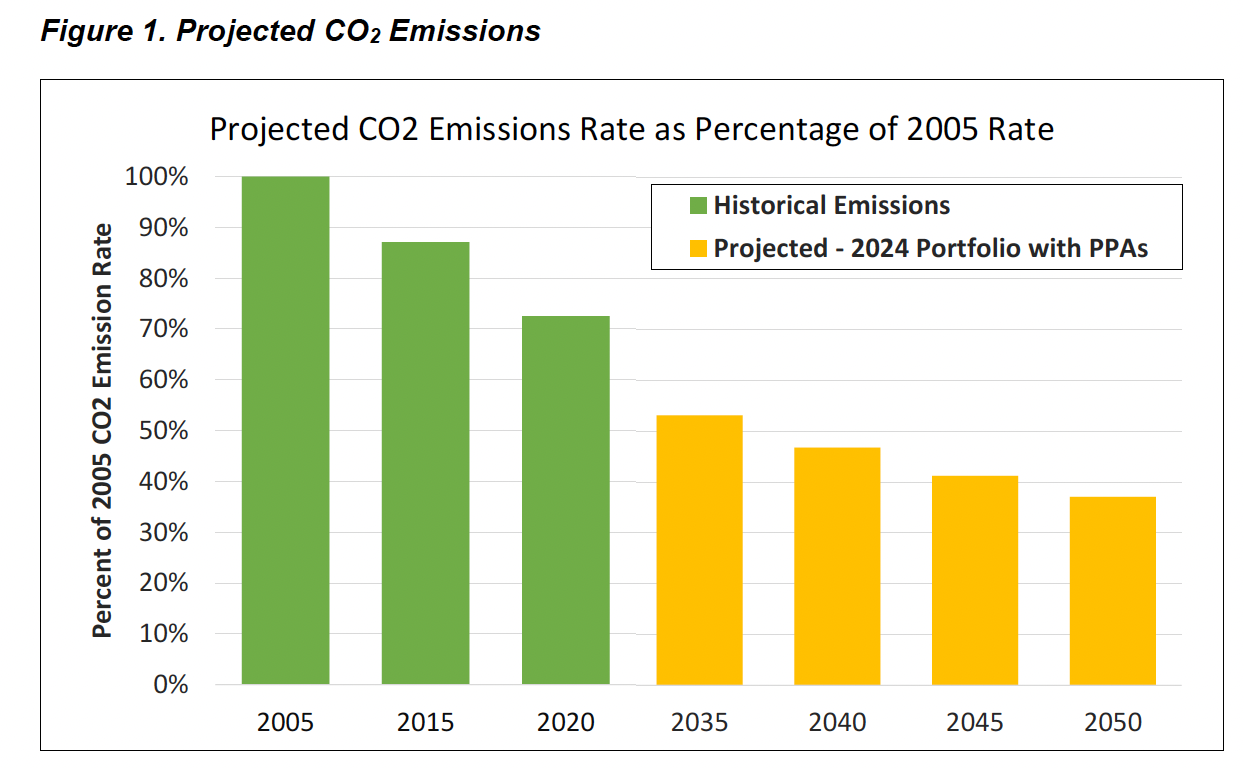
Let’s move forward to future planning for increasing generation to meet the growing Demand. Here below is the narrowly focused basis of low CO2 generation planning by Santee-Cooper (aka South Carolina Public Service Authority) updated IRP. As you can see, the primary driver of the type of new generation capacity is CO2 Emissions. Not Grid reliability, affordability, Dispatchability or industrial economics. This is in opposition to the Trump energy agenda and policy to exit the anti-American Paris Agreement and to repeal the CO2 Endangerment Finding and keep America strong. President Trump has done his part, our state, like many blue states and Deep State Bureaucrats, is continuing to trod down the destructive regulatory path of Net-Zero Carbon.
My Letter to S.C. Senator Davis, April 2025
I wrote to S.C. Senator Davis as a response to his Press Release asking for public comments. Here are some excerpts from my letter to Senator Davis:
“Electric Power Grids that have a high percentage of wind and solar must be backed up with fast start natural gas turbines or reciprocating Internal Combustion Engines (RICE). Because the cost component of the fuel used is up to 90% of the electricity production cost, then the electricity cost is as volatile as the fuel cost. Natural gas is a clean and abundant fuel. However, the cost of natural gas can vary from $2.00 per million BTU to $5.00 per million BTU. When the fuel cost varies, so does the electricity production cost. Sometimes doubling. The state electric rates of California, MA, CT and Hawaii are examples of extreme switches to renewables with natural gas or oil backup. Here are two slides used in presentations by me and other electricity generation experts during 2024. The ten highest cost states and ten lowest cost states are instructive when the sources of primary energy for electricity generation is considered. My blog referenced below has more references.”
This letter was written last year, well before the Iranian conflict began. Gas prices are likely to become more volatile and mostly higher when summer electricity Demand begins and of course, a lot higher next December.
“Repeal the S.C. Restrictions on Greenhouse Gases. The EPA Law referenced in the Santee-Cooper IRP and also applying to Dominion Energy and Duke, is flawed and in the process of properly being nullified by the new EPA Administrator. The shutting down of coal plants is the main reason why electric rates will increase, and Demand Response (Rationing) measures will need to be implemented.” (1. Below-From Santee-Cooper IRP)
“Maintain, Improve and Expand coal power generation in S.C. The lowest production cost electricity in S.C. is from the coal plants at the following plants: Cross, Cope, Winyah, Williams and Wateree Generating Stations. The 600 MW Pee Dee Coal Plant that was planned to be built about 2010 should be constructed ASAP. The existing coal plants should be authorized to perform all required maintenance to keep in first class operating condition until such time that new nuclear capacity is put on line. “
“Build sufficient new coal generating capacity at the Santee-Cooper (South Carolina Public Service Authority) with the same Balanced Generation Portfolio of coal, nuclear and gas as has been the practice for over 80 years of reliable and affordable electricity production by Santee-Cooper. Santee-Cooper is the primary supplier of electricity to Palmetto Electric and the generation assets are over 60% coal fueled.”
“Stop the building of more non-Dispatchable solar and wind power generation systems. Stop subsidies and incentives for Solar, Wind and Battery Storage Systems (BESS). Why? Because shutting down of reliable, dispatchable, affordable coal plants has been done by these other states and the electricity costs are the highest in our country. California, Massachusetts, Hawaii, Connecticut and Rhode Island. (2. EIA list of U.S. Electric Rates by state)Also, the high cost, non-competitive electricity experiences of Germany, Scandinavia and the UK are instructive. (3.) “
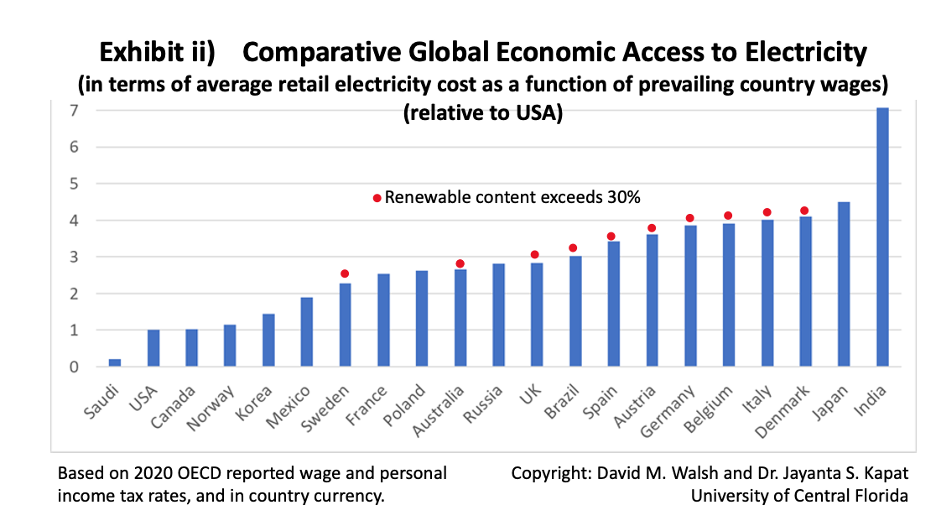
Included in the letter to Senator Davis was a couple charts, including this one of the renewable premium paid in electricity costs in various countries of the world.
I have written an article on my blog which outlines the good results of coal plants (such as Santee-Cooper’s excellent record of 80 years) and the references to other states and countries that have abandoned coal fuel. The blog post is here.
As of this writing, the S.C. Legislature has not budged from the the Net Zero path to increased electricity costs and less reliability.
Conclusion: S.C. is Planning for Electricity Price Rises and Less Grid Reliability
The previous blog posts showed many details of Palmetto Electric’s Bulk Power Supply, from Santee-Cooper. Here, here, here, here and here.
By planning for Net Zero Carbon, South Carolina is planning for higher electricity costs in lieu of building new coal plants to preserve our position as one of the states with the most Industry and consumer friendly low electric rates.
Additional references are listed below to show the clear rise in electric rates as more dependence on variable generation and battery storage. Another consideration is resistance to fuel interruptions during times of war, such as we have now. Coal power generation has the inherent advantage of storing weeks or months of primary energy in a coal pile on site.
Yours truly,
Dick Storm, March 17, 2026
References and information for further reading and research
Perhaps some day a Documentary will be made to summarize how Coal was Demonized by NGOs, government, WEF, MSM, Entertainment, Dark Money, and Environmental Extremists just as nuclear power was during the 1970 and 1980’s? Here is “Pandora’s Promise”, 2013 Movie to Expose the Facts about Nuclear Power and how it was wrongly Demonized, causing the collapse of the nuclear Supply-Chain. https://www.youtube.com/watch?v=KMutoR8YTlQ
This post will be short and to the point. Myself and many of my energy experienced friends have watched as absolutely anti-American, anti-Human energy polices have come to be. My friend Tom cut through the BS and wrote the following as a response to the Daily Caller article which documented Chinese involvement in NGOs impacting U.S. Energy Policy. From my very experienced electricity generation engineer, Tom:
This shows the real problem we have in the energy sector:
Nuclear power is the safest way to generate safe, clean, environmentally friendly bulk power. But the woman running the cash register at Walmart has been convinced by Jane Fonda and Greenpeace that nuclear power is dangerous and has a huge environmental problem with waste. Neither of these, or all the other fallacies that are widely believed regarding nuclear power are true. How did it ever get this bad?
Clean coal technology has advanced to an amazing level. Go to the top of Mount Washington in Pittsburgh, PA and look out over the clean bright city. Yes, 120 years ago the air was so bad that they needed streetlights during the day. The Monongahela River did indeed catch on fire (so did Lake Erie near Cleveland). But that was then, not now, and there is no way we are going back to using 1800’s technology for coal power plants. Yet, the West Penn Power and Cheswick plants were recently shut down and dismantled. The environmental groups have succeeded in brainwashing most of the non-technical people that climate change is real. They will believe Al Gore and Leonardo DeCaprio rather than the people that actually understand the environmental impact of energy generation. (oh, and they are fighting against building a datacenter on the Cheswick plant sight just because – it’s a lot easier to NIMBY everything than try to find real solutions).
The total thermal efficiency cycle for electric cars is far worse than burning a primary fuel in an internal combustion engine. How does this inefficiency impact the environment? (Answer: all the inefficiency is heat dissipated directly to the environment – how in the world does that not contribute to “global warming”?) But the public has become convinced that electric cars are cleaner and the way of the future. Why isn’t the technical community telling the non-technical community this side of the story? (I think we know, government $$$$$, just like wind/solar, the more the government gets to subsidize, the more money available for other nefarious activities. Isn’t this the trap ASME fell into?)
We can make nuclear safer, coal cleaner, and cars more efficient until the cows come home. The problem is – these facts don’t matter. The three-headed (now 4 with the new head of the justice system) doesn’t operate on facts. Until we start addressing this problem (Root Cause) we are just spinning our wheels. Maybe we should start with the ASME – when an organization that is supposed to be a premier technically based organization goes woke, how are the average non-technical people out there supposed to know that? If they can’t rely on ASME, then who can they believe? (think Covid, Anthony Fauci, Health & Human Services, the American Medical Association, etc….or even worse – the legal profession).
My thanks to Tom for giving me permission to share these concisely written, truthful and troubling facts.
I have written on the SWAMP Influencers, Federal Regulations and NGOs before. Tom just did it with a great economy of words.
Thank God for President Trump, Chris Wright, Lee Zeldin and a well qualified Cabinet of qualified people to look out for the best interests for America. In closing, let me suggest reading the references listed below if you are curious of who and how the absurd Federal Regulations have come to be.
Yours very truly,
Dick Storm, March 14, 2026
References and information that supports my opinion and text written above:
John Podesta, Head of 300+ Billion dollars of U.S. Taxpayer funds for clean energy. Check Influence Watch to read some interesting background on his career: https://www.influencewatch.org/person/john-podesta/
Coal power in America remains important and I wrote on that last week. This is a followup to provide an overview of the importance of coal as a form of primary energy in the rest of the world. The key phrase is Primary Energy.
Ron Stein and Nancy Perlman wrote an excellent article on the importance of providing primary energy to the six billion people on the planet that are living in poverty. Lifting them from poverty requires energy, just as energy powered the citizens of countries living in the Developed world.
“In poor countries, millions of those in poverty die every year. From indoor air pollution from having to burn wood, charcoal, grass, and dung, because they don’t have natural gas, propane or electricity for cooking and heating. From bacteria and parasites in their water and food, because they don’t have electricity, water treatment or refrigeration. From malaria and other diseases, because their substandard clinics and hospitals lack electricity, clean water, sufficient vaccines and antibiotics, even window screens. “
It’s disheartening that the wealthier country governments have chosen electricity generation “winners,” i.e., wind and solar, to generate electricity, paid with taxpayer funds, to support the Government Mandates and Subsidies.”
How about India and China?
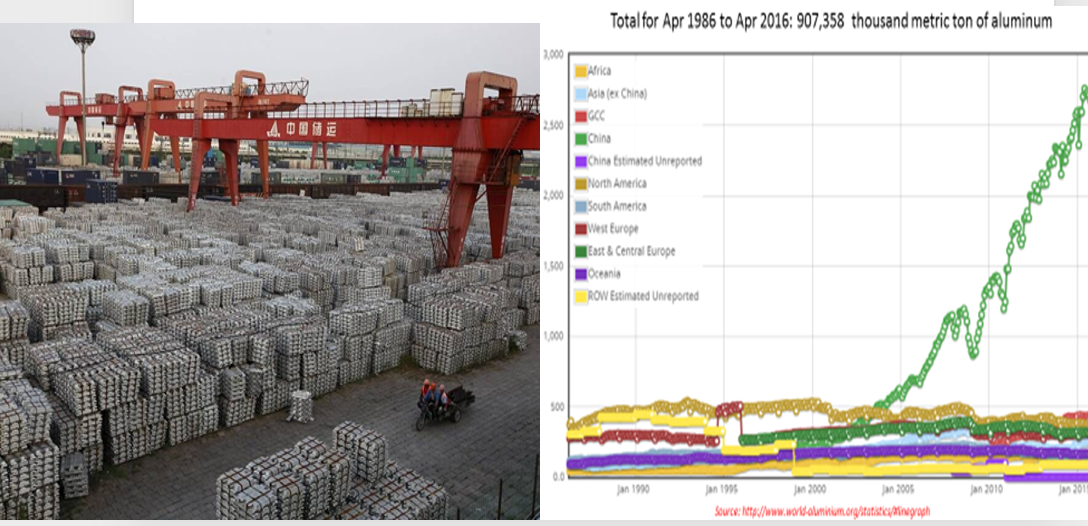
China did in fact lift millions from poverty since they entered the World Trade Organization and became the world’s leading country in manufacturing. One example is their use of enormous amounts of coal as the primary energy to produce aluminum. Before the year 2000 China was an insignificant producer of aluminum. Look what they did in 20 years.
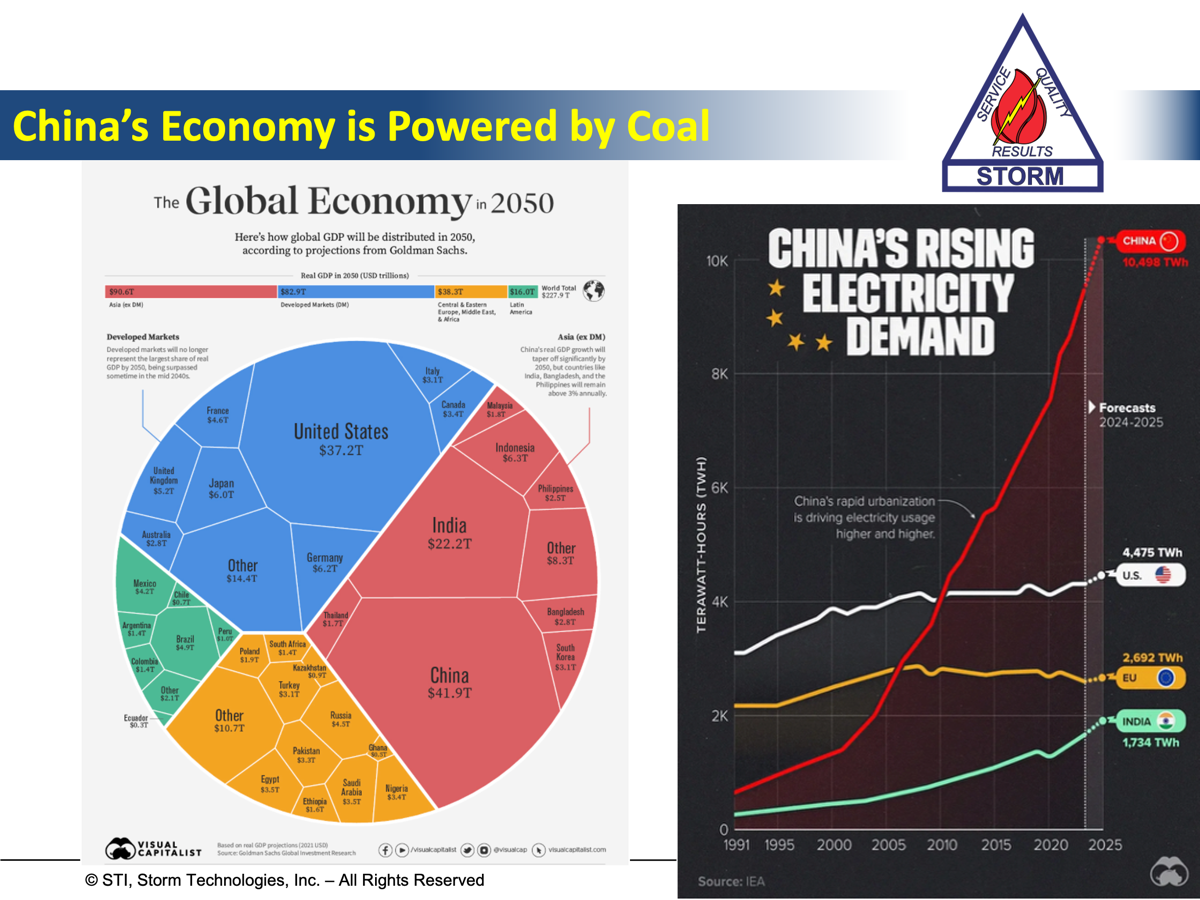
How did China power their economy to become the world’s largest producer of aluminum, steel and most manufactured products in such a short time? They did it with coal power. Thomas Shepstone, Jr. and Duggan Flanigan also wrote about energy intensive aluminum production. Here is an overview of China’s energy production during this period of astounding industrial production growth. This chart below is from my July 2025 presentation to the Coal Institute.
China consumes over 50% of the world’s coal. They understand the sources of primary energy that are viable for affordable, Dispatchable and reliable electricity production, so does India. From the IER (Institute for Energy Research)
“China and India – both considered “developing countries” by the IPCC – are burning record amounts of coal and using more kinds of energy to keep energy prices affordable and increase the standard of living for their people. Wind and solar energy in China and India are complements, not substitutes, to their massive growth in energy, particularly in fossil fuels. Fossil fuels provided 82 percent and 88 percent of China and India’s energy, respectively, in 2022.”
How about India, Germany and the UK?
From the Economic Times: “India’s coal consumption could more than double by mid-century before plunging sharply as the country shifts toward cleaner energy, long‑term projections published by government think-tank NITI Aayog show.“
Germany’s path to Net Zero has created much loss of industry. Here are a few references:
WUWT on the Decline of German Chemical Industries due to High Energy Prices, and How Germany is Dismantling it’s Core, by Tilak Doshi.
Lars Shernikau’s blog post on the decline of German Industry due to missteps of Green Policies. Dr. Shernikau is a well respected author and world renowned energy expert.
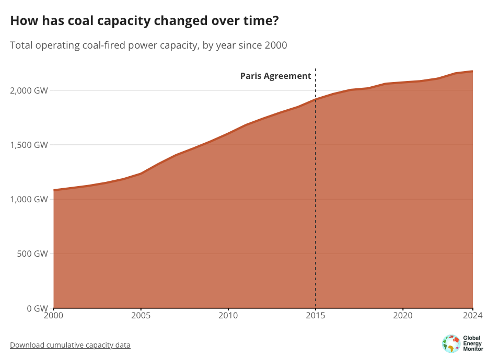
Coal use in the world has steadily increased.
So if Coal Is Such an Obvious Source of Primary Energy, Why is the West Self Sabotaging Their Economies?
I provided a presentation to the ENERUM Energy Forum in Columbus in 2022 to ask this question. A similar presentation to Liberty University in 2023. I am glad to send those presentations. upon request.
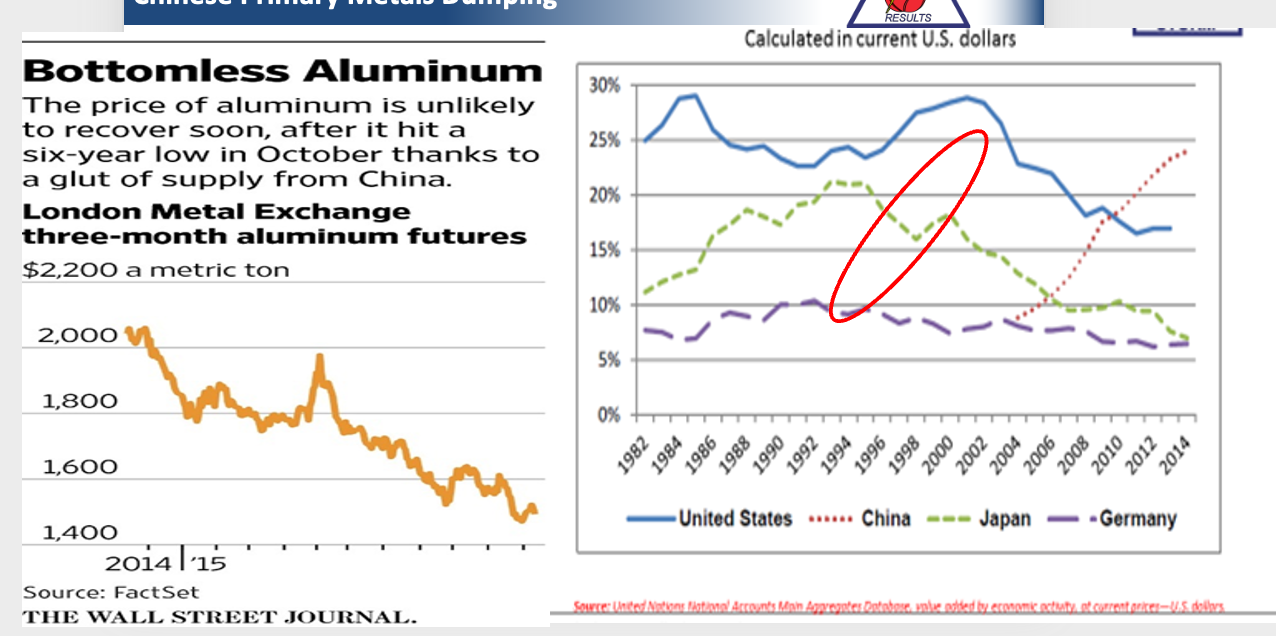
Getting back to aluminum production, here is a graph of U.S. and China production. As America shut down many coal plants and electricity costs rose, China was building new coal plants to provide reasonable cost electricity to smelt aluminum in huge quantities. Many folks, including me believe that China Dumped aluminum on the International markets in lieu of counterfeiting U.S. currency. Note the rise of aluminum produced in China during the years 2004-2014 (from chart above). Both of these charts are from a presentation to the Delaware County Bar Association in 2016 to discuss energy, the economy and how it impacts the Real-Estate Market. Yes, I know that sounds abstract, but reasonable cost energy = jobs, especially for energy intensive industries such as aluminum smelting, then the jobs impact the Real-Estate market.
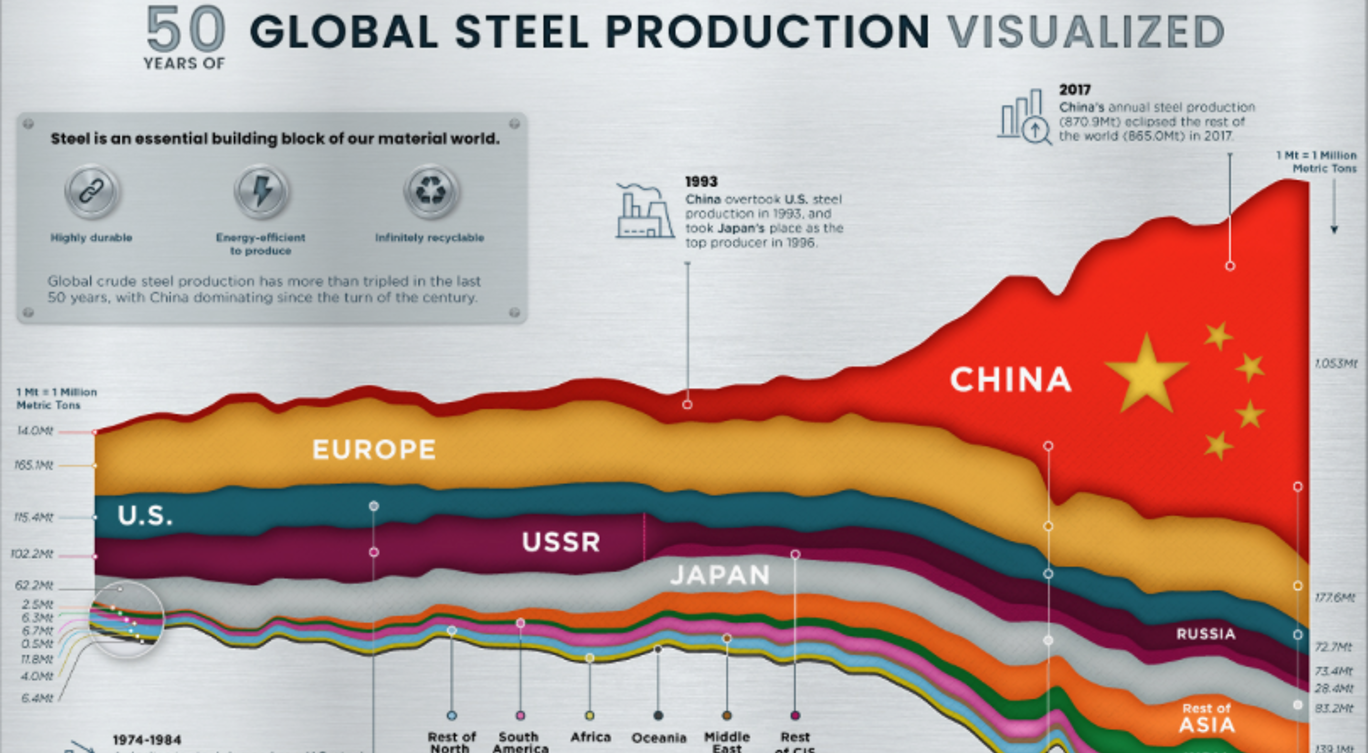
The Self-Sabotaging and excessive environmental laws of the U.S. have not only seriously (I hope not mortally) wounded the aluminum industry, but also steel and heavy manufacturing. Steel production by country is shown below. Why do western politicians continue to do their best to weaken their countries and force manufacturing overseas? It is not only the U.S. it is Australia, Germany the UK and more. President Trump is trying to correct the U.S. problem, but he has much opposition by the Democrats.
The west has been committing energy suicide. Here are links to several articles written by Professor Vaclav Smil, CO2 Coalition’s Gregory Whitestone and Ron Stein. Vaclav Smil for Fraser Institute, “Why Net Zero is Impractical and Unrealistic” and Scam of the Century: Ridding the World of Crude Oil Without a Replacement is Global Suicide”, by Ron Stein and Gregory Whitestone, July 2024. I have also written much with many credible other references on the Self-Sabotaging of the U.S. electric Grid. Here, here and here are three such articles.
Professor Samuele Furfari whom I admire and follow, has written much on the fallacy of hydrogen, wind and solar. Here is a short article he wrote for the CO2 Coalition. Here is an excerpt:
“Over the past ten years, the EU has reduced its energy demand by 6.1 EJ. In contrast, the rest of the world has increased its energy demand by 76.8 EJ – thirteen times more. This is not surprising given that the EU’s competitiveness is currently under threat from the Green Deal. This tragedy is even recognised by the Mario Draghi report, although it does not directly attribute faults to the Green Deal n order to remain politically correct. Instead, the report blames the increase in energy prices, which are nevertheless the consequence of EU energy policy. Outside the European Union, renewable energy sources such as wind and solar power have generated 8 EJ. This figure actually surpasses the change in energy demand within the EU itself. Nevertheless, over the past ten years, fossil fuel consumption has increased by 59 EJ. This means that outside the EU growth in fossil fuels has outpaced that of renewables by a factor of 7.3. In other words, while modern renewable energy is expanding, fossil fuel use is increasing at a rate more than seven times greater. Contrary to the commonly held belief within the EU that the gap between renewables and fossil fuels is narrowing, the reality is that the gap is widening. The evidence suggests that the EU has indeed achieved results in the energy transition, undergoing a profound transformation of its electricity sector and setting benchmarks for renewable energy integration and emissions reduction. However, the EU’s progress is not being matched elsewhere, and its leadership is merely symbolic because the rest of the world is accelerating its use of fossil fuels more than its use of renewable energy. When a leader realises that no one is following them, they must reconsider whether they are truly leading.” I emboldened the line which I thought was most important. It is not only the EU that has chosen the foolish path of Net Zero Carbon, but many other countries and states remain on this course. So, let’s take a look at Australia.
Australia
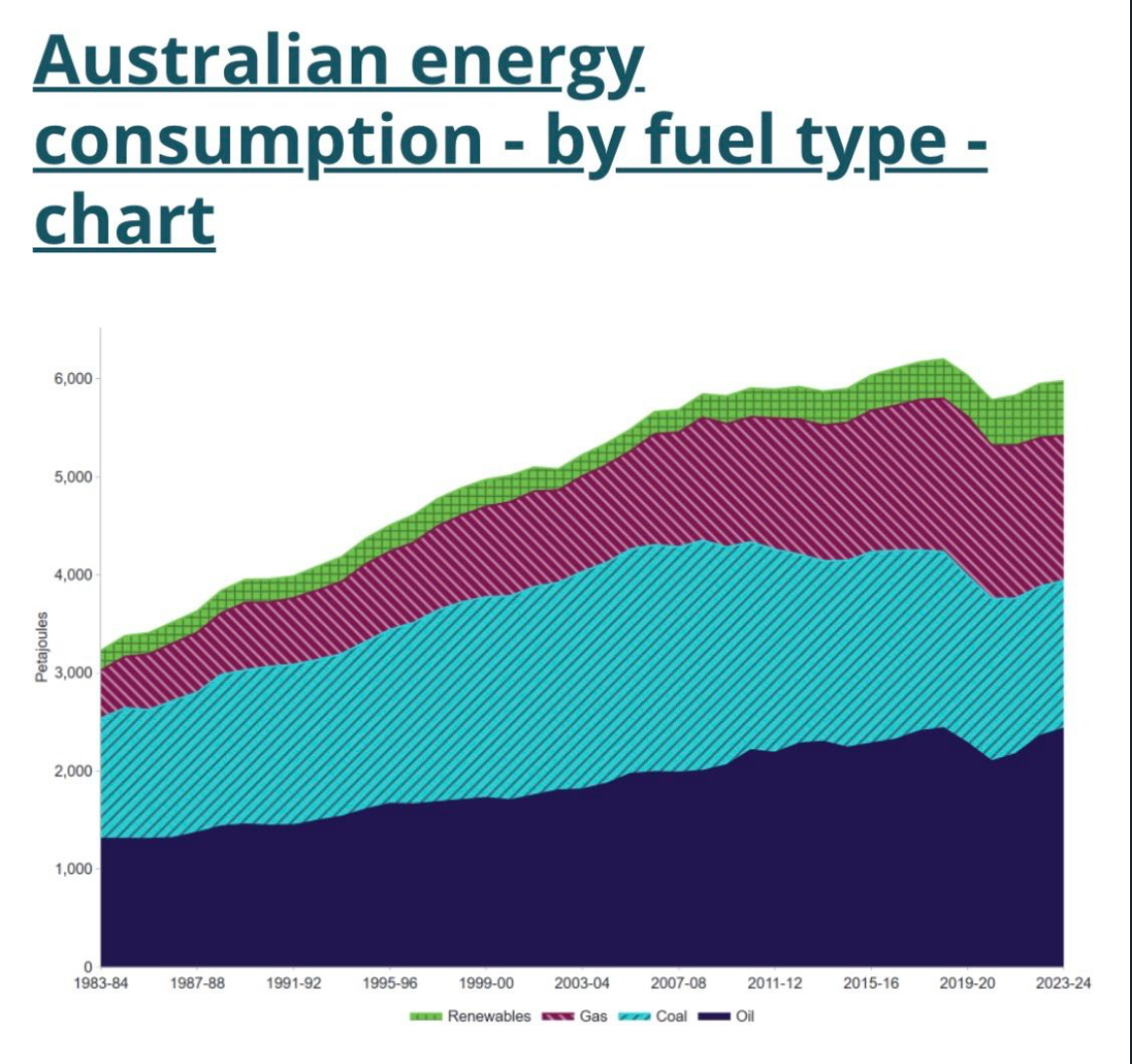
I saw Ben Tan’s post on LinkedIn where he showed the primary energy used in Australia 1984-2024. It is copied below. This shows the constant need for coal power, steady since 1983.
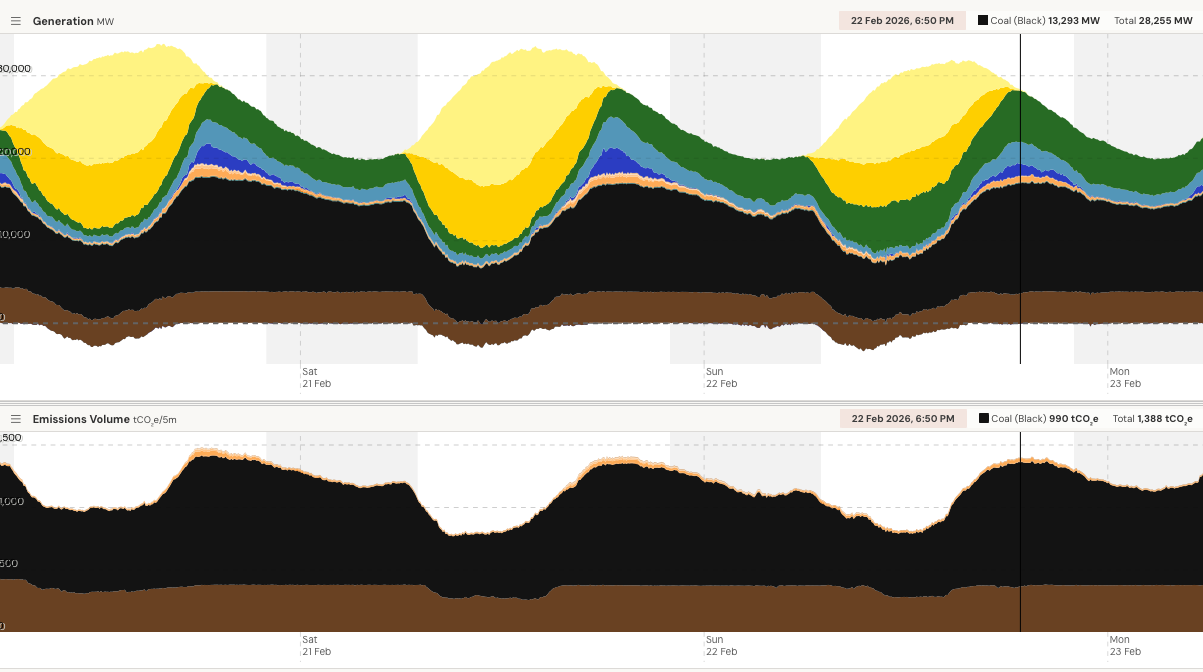
Two other Australian sources for up to date enelectricity generation by source are Rafe Champion and Ben Beattie. I thank them for their articles, links and information. Here below is the Australian Grid generation by fuel for Feb. 22, 2026. Note that it is over 50 % coal. (at one point 38.5% Black coal and 13.2% Brown Coal) Solar and wind were producing 45% at this same moment. Solar does very well during the sunshiny 6 hours or so of the day and wind does well when the wind is blowing, but the voltage control, base load, sudden increased demand requirements (like turning on a 150 MW electric furnace in a steel mill). Also, the rotational inertia and Grid stability are provided by the coal and gas plants.
Numerous references are included at the end from Rafe Champion, PA Pundits and others on the problems with wind and solar. Although electricity generation is complicated, it is not rocket science. If the politicians would do just a little bit of reading and research and maybe even ask folks like us that do understand, they could make right decisions. However, across the west politicians insist on weakening their countries. Just like the U.S. presidents Obama and Biden (before President Trump began the Herculean job of correcting anti-American Energy policy) and the German and UK politicians. Of course, even many Bureaucrats and state Legislatures to this day, are still stuck on the destructive path of Net Zero Carbon. Even my Conservative (Red) state of South Carolina. Here is a quote From the Santee-Cooper IRP: “As required by S.C. Code Ann. §58-37-40(A)(4)(c), Santee Cooper has evaluated a Net Zero CO2 “
This reminds me of Charlie Reese’s last column on how a minority of legislators and judges can force their Ideology on the citizens. Off topic but voter energy education and voter turnout needs to be improved. As I said, we even have misguided voters and politicians in the deep red state of South Carolina. We have got to improve the energy IQ of the voters.
Recent Articles to Support Building New Coal Power Generation Plants
Rather than repeat my same message, here are recent articles I have written in an attempt to explain the case for new coal plants, including two articles on the need to build new coal plants based on coal being the default source of primary energy. The default source of primary energy because the electricity growth is expected to out pace the production of gas turbines to provide for all new generation and nuclear generation, although a very good approach, will take a decade or more to provide the needed electricity generation capacity.
• Wind and Solar are the Highest Cost Power and Cannot Meet Demand, they are a risk to national security and when a region exceeds 30% renewables and the electricity rates are the highest
• More Dispatchable Bulk Power Plants Need to be Built
• Coal, Gas and Nuclear Plants provide the lowest cost, most reliable Power over the long term
• States and Countries on Path to Net-Zero Carbon are Paying a high price
• Natural Gas Prices will likely rise in the future
• Electricity prices will rise with fuel cost as well as from inflation of components and construction costs.
• Production prices of electricity will follow fuel cost
• A Balanced Generation portfolio is Beneficial as a Hedge Against Fuel Cost Volatility
• America should learn from the experiences of Germany, CA, Hawaii, CT, MA, ME, NH, NJ and other states with high electricity costs
• States and countries that have shut down coal plants have experienced increased electricity production costs. This is not a forecast, this is fact
Coal fuel should be included in the future electricity generation portfolio based on the laws of physics, available forms of primary energy, proven economics of electric power generation and the proven track record of coal power for providing reliable, dispatchable and affordable electricity generation. The CO2 Coalition’s Angela Wheeler interviewed me for the CO2 Coalitions Podcast, “Climate De-Brief” and here are my views of the absurd anti-American energy policies, many of which are still strangling President Trump’s path to restoring America’s Greatness. Energy is, in fact, The LifeBlood of Our Economy.
This article will attempt to show some of the reasons why based on the merits of coal why it should be increased as in the portfolio of reliable sources of primary energy. Speaking of BTUs, I would like to start with describing the potential sources of the primary energy America needs and is using now to supply 100 quadrillion BTUs of primary energy.
Back to Basics: Let’s Look at the Available Sources of Primary Energy
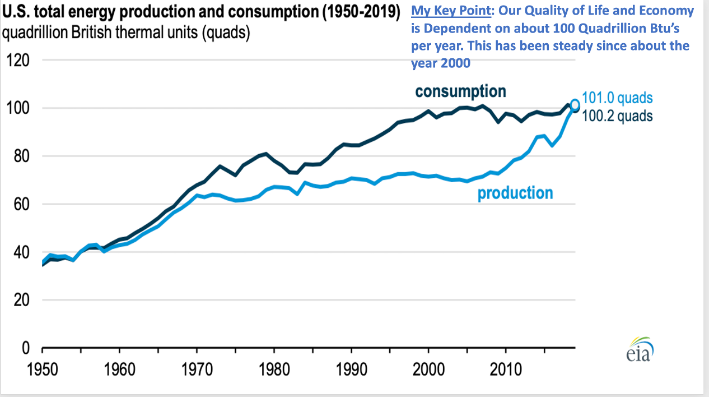
From a primary energy viewpoint, America has used right at 100 quadrillion BTUs of energy each year since about the year 2000.
This includes all forms of energy including oil, gas, coal, nuclear and renewables. As more AI Data Centers are built, more manufacturing is reshored, more EVs placed on the highways and greater electrification is transitioned across the economy, the demand for total primary energy is expected to increase. Coal is the most practical, achievable and available addition to provide 10-30 quadrillion BTUs more per annum of growing primary energy supply. Do you remember the phrase from a couple years ago, “Electrify Everything”? Let’s get back to the basics of Primary energy and then look at the incredibly huge contribution of conventional fuels. Also, the diminutive contribution of wind and solar.
Conventional forms of energy, that is those forms of energy we have depended on for the last hundred years, still provide well over 90% of the Primary energy that we need for our economy to thrive and to power our lives.
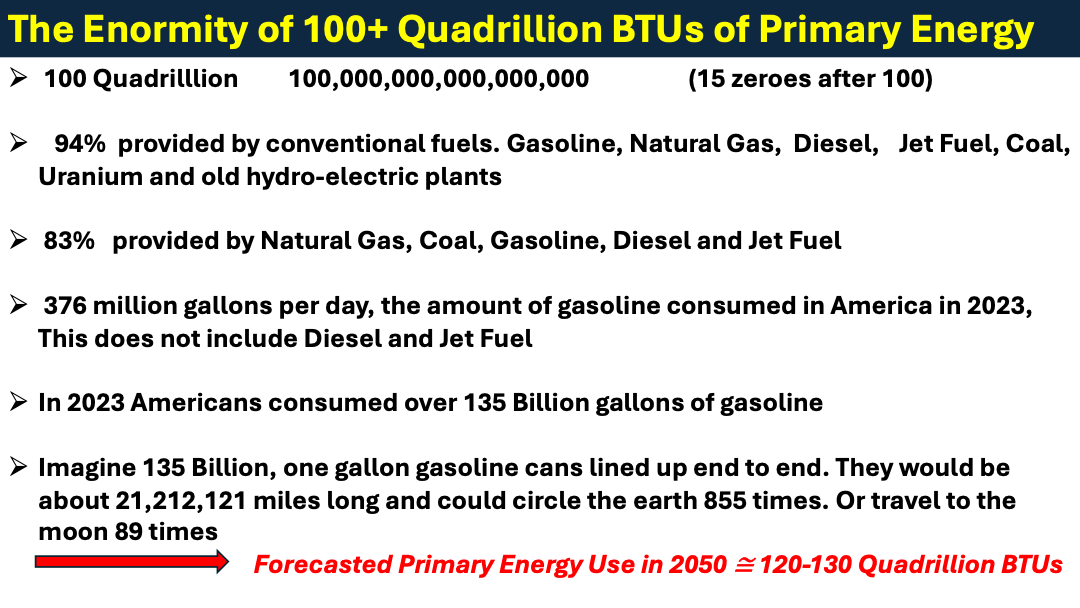
The Enormity of 100 Quadrillion BTUs
The statistics of energy use, fuel sources, electricity generation, plant efficiencies and much more are well understood by people who read this. However, outside of our energy professional’s network there are millions of Americans that have low energy IQ’s. Some of the low energy IQ individuals create national energy policy. As a result of indoctrination by renewable energy proponents many Americans believe that wind and solar can replace coal, gas and yes, even nuclear.
The public in general, has a very weak understanding of the generation of electricity and how it is managed. Therefore, I thought I would describe in understandable terms; primary energy, electricity and the enormity of 100 Quadrillion BTUs. Perhaps this will reach people and politicians that are otherwise unaware of the magnitude of the primary energy supplied by conventional forms of energy which we absolutely need to power our lives.
Reliable, Dispatchable and affordable Electric power generation is the Life-Blood of any country’s economy. The source of most of the electric power generation for most of the industrialized world since the Industrial Revolution has been Thermal Power generation. Even in the western countries that have attempted to transition to carbon free sources of electric power generation, thermal power continues to dominate. For the year 2024 about 76% of the electric power production was from thermal power. The primary energy of over 90 quadrillion BTUs was provided by coal, gas, nuclear, oil and Biomass.
One of the advantages of Thermal generation is just about all forms of Thermal power are dispatchable on demand. Gas turbines and Reciprocating gas engines obviously respond faster than a pulverized coal or nuclear unit, but most of the thermal power plants are in fact, dispatchable.
The demand for electricity is growing. The quantity of growth in the future in debatable however, most experts agree, electricity demand is growing and U.S. growth may require as much as 100 GW of new generation by 2030 and 800 GW of new generation by 2040. Limited battery backup is available for intermittent renewables. Proven sources of dependable, affordable and dispatchable power are needed for grid reliability.
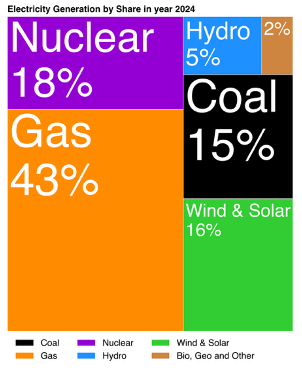
Gas fuel provides 43% of America’s electric power generation. Nuclear is now accepted by almost everyone. However, deploying 100 GW of new nuclear power generation by 2030 is unrealistic, given the record of permitting and construction times from recent new nuclear power plants such as Vogtle 3 and 4 which took about 10 years to build. In the U.S. nuclear power provided about 808 TWh of electricity out of about 4200 TWh total or about 19%. This is commendable, however, most of the U.S. nuclear plants were built decades ago and are an average age of about 42.
Think about the need of 100 GW of new power generation by 2030. If the growth in supply was all nuclear, 100 GW would be equivalent to completing 45 new nuclear units the size of Vogtle units #3 & 4 in four years, if started today.
Included in the heading “Conventional Energy” is Hydro. Why? Because it is important, it is dispatchable and it has been around for well over 100 years. Therefore, in my view, it qualifies as being conventional. When hydropower is included with thermal power, the total Primary Energy from conventional sources exceeds 90%.
This is the primary energy that generates electricity, provides ground and air transportation, commercial & Residential heating, cooling, cooking and very importantly, industrial production. Electricity generation consumes between 33 to 40% of the world’s total primary energy.
Electrify everything was the buzz phrase of a few years ago. Let’s look at the enormity of replacing the conventional fuels we all depend on now.
Thermal electric power generation dominates U.S. electricity generation. Gas fuel has taken the lead from coal since about 2010. The total Thermal power generation in the U.S. in 2024 was about 76% Thermal generation.
The Enormity of BTUs Measured in Quadrillions
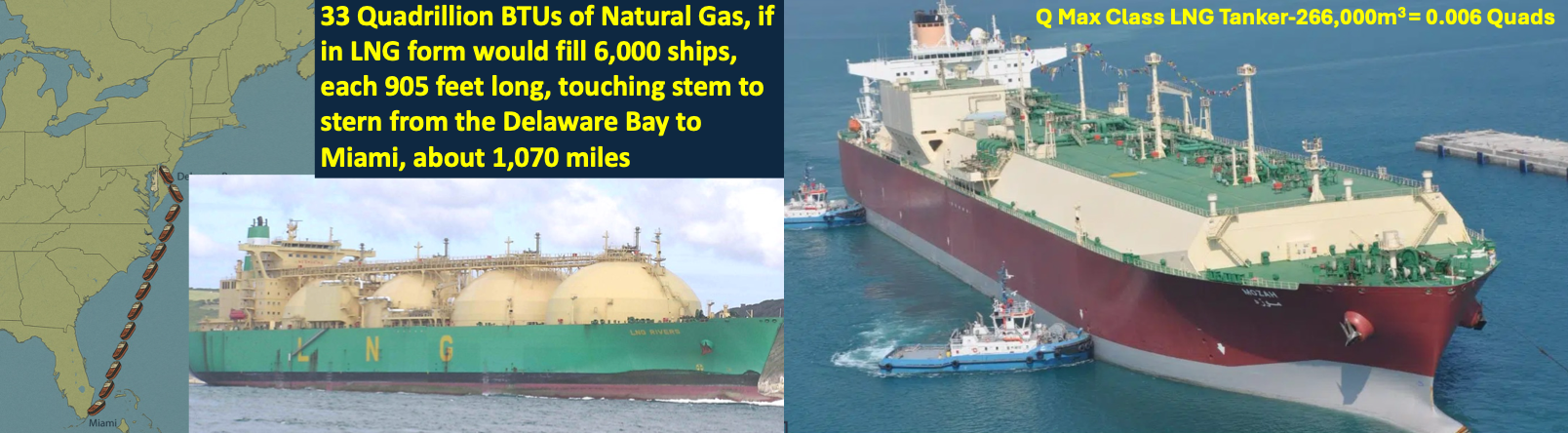
About 43% of America’s electricity was generated from pipeline supplied natural gas in 2025. It is hard to visualize 33 Quadrillion BTUs of methane, so I thought showing huge LNG tanker ships might be a way to describe the challenge of increasing America’s total Primary energy consumption from the current @ 100 Quads to the range of 120 Quads by 2050.
How About Coal?
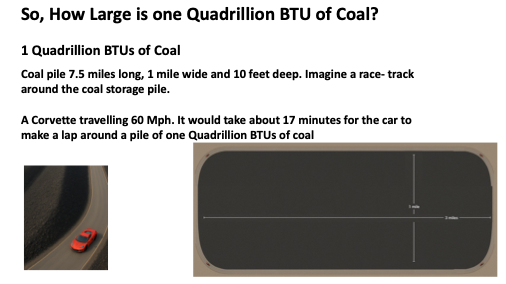
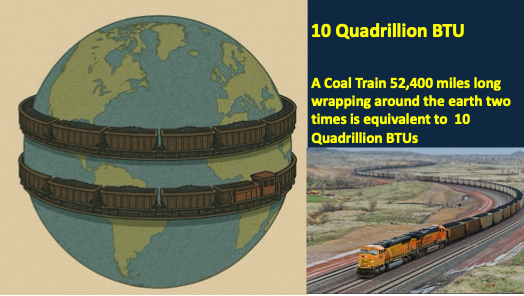
In the year 2008 America consumed about 20 Quadrillion BTUs of coal generated electricity. Since then natural gas use has overtaken coal’s #1 position and coal in 2025 generated about 16% of America’s electricity and consumed about 10 Quadrillion BTUs. Coal has been demonized by many and is not perceived by the public to be the Treasure of American energy that I believe it is.
However, from the standpoints of physics, economics, proven track record, dispatchability, energy storage and reliability….Coal is an important fuel for the next twenty or thirty years. Here are thirteen advantages of coal as a source of primary energy for electricity generation:
Coal Power is Proven Here and Now
Energy Density
Reliable
Affordable and has the best record of low cost electricity production over the long term
On-Site Fuel Storage for months
Dispatchable
Coal Plants are Robust and have a long life when properly maintained
The Manufacturing Supply-Chain is Established
America is the Saudi Arabia of Coal and has hundreds of year supply
Operations and Maintenance Training and Protocols are Established
Manufacturers, EPRI and Training companies all have an established library of Best O&M practices
Flyash/Bottom Ash Use as Concrete Additive for Strength and resistance to spalling, FGD sludge byproduct used for sheetrock and also a source of Rare Earth Minerals
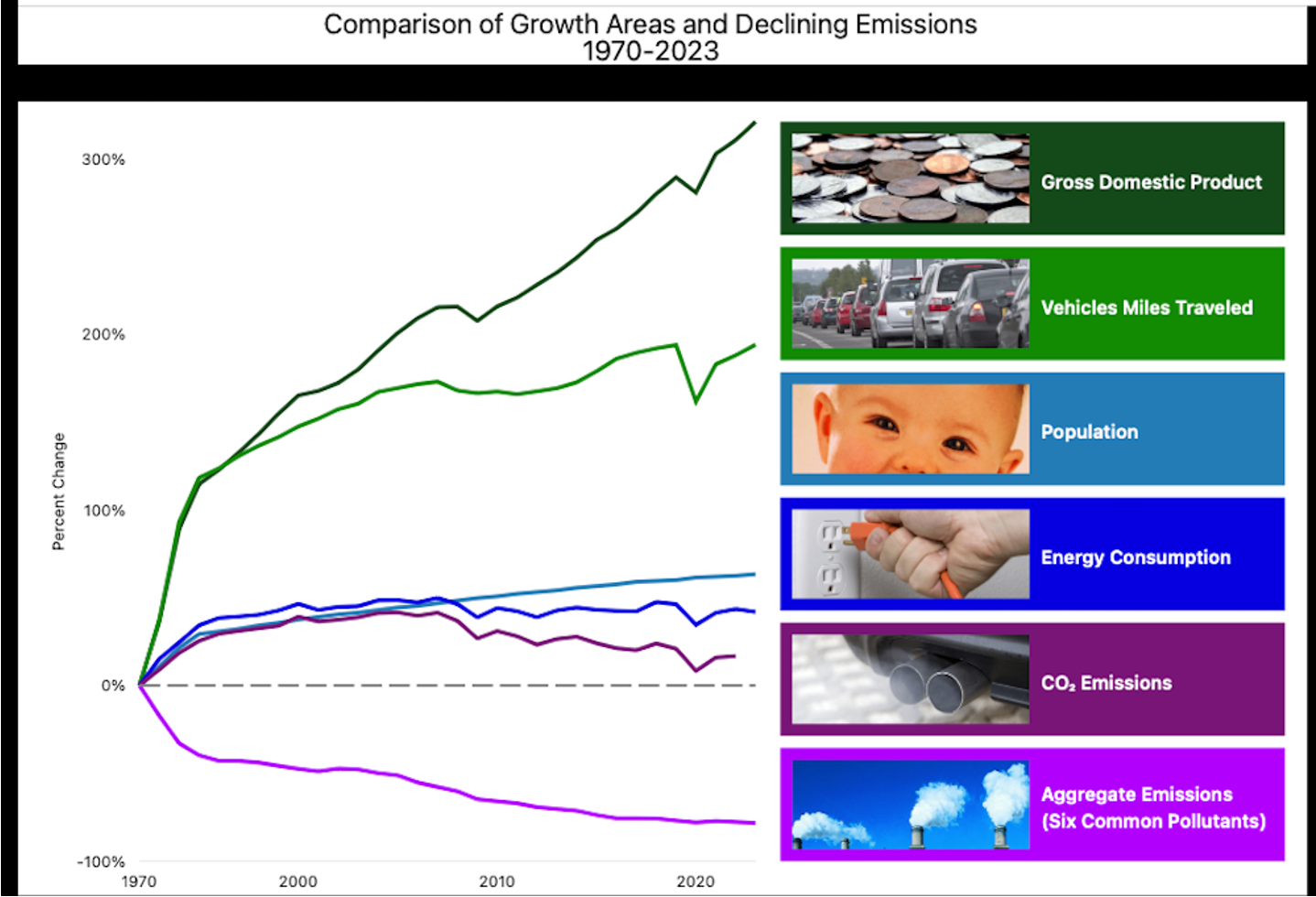
Modern Coal Plants are cleanand the emissions of major pollutants have been corrected with backend pollution control equipment. The six main pollutants have been reduced since 1970 in spite of increases in GDP, Population, auto miles driven and greater use of energy in all forms. The EPA chart below shows the progress achieved.
Conclusions
Wind and Solar are the Highest Cost Power and Cannot Meet Demand
More Dispatchable Bulk Power Plants Need to be Built
Coal, Gas and Nuclear Plants provide the lowest cost, most reliable Power
States and Countries on Path to Net-Zero Carbon are Paying a high price
Natural Gas Prices will likely rise in the future
Electricity prices will rise with fuel cost as well as from inflation of components and construction costs.
Production prices of electricity will follow fuel cost
A Balanced Generation portfolio is Beneficial as a Hedge Against Fuel Cost Volatility
America should learn from the experiences of Germany, CA, Hawaii, CT, MA, ME, NH, NJ and other states with high electricity costs
States and countries that have shut down coal plants have experienced increased electricity production costs. This is not a forecast, this is fact
Building new clean coal plants are needed to continue America’s excellent record of providing reliable electricity at affordable costs.
Coal is the default fuel to increase America’s Primary energy supply beyond 120 Quadrillion BTUs in the next decade
Part ll will cover electric power generation in the rest of the world and some of the advances of clean coal power generation.
Here is an absolutely nutty proposal, replace a reliable 2700 MW coal plant, (the Sherco Coal Plant) with solar panels. This is Minnesota where it gets very cold and also is known for heavy snowfall in the winter…, CNN report: https://www.cnn.com/2024/09/16/climate/coal-to-solar-minnesota
The term BULK POWER means just that, Bulk Power in hundreds and thousands of Megawatts. America needs huge Bulk Power generation additions of about 30,000 MW per year, not small scale R&D projects of variable generation or unproven new SMRs. Perhaps some time in the future renewables and new nuclear will be viable and competitive. However for now, we need 100-800 GW of new electricity generation to replace the more than 200 GW of reliable coal plants that were either shut down or planned for shut down soon. Satisfying the growing electricity demand of the future requires lots (Lots= 30,000 MW each year) of new generation capable of 24/7 generation.
When I joined CP&L in 1973 I entered a door emblazoned with a sign: Bulk Power Supply. Then I thought the name odd and frankly, I have not seen it since. However behind that door were the men and women that managed the generation assets of CP&L which at the time was only about 5,000 MW. The Bulk Power Supply came from seven fossil plants. Those plants were; Cape Fear, Weatherspooon, H.F. Lee, Sutton, Roxboro, Asheville and Robinson, including (1973) one lone nuclear (H.B. Robinson #2) and some small hydroelectric plants in the western corner of N.C. Bulk Power Supply was measured in Megawatts. Many of those coal units (CP&L has been absorbed into Duke Energy of the Carolinas) have been shut down. Most of them have been demolished as shown on the video of the Sutton plant implosion.
These coal plants should have been replaced with new coal generation plants of higher efficiency and even better flue gas cleaning. America is paying a price which will rise further, for the loss of this vital generation capacity without replacing it in kind.
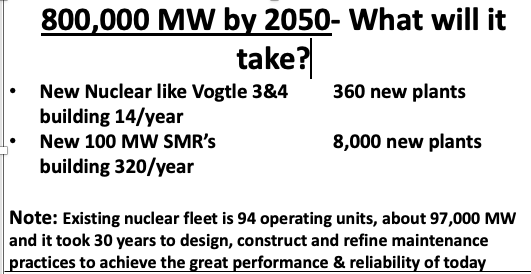
The Bulk Power Supply of America needs to grow by about 800 GW by 2050. Increasing the Bulk Power Supply is a huge challenge which has been vastly underestimated. Do the math. Building new 800,000 MW of capacity in 25 years is 32,000 MW per year of new dispatchable, reliable and affordable new capacity.
Unfortunately, I think many Utilities and government officials have under-estimated the enormity of building 800 GW of new power generation. I tried to lay out my perspective in a presentation to the Coal Institute in July. 800 GW of new generation capacity is equivalent to building over 325 coal plants the size of Duke Energy’s Roxboro Coal Plant (2462 MW) or building 360 new nuclear units such as Southern Company’s Vogtle Units # 3 & 4. (2200 MW)
How About the Primary Energy to Generate 800 GW of New Electricity Generation?
As mentioned above, many experienced authors of energy and electricity generation do not dwell on the importance of primary energy, so I will. Primary energy is not magic and it is not free as the proponents for wind and solar suggest.
The results are now in for “the Global Science Project” of experimentation with wind and solar aka “The Green New Deal”. One simply has to observe the actual electricity prices in Germany, Hawaii, Spain, California, the UK and Scandinavia to know that wind and solar cost more, are not reliable and of course they are not dispatchable.
Primary Energy
Electricity is secondary energy, it must be produced from Primary energy. In the vernacular of physics one Kilowatt hour of electricity is equivalent to 3,412.6 BTUs of thermal energy. Thermal energy has proven to be the most reliable, dispatchable and affordable. The reporting of Total Energy use by countries and the world is usually done in BTUs for U.S. customary units or in Exajoules in International units. The total world, according to the IEA has used right at 600 Exajoules (rounded from 592) and is shown below in a graphic from the Visual Capitalist. The conversion of EJ to Quadrillion BTU is EJ x 0.9478=QBTU. Example 592 EJ x 0.9478= 562 Quadrillion BTU.
The U.S. uses almost one fifth of the world’s primary energy. A reminder that economic prosperity is driven by energy. America is still the world’s #1 economy and therefore it should not be a surprise that we use almost a fifth of the world’s total primary energy consumption. This is Primary energy used not only for electricity generation but also for transportation, Industrial production, heating, cooking and commercial uses. Remember the phrase “Electrify Everything?”
The First Prerequisite to a thriving economy is that there must be available, reliable and affordable Primary energy to generate that electricity.
America Uses about 100 Quadrillion BTUs Annually of Primary Energy
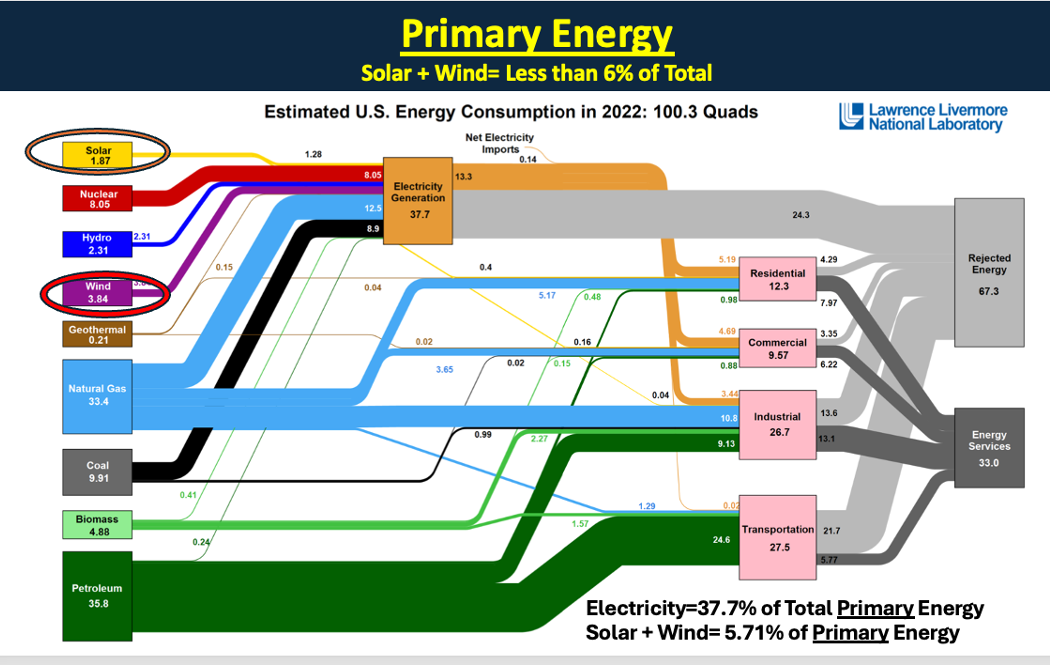
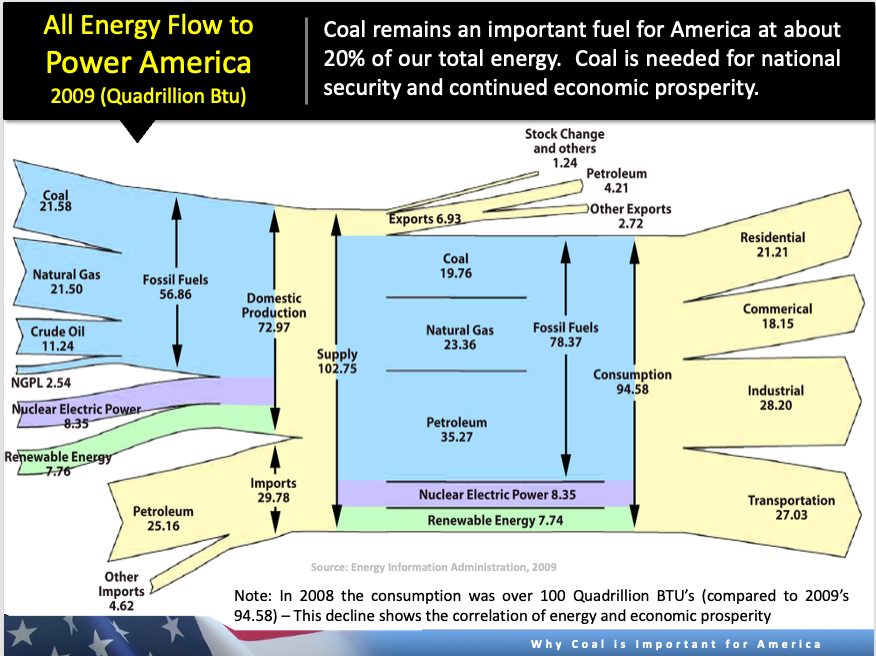
The LLNL Sankey Diagram shown below details the Primary Energy flows from sources to consumption. The U.S. has used right at 100 Quadrillion BTUs for the last 20 years. A little more than a third of total primary energy is used for electricity generation. (37.7%)
The chart above is from 2022. The one below from 2009. I used this chart in a presentation to the ASME in 2011 to attempt to impress the members with the importance of coal. At the time, America was using coal for about 45% of our electricity generation and the primary energy used to generate that power was about 20 Quadrillion BTUs of coal fuel. As can be seen from the two charts, natural gas increased about 10 Quads and coal decreased a similar amount. Basically, substituting natural gas for coal power production.
Self Sabotaging of the U.S. Bulk Power Supply
Since President Obama’s two term escalated war on coal over 50% of America’s reliable, affordable, Dispatchable and energy secure power generation has been shut down. I have called this self-sabotage. Mostly as a result of Federal Regulations, especially the politically inspired (not based on human health or science) EPA Endangerment Finding. But also due to NGOs and other voices working very effectively to demonize coal power. America had the most reliable, least expensive electricity supply in 2010 and the forces against coal power have steadily weakened our energy security, reliability and affordability. Electricity prices are climbing and will continue to do so as more unreliable, variable generation is forced onto the Grid, and backed up by natural gas fuel. Low prices of natural gas are not guaranteed into the future and fuel is the major cost component for thermal power generation. If the fuel cost doubles, so does the production cost of electricity.
The chart below from the IEEFA shows the path of coal free power generation. Some states and countries are ahead of my state of S.C. and the electricity costs in those states that have shut down their coal plants has escalated sharply. Germany has suffered from significant De-Industrialization as a result of forcing wind and solar on the nation. If America continues the path set by Net-Zero Carbon advocates, we all will join Hawaii, California, Spain, Germany, the UK, Massachusetts and Connecticut with higher cost power and possible de-industrialization.
Thanks to President Trump and Chris Wright, America’s energy regulatory policy is somewhat corrected. However, some states, even S.C. still have laws on the books to exit coal. I feel this is energy suicide. Coal is a national treasure that should be utilized. In fact, in my opinion, it is the best and only viable choice of primary energy to provide the needed electricity generation between now and 2050. A coal plant should be able to be built in four years. We have done it before and can do it again!
The Future 2025-2050
Electricity generation capacity will need to increase dramatically over the next 25 years. The projected growth has been well documented by many others including Stephen Heins, Thomas J. Shepstone, Jr., the ICF, NEMA and others. What is needed is an enormous amount of new, Dispatchable, reliable and affordable Bulk Power. About 800,000 MW of new Bulk Power. he workforce challenge is a topic to cover on another day.In my analysis, nuclear will play an important part. So will natural gas. However, there are three limits to just how much nuclear and natural gas can supply. These three constraints are Supply-Chain, pipelines and achieving a Balanced generation portfolio. The nuclear supply chain limits have been discussed before and although proven and an excellent clean choice, nuclear seems decades away before the needed capacity can be built. For example, it took America over 30 years (1957-1987) to design and build the existing nuclear fleet of about 97,000 MW of capacity. We now need eight times the nuclear fleet that was built over 30 years. Keep in mind, the legacy nuclear units built 1957-1987 were constructed when the Supply-Chain was well established, there were thousands of trained and experienced engineers at B&W, Combustion-Engineering and Westinghouse and craftsmen were much more abundant in the workforce. Many experienced engineers and craftsmen are now retired. Rebuilding the workforce is a topic for another day.
“Just in Time” Primary Energy
Today about 45% of the U.S. electricity generation at peak times is provided by natural gas through “just in time” pipelines. Not only is the Supply-Chain of new gas turbine plants limited but so are the pipelines and fuel supply. In my analysis, we already have too much dependence on pipeline provided natural gas. Remember the Colonial Pipeline Hack of 2021? Coal plants have the inherent advantage of being capable of storing several months of fuel on site.
The best choice for a Balanced Portfolio then, in my analysis is to build new coal plants. In Dick Storm’s Perfect World of Power Generation, I would like to see a Balanced generation portfolio of 30% coal, nuclear, gas, with 10% renewables. Illustration from the Coal Institute presentation.
Conclusion
The policy planners and utilities have gravely underestimated the growth of electricity Demand and now are catching up by using the “Easy Button” of purchasing gas turbines for backup power for wind and solar. Most of the capital being invested in new generation in this calendar year is for solar, wind and BESS (Battery Electricity Storage). This is a mistake that will cost Americans dearly.
President Trump, Chris Wright and Lee Zeldin have done the best they can to correct decades of poor flawed planning by the EPA and Congress with the Inflation Recovery Act version of the New Green Deal. However, many states and large Utilities still remain on a foolish path toward Net-Zero Carbon. For example, Here are five articles on U.S. and South Carolina Energy Policies:
America needs to begin building new Dispatchable, affordable and proven reliable Bulk Power Generation as soon as possible. As I see it, the best source of the needed primary energy to satisfy the demand is America’s own treasure of coal reserves. Think about the needed capacity in terms of 32,000 MW per year for 25 years. That my friends is a heavy lift. As a country we must unite behind President Trump to get this done…Wake up Americans!
There are a number of states that are on a path to higher electricity bills and less reliability, including S.C. Why? Because the S.C. Governor and the Legislature are still stuck on Net Zero Carbon. I thought it might be informative to list 10 unpopular truths:
Hard Truths that Apply to S.C. as Well as All Other U.S. States
New nuclear plants will take decades to be built to replace existing coal and gas units
Electricity generation for Dispatchable Electricity Generation capacity takes years to build
Most of our electricity today comes from power plants that are more than 30 years old. S.C. examples: The Wateree coal plant began operation in 1970, Duke Energy’s Oconee nuclear plant, the largest in South Carolina, first unit started up in 1973, and the first Santee-Cooper Cross Unit began operation in 1984 and Winyah 1975.
The major production cost component of electricity generation for Thermal Power Plants is fuel
The proven lowest production cost of electricity is from coal, nuclear and gas
Coal prices have remained stable for decades
Gas prices are volatile and can fluctuate with market changes. Low gas prices into the future are not guaranteed
Wind, Solar, and Battery storage are higher-cost producers of Bulk Power. Forget the “Free Fuel Myth of Wind and Solar”. All states and countries that have taken the S.C. Net-Zero Carbon path now have high-cost electricity
South Carolina is on a similar primary energy path as Germany was fifteen years ago
It takes decades for the impact of energy policies to be felt by consumers and industry
Here is a presentation to the Beaufort Federation of Republican Men, which summarizes the S.C. path to higher cost electricity.
Bulk Power Supply and Demand Projections to 2052
The Supply/Demand Chart of Santee-Cooper is shown below. Note the plan to reduce coal power generation and replace it with gas, purchased power and variable renewables.
A Better Path: Build New Coal Plants
The low country of South Carolina has been well served by Santee-Cooper since 1934. Also known as South Carolina Public Service Authority. SCPSA is state owned and controlled.
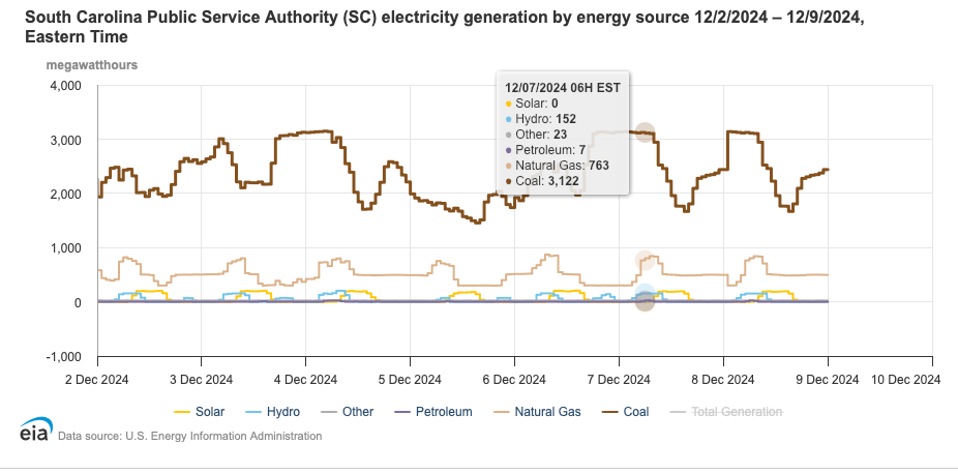
Like TVA, Santee-Cooper began with hydroelectric generation and as with TVA, the electricity demand rapidly increased to loads far in excess of the available hydroelectric capacity. Thus coal plants were built and for most of the last 80 years most of the electricity generation has been from coal fuel. This continues to be the case. The screenshot below is the electricity generation the week of December 2, 2024. The primary energy provided for the power production was 77% coal fuel at this time and it will be needed again this coming winter.
To this day most of the Santee-Cooper installed power generation capacity is coal power plants. Here is a list of their generating assets. Over 60% are dispatchable and proven to be affordable coal power. Electricity costs in our region has been amongst the lowest in the U.S. for decades. Thanks to coal fuel. As the transition to more renewables and more backup natural gas is made, the cost of Bulk Power generation will increase as it has in Germany, the UK, Hawaii, CT, MA, NJ and other states that are ahead of S.C. in transitioning from coal to more renewable energy. The so called “Energy Transition” is the root cause of increasing electric rates. Hawaii as a poster child example of a transition to expensive “Green New Deal” renewables.
What About Industry?
About a third of S.C. electricity is used by industry. This is important for U.S. security, competitiveness and for the jobs industry provides. For the low country of S.C. there are at least two very energy intensive industries; Century Aluminum and Nucor Steel. Both of these industries use hundreds of Megawatts for steel and aluminum production. The main reason the plants were built in S.C. was because of reasonable cost electricity provided by Santee-Cooper. The Century Aluminum plant at full capacity will use over 400 MW and each Nucor plant about 175 MW. These two companies alone represent 24/7 Demand that is about a quarter of the huge Cross Generating Station’s capacity.
Can We Learn From the Experiences of Germany, the UK, California, Hawaii, Connecticut and New Jersey?
Each of these states & countries have been working toward a transition away from coal and toward renewables. In each case the electric rates have escalated to the point that they have caused industries to shut down and harmed the industrial capacity of the countries or states. Electricity is the LifeBlood of an economy. Ask a knowledgeable German citizen about the results of their energy transition.
The high German electricity rates have caused many very well run and established companies to shut down and/or relocate manufacturing into other countries. Three examples are BASF, Krupp Steel and VW
The Optimum Future Electricity Generation Capacity
A Balanced generation portfolio is optimum as a hedge against fuel cost escalation, security of generation and reliability of generation. In my experience and based on the well documented experiences of other states and countries, a balanced generation portfolio of no more than 20% renewables with the balance of generation from dispatchable sources such as nuclear, gas and coal, is best. Plenty of references are listed below (also the chart above) which show the results of over-reliance on windmills solar and battery backup or BESS (Battery Electricity Storage and Supply).
Conclusions
The main point I wish to make here is that Bulk Power, that is huge amounts of electricity generation from large power plants take years, even decades to replace or to use the word more common today, Transition. Most of the vital 24/7 electricity supply to S.C. is provided by aging power plants. Examples, Oconee about 53 years, Wateree about 55, Winyah 50 and Cross about 40 years old.
As reliable, affordable and dispatchable coal plants are shut down the electric production cost will increase and along with the rising production cost, eventually increased rates.
Building new coal plants as once was planned at the Pee Dee plant site, was and still is a good idea. So is building more nuclear plants but that takes time.
My suggestion for the S.C. Legislature is to remove the Net-Zero Carbon laws that are on the books and to provide ample funds for maintenance of the existing coal plants serving S.C. so well.
Electric generation capacity of Dominion and Santee-Cooper about 12,000 MW of Bulk Power Capacity: https://datawrapper.dwcdn.net/hjyEG/5/ Duke Energy about 6600MW
The S.C. Legislature has laws on the books to exit coal power and depend on gas, nuclear, solar, wind and Battery backup systems (BESS). All of which are higher cost generation than coal. https://www.scstatehouse.gov/sess126_2025-2026/bills/3309.htm
Wind, solar and BESS systems need to be backed up by Dispatchable generation. Usually that backup (and planned for S.C) is natural gas fueled generating plants. Therefore, one reason electricity costs are higher with solar and wind is because two to four times the generation capacity is needed over a coal or nuclear plant. Solar and wind are intermittent generators dependent on nature. Solar averages about 6 hours per day of generation.
Anti-American, pro-CCP energy policies are not limited to Blue states. We expect foolish energy policies from California, Hawaii, Massachussetts, CT, ME and NY but not so much in “Red States” like South Carolina. S.C. is one of the most Conservative states in the U.S. However the S.C. political leaders have drank the “Green Kool Aid” and continue to permit and depend on solar with battery backup to be promoted to replace the reliable and affordable coal generation in our state.
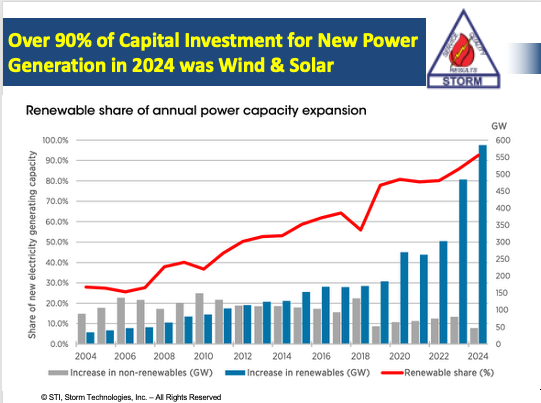
A chart of investment in renewables supports the comments of Dave Walsh. Over 91% of the new generation installed in the U.S. in 2024 was renewables. This is also corroborated on the Global Energy Monitor website.
Mark Lewis on LinkedIn has also posted a summary of the persistent building of tax subsidized, parasitic and high electricity rate driving solar and wind. Mark’s post is here. A screen shot of the ENVERUS chart is copied below. This is from Ian Nieboer Substack article. Thank you Ian. As can be seen, the subsidies for wind, solar and battery storage continue well past 2030. In my opinion and observations, the subsidies for wind and solar are the root cause of increasing electric rates nationwide and a trend toward reduced reliability as well.
Back to my Red state of S.C. SenatorTom Davis, Governor McMaster and the SC Legislature still have coal plant shutdowns planned for Santee-Cooper. Here is an excerpt of the Press Release on “All of the Above EnergyPolicy” by Senator Davis:
These coal plants have a stellar record of keeping electricity prices and reliability amongst the best in the world. Tom Davis’ Press Release after the Governor signed the SC Energy Bill implied: “We consider all forms of energy, renewables, gas and nuclear”. I emailed Davis to remind him that over 40% of Palmetto Electric’s Bulk Power is from coal and that it is the lowest cost fuel. Davis got right back to me and said, “We won’t shut coal plants down until a better source is found”….This is Not reassuring because, starving an operating plant of required maintenance $$ will simply cause it to become an unreliable and higher cost asset…then, predictably, the improperly maintained equipment wear and tear will lead to a self inflicted decay and unreliability. After the deterioration, this will lead to a then obvious decision to replace the coal plants with higher production cost gas plants. This happened at the once magnificent McIntosh Unit #3 at the City of Lakeland in Florida. I know because I worked many years for the City of Lakeland as a contractor and/or consultant, including the startup and tuning of McIntosh #3 and many maintenance efforts 1982-2012.
Reminder, the generation cost component to produce electricity, for a gas plant is about 90% fuel cost. Therefore, if the gas price doubles, so does the production cost of electricity. Let that sink in. The gas fueled RICE (Reciprocating Internal Combustion Engines) will produce electricity at a cost that tracks natural gas prices.
Fast forward to next year and the U.S. exported LNG will likely increase domestic gas prices in the U.S. this winter and beyond. I support President Trump’s interest in exporting LNG but we should use more American coal for power generation here in the U.S. until new nuclear plants are built. In fact, more new coal plants should be built as well. I presented my thoughts and analysis of the importance of coal power at the Coal Institute in July. Coal is a more stable and economical fuel for Bulk Power generation.
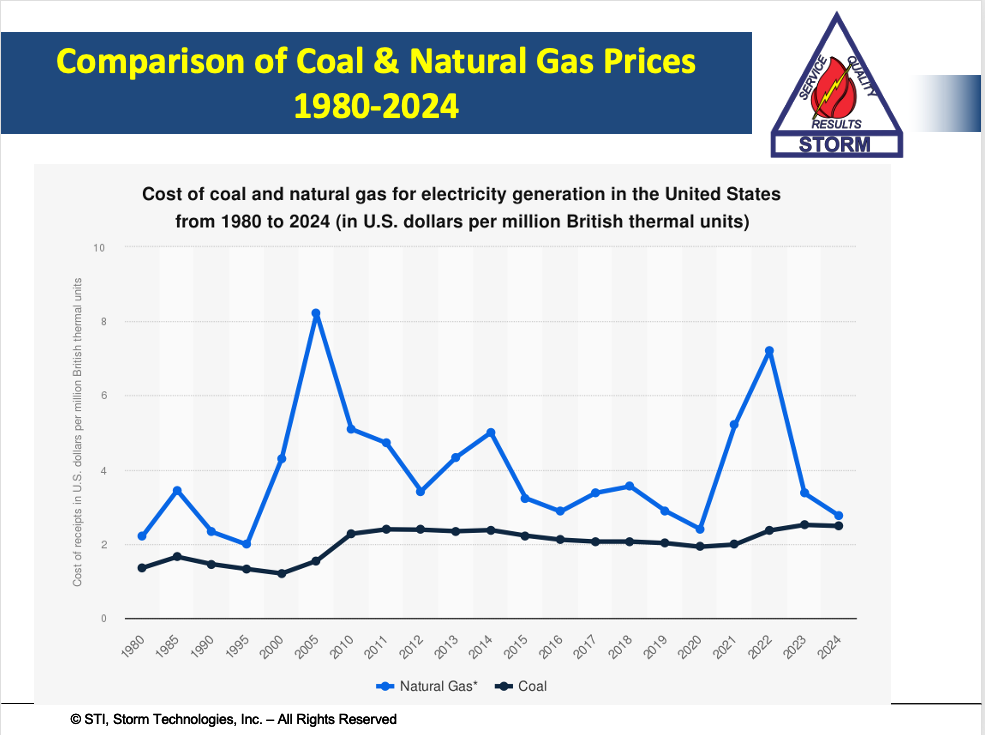
Natural gas prices are not always low. Here is a 44 year history of gas prices compared to coal.
A minority of the folks in the U.S. population (Including Policymakers) understand the basics of energy and power generation. My estimate is less than 3%. Why? Utility generating plants became huge, highly automated and it only takes a crew of three operators to run a 600-1200 MW coal plant. Also, the 97% of the energy naive public has been bombarded with green indoctrination and lies about “Free solar and wind power”. Thus, the combination of high productivity of coal plants over the years has been done with a very small work force that has experience in power generation. Then, secondly, the successful demonization of coal by the MSM, Entertainment and well funded NGOs has led us to the point of a Self-Inflicted electricity generation crisis. ( Maybe not all Self Inflicted, some foreign actors were also involved)
Piling onto the madness of anti-American energy policies we have, Utility managers trained in accounting or law that have teamed up with similarly low Energy IQ politicians to create harmful, anti-American, Net-Zero Carbon Policies…These are so called “Energy Policies”. Why and how can these insane policies be put into place? Because the policy makers simply do not understand basic power generation fundamentals. Much of the western world has been following the same destructive Net-Zero Carbon path. Five examples are the UK, Germany, Spain, Australia and Denmark. They all have high power costs that are killing their once productive Industrial base. My adopted state of S.C. seems to be right there with the UK and Germany with regard to foolish “Green Energy Policies”.
Conclusions
Much of the Free Western World has been making the same mistakes on following a path to Net-Zero Carbon
It is my opinion that the path to Net-Zero Carbon was to reduce the productive capacity of the west and increase the dependence on manufactured products from China. Net-Zero Carbon policies are Not based on sound energy policies or for protection of the environment. At best they are to promote government control of our lives. At worst they are to weaken the western free world and therefore by default, increase the world influence of China.
Thankfully we have President Trump and Chris Wright to frame U.S. Energy Policy. However, the purpose of this article is to point out the fact that many states remain on paths to destroy reasonable cost, reliable electric power generation that supports industrial production and economic prosperity…
GRIDWATCH Australia Thank you Rafe Champion! “AT 6.30 PM eastern time THE WIND WAS CONTRIBUTING 13% OF DEMAND IN THE EAST AND 2.5% IN THE WEST OH DEAR!!” https://www.nem-watch.info/widgets/RenewEconomy/
About three decades ago I became curious of those people and organizations that seemed to work in earnest against the best interests of the U.S.A. My interest began with EPA “Violations of New Source Review” How did they affect me? It was directly. Myself and our team were consulting and providing performance improving modifications (“modifications” was a dirty word with the EPA when NSR is considered) with numerous electric Utilities to improve capacity, fuel flexibility, heat-Rate (efficiency improvement) and to reduce emissions. What reward did we get for improving efficiency, reducing the cost of power generation and reducing emissions? The plant owners were fined and in some cases the plants were prematurely retired and shut down. As for my company, we just lost some business and moved on to the next opportunity. But….I remember at the time…wondering why the EPA rules that already seemed anti-American became even more restrictive and seemed to be headed toward outlawing coal for power generation? Ultimately EPA Rules leading to the “Self-Sabotaging” of our reliable power generation. That was a time when about 50% of America’s electricity was generated from coal fuel and the U.S. enjoyed amongst the lowest cost electricity in the world, the Grid was reliable and affordable. Then the Obama Administration boldly did move to literally demonize and outlaw new coal power generation plants with the “EPA Endangerment Finding” in 2010.
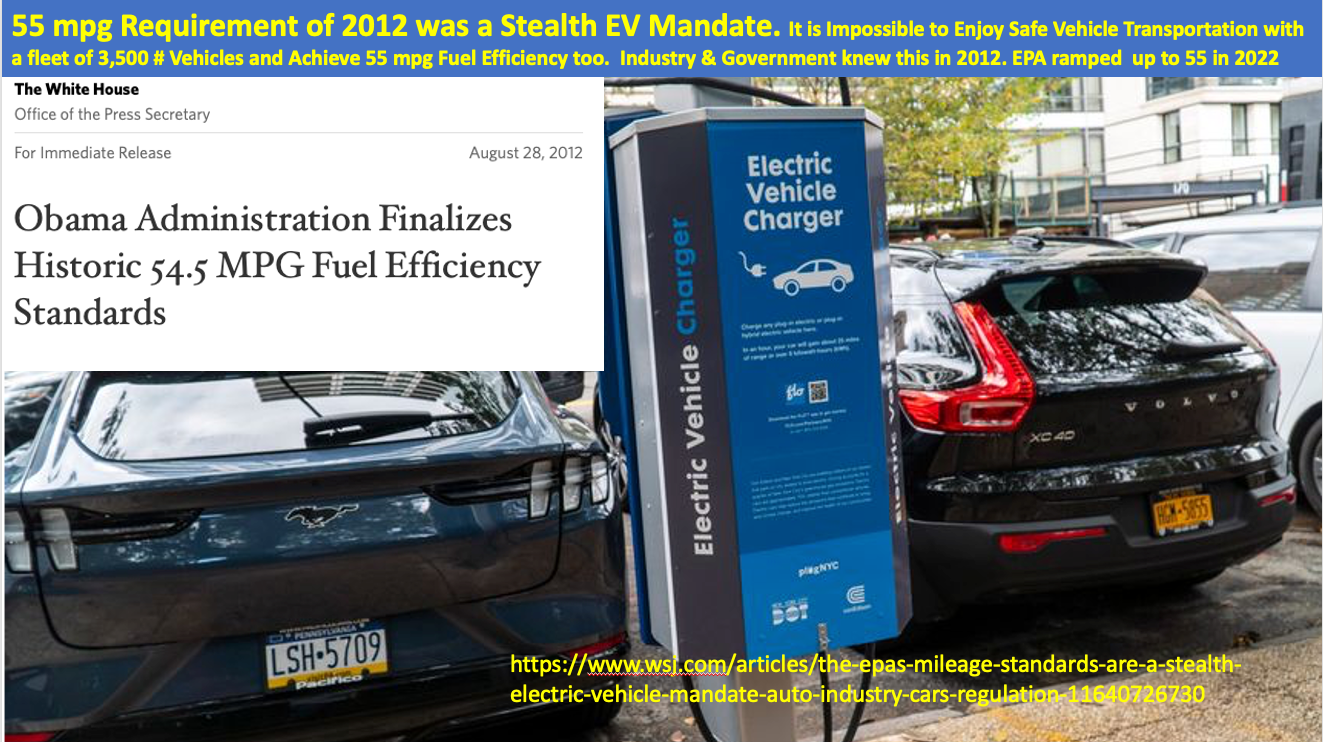
A reminder, Obama and his EPA created the EV Mandate in 2012. Then the escalated “War on Coal”.
Fast-forward to 2025 and now facts are coming out that perhaps the “Self-Sabotaging” of our electric grid was not driven by policies to clean the air and water. Perhaps a more sinister motivation? Here are twenty references that implicate certain U.S. politicians and China’s influence. The EPA Rules went beyond clean air and water and in my opinion, were anti-American.
The SWAMP is comprised of many nefarious actors, both foreign and domestic. Some are as innocent looking as TIME Magazine and Dan Rather on CBS News. Thank you Chris Martz, Tony Heller, James Woods, Krudkrew147, and John Stossel for these reminders of the greatest scientific hoax in history. The misinformation on science, demonization of coal and hydrocarbon fuels has literally crippled the industrial production of western civilization and helped to transfer manufacturing and the wealth it provides to China. Here are some of the domestic sources of the mischievous Climate propaganda.
A CBS News report by Dan Rather warns that if we don’t stop digging up ancient carbon and burning it, 25% of Florida will be underwater.
Posted on “X” by Krudkrew147 Captures the true facts in one meme. Was it a hoax or successful Propaganda by the CCP?
History of Energy Foundation China, according to Influence Watch
The enemies of common sense energy policies are not only foreigners. Note the American NGO’s listed in Influence Watch. To me, this is troubling, to see respected NGOs and American businesses that are aiding and abetting the CCP.
The Energy Foundation was founded in 1991 when three foundations – the MacArthur Foundation, the Rockefeller Foundation, and the Pew Charitable Trusts – recruited recent Stanford University graduates Hal Harvey, Tom Strand, and Eric Heitz to start an environmental initiative. Energy Foundation China was launched in 1999 with support from the Hewlett and Packard foundations. In 1999, the Packard Foundation helped to establish Energy Foundation China, with offices in Beijing. In 2020, Energy Foundation China separated from the Energy Foundation, whilst retaining the legacy EIN number.
Like others knowledgeable in power generation, I thought, these are actions to deliberately weaken America. They could not be done better by our country’s mortal enemies if they were in charge of the EPA themselves. So, that is where I am coming from. The purpose of this article is to review the history of Applied Political Science 1990-2023 enemies within the U.S. Some are foreign and some are domestic.
Here are previous articles that I wrote on Influencers of U.S. Environmental Policies that literally caused the Self Sabotaging of our power generation infrastructure.
The past fifteen years of anti conventional energy policies will be difficult to overcome. I applaud President Trump and his outstanding Cabinet members for their efforts to correct past anti-American environmental and energy polices. However, I fear that we have gone a bit past the tipping point of NOT building enough new generation capacity to replace that which has been shut down and in most cases, destroyed. The about 125,000 MW of coal power generation shut down since 2010 cannot be replaced by new coal or nuclear plants of similar capacity by 2030 due to supply-chain limitations. Obama, Pelosi, Biden and the Democrats have weakened our electric power generation infrastructure. Why do they seem to have a stronger allegiance to China than to the U.S.A.?
My hope and prayer is that the American people will wake up and force the Democrat politicians to begin to support Pro-American energy and environmental policies. Based on what I have observed over the past 15 years, this will be difficult for many NGOs, wealthy individuals, politicians and Bureaucrats to support restoring American Industrial productivity, as we had before Obama’s Presidency. Rebuilding the supply-chain of talent, manufacturing capacity and the “American Can Do” attitude will be hard unless the half of our country stuck on resisting Trump wakes up and supports America First.
Respectfully and very truly yours,
Dick Storm, August 7, 2025
83 References for further background (updated August. 8, 2025)
Chinese Companies listed on U.S. Stock Exchanges: As of March 7, 2025, there were 286 Chinese companies listed on these U.S. exchanges with a total market capitalization of $1.1 trillion. That valuation increased by $250 billion from the start of 2024, when this table tracked just 265 Chinese companies listed on U.S. exchanges with a total market capitalization of $848 billion. Since January 2024, 48 Chinese companies have listed on the three U.S. exchanges, raising $2.1 billion in combined initial public offerings (IPOs). https://www.uscc.gov/research/chinese-companies-listed-major-us-stock-exchanges
Sheldon Whitehouse’s new book where he will claim the opposition party does what he and his party have done very effectively, for decades: “The Scheme, where He accuses Republicans of using Dark Money”, when in fact, the Democrats do it much more: https://thenewpress.com/books/scheme
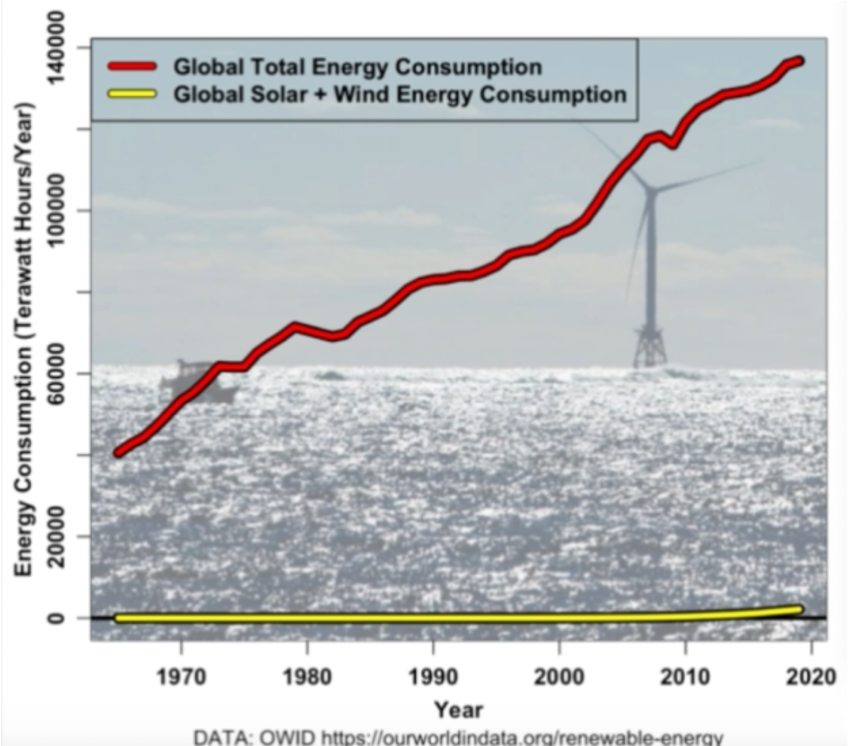
It has been forecasted that the U.S. needs about 125 GW of new electricity generation capacity by 2030 and about 600 GW of new generation capacity by 2050. The combined maximum manufacturing of new nuclear, new wind and new solar cannot provide this growth in time. Previously written here, here and here. The Our World in Data graph showing worldwide capacity of total primary energy by sources shows the futility of expecting the new Demand for energy to be supplied from wind and solar.
The graph above illustrates the dismal contribution of wind and solar to the total Primary Energy needs of the world. Bjorn Lomborg (and others) has written numerous articles that document the poor capacity factor, high cost and unreliability of wind and solar after decades of spending billions.
The answer to providing the needed Primary Energy for electricity generation over the next twenty five years is to build more dispatchable electricity generation capacity from new natural gas, nuclear and coal plants. We need to build lots of new gas, nuclear and coal plants. Easy to write, harder to accomplish. That is the purpose of this article, to try to quantify the colossal design, manufacturing and construction supply-chain effort that needs to be accomplished on a fast-track basis.
New Generation Capacity Manufacturing Supply-Chain
The gas turbine supply-chain limitation was covered in my previous article here and by POWER Magazine here. Nuclear is the fuel that provides the largest carbon free capacity today and it is likely to be the fuel of choice in the future. However, building 125 GW of new electricity generation capacity by 2035 or so could with a Herculean effort be accomplished with new coal plant construction. This is about the same as the electricity generation capacity that has been shut down since 2010. The previous article discussed the 151 new coal plants that were planned in 2008 most of which were never built. Between now and 2035 we need to build the coal plants that were planned in 2008 and were never built.
The Coal Plant Supply-Chain That Was circa 1975-1980
In 1975 I was a project engineer for the startup and improvements for the 720 MW Roxboro Generating Station Unit #3. The superheater needed to be replaced with upgraded alloy due to design issues of temperature and steam distribution throughout the over 1500 individual flow circuits. The tubing material selected was 304H stainless steel. Over twenty miles of new tubing needed to be fabricated into 48 superheater assemblies, each comprised of 26 tube circuits about 120 feet long. The contract was signed about March of 1975 for delivery to site and installation in the fall outage the same year. The tubes had to be manufactured from stainless steel billets, drawn into tubing and the tubing bent, attached together into assemblies, stress relived in a furnace and welded together. The total superheater required dozens of truck loads for delivery from Chattanooga to Roxboro. The same project today would be possible but not in the same time frame. It will require more than a year or two to simply fabricate a superheater of this size and get it delivered. Much of the tubing and components would be sourced from Asia.
Remembering Combustion-Engineering
Let’s discuss Combustion-Engineering’s Chattanooga works in 1975. Here is an aerial picture of this magnificent facility.
The facility was over 88 acres under roof and included capabilities for manufacturing steel tubing, waterwalls, heavy walled headers, fabrication of tube assemblies as described above for the Roxboro superheater and also nuclear reactors and steam generators. I intentionally used the adjective magnificent to describe it. Here is a quote from my friend Tom who worked at C-E during this time period:
“I did a stint at CE in Chattanooga and still vividly recall the enormity of the manufacturing capability. For instance 15,000 ton press that could bend 12” thick steel Into a cylinder for a completed nuclear vessel weighing 700 tons.
A Gang drill setup to drill 1600 holes through a 26” Inconel tube sheet for nuclear PWR steam generators.
1000 ton crane to handle these fabrications and heat treat furnaces large enough to stress relieve them before shipment. What an experience to view and work with these marvels.”
The facility evolved and progressed over many years to become the pearl of manufacturing prowess that it was in 1975. Combustion-Engineering in these times was capable of producing steam generators that could power about 25,000 MW of electricity generation capacity each year. The business volume in 1977 dollars was about $1 Billion/year. The manufacturing volume was almost equal to the business profits of aftermarket maintenance and repairs. Being outstanding in design, manufacturing and services was a huge business for tens of thousands of employees. In 1978 Combustion-Engineering was # 125 on the Fortune 500 list of companies. Two competitors during this era with facilities similar to Combustion-Enegineering were Babcock & Wilcox and Foster-Wheeler. B&W was # 132 on Fortune’s list and Foster-Wheeler # 207.
Today Combustion Engineering and Foster-Wheeler U.S. shops are gone, B&W’s downsized but, thankfully, still in operation.
Today I discussed a replacement/repair of a high pressure header for a Utility coal steam generator in Texas. I was told the header is on emergency order and it will be on site this fall. The header is sourced from somewhere in Asia and welding of tube studs and completion of fabrication will be done in South Carolina. This is bout 24 weeks lead time for just one header. I described a 1350 MW steam generator in a previous article, here. Just to show a rough idea of the immensity of a large coal steam generator. The one described is the B&W Zimmer Plant, supercritical steam generator. In electricity generation capacity, it is nearly twice the size of Roxboro Unit #3.
How About Talent?
I was watching Mike Rowe on TV yesterday and he stated that today over 485,000 manufacturing jobs remain unfilled. Tens of thousands of highly skilled craftsmen such as the Boilermaker/Welders such as those shown below are needed. But, the training and education of the workforce is a topic for another day. Here is a recent WSJ article on building the craft workforce.
Building a new 1600 MW Coal Plant
One of the most recent coal plants built is the Prairie States Energy Center in southern Illinois. The plant construction is well documented by Bechtel and Prairie States. Here are some statistics to explain the immensity of the challenge of building a plant such as the Prairie States Energy Campus.
Now do the math. It will take about 78 new coal plants like Prairie States to produce 125,000 MW of electricity. Using the proportions of what it took about 13 years ago to build the Prairie States Energy campus would extrapolate to:
12,870,000 yards of concrete
3,276,000 tons of steel
210,600 construction workers
93,600 miles of electric cable, mostly copper
9,360 miles of piping
This does not include the engineers and designers to prepare the engineering drawings, the factory personnel such as those once employed at the C-E Chattanooga Works described above or Foster-Wheeler’s Mountaintop Pennsylvania facility. I estimate that over 250,000 new engineers, technicians, craftsmen and other factory workers will need to be trained and employed to accomplish this huge task. Unfortunately, many of the trained and experienced engineers needed are like me and many of my friends, who are now retired. The next generation has a huge job to rebuild the supply-chain.
Conclusions
Needed is 600 GW of new reliable, affordable, dispatchable and preferably, U.S. made generation capacity. Satisfying this demand for new capacity will require more new gas, new coal and new nuclear plants to be built. As discussed above, the new gas turbine manufacturing capacity is at it’s limits and optimistically, about half of the needed 600 GW by 2050 can be provided by G-E, Mitsubishi, Siemens and a few others.
Nuclear today provides about 100 GW of electricity generation. Most of the nuclear plants providing this power were built over 40 years ago. It took over 30 years to build the first 100 GW of nuclear generation and yes, we should proceed full speed ahead on doing so again. All things considered, including manufacturing facilities, talent, forgings, high grade nuclear quality steel production and site construction challenges, doubling the 100 GW of existing nuclear capacity may take another 30 years. America misses both the manufacturing facilities such as C-E Chattanooga and others and the 125 GW of coal plant capacity that also has disappeared.
The solution, in my view, is build more coal plants and build them now. It will be difficult to ramp up the supply-chain, but we should begin ASAP. Building plants like Prairie States takes years. At best, about four years from the start of engineering to the first connection to the Grid and then it usually takes months of debugging and fine tuning to reach the full potential of a new plant.
The Roxboro Generating Station has been mentioned by me in many of my articles and talks. Why? Because I was employed at Roxboro as a field service engineer, senior startup engineer, operations superintendent, maintenance contractor and consultant over a fifty year career. I know (or at least remember it) Roxboro plant very well. A side note, Mr. Mendall Long, one of the Greatest Generation and past Manager of Fossil Plant Engineering told me late in his life, “Lad, you are the only guy I know that made a full career out of working on only three boilers” Mr. Long was referring to the Riley Boilers at Sutton and Roxboro Plants that I did indeed work on (amongst others) over a forty year period during his life-time. We miss extraordinary and courageous engineer/managers like Mr. Long.
Roxboro has a capacity of 2,462 MW. I use this plant as an example of the 125 GW’s of new power needed. It will take 50 new plants like Roxboro to produce 125,000 MW’s of coal plant capacity. I described the superheater replacement for Unit #3 above. That is only one unit. Roxboro has four operating units. The Prairie States Energy Campus is a better example because it is newer.
POWER Magazine wrote in October 2013: “The 1,600-MW Prairie State Energy Campus uses the latest coal technology to burn Illinois coal from the Lively Grove mine, located adjacent to the plant. In planning since 2001, the second unit of the two-unit, $4.93 billion plant entered commercial service in November 2012, thus completing the largest coal-fired plant built in the U.S. in 30 years.
The Prairie State Energy Campus (PSEC) is likely the last of the multi-unit coal-fired power plants that will be built in the U.S. in the foreseeable future. The most recently commissioned coal plants (SWEPCO’s 600-MW John W. Turk, Jr. and Duke Energy’s 825-MW Cliffside Unit 6) are single-unit plants with no firm plans for future expansion. The last two-unit coal-fired plants completed as a single project were Luminant’s Oak Grove power plant (2 x 800 MW) and We Energies’ Elm Road plant (2 x 615), both completed in 2010, but that’s where the similarity ends.”
As mentioned above, America should build 78 new plants similar to the Prairie States Energy Campus. We should begin now as the electricity generation crisis is real, not imagined. In 2008 over 150 new coal plants were planned. Most of these were cancelled. That was a mistake that needs to be corrected.
Combustion-Engineering History-From Wikiwand: https://www.wikiwand.com/en/articles/Combustion_Engineering_Company Combustion Engineering (C-E) was a multi-national American-based engineering firm that developed nuclear steam supply power systems in the United States. Originally headquartered in New York City, C-E moved its corporate offices to Stamford, Connecticut, in 1973. C-E owned over three dozen other companies including Lummus Company, National Tank Companyand the Morgan Door Company. The company was acquired by Asea Brown Boveri in early 1990. The boiler and fossil fuel businesses were purchased by Alstom in 2000, and the nuclear business was purchased by Westinghouse Electric Company also in 2000. Merger with the Superheater Company During the Great Depression, C-E formed a partnership with the Superheater Company. The Locomotive Superheater Company was founded in 1910 to further the use of superheated steam in locomotives. The Superheater Company’s primary manufacturing facility was located in East Chicago, Indiana. In December 1948 stockholders approved a merger between the Combustion Engineering Company and Superheater Company. Following consolidation the corporation was called Combustion Engineering-Superheater Inc. In September 1950 the firm announced plans to build a large high-pressure generating unit for Virginia Electric & Power Company in Chester, Virginia. In 1953, the name Superheater was eliminated and the company took the more familiar name – Combustion Engineering, Inc. At this time, C-E primarily designed and built boiler assemblies for conventional power plants; those powered by coal and oil. In the mid-1950s, C-E also expanded its operations into oil and gas exploration, production, refining, and petrochemicalswith the acquisition of the Lummus Company located in Bloomfield, New Jersey. Lummus also supplied small industrial steam supply systems for oil field enhanced recovery. C-E was one of the major suppliers of boilers for US Navysteam-powered warships, including Liberty ships during World War II. Amongst many other warships, all of the 46 Knox-classfrigates built during the 1960s and 1970s were equipped with a 1,200-pound-per-square-inch (8,300 kPa) C-E power plant. C-E also was a leader in the development of large coal utility steam supply systems which were used worldwide. C-E pioneered the tangential firing process used in modern large pulverized coal utility boilers. C-E maintained a large coal burning test unit at the Windsor, Connecticut site which allowed the Power Systems Group to test changes to boiler air-flow and other critical boiler design factors.
Nuclear steam supply systems C-E’s nuclear power activity began in 1955 under Arthur Santry Jr. The history of the C-E Windsor, Connecticut campus dates to the early development of the nuclear submarine. From the mid-1950s through the early 1960s, Combustion Engineering, under federal government contract, produced nuclear fuel for the US Navy’s “Nuclear Navy” nuclear submarines. Also located at the Windsor site was the prototype marine nuclear propulsion training facility known as S1C, which was designed and constructed by C-E adjacent to its main campus. The S1C prototype was operated by C-E for more than ten years as an R&D and Naval training facility. After expiration of C-E’s contract, the S1C contract was subsequently awarded to Knolls Atomic Power Laboratory (KAPL), who operated the unit until its decommissioning and dismantlement in the late 1990s and early 2000s. In the 1960s, C-E began selling nuclear power steam supply systems. The first commercial nuclear steam supply system was sold to Consumers Power Company of Michigan for the Palisades Nuclear Generating Station, which closed in 2022. C-E competed aggressively with General Electric and Westinghouse in this domain. In the late 1960s the company supplied nuclear reactor systems and fabricated uranium fuel for electric utility companies. A joint venture was announced in April 1968, involving the Combustion Engineering Company, Houston Natural Gas, and Ranchers Exploration & Development Corporation. The three businesses combined to search for uranium on 250,000 acres (1,000 km2) in New Mexico C-E was generally credited with a superior design, evidenced by the fact that the megawatt yield of its nuclear reactors was typically about 10% higher than that of comparable Westinghouse plants. The basis for this increase in efficiency was a computer-based system called the Core Operating Limit Supervisory System (COLSS) for design, and the Core Protection Calculator (CPC) for real-time control room operation, which leveraged almost 300 in-core neutron detectors and a patented algorithm to allow higher power densities. [citation needed] Combustion also fabricated a number of the Westinghouse reactor vessels and steam generators at its Chattanooga manufacturing facility under contracts with the Westinghouse company. C-E maintained a sophisticated nuclear reactor operator training simulator at the Windsor facility for support for customers of its nuclear steam supply systems…..
Believer in Freedom to use of Energy for sustainable high quality lives