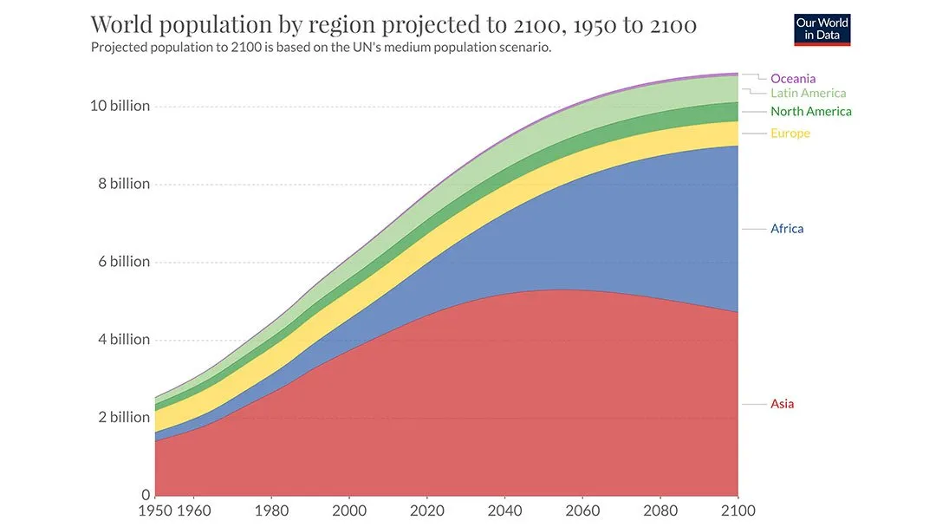
The Developed world and the Developing countries depend on energy to run. Developing countries need reliable PRIMARY Energy to progress from muscle power to machines and the Developed countries, including China and India require lots of reliable primary energy to sustain their quality of life. I am one of the few people who focus on PRIMARY energy and the crucial part coal plays in providing up to 25% of our needed primary energy. Dependable, affordable primary energy is what makes the world really work. Over 80% of the primary energy needed comes from four conventional sources:
I (so has NERC, FERC and other reputable orgs) have been warning of electric power shortages for years. This year could be the year that matters.
The Iranian War and closing of the Straits of Hormuz is a huge problem for LNG supplies to the world. Especially to Europe, South Korea and Japan. The foolish Net Zero Carbon path that western countries have adopted (S.C. too) has forced dependence on natural gas fuel. I wrote a blog post a couple years ago on the enormity of primary energy that America uses. The average American only understands the importance of energy in his or her life when a major weather disaster such as a hurricane makes gasoline, Diesel and electricity scarce for a few days or a week. Many are too young to remember the Oil Embargoes of 1973-1974 and 1978-1979.
Well, the Shale Gas Revolution in the U.S. nearly killed coal but it makes the U.S. mostly energy independent. Here is an excellent article by Giacomo Prandelli on the world impact of LNG supplies. Not so much of a big deal in May but likely a critical energy supply issue come next winter.
Primary energy is important. Remember this statement next December and January.
New Modern Coal Plants are Needed for Energy Security, Grid Reliability, Affordable Electricity Generation and Without Pollution, so let me explain some of the details of the equipment used to clean the flue gases and the progress made in cleaning the air since 1970
Short History of Air Pollution Control
The EPA was started in 1970, for good reasons of cleaning the air and water. Coal plants built before 1970 had no controls on sulfur emissions and particulate collection was only between 75 and 90%. Today nearly all of the sulfur and particulates are collected. I have been a strong critic of the EPA since the “War on Coal” began during the Clinton administration with the beginning of weaponization of government rules such as “New Source Review”. However, in 1970, the EPA was needed to clean our air and water.
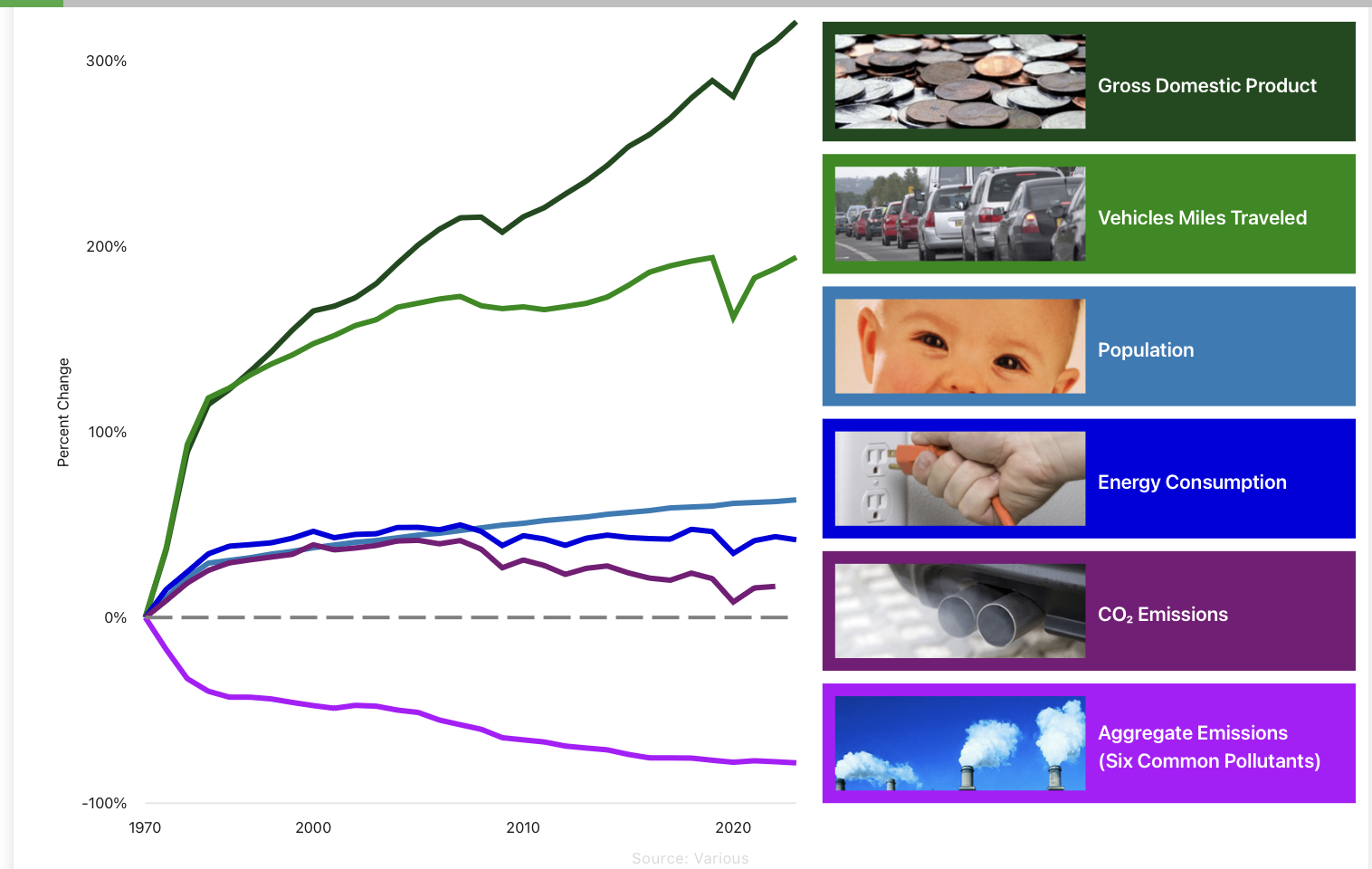
Shortly after promulgation of the EPA the major air pollutants were identified that needed controls. These pollutants are sulfur, particulates, VOCs (volatile organic compounds), carbon monoxide, lead, oxides of nitrogen and ozone. Since 1970 the EPA has measured and reported the progress of cleaning the air and this progress of controlling the true pollutants is shown on the chart below.
Notice the increases since 1970 in population, GDP, energy use and miles driven. These all trended up, whereas the pollutants trended down 78%. This is a story that needs to be told.
We Figured Out How to Make Coal Plants Clean and Then the EPA was Politicized & Weaponized to Kill Them
The perfection of advanced flue gas cleanup occurred about the same time that the EPA became a political weapon. In other words, the air pollution industry succeeded in cleaning all of the harmful pollutants out of the flue gas stream just as the Obama administration declared CO2 a pollutant, which it is not.
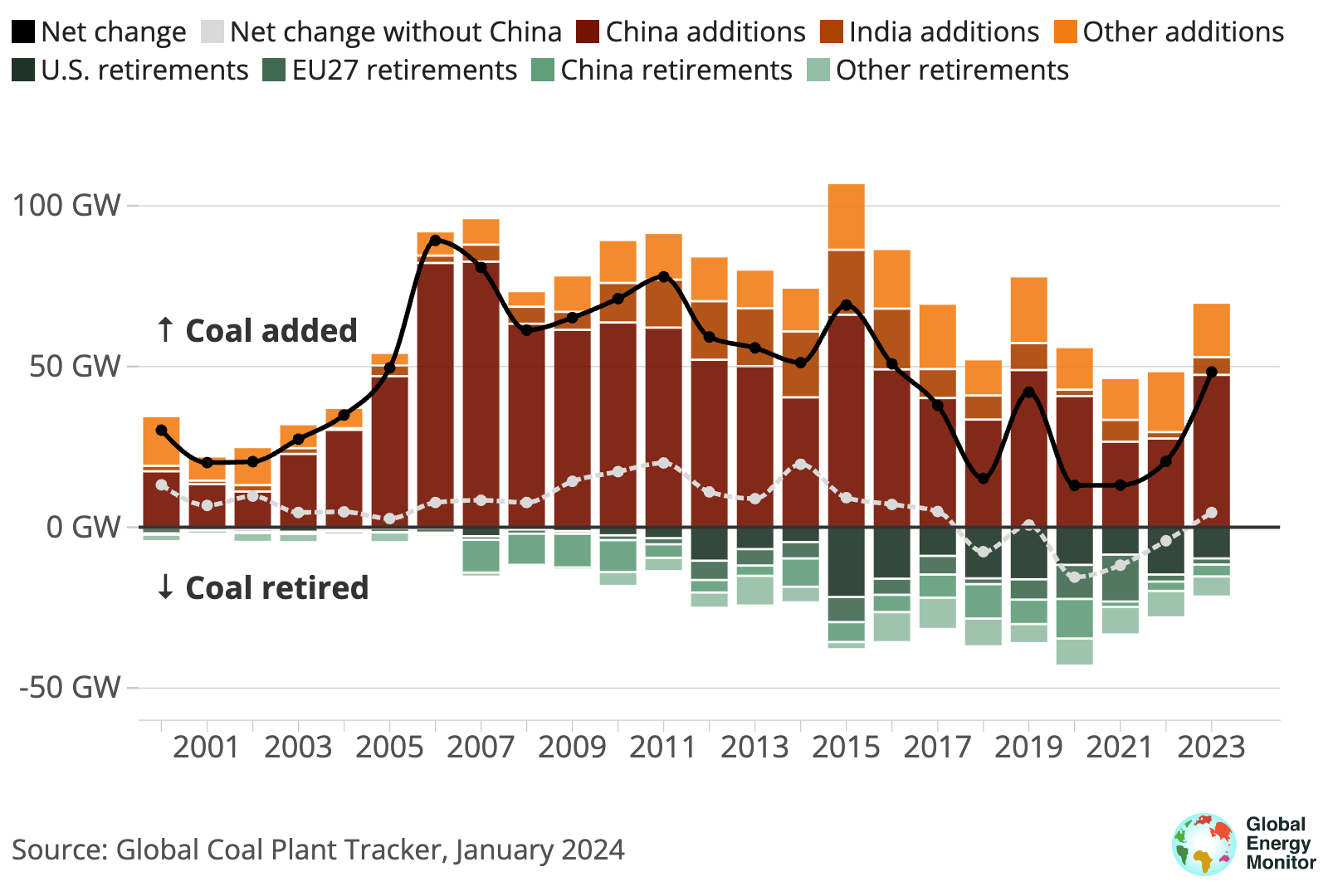
This attempt to kill reliable, affordable, Dispatchable and on-site energy storable coal power has been very effective. Over half of the coal power plants in America have been shut down while the largest fuel source for power generation in the rest of the world is still coal and the coal use continues to rise.
Clean Coal Combustion in a Pulverized Coal Power Plant
Most of the coal power plants in the world use the pulverized coal firing method. I described the Zimmer coal plant in a previous article. “The Magnificent Heat Engines that Society Depends On”.
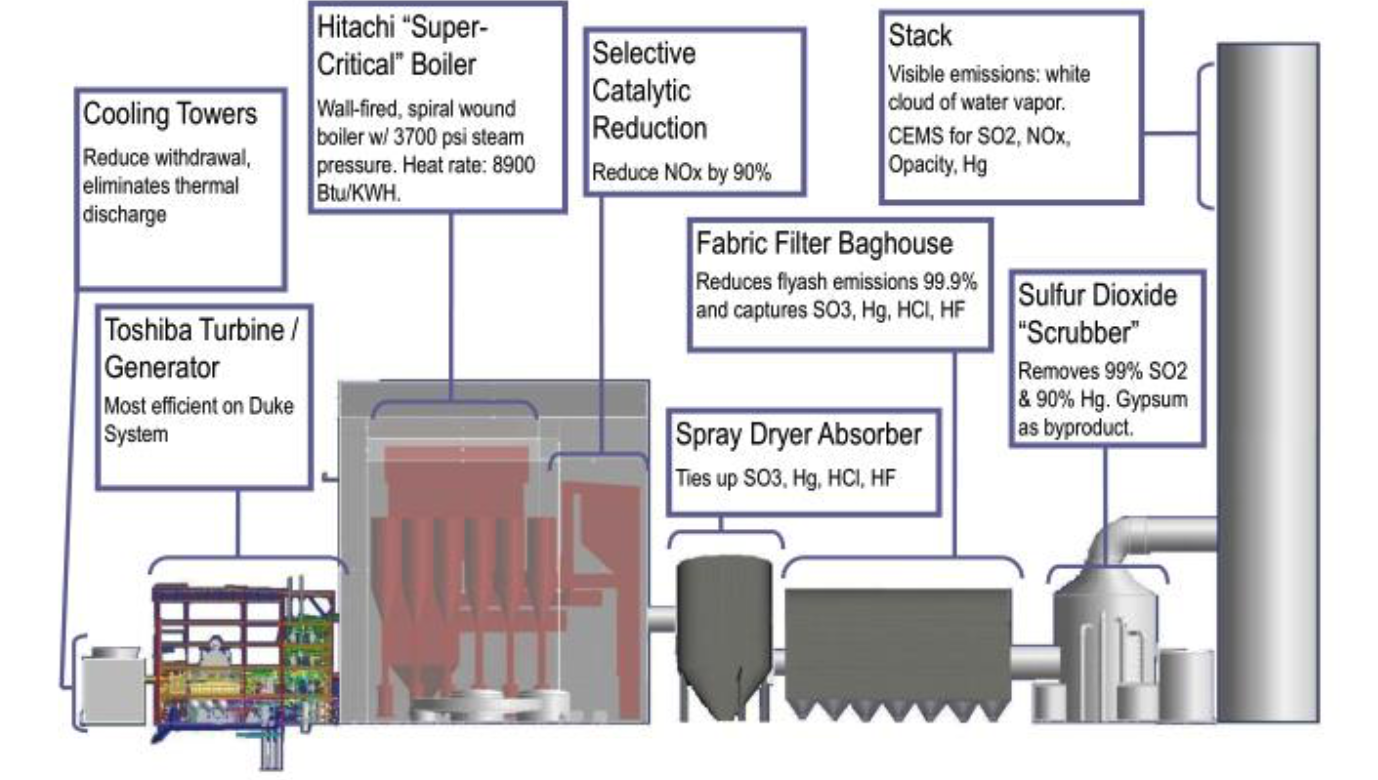
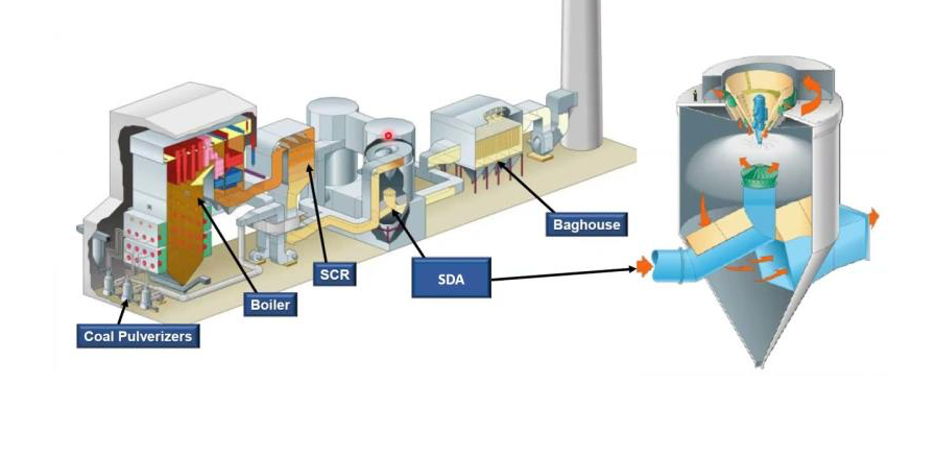
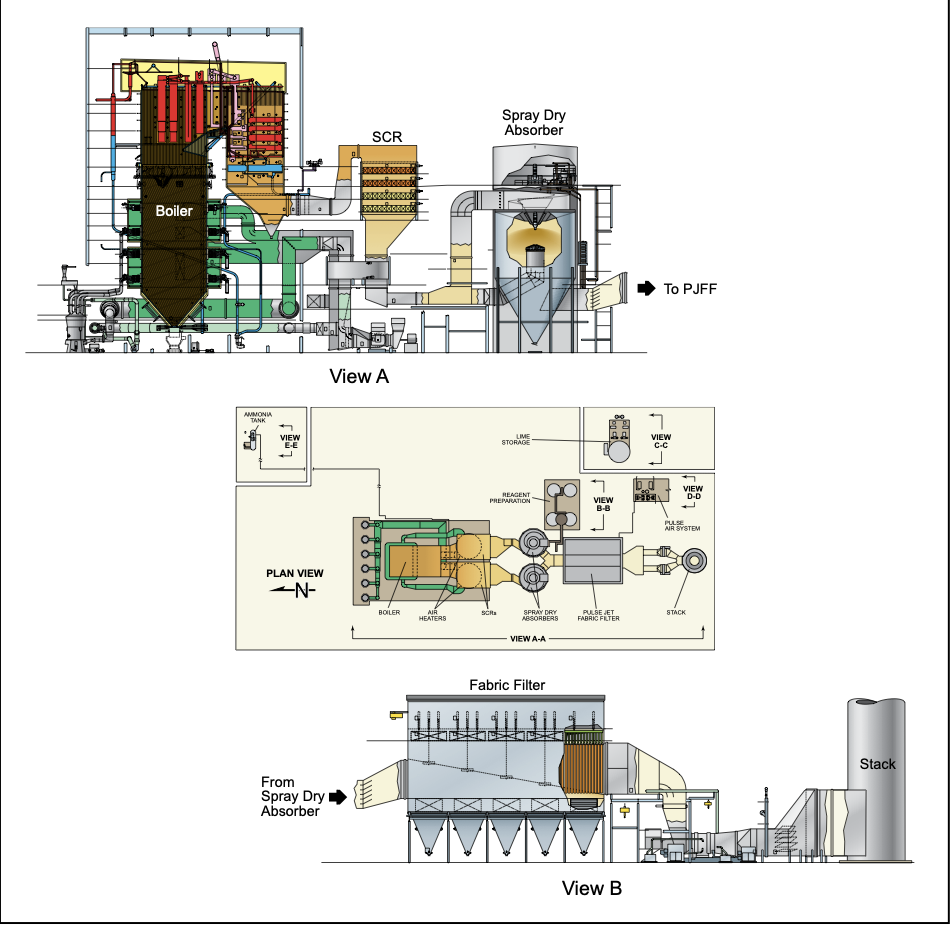
There are other forms of coal power including CFBs (Circulating Fluidized Beds), IGCC (Integrated Gasification, Combined Cycle), stoker firing and cyclone firing. PC Firing (Pulverized Coal) is the most common method used and that is what I will discuss with regard to the exhaust gas (flue gas) cleanup systems. Here is a typical schematic flow diagram of a PC steam generator and the flue gas flow path to the stack.
This schematic is from the Duke Energy Rogers Energy Center plant overview:
The flue gas cleanup equipment in the schematic is shown to approximate scale. The power generation equipment is dwarfed by the size of the flue gas cleanup systems. So is the number of employees required to maintain the chemical processes at the backend larger than those needed to operate and maintain the power generation equipment. Yes, the flue gas cleanup systems are expensive, but once built, the electricity production costs are mostly fuel. Thus, as natural gas prices rise, such as with the Middle East crisis, coal mined in America can be used competitively for power generation less expensively than natural gas fuel for power generation. All of the economic and operational advantages of coal power without pollution.
How the Pollutants are Controlled
Lets take a look at the pollutants one at a time and take a look at how they are lessened or removed from the flue gas stream.
Sulfur Removal
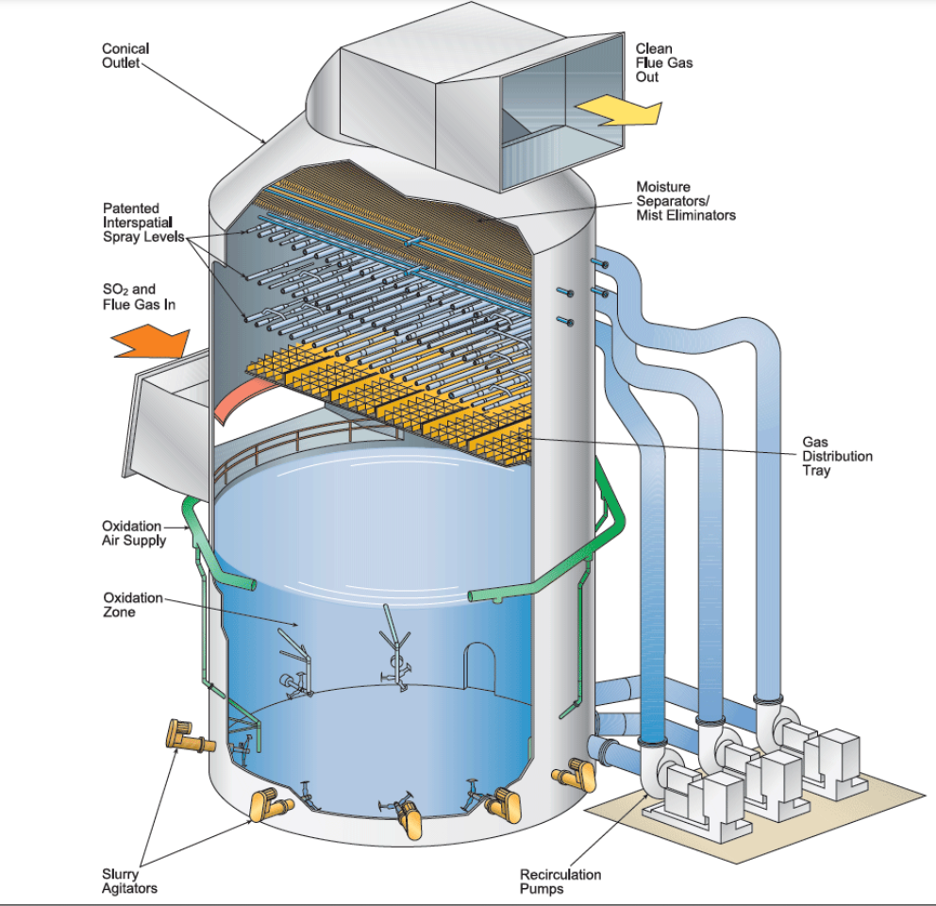
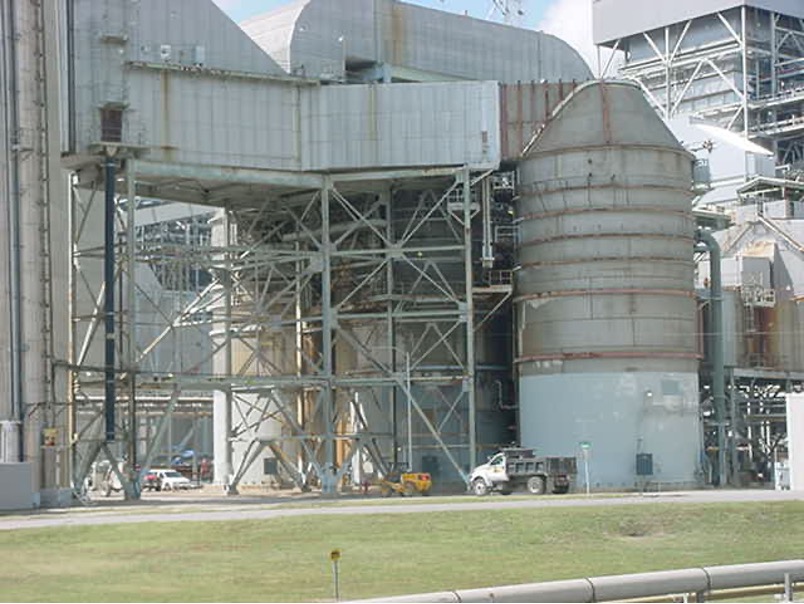
Sulfur emissions were the main cause of acid rain and large coal power plants were the single largest source of atmospheric sulfur emissions. Corrections began with the invention and deployment of FGD (Flue Gas Desulfurization) systems about 1978. Since 1978 the efficacy of FGD systems have advanced. Here below is a schematic of a wet scrubber which utilizes a limestone slurry to capture the oxides of sulfur into a calcium oxide slurry to create calcium sulfate, aka gypsum. The waste calcium sulfate is often utilized for fertilizer and for manufacturing wall board as a byproduct.
More commonly used in the most modern coal plants for sulfur removal is Spray Dryer Absorbers. These collect the sulfur in small droplets of limestone slurry which is then transported in the gas stream to a Baghouse. The ash + limestone is collected on the surface of fabric filter bags and collected in hoppers beneath.
Particulates Removal
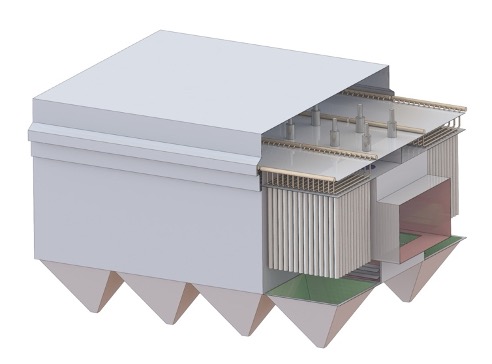
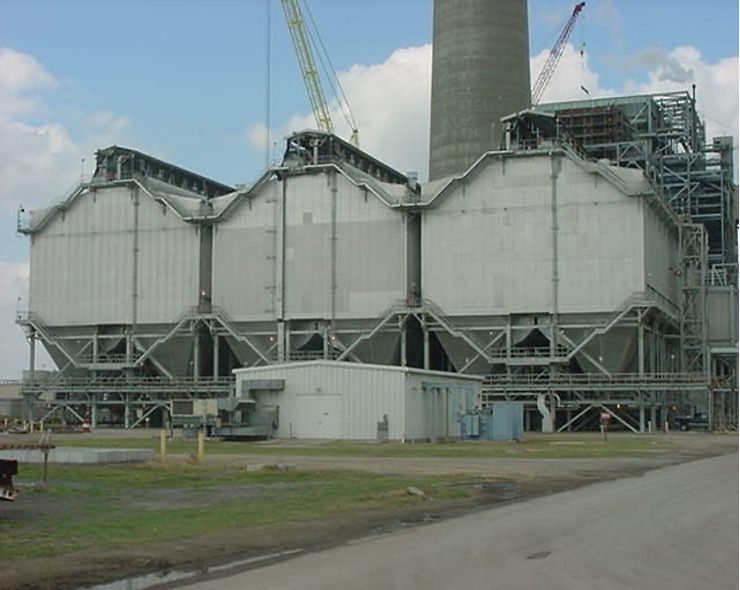
The equipment to collect particulates are Fabric Filter Baghouses. These have certain advantages, especially when used with SDAs (Spray Dryer Absorbers) because of the moist nature of the collected flyash, sulfur and lime slurry can continue to react with oxides of sulfur in the filter cake. Here is an illustration of a Baghouse, followed by a photo of an actual Fabric Filter Baghouse installed on a 650 MW coal plant.
The operating principle of a Fabric Filter Baghouse is basically the same as a home vacuum cleaner, where the dust is collected in a filter cake on the fabric surface. The filter cake then breaks up and falls by gravity to the hoppers below where it is then pneumatically removed and transported to ash storage.
Oxides of Nitrogen
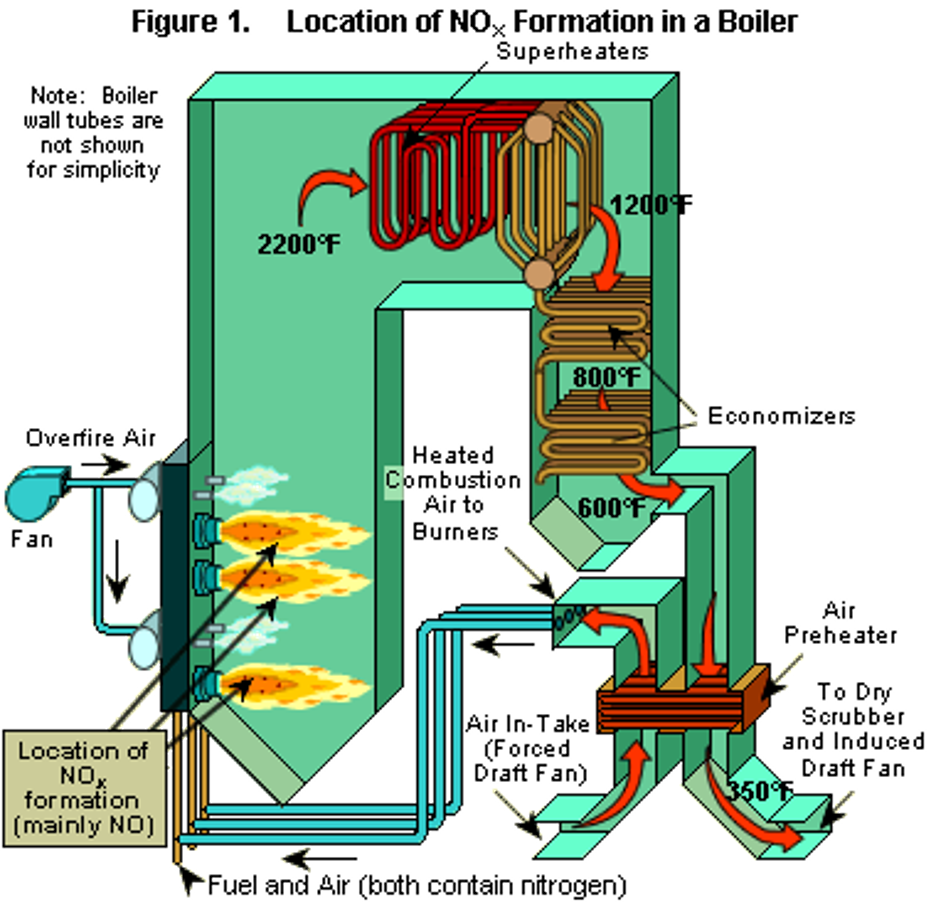
Combustion of coal creates oxides of nitrogen from both the nitrogen in ambient air and from the nitrogen that is trapped in the coal fuel. If uncontrolled the NOx (an expression used to refer to all oxides of nitrogen) can contribute to ground level ozone, smog, acid rain and deterioration of visibility from photochemical smog. Therefore, oxides of nitrogen are drastically controlled to very low levels through a combination of modern low NOx combustion systems applied to the furnace. Then also by use of post-combustion SCRs (Selective Catalytic Reactors). The following two figures illustrate modern approaches to NOx controls.
First, Furnace solutions are low NOx burners combined with over-fire air systems to stage combustion.
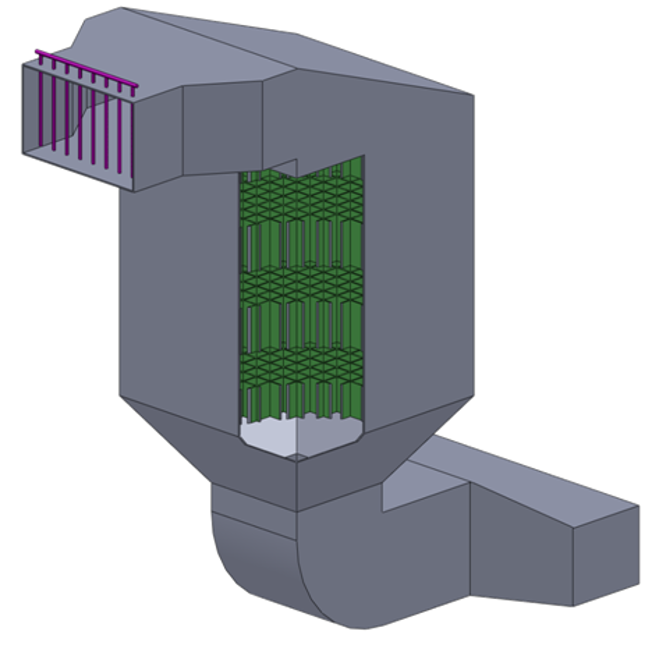
Then, post combustion, SCRs (Selective Catalytic Reactors) are used to remove most of the remaining oxides of nitrogen. An illustration of an SCR is shown below.
The catalyst inside the SCR is reactive honeycomb ceramic as shown below.
Removal of Heavy Metals including Mercury
There are trace amounts of heavy metals in coal ash such as arsenic and mercury, Most of these are removed with the FGD (Flue Gas Desulfurization) system. Sometimes, if the mercury is above limits activated carbon injection is utilized to absorb and collect the mercury.
The Integrated Emissions Control System
The systems described above work together to collect or control the ash particulates, sulfur, NOx and mercury. One version of an integrated emissions control systems is shown below.
Stack Emissions are Harmless Water Vapor and CO2
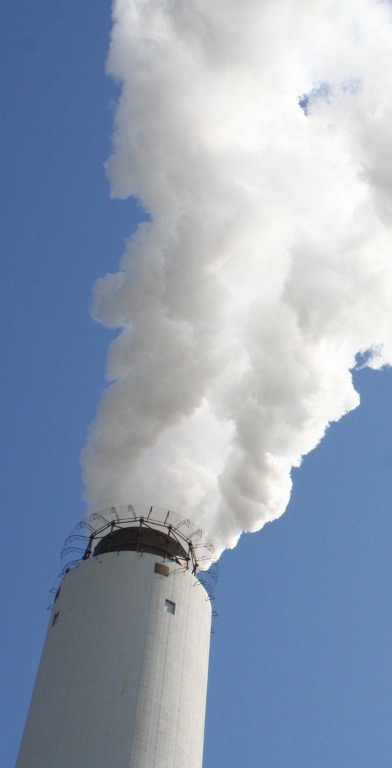
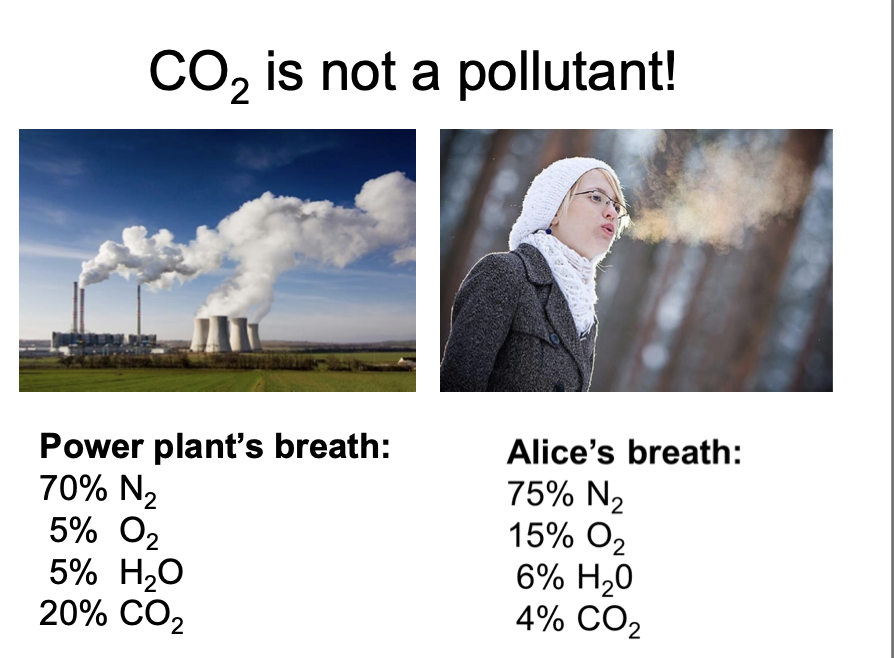
The stack plumes are mentioned by those critical of coal power because they are so visible from far away. The fact is that the stack plumes are harmless water vapor, CO2 , nitrogen and oxygen not that much different than the exhaled breath of a human. Dr. William Happer gave a presentation a few years ago using that very example. Dr. Happer’s presentation is here.
Summary
Back in 1970 the boiler island comprised a steam generator and the fuel burning equipment. Minimum backend flue gas cleanup equipment was installed. There was no treatment of oxides of sulfur. Since 1970 the flue gas cleanup systems have advanced to huge chemical processing plants that require more manpower, maintenance and attention than the “Power Block” including the power generation equipment, steam generator, steam turbine and auxiliaries. The result is shown on the first chart above which shows the progress since 1970 in cleaning our air. The equipment for removal of harmful pollutants has been invented, perfected, installed, proven and continues to be commercially available. Another example is the John Turk Plant in Arkansas. This was POWER Magazines “Plant of the Year” in 2013 and is shown below. This is from the B&W success stories. https://www.babcock.com/home/products/spray-dryer-absorber-sda
Conclusions
Coal has been wrongly demonized by NGOs, MSM, Entertainment, wealthy individuals and enemies of the U.S.
Politicians have been duped into believing the “Manmade Global Warming Narrative” and that shutting down coal plants will make a difference. It won’t.
Regulations and Laws have been wrongly applied to shut down coal plants and the coal industry
Many of America’s elected officials have implemented policies that are Self-Sabotaging the once most reliable electric Grid in the world
Utility executives are just as bad as the indoctrinated public and have chose to follow the “Easiest path” to Bulk Power Supply. That path is, install lots of unreliable solar and wind and then back it up with natural gas turbines. Why? Because generating Bulk Power from coal fuel is complicated, expensive and simply harder to do. It takes hard work to overcome public resistance, more capital and more employees. It is simply a lot easier to take the renewables + CCGT path rather than the path of least cost, most reliable generation. Call it hitting the “Easy Button” But it is NOT best for America!
The De-Regulation of electricity in the 1990’s has absolved most Electric Utilities of Accountability to construct the needed Dispatchable electricity generation capacity. Before De-Regulation each Regional Utility planned for growth to match needed Demand with available and affordable generation capacity.
It costs much more Capital to “Burn Coal than to Mine it”
The general public Energy IQ is very low. So is the Energy IQ of most politicians.
The possibility of unreliable electric service is possible due to decades of public indoctrination
The largest need today in Energy and Electricity Generation is better energy education of the public
American Coal Ash Association used U.S. Geological Survey data to compare the levels of heavy metals in coal ash to the levels present in ordinary rocks and soil. The study showed the levels to be comparable — which shouldn’t surprise anyone because that’s what coal ash is: “the non-combustible mineral portion of coal.” It’s the dirt and rock that were mixed in with the coal. There’s nothing about burning it that causes more to appear. The study can be found here: https://acaa-usa.org/wp-content/uploads/free-publications/ACAA_CoalAshMaterialSafety_June2012.pdf
Other scientific studies of note: The U.S. Environmental Protection Agency conducted risk analysis of the use of various coal combustion products in concrete, wallboard, and agriculture and found them all to be safe:https://acaa-usa.org/wp-content/uploads/2023/04/ccr_bu_eval.pdf
Other scientific studies of note: The U.S. Environmental Protection Agency conducted risk analysis of the use of various coal combustion products in concrete, wallboard, and agriculture and found them all to be safe: https://acaa-usa.org/wp-content/uploads/2023/04/ccr_bu_eval.pdf
If it was simply the laws of Physics, Economics and Global Experiences of which source of Bulk Power was Best; then coal power plants would be on order by the hundreds. How can we fix the poor perceptions of coal power? Here are my thoughts.
Energy Powers Life as We Know It
America runs on energy. Energy is the Lifeblood of our economy and it is far more important than the MSM or public education teaches or explains. America has used right at 100 Quadrillion BTUs of primary energy each year for the last 25 years. Let me state this a different way, the total PRIMARY Energy used by the U.S. annually is about 100 quadrillion BTUs. Pro-rated, this is about 300 million BTUs for each U.S. citizen per year. I attempted to explain the use of about 300 million BTUs of energy per capita, each year by Americans here. The disconnect between perceptions and reality is, I think, a lack of understanding of basic physics and basic electricity generation economics. No one is an expert in everything and I freely acknowledge that there is much I do not understand about a lot of subjects. One reason such a large percentage of the public (and policymakers) became hoodwinked on renewables was, in my opinion, they were indoctrinated by green energy zealots that thought they knew a lot about solar and wind, but these zealots did not know as much about the energy and electric power business as they thought they did. Then these renewables advocates, with little understanding of bulk power generation, became influencers of elected officials who also did not understand. Thus, the blind led the blind into setting the Net Zero trap with high expectations from wind and solar. The result has been the self sabotaging of our reliable Grid. Many people I talk to, think they know a lot about power generation. Why? Because they have been indoctrinated with wind and solar propaganda. So, now we have a huge amount of the population, not only in the U.S. but all across the west, including the UK, EU, Australia and more. Many elected officials still believe that wind, solar and batteries can provide the electricity to compete with the world and still power our comfortable lives.
Energy Awareness, Thanks to the Iranians
The Iran war and closed Strait of Hormuz has helped create energy awareness with the general public. The last shock like this to ignite public interest, at least in my lifetime, to demonstrate the importance of energy in their lives was the 1973 Arab Oil Embargo. An unexpected benefit of the Iran War is that the public is forced to gain a better understanding of the availability and reliability of the conventional fuels: gasoline, Diesel, Jet fuel, natural gas, coal and nuclear. These six forms of primary energy provide over 90% of the energy we need and use.
Keep in Mind, April is a Low Electricity Demand Month
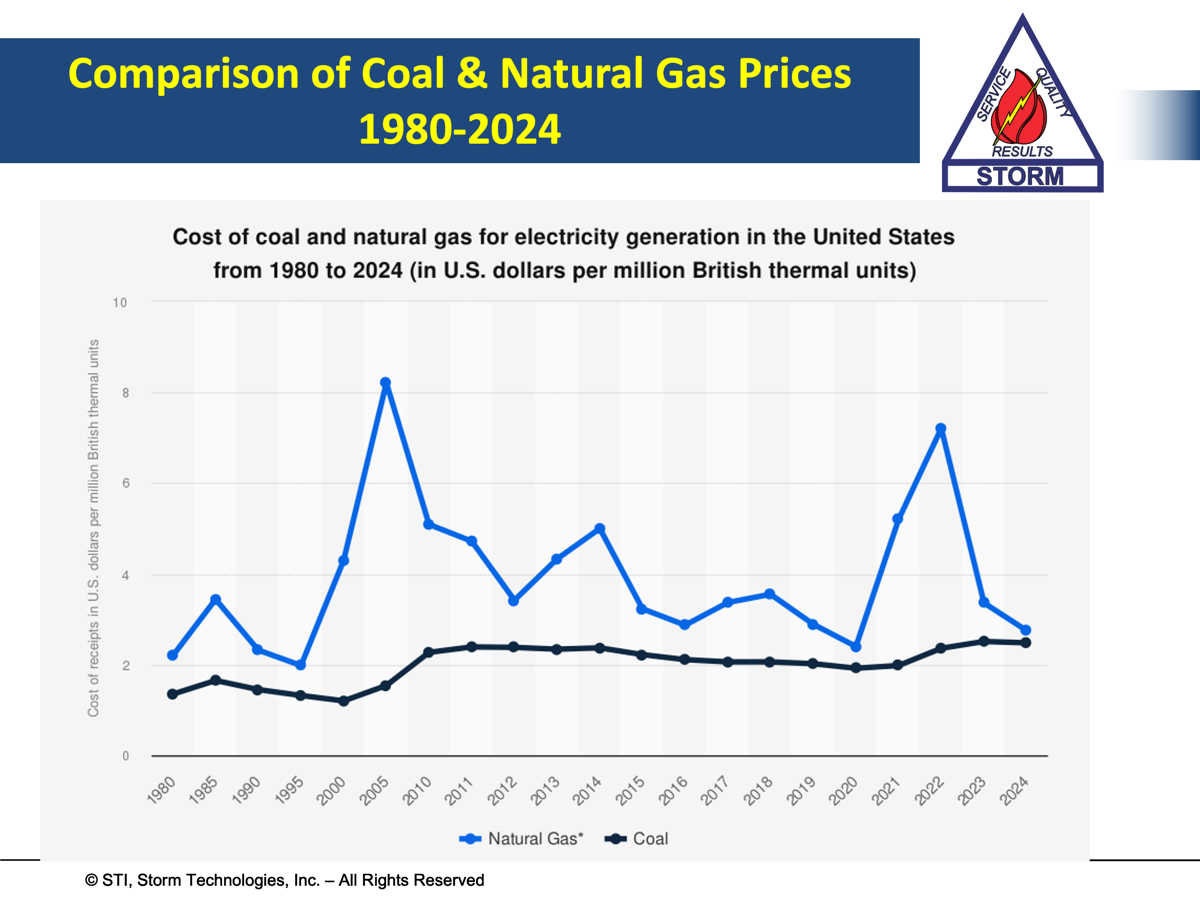
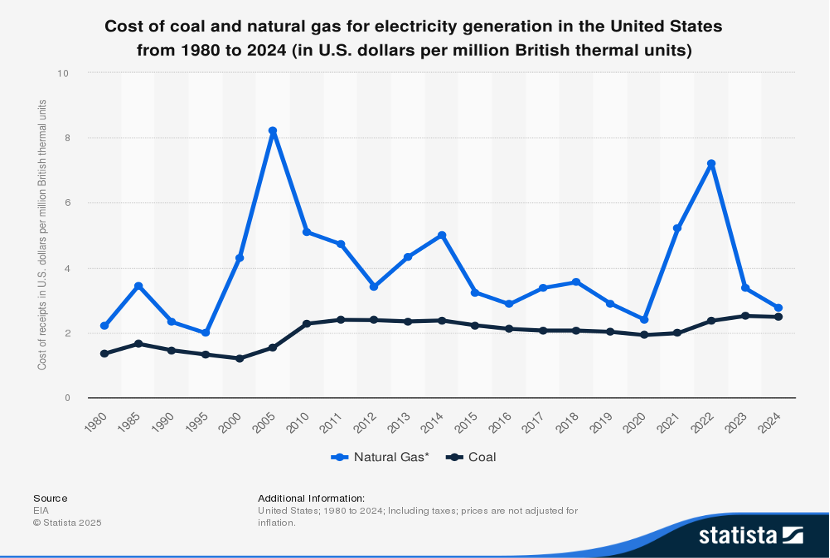
If this was winter and the world demand for LNG soared, then U.S. natural gas prices would (LNG Demand will likely exceed supply in the winter) escalate to peaks of over $10/million BTU. Fortunately, April is a low electricity demand season. Winter will come and I predict much higher than expected natural gas prices due to the world demand for LNG. Just as a reminder, the graph below shows natural gas spot market prices compared to coal prices, from 1980 to 2024.
Coal Power and Public Perceptions
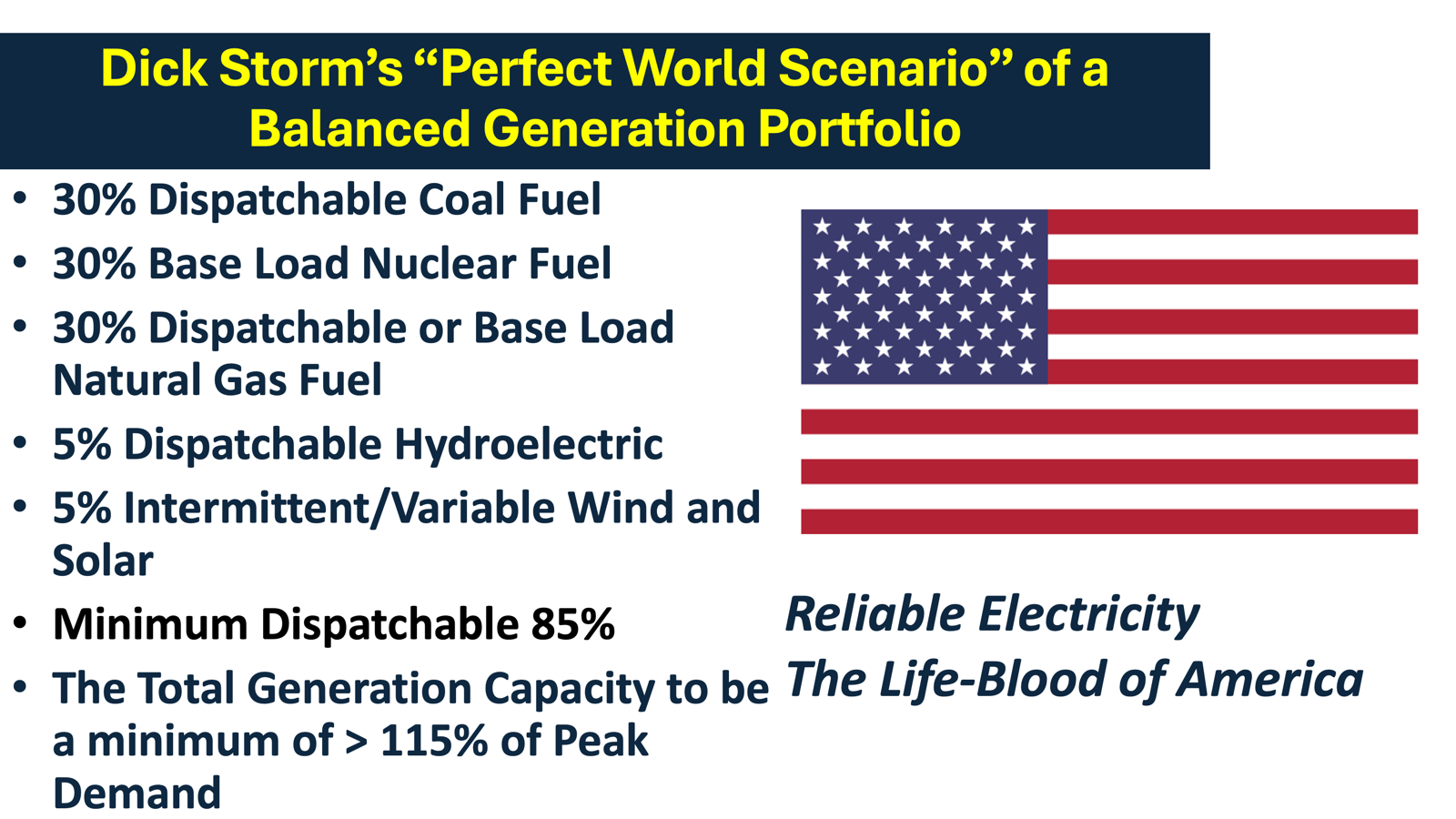
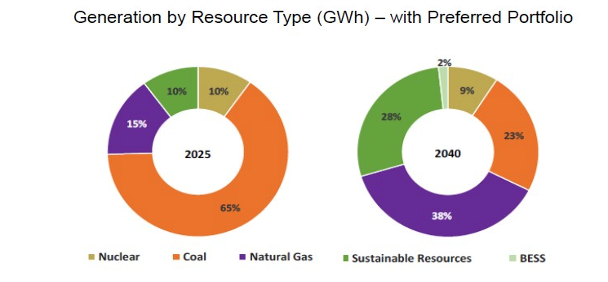
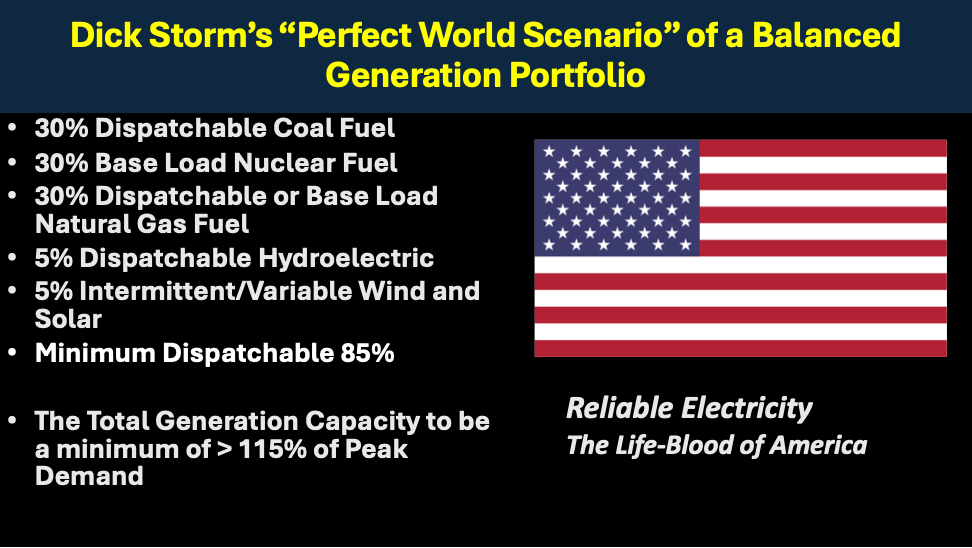
I advocate for coal because that is the fuel that I know and understand, having worked for five decades in the design, construction, startup, testing, operations, maintenance, upgrade modifications, tuning for efficiency and applying low NOx solutions to coal plants. I also advocate for natural gas and nuclear power because I believe a Balanced generation portfolio is best for the U.S.A. and each fuel has its advantages. Here is a slide from a recent presentation showing my preferred Bulk Power Generation portfolio.
In my effort to help increase energy awareness of the public, I have recently been involved in presentations to two Lifelong Learning groups, both local here in the Hilton Head Island area. For the most part, it is rewarding to share my knowledge and experiences and I have been involved with about five courses at USCB-OLLI and in addition, have given presentations to a number of civic clubs. I really appreciate the feedback from surveys that show the candid comments of the participants. Some people are very gracious and appreciative for the instructors efforts, and as an instructor, I appreciate the kind words. However, as all of us who have worked in the real world of conventional energy and electricity generation, we know that many of the public have been indoctrinated to believe that wind and solar are good, and coal (all fossil fuels for that matter) is bad. Period. This is the divided society that we live in and I wish I knew how to change it. What follows are some suggestions to help improve the average Energy IQ of voters.
Some of the Public Understand Energy and Electricity Generation, Most Do Not
My estimate of those who understand the true facts on energy and electricity generation is 5%. That is one person in twenty. Why do I say this? Because for the last twenty years I have been active in public advocacy for common sense energy policies by preparing paid ads in newspapers, presenting paid radio “Energy Fact Minutes”, presented dozens of presentations to civic clubs, taught courses at colleges and discussed with many people whom I had never met before. Thus my low estimate of 5%, although statistically unscientific, this is based on personal contact with thousands of people over the last two decades. I have confidence that it is close to being realistic.
Let’s assume that I am correct that one in twenty understands energy and that we are going to educate the other 95% on energy and electricity generation. What would be a reasonable approach? Here are three suggestions.
A Path to Better Energy & Environmental Education
I suggest a three step program to improve the public’s understanding of energy, electricity generation and the environment:
1. Electric Utilities to Replicate the 1926-1973 “Reddy Kilowatt” Program to Teach the Fundamentals of Energy and Electricity Generation
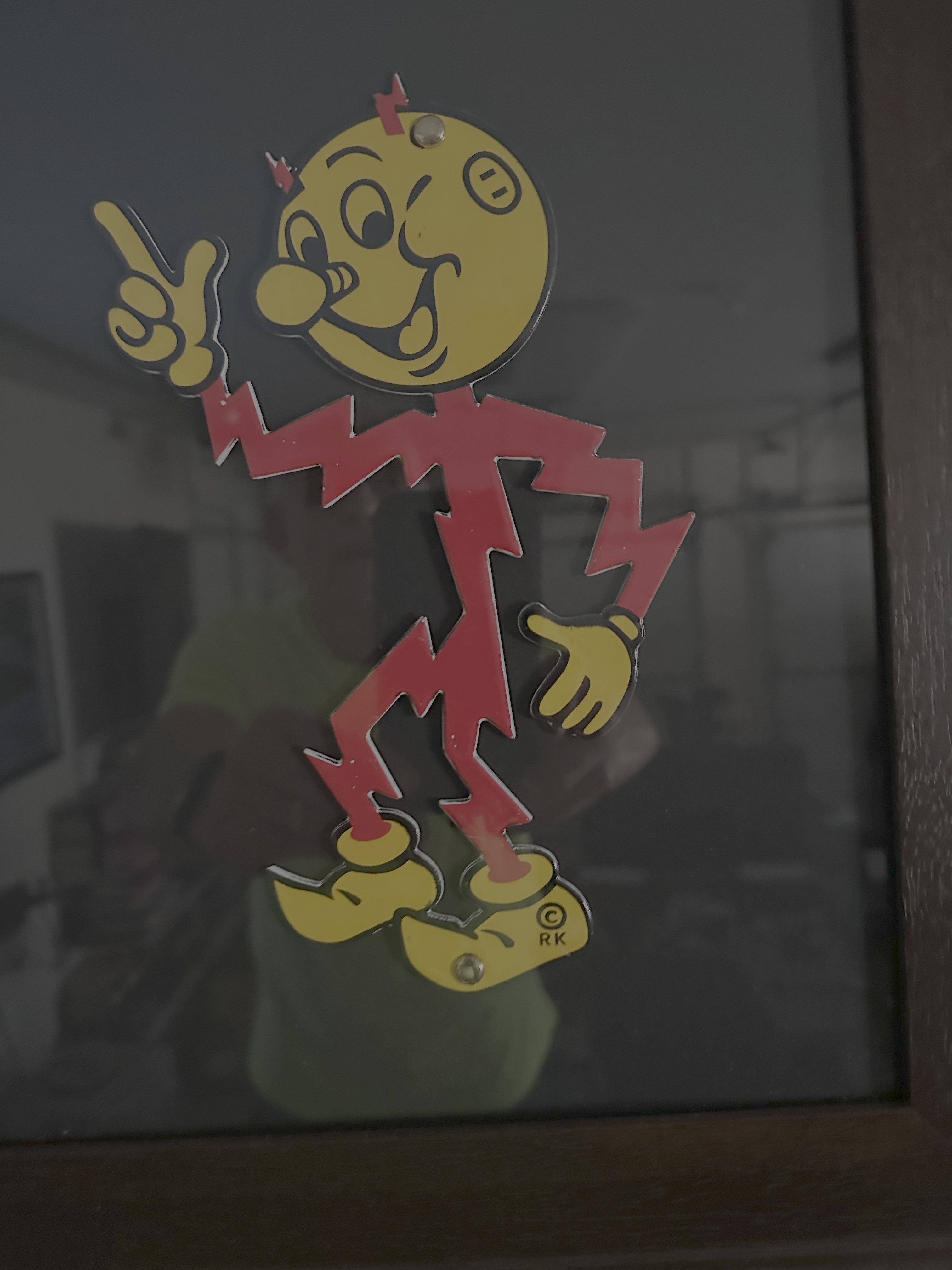
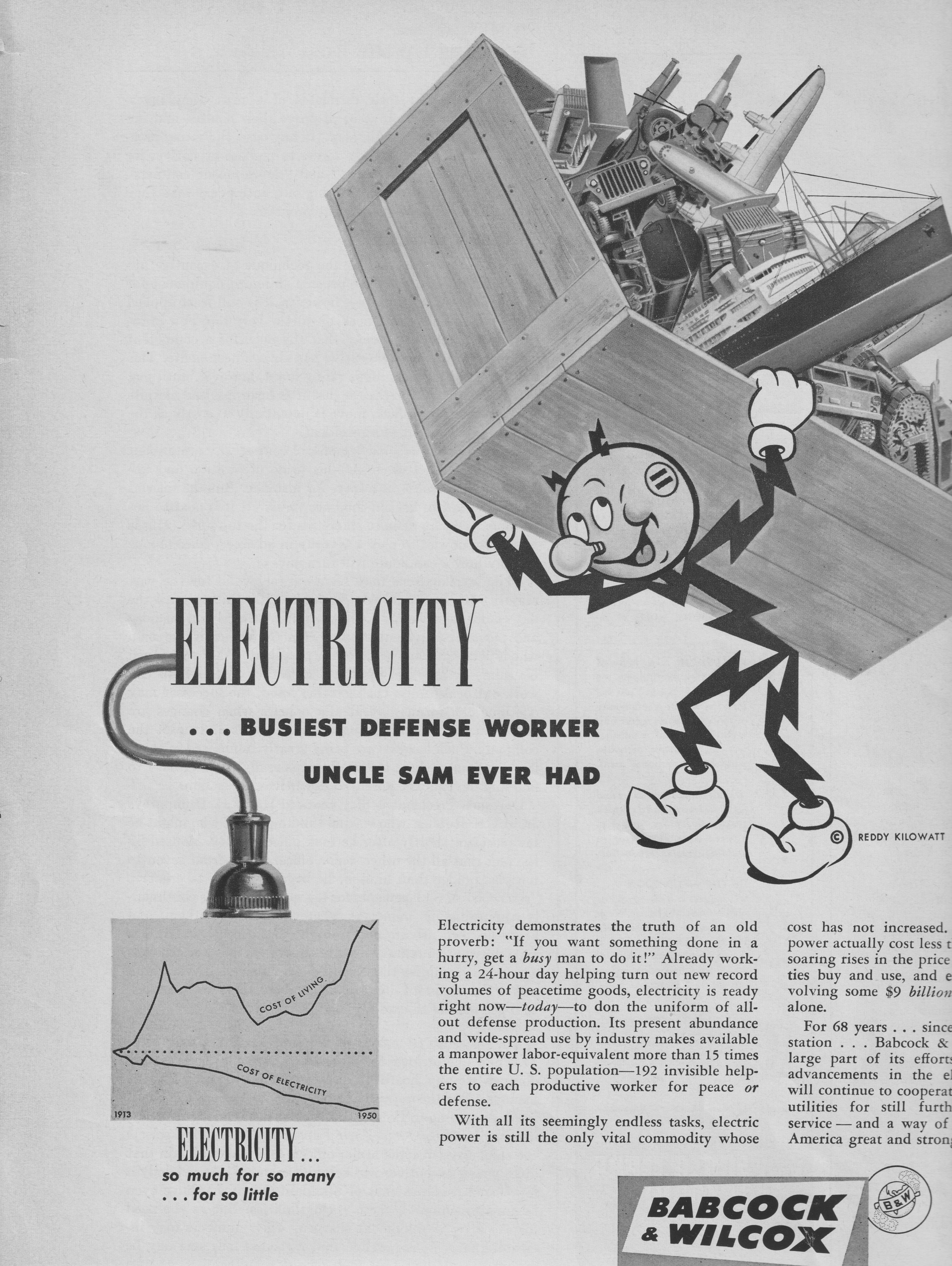
Readers born before about 1955 will remember Reddy Kilowatt, the mascot of the Investor Owned Utilities advertising campaign which began about 1926 and lasted (ironically) up to about the first Arab Oil Embargo in 1973.
Reddy Kilowatt was used to teach the basics of “Living Better Electrically”. It was also part of a magazine advertising campaign in 1950. Here is an ad by B&W which manufactured about 40% of the steam generators used by the electric utilities and the U.S. Navy. B&W has a long history of steam generator manufacturing in the U.S. since 1867, providing steam generators to Thomas Edison and George Westinghouse and then growing to be a Fortune 500 company in the 1950’s and 1960’s.
(B&W Fortune 500- #141 in 1957)
That theme of “Living Better Electrically” caught on well and none other than the Great Communicator himself was the spokesperson for General Electric on the Sunday night TV show, the General Electric Theater, 1953-1962. Ronald Reagan plugged G-E appliances but the advertising message included power generation.
Back in the early 1970’s I personally, as a CP&L startup engineer had many interactions with G-E’s Power Generation Division and they enjoyed wide public acceptance, everyone knew what G-E did to improve our quality of life and including building high quality steam turbines and generators.
I recommend that President Trump provide an incentive for all Utilities and large power generation equipment corporations to become involved with educating the public on the true facts on energy and electric power generation. Like the EEI and many municipal utilities did up to about 1974 using the “Live Better Electrically Theme” with Reddy Kilowatt as the mascot. Perhaps a new tag line, new mascot, but a replication of the public education on energy is what I am proposing.
2. Government Printing of Factual Textbooks on Energy, Electricity Generation and the Environment
The EPA and the Department of Energy, TVA, ORNL, LLNL and other government organizations together have tens of thousands of employees. This talent bank could be used to create and in some cases, simply update literature that can be reused for High Schools and Colleges to teach the true facts on energy, electricity, the environment and energy economics. The fundamentals written and illustrated in books, pamphlets and other published information on the generation of electricity by coal, gas and nuclear has not changed. Therefore, updating is all that is needed. Thermodynamics, chemistry and fluid mechanics are still the same. The few changes are higher pressures and temperatures, advanced alloys and the addition of enormously complicated Flue Gas Cleanup systems that have made clean coal, clean.
3. Encourage K-12 and University Teachers/Professors to teach the true factual physics, economics, chemistry and environmental science
Much of the existing textbooks and culture is basically biased against fossil fuels. As mentioned above with the reference to Reddy Kilowatt, back in the 1960’s, chemistry, physics, general science and environmental science was taught based on factual science. We need to return to teaching unbiased science courses to all students. Enormous amounts of literature that is factual and teaches the true laws of physics exist in the private sector. Here are some examples to help the average person (whether a High School student or an adult) understand the importance of affordable, reliable and environmentally acceptable energy:
Dr. Lars Schernikau’s website, “Unpopular Truths” which has numerous factual articles on energy and electricity generation: https://unpopular-truth.com/blog/
All of us that understand energy and electricity generation should do our part to help the other 95% of the population to understand the true facts and “How the World Really Works”, by the way, Vaclav Smil published an excellent book by that title.
I would add this and Smil’s other books to the required reading for anyone who is involved in creating energy policy, or anyone who really does want to learn “How the World Really Works”. Energy is the Lifeblood of all that we cherish, it is my hope that the public will learn more and respect the sources of energy that power our lives.
Yours truly,
Dick Storm, April 23, 2026
References and Including Documents that address CO2 and Control of Exhaust Emissions from coal power plants
For my friends that asked, “Why didn’t you discuss more of the environmental impacts of coal power, well, here is a lot of reading if you are sincerely interested in learning more.
Other scientific studies of note: The U.S. Environmental Protection Agency conducted risk analysis of the use of various coal combustion products in concrete, wallboard, and agriculture and found them all to be safe: https://acaa-usa.org/wp-content/uploads/2023/04/ccr_bu_eval.pdf
Background: Bulk Power Supply in the S.C. Lowcountry
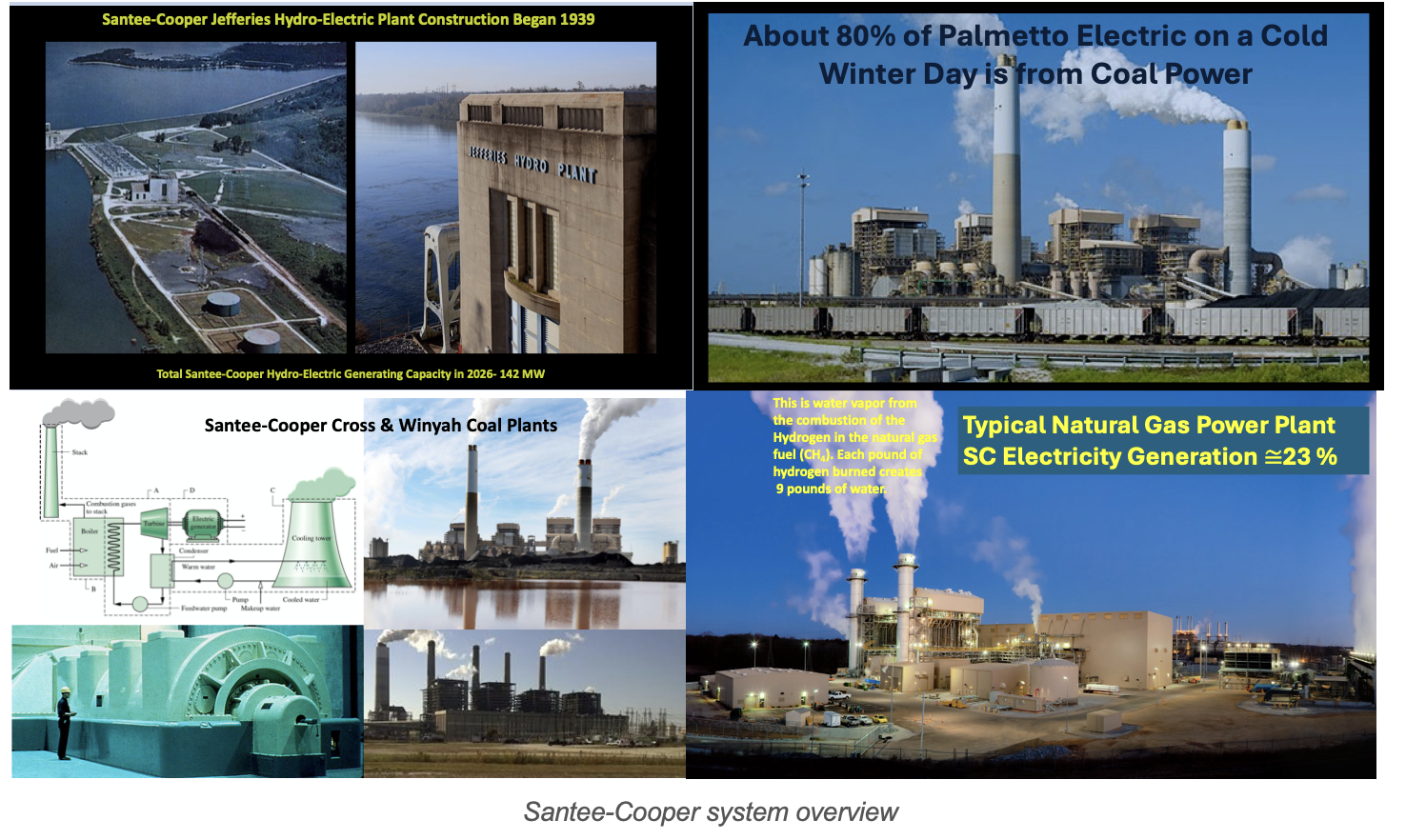
The wholesale (Bulk Power) electricity providers serving our region are Santee-Cooper (officially the South Carolina Public Service Authority, or SCPSA) and Dominion Energy (which replaced South Carolina Electric & Gas as the Investor-Owned Utility). Most of Palmetto Electric’s Bulk Power comes from Santee-Cooper.
Santee-Cooper is a state-owned agency operating since the 1930s. Its first electricity was generated in 1941 from the Jefferies hydroelectric dam at Moncks Corner. Today, SCPSA’s hydroelectric plants still operate with a combined capacity of 142 MW.
Since 1941, population growth, industrial expansion, and regional electrification have driven steadily increasing electricity demand. During peak-load periods, SCPSA now generates up to approximately 5,000 MW. Over more than 80 years, coal has been the primary energy source, keeping production costs at or below the U.S. average—a commendable achievement.
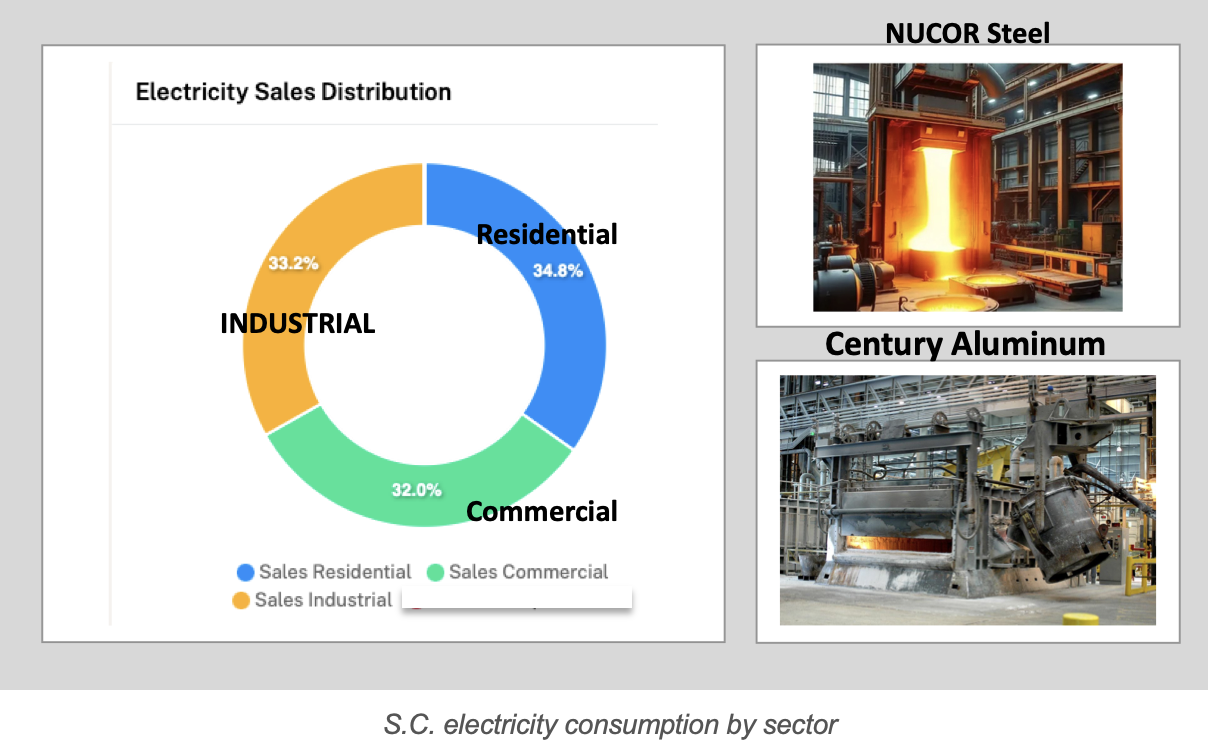
This low-cost electricity attracted energy-intensive industries, most notably NUCOR Steel and Century Aluminum. Affordable coal-fired power was the decisive factor in locating these facilities in South Carolina. This has benefited heavy industry and all citizens of the region, including our area around Bluffton and Hilton Head Island.
How South Carolina Uses Its Electricity
Industrial, Residential, and Commercial customers each consume approximately one-third of total S.C. electricity generation. NUCOR, Century Aluminum, and other industrial customers consume about a third of all electricity generated by S.C. utilities.
The Scale of Industrial Energy Demand
Aluminum and steel production are extremely energy-intensive. It takes approximately 6 kWh of electricity to produce just one pound of aluminum from aluminum oxide powder—and that is only to create raw ingots, not including the energy to refine bauxite ore or form finished products.
At full production, NUCOR and Century Aluminum together consume more Bulk Power on a given day than the entire island of Hilton Head uses during its highest winter peak-load demand day.
Affordable electricity supports economic prosperity, employment, and national security—in addition to keeping our homes heated and cooled.
Coal-Fired Generating Stations in The Low Country of S.C.
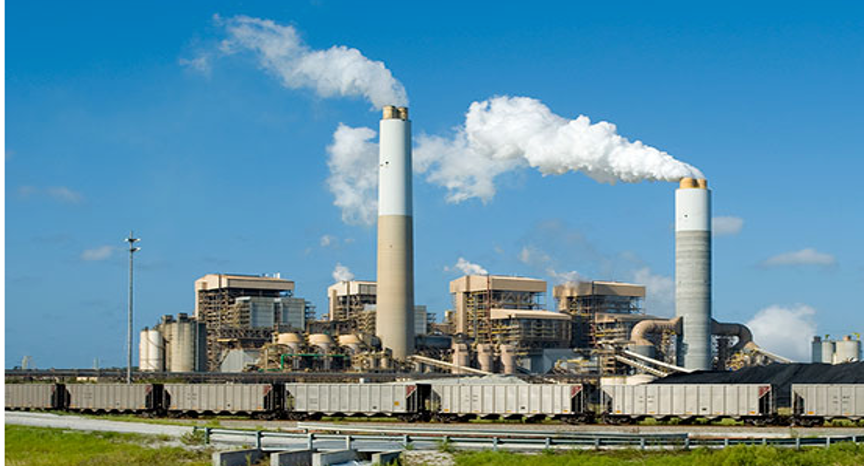
The Cross Generating Station, located about 100 miles north of Hilton Head Island, has four units built between 1983 and 2009 with a combined capacity of approximately 2,390 MW. All four units are equipped with stack-cleaning equipment; the visible stack plume is harmless water vapor.
Winter Storm Fern Proved the Importance of Coal-Fueled Electricity Generation
Cross and Winyah coal plants provided over 80% of the electricity consumed in the S.C. Lowcountry during the Winter Storm Fern peak demand period (January 26 – February 4, 2026). Natural gas and solar generation are also shown in the chart below. Not shown: the 322 MW of nuclear generation from Santee-Cooper’s one-third share of V.C. Summer Nuclear Plant.
The chart above is the actual “Bulk Power Supply” as generated by SCPSA, which provides the wholesale power to Palmetto Electric. Note that over 80% is from coal generation. Also, note the small contribution of solar. Not shown is the 322 MW of nuclear generation from Dominion Energy.
The Net Zero Carbon Mandate and Rising Costs
The least-cost fuels for electricity generation are coal and nuclear. However, SCPSA and other S.C. utilities have been ordered by the S.C. Legislature to transition away from coal toward Net Zero Carbon. The path ahead is described in the Santee-Cooper Integrated Resource Plan (IRP).
As can be seen on the portfolio transition, the plan is to reduce coal from over 55% to about 23% by 2040.
The S.C. Legislation to Increase Electricity Costs
South Carolina law (S.C. Code Ann. §58-37-40) directs the retirement of coal-fired generation:
Santee-Cooper’s analysis demonstrated that the Net Zero CO₂ by 2050 portfolio would be higher in costs and involve more risk for customers than the Economically Optimized Portfolio. Several supplemental analyses were performed reflecting the retirement of the Winyah generating station by end of 2028 or 2030.
This is the fundamental reason electricity costs will rise in the years ahead. The transition from reliable, affordable coal generation is a transition to higher-cost production. This is not a forecast—it is fact, based on the experience of countries and U.S. states already further along in the Net Zero transition.
Understanding Your Electric Bill
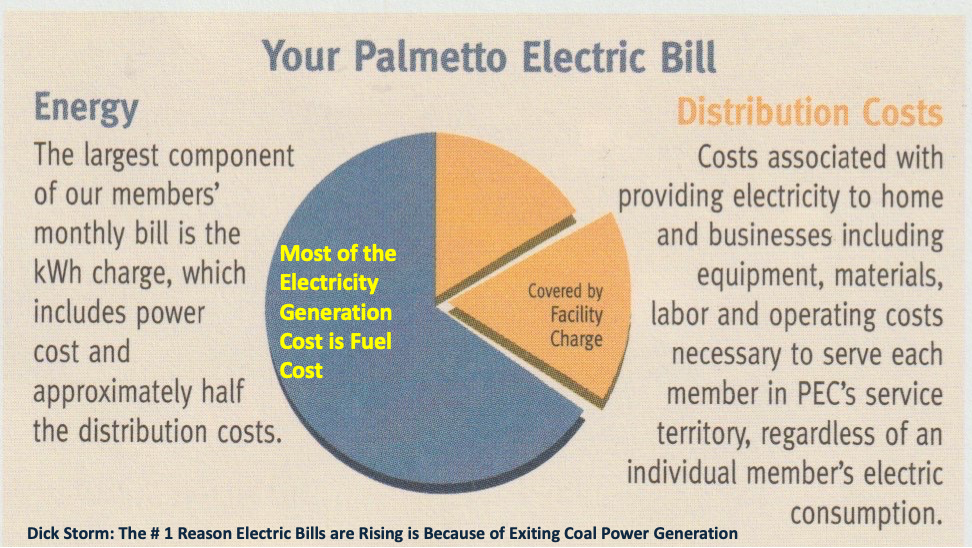
The major component of electricity production cost is primary energy (fuel). When wholesale power costs rise, retail electric bills follow. For a Combined Cycle natural gas plant, fuel alone constitutes about 90% of production cost. If natural gas prices double, so does the cost of electricity. Coal is a low-cost, price-stable source of primary energy, benefiting all ratepayers.
Why Transitioning to Renewables Raises Electricity Costs
The Core Problem: Backup Power
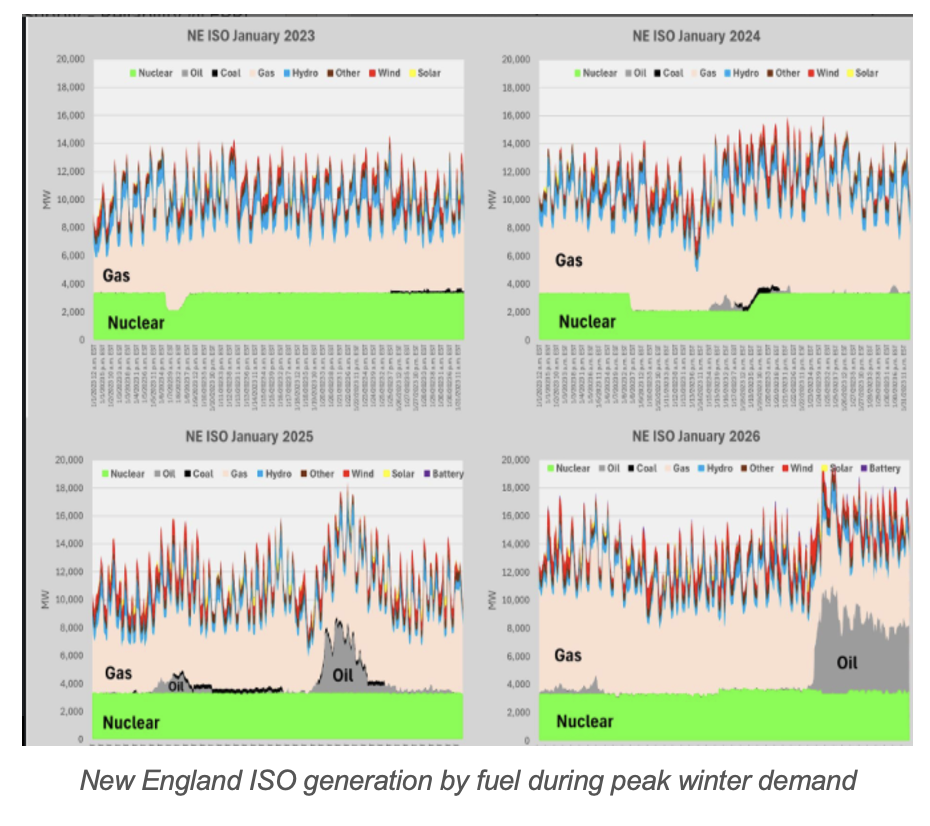
When the sun is not shining and the wind is not blowing, power must be supplied immediately by backup generation. In the U.S., that backup has primarily been natural gas. In some cases—Hawaii and New England—diesel, kerosene, and jet fuel have been used when other sources were unavailable.
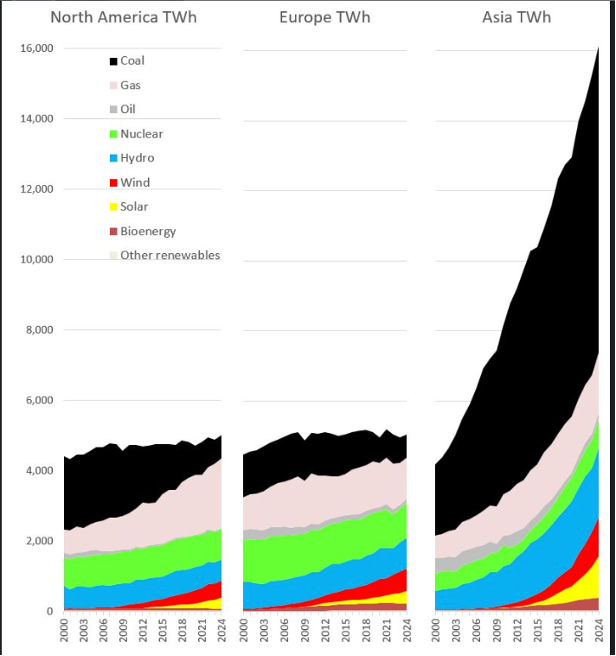
Electricity must be generated the instant it is needed. Wind and sunshine may be free, but backup power is not. The charts below show world generation by fuel. Note the coal consumption of Asia compared to the U.S.
This shows the absurdity of the path to Net-Zero Carbon when the entire world coal consumption is considered. If America’s coal consumption went to zero, it would barely make a difference in total CO2 emissions.
Credit for the chart above goes to Mr. Mike Caravaggio who prepared and posted on LinkedIn.
Case Study: Hawaii — An Energy Island
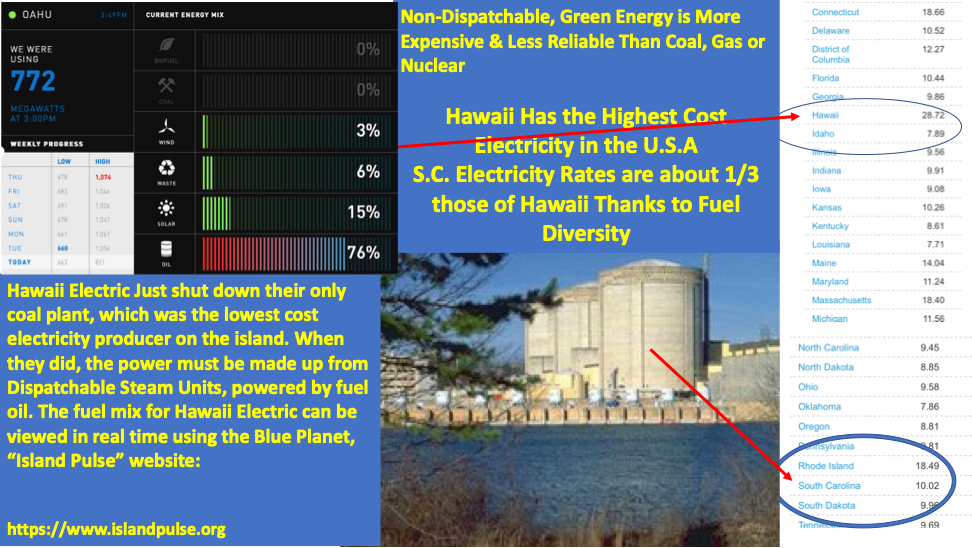
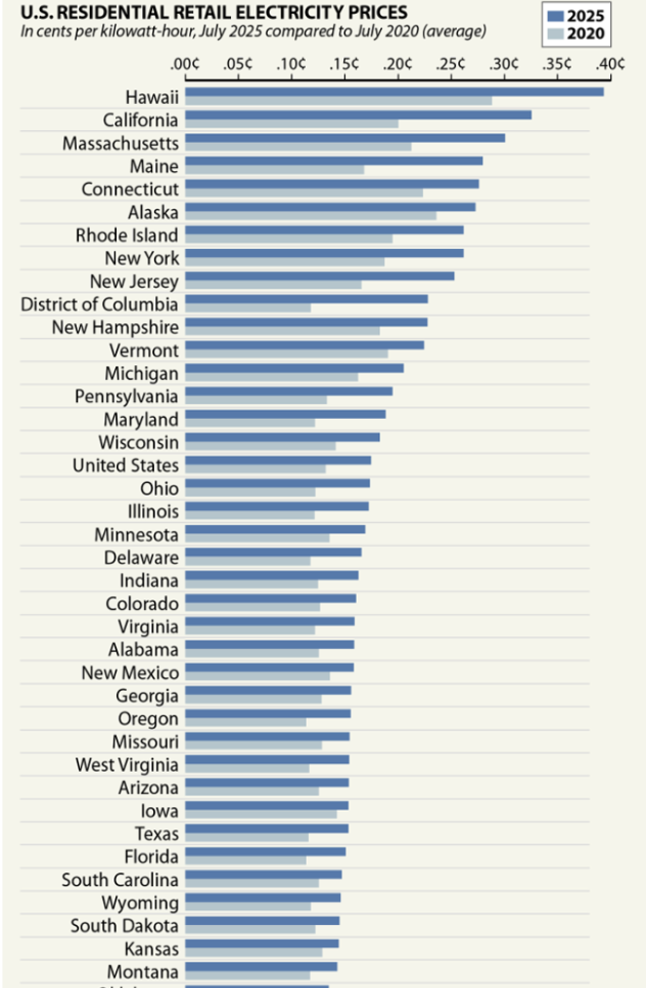
Hawaii is not connected to the mainland grid, making it a telling example. In 2021, 76% of its generation fuel was diesel. Hawaii once had a 180 MW coal plant that produced its lowest-cost electricity—even with imported coal. After transitioning to renewables, diesel backup became dominant when the sun set or wind dropped. Because diesel is among the most expensive generation fuels, Hawaii now has the highest electricity rates of all 50 states.
Case Study: New England
States that have retired coal plants have experienced sharply escalating costs, including California, Massachusetts, New Hampshire, Rhode Island, Connecticut, Vermont, and Maine. During Winter Storm Fern, New England generated roughly one-third of its electricity from diesel for several days. Their plan to import Canadian hydropower failed when Canada needed its own capacity during extreme cold.
Electricity Costs by State
The pattern is clear: states with the least coal power tend to have the highest electricity costs.
The state of Tennessee for some reason was not included in the chart above. TN does in fact have some of the lowest electricity costs in the U.S. according to: https://findenergy.com/tn/ The low cost is attributed to a lot of old hydroelectric power, considerable nuclear and a still large coal fleet. TN average electricity cost is about $0.129/kWh.
Case Study: Germany
Germany began its coal transition in 2011 under the Energiewende policy. Once Europe’s strongest manufacturer, Germany has experienced de-industrialization driven by skyrocketing electricity costs—now approximately $0.33/kWh, even higher than Hawaii.
Dr. Lars Schernikau is an energy expert and knows a lot about European energy policies, including Germany. Here is a quote from Dr. Schernikau in the Engineering News:
Schernikau was bluntly pessimistic about the true financial viability of wind and solarenergy on a grid scale.
“There is no way you can make honest money with wind and solar. It’s not possible. When I say honest money, I mean without somebody else’s money, because you are living off somebody’s subsidies, which is paid by taxpayers,” he said.
He illustrated this by pointing to the economic problems with high solarpenetration in markets such as Germany, where an oversupply of solarenergy has led to a significant drop in prices. In May, for example, the price of solarenergy in Germany fell by 50%, reducing the earnings of solar producers. Negative power price days are at an all time high in Germany and other countries, Schernikau pointed out.
The impact of high electricity costs on households was another area of concern. Schernikau cited a March report from the German government auditor Bundesnetzagentur, which revealed that energy poverty in Germany had risen to 25%, meaning one in four households is now classified as energy poor.
So, I would ask. Why is South Carolina following the same Net Zero path of Germany?
Natural Gas for Electric Power Generation
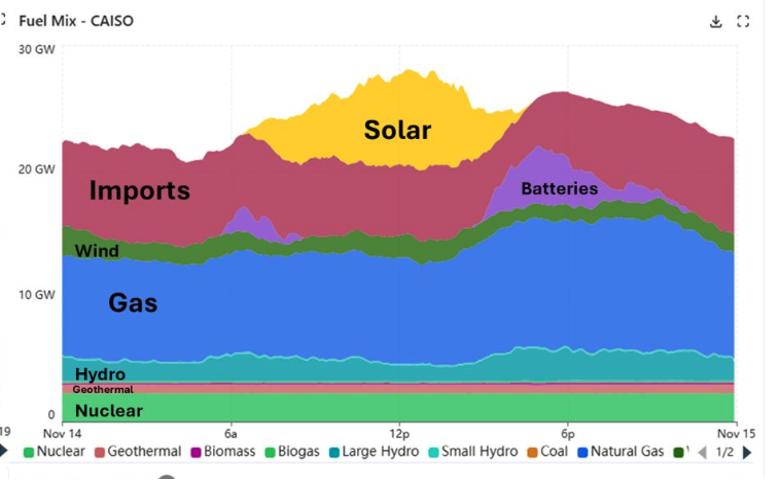
Intermittent sources like solar and wind must be backed up by dispatchable generation—gas turbines or reciprocating engines (RICE). The chart below shows a typical daily generation profile in California. Solar (yellow) is strong for about six hours; as the sun sets, Dispatchable power must ramp up sharply.
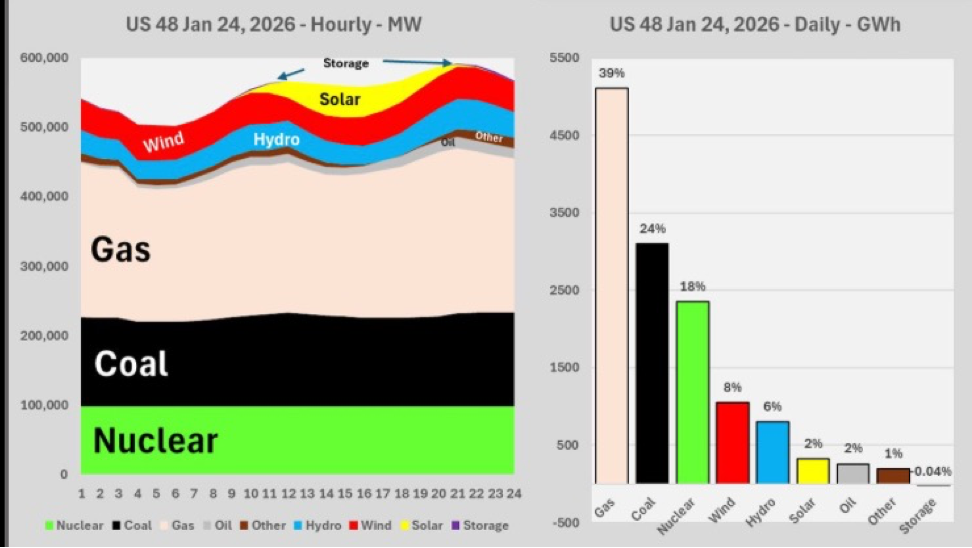
Here is the generation by fuel for the lower 48 states for the first 24 days of January 2026. Thanks again to Mike Caravaggio from EPRI for posting this on LinkedIn.
A reliable Grid should have a balanced generation portfolio. In my experience, 85% Dispatchable or Base load generation works well and has been proven.
A balanced generation portfolio works best with at least 85% dispatchable power generation capacity.
Fuel Price Stability: Coal vs. Natural Gas
Natural gas prices are volatile, especially during winter when home heating competes with power generation for pipeline capacity.
A key point on the generation of electricity: The fuel cost is the single largest component of the operating dollar for the production of electricity. So, if much solar and wind is installed, then it must be backed up with Dispatchable electricity generation. Usually in the U.S., that fuel for Dispatchable, backup power is natural gas. As can be seen from the examples of New England, California, Hawaii, Germany and the UK, the cost of that backup fuel matters when retail electricity prices are compared.
The chart below compares natural gas prices (blue) with coal prices (black) since 1980.
Conclusions
Coal provides the fuel to generate reliable electricity at amongst the lowest cost in the world. This is based on actual results and actual rates, not on economic models or expert opinions.
Modern coal plants like Cross are clean; their ash is recycled for cement and sheetrock manufacture.
Nuclear is excellent but new construction takes a decade and costs tens of billions (Vogtle 3 & 4: 10 years, $30+ billion).
Natural gas already provides ~43% of U.S. electricity (2025)—a high share for a pipeline-delivered fuel. Coal plants balance price volatility and store weeks of fuel on-site, an intrinsic grid security advantage.
The author recommends the S.C. Legislature repeal the Net Zero Carbon law and allow SCPSA and AI Data Center developers to pursue new coal-fueled generation
Part 2 will follow and show some more reasons why wind and solar although using “Free” fuel, cost more.
Coal power in America remains important and I wrote on that last week. This is a followup to provide an overview of the importance of coal as a form of primary energy in the rest of the world. The key phrase is Primary Energy.
Ron Stein and Nancy Perlman wrote an excellent article on the importance of providing primary energy to the six billion people on the planet that are living in poverty. Lifting them from poverty requires energy, just as energy powered the citizens of countries living in the Developed world.
“In poor countries, millions of those in poverty die every year. From indoor air pollution from having to burn wood, charcoal, grass, and dung, because they don’t have natural gas, propane or electricity for cooking and heating. From bacteria and parasites in their water and food, because they don’t have electricity, water treatment or refrigeration. From malaria and other diseases, because their substandard clinics and hospitals lack electricity, clean water, sufficient vaccines and antibiotics, even window screens. “
It’s disheartening that the wealthier country governments have chosen electricity generation “winners,” i.e., wind and solar, to generate electricity, paid with taxpayer funds, to support the Government Mandates and Subsidies.”
How about India and China?
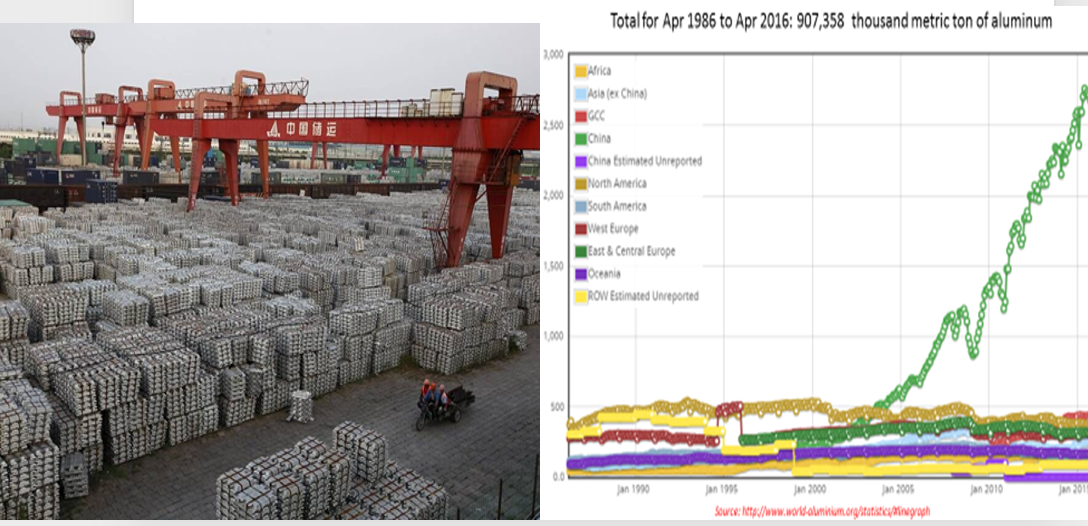
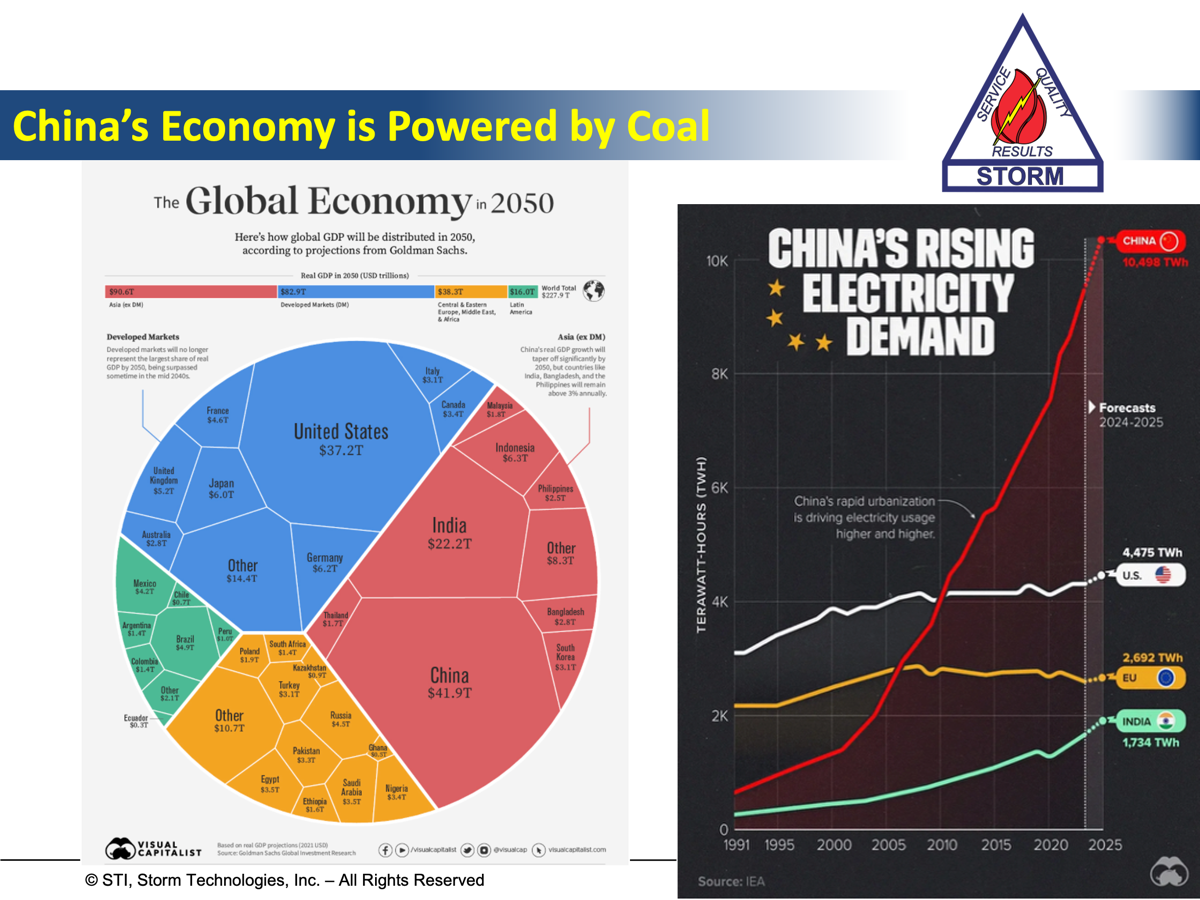
China did in fact lift millions from poverty since they entered the World Trade Organization and became the world’s leading country in manufacturing. One example is their use of enormous amounts of coal as the primary energy to produce aluminum. Before the year 2000 China was an insignificant producer of aluminum. Look what they did in 20 years.
How did China power their economy to become the world’s largest producer of aluminum, steel and most manufactured products in such a short time? They did it with coal power. Thomas Shepstone, Jr. and Duggan Flanigan also wrote about energy intensive aluminum production. Here is an overview of China’s energy production during this period of astounding industrial production growth. This chart below is from my July 2025 presentation to the Coal Institute.
China consumes over 50% of the world’s coal. They understand the sources of primary energy that are viable for affordable, Dispatchable and reliable electricity production, so does India. From the IER (Institute for Energy Research)
“China and India – both considered “developing countries” by the IPCC – are burning record amounts of coal and using more kinds of energy to keep energy prices affordable and increase the standard of living for their people. Wind and solar energy in China and India are complements, not substitutes, to their massive growth in energy, particularly in fossil fuels. Fossil fuels provided 82 percent and 88 percent of China and India’s energy, respectively, in 2022.”
How about India, Germany and the UK?
From the Economic Times: “India’s coal consumption could more than double by mid-century before plunging sharply as the country shifts toward cleaner energy, long‑term projections published by government think-tank NITI Aayog show.“
Germany’s path to Net Zero has created much loss of industry. Here are a few references:
WUWT on the Decline of German Chemical Industries due to High Energy Prices, and How Germany is Dismantling it’s Core, by Tilak Doshi.
Lars Shernikau’s blog post on the decline of German Industry due to missteps of Green Policies. Dr. Shernikau is a well respected author and world renowned energy expert.
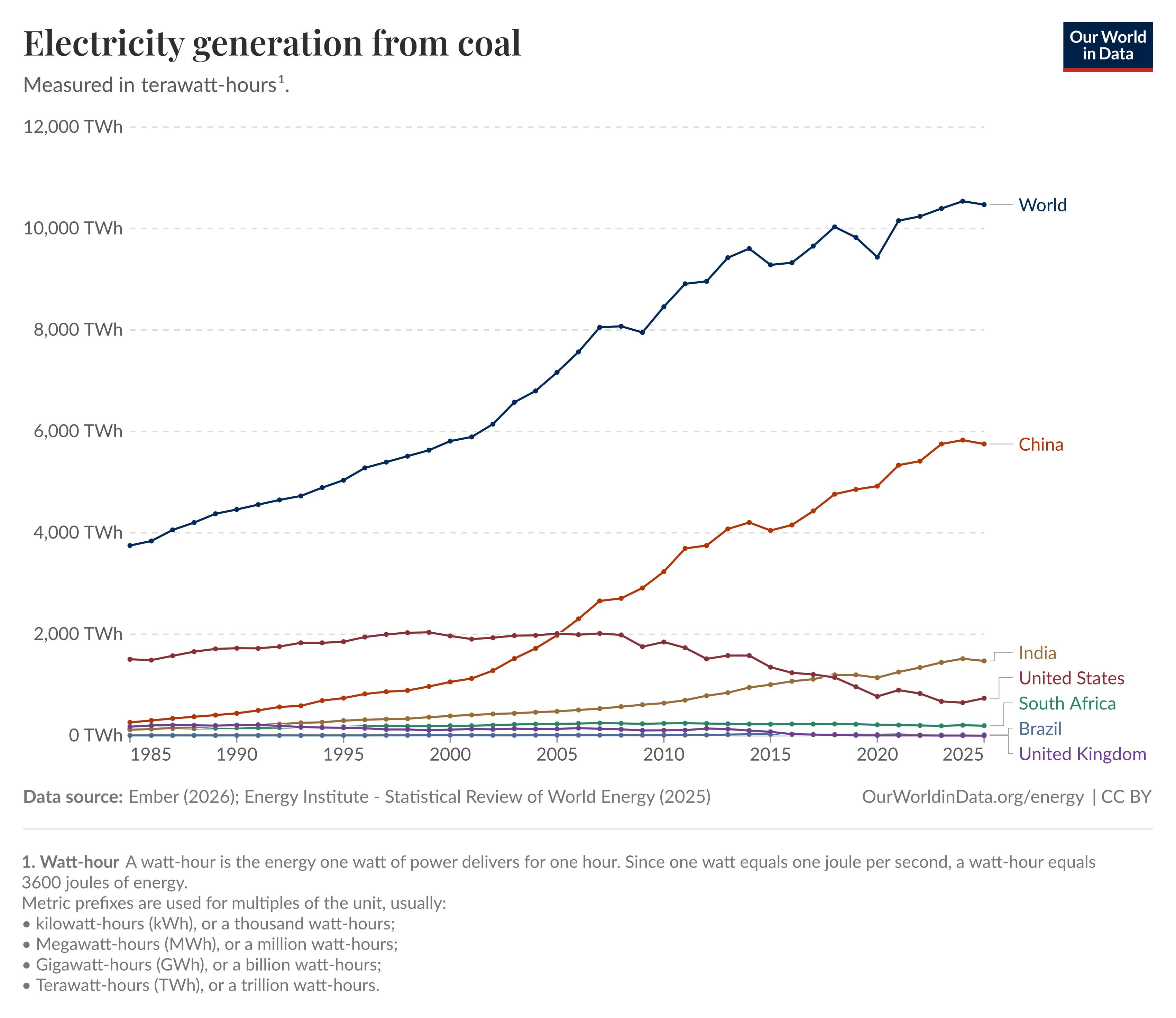
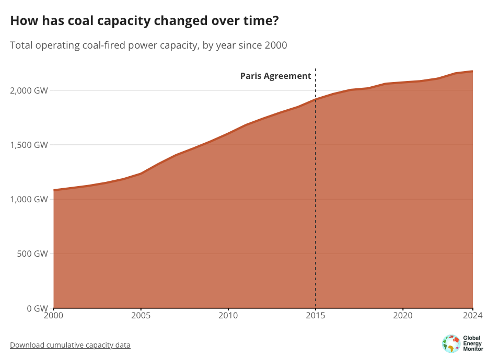
Coal use in the world has steadily increased.
So if Coal Is Such an Obvious Source of Primary Energy, Why is the West Self Sabotaging Their Economies?
I provided a presentation to the ENERUM Energy Forum in Columbus in 2022 to ask this question. A similar presentation to Liberty University in 2023. I am glad to send those presentations. upon request.
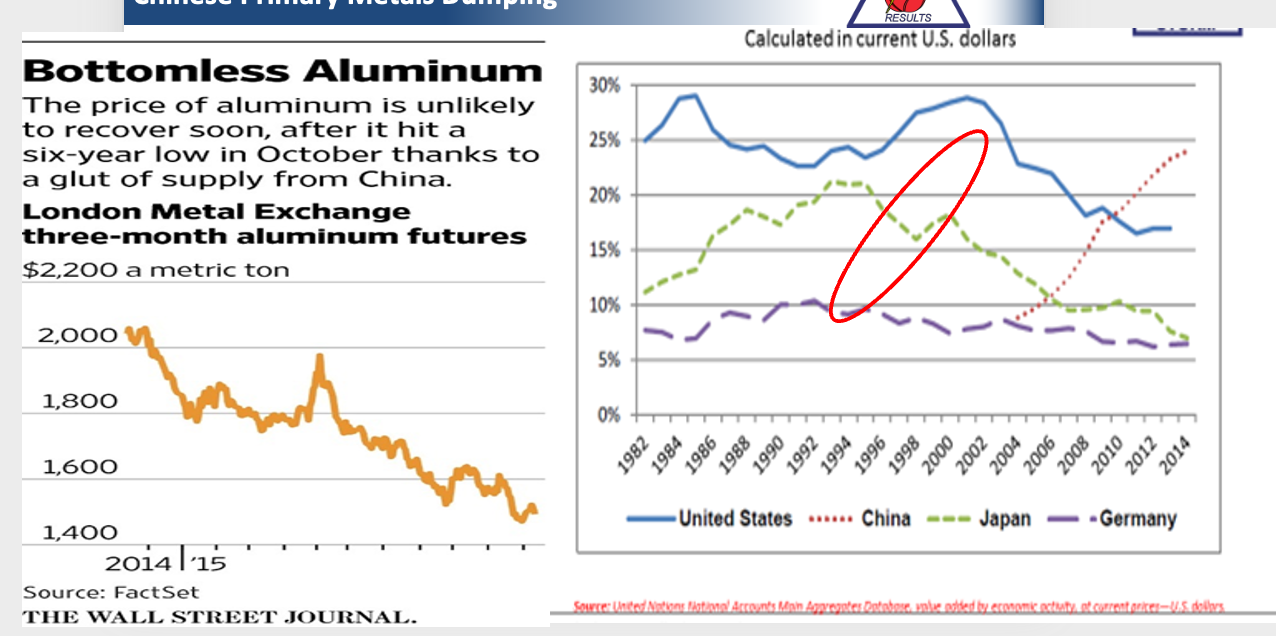
Getting back to aluminum production, here is a graph of U.S. and China production. As America shut down many coal plants and electricity costs rose, China was building new coal plants to provide reasonable cost electricity to smelt aluminum in huge quantities. Many folks, including me believe that China Dumped aluminum on the International markets in lieu of counterfeiting U.S. currency. Note the rise of aluminum produced in China during the years 2004-2014 (from chart above). Both of these charts are from a presentation to the Delaware County Bar Association in 2016 to discuss energy, the economy and how it impacts the Real-Estate Market. Yes, I know that sounds abstract, but reasonable cost energy = jobs, especially for energy intensive industries such as aluminum smelting, then the jobs impact the Real-Estate market.
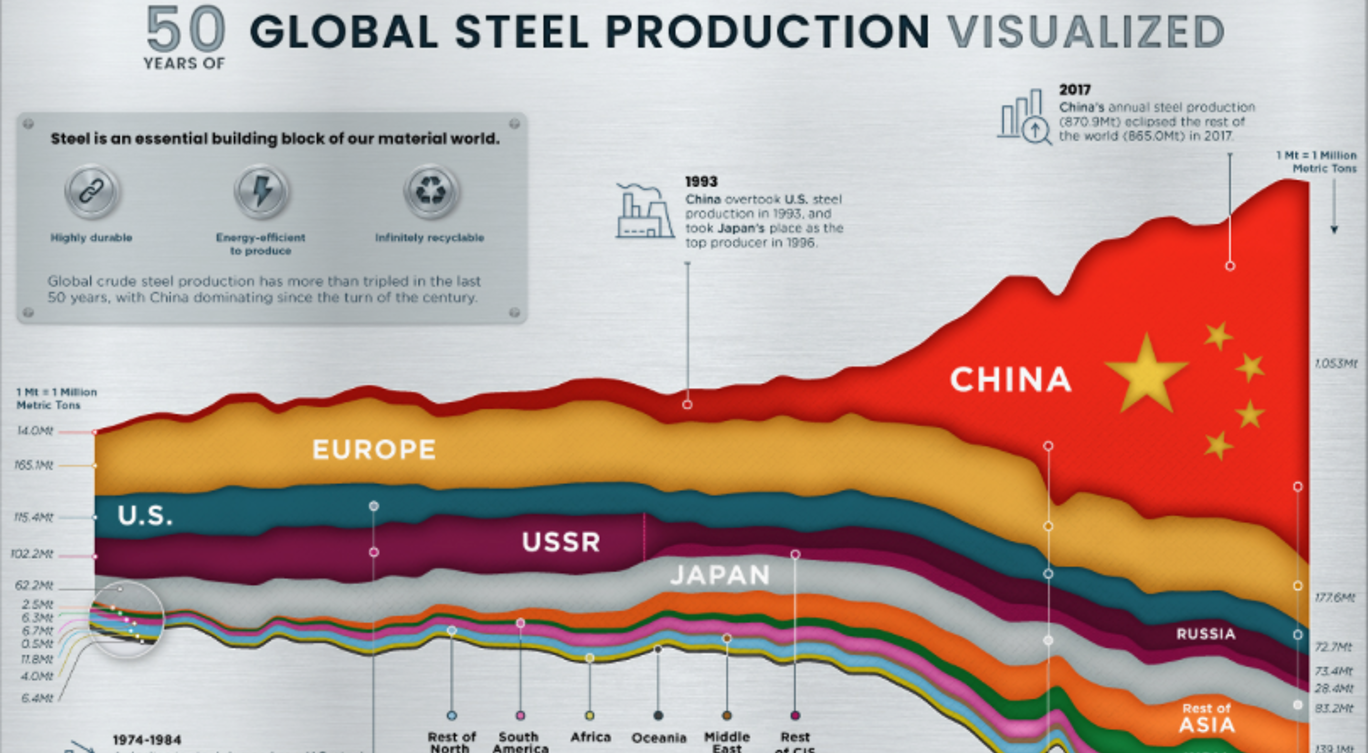
The Self-Sabotaging and excessive environmental laws of the U.S. have not only seriously (I hope not mortally) wounded the aluminum industry, but also steel and heavy manufacturing. Steel production by country is shown below. Why do western politicians continue to do their best to weaken their countries and force manufacturing overseas? It is not only the U.S. it is Australia, Germany the UK and more. President Trump is trying to correct the U.S. problem, but he has much opposition by the Democrats.
The west has been committing energy suicide. Here are links to several articles written by Professor Vaclav Smil, CO2 Coalition’s Gregory Whitestone and Ron Stein. Vaclav Smil for Fraser Institute, “Why Net Zero is Impractical and Unrealistic” and Scam of the Century: Ridding the World of Crude Oil Without a Replacement is Global Suicide”, by Ron Stein and Gregory Whitestone, July 2024. I have also written much with many credible other references on the Self-Sabotaging of the U.S. electric Grid. Here, here and here are three such articles.
Professor Samuele Furfari whom I admire and follow, has written much on the fallacy of hydrogen, wind and solar. Here is a short article he wrote for the CO2 Coalition. Here is an excerpt:
“Over the past ten years, the EU has reduced its energy demand by 6.1 EJ. In contrast, the rest of the world has increased its energy demand by 76.8 EJ – thirteen times more. This is not surprising given that the EU’s competitiveness is currently under threat from the Green Deal. This tragedy is even recognised by the Mario Draghi report, although it does not directly attribute faults to the Green Deal n order to remain politically correct. Instead, the report blames the increase in energy prices, which are nevertheless the consequence of EU energy policy. Outside the European Union, renewable energy sources such as wind and solar power have generated 8 EJ. This figure actually surpasses the change in energy demand within the EU itself. Nevertheless, over the past ten years, fossil fuel consumption has increased by 59 EJ. This means that outside the EU growth in fossil fuels has outpaced that of renewables by a factor of 7.3. In other words, while modern renewable energy is expanding, fossil fuel use is increasing at a rate more than seven times greater. Contrary to the commonly held belief within the EU that the gap between renewables and fossil fuels is narrowing, the reality is that the gap is widening. The evidence suggests that the EU has indeed achieved results in the energy transition, undergoing a profound transformation of its electricity sector and setting benchmarks for renewable energy integration and emissions reduction. However, the EU’s progress is not being matched elsewhere, and its leadership is merely symbolic because the rest of the world is accelerating its use of fossil fuels more than its use of renewable energy. When a leader realises that no one is following them, they must reconsider whether they are truly leading.” I emboldened the line which I thought was most important. It is not only the EU that has chosen the foolish path of Net Zero Carbon, but many other countries and states remain on this course. So, let’s take a look at Australia.
Australia
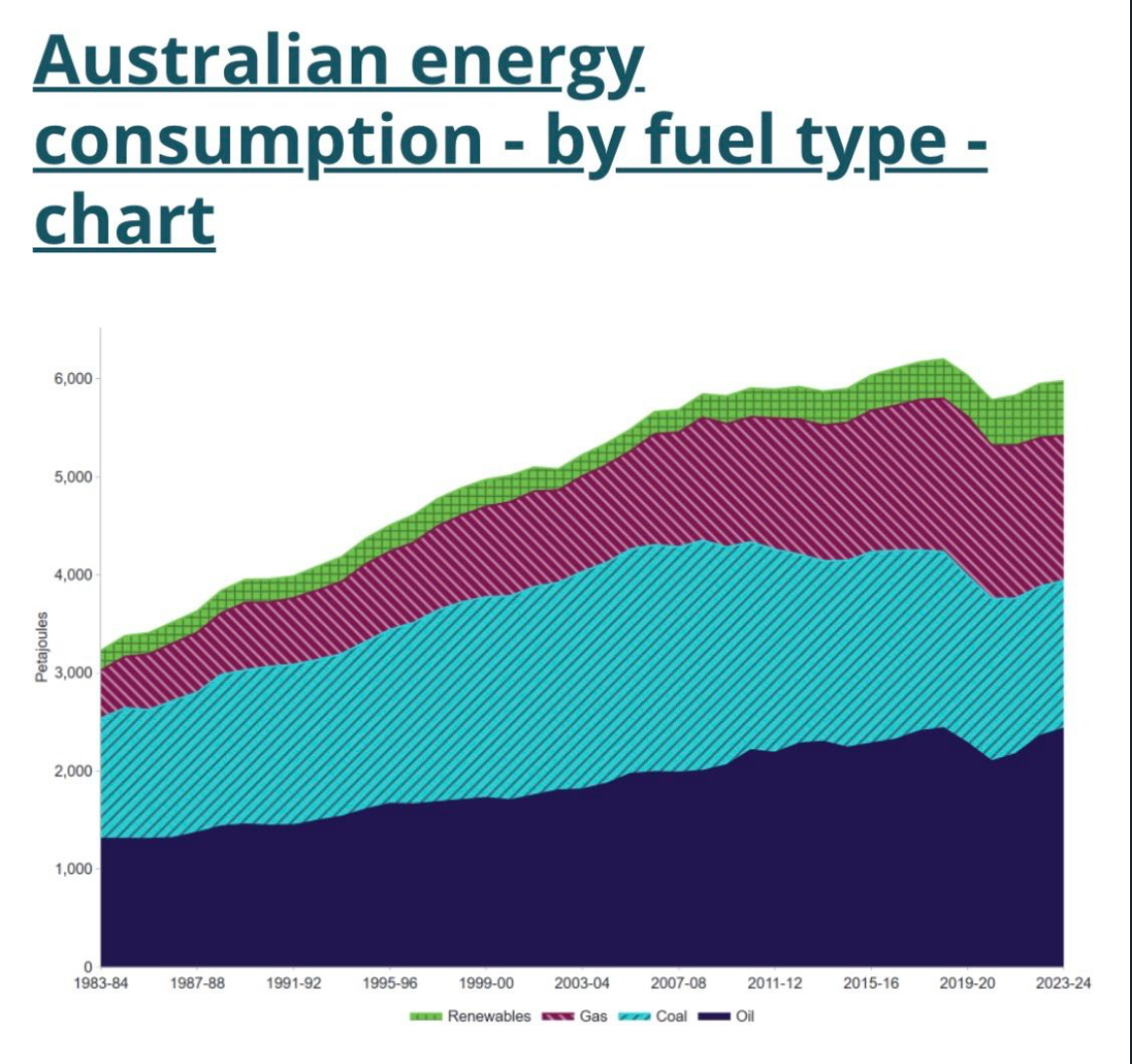
I saw Ben Tan’s post on LinkedIn where he showed the primary energy used in Australia 1984-2024. It is copied below. This shows the constant need for coal power, steady since 1983.
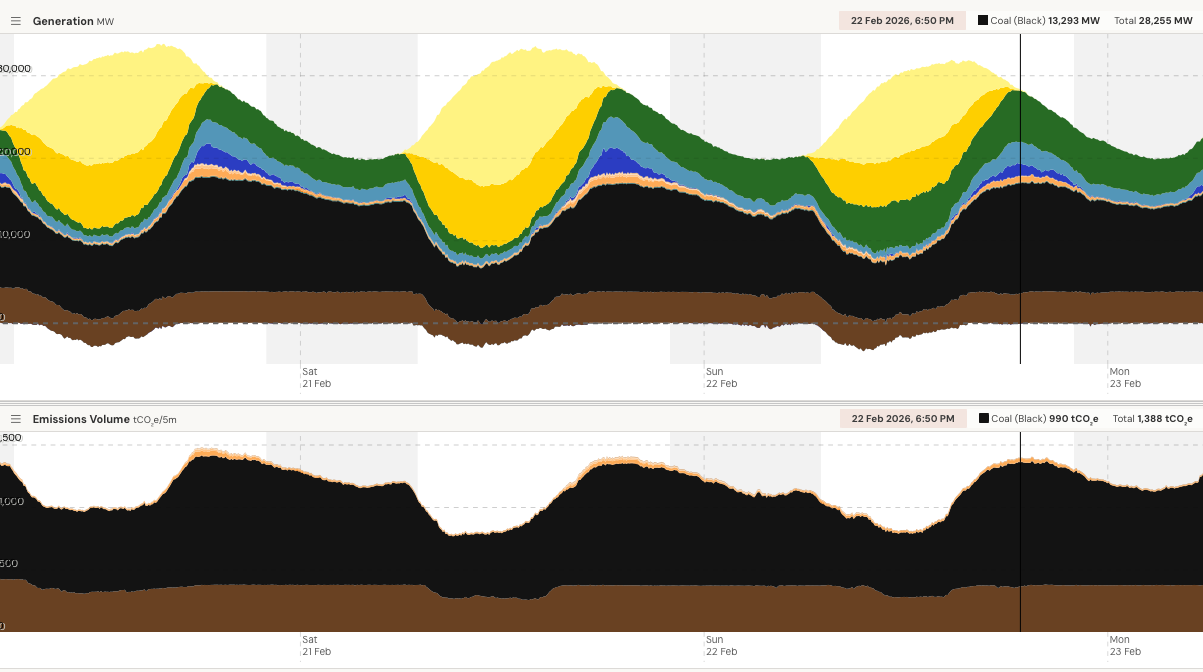
Two other Australian sources for up to date enelectricity generation by source are Rafe Champion and Ben Beattie. I thank them for their articles, links and information. Here below is the Australian Grid generation by fuel for Feb. 22, 2026. Note that it is over 50 % coal. (at one point 38.5% Black coal and 13.2% Brown Coal) Solar and wind were producing 45% at this same moment. Solar does very well during the sunshiny 6 hours or so of the day and wind does well when the wind is blowing, but the voltage control, base load, sudden increased demand requirements (like turning on a 150 MW electric furnace in a steel mill). Also, the rotational inertia and Grid stability are provided by the coal and gas plants.
Numerous references are included at the end from Rafe Champion, PA Pundits and others on the problems with wind and solar. Although electricity generation is complicated, it is not rocket science. If the politicians would do just a little bit of reading and research and maybe even ask folks like us that do understand, they could make right decisions. However, across the west politicians insist on weakening their countries. Just like the U.S. presidents Obama and Biden (before President Trump began the Herculean job of correcting anti-American Energy policy) and the German and UK politicians. Of course, even many Bureaucrats and state Legislatures to this day, are still stuck on the destructive path of Net Zero Carbon. Even my Conservative (Red) state of South Carolina. Here is a quote From the Santee-Cooper IRP: “As required by S.C. Code Ann. §58-37-40(A)(4)(c), Santee Cooper has evaluated a Net Zero CO2 “
This reminds me of Charlie Reese’s last column on how a minority of legislators and judges can force their Ideology on the citizens. Off topic but voter energy education and voter turnout needs to be improved. As I said, we even have misguided voters and politicians in the deep red state of South Carolina. We have got to improve the energy IQ of the voters.
Recent Articles to Support Building New Coal Power Generation Plants
Rather than repeat my same message, here are recent articles I have written in an attempt to explain the case for new coal plants, including two articles on the need to build new coal plants based on coal being the default source of primary energy. The default source of primary energy because the electricity growth is expected to out pace the production of gas turbines to provide for all new generation and nuclear generation, although a very good approach, will take a decade or more to provide the needed electricity generation capacity.
• Wind and Solar are the Highest Cost Power and Cannot Meet Demand, they are a risk to national security and when a region exceeds 30% renewables and the electricity rates are the highest
• More Dispatchable Bulk Power Plants Need to be Built
• Coal, Gas and Nuclear Plants provide the lowest cost, most reliable Power over the long term
• States and Countries on Path to Net-Zero Carbon are Paying a high price
• Natural Gas Prices will likely rise in the future
• Electricity prices will rise with fuel cost as well as from inflation of components and construction costs.
• Production prices of electricity will follow fuel cost
• A Balanced Generation portfolio is Beneficial as a Hedge Against Fuel Cost Volatility
• America should learn from the experiences of Germany, CA, Hawaii, CT, MA, ME, NH, NJ and other states with high electricity costs
• States and countries that have shut down coal plants have experienced increased electricity production costs. This is not a forecast, this is fact
The term BULK POWER means just that, Bulk Power in hundreds and thousands of Megawatts. America needs huge Bulk Power generation additions of about 30,000 MW per year, not small scale R&D projects of variable generation or unproven new SMRs. Perhaps some time in the future renewables and new nuclear will be viable and competitive. However for now, we need 100-800 GW of new electricity generation to replace the more than 200 GW of reliable coal plants that were either shut down or planned for shut down soon. Satisfying the growing electricity demand of the future requires lots (Lots= 30,000 MW each year) of new generation capable of 24/7 generation.
When I joined CP&L in 1973 I entered a door emblazoned with a sign: Bulk Power Supply. Then I thought the name odd and frankly, I have not seen it since. However behind that door were the men and women that managed the generation assets of CP&L which at the time was only about 5,000 MW. The Bulk Power Supply came from seven fossil plants. Those plants were; Cape Fear, Weatherspooon, H.F. Lee, Sutton, Roxboro, Asheville and Robinson, including (1973) one lone nuclear (H.B. Robinson #2) and some small hydroelectric plants in the western corner of N.C. Bulk Power Supply was measured in Megawatts. Many of those coal units (CP&L has been absorbed into Duke Energy of the Carolinas) have been shut down. Most of them have been demolished as shown on the video of the Sutton plant implosion.
These coal plants should have been replaced with new coal generation plants of higher efficiency and even better flue gas cleaning. America is paying a price which will rise further, for the loss of this vital generation capacity without replacing it in kind.
The Bulk Power Supply of America needs to grow by about 800 GW by 2050. Increasing the Bulk Power Supply is a huge challenge which has been vastly underestimated. Do the math. Building new 800,000 MW of capacity in 25 years is 32,000 MW per year of new dispatchable, reliable and affordable new capacity.
Unfortunately, I think many Utilities and government officials have under-estimated the enormity of building 800 GW of new power generation. I tried to lay out my perspective in a presentation to the Coal Institute in July. 800 GW of new generation capacity is equivalent to building over 325 coal plants the size of Duke Energy’s Roxboro Coal Plant (2462 MW) or building 360 new nuclear units such as Southern Company’s Vogtle Units # 3 & 4. (2200 MW)
How About the Primary Energy to Generate 800 GW of New Electricity Generation?
As mentioned above, many experienced authors of energy and electricity generation do not dwell on the importance of primary energy, so I will. Primary energy is not magic and it is not free as the proponents for wind and solar suggest.
The results are now in for “the Global Science Project” of experimentation with wind and solar aka “The Green New Deal”. One simply has to observe the actual electricity prices in Germany, Hawaii, Spain, California, the UK and Scandinavia to know that wind and solar cost more, are not reliable and of course they are not dispatchable.
Primary Energy
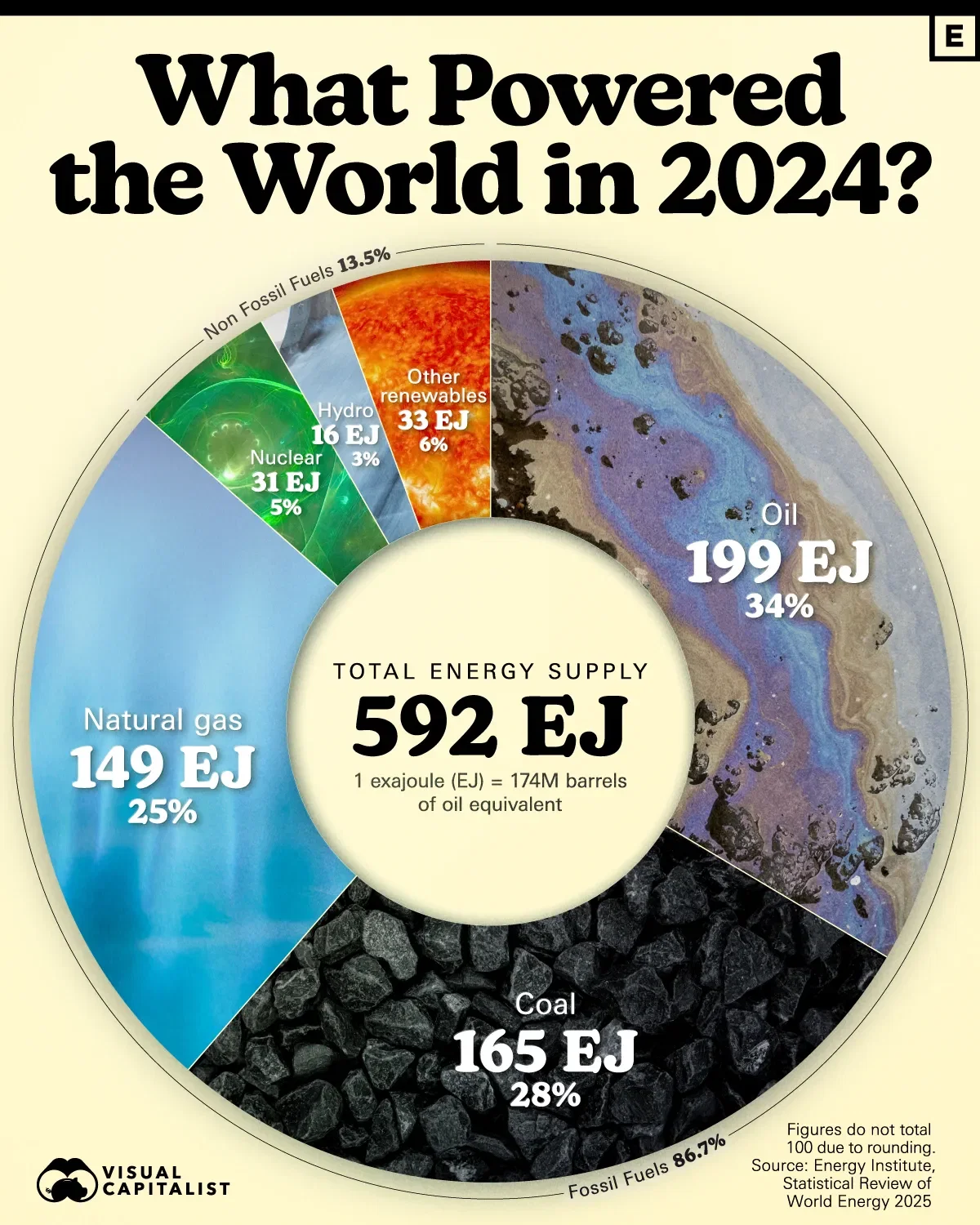
Electricity is secondary energy, it must be produced from Primary energy. In the vernacular of physics one Kilowatt hour of electricity is equivalent to 3,412.6 BTUs of thermal energy. Thermal energy has proven to be the most reliable, dispatchable and affordable. The reporting of Total Energy use by countries and the world is usually done in BTUs for U.S. customary units or in Exajoules in International units. The total world, according to the IEA has used right at 600 Exajoules (rounded from 592) and is shown below in a graphic from the Visual Capitalist. The conversion of EJ to Quadrillion BTU is EJ x 0.9478=QBTU. Example 592 EJ x 0.9478= 562 Quadrillion BTU.
The U.S. uses almost one fifth of the world’s primary energy. A reminder that economic prosperity is driven by energy. America is still the world’s #1 economy and therefore it should not be a surprise that we use almost a fifth of the world’s total primary energy consumption. This is Primary energy used not only for electricity generation but also for transportation, Industrial production, heating, cooking and commercial uses. Remember the phrase “Electrify Everything?”
The First Prerequisite to a thriving economy is that there must be available, reliable and affordable Primary energy to generate that electricity.
America Uses about 100 Quadrillion BTUs Annually of Primary Energy
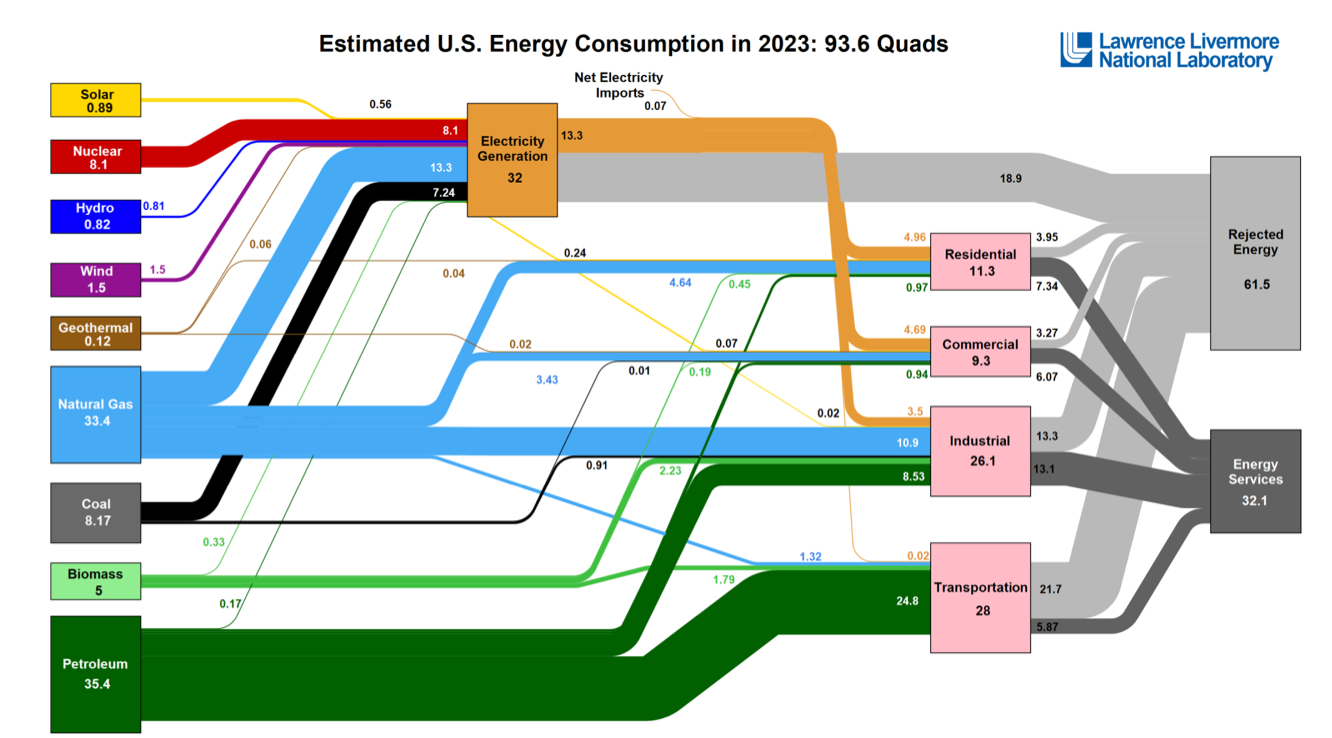
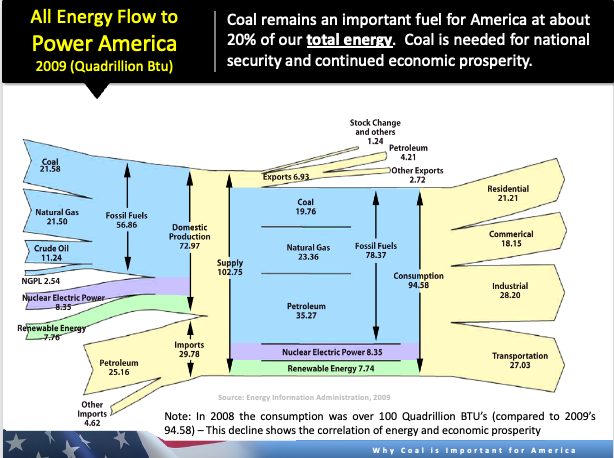
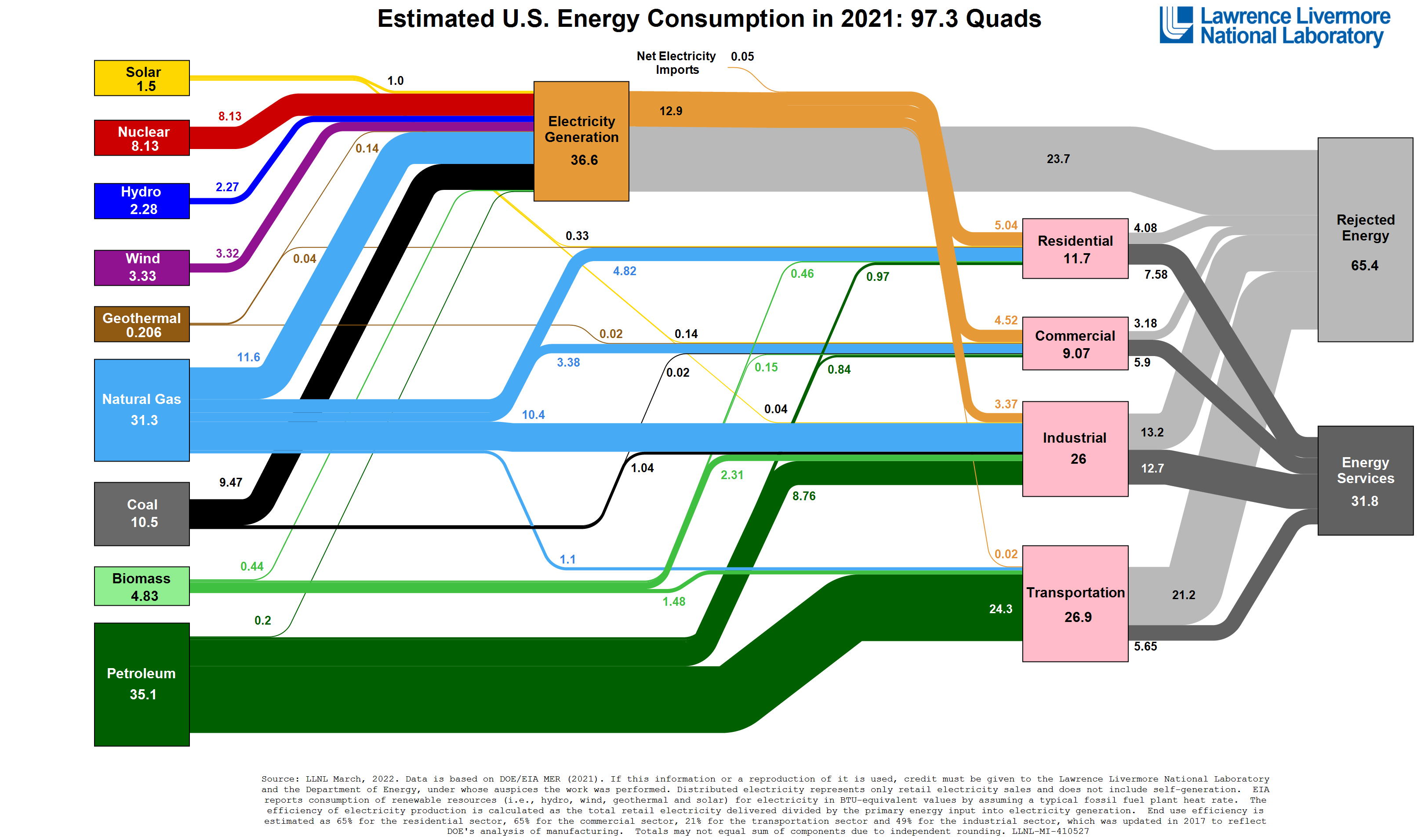
The LLNL Sankey Diagram shown below details the Primary Energy flows from sources to consumption. The U.S. has used right at 100 Quadrillion BTUs for the last 20 years. A little more than a third of total primary energy is used for electricity generation. (37.7%)
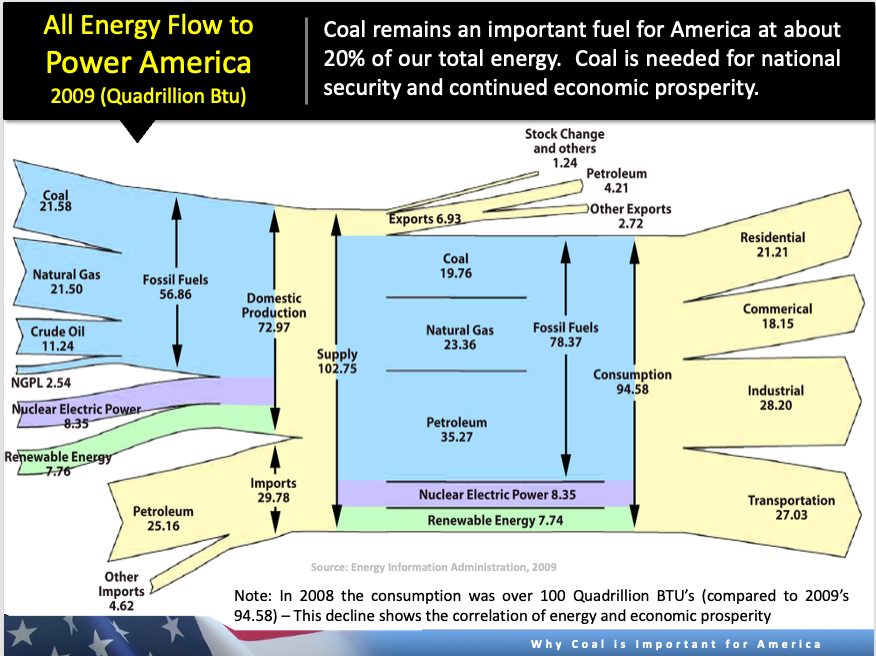
The chart above is from 2022. The one below from 2009. I used this chart in a presentation to the ASME in 2011 to attempt to impress the members with the importance of coal. At the time, America was using coal for about 45% of our electricity generation and the primary energy used to generate that power was about 20 Quadrillion BTUs of coal fuel. As can be seen from the two charts, natural gas increased about 10 Quads and coal decreased a similar amount. Basically, substituting natural gas for coal power production.
Self Sabotaging of the U.S. Bulk Power Supply
Since President Obama’s two term escalated war on coal over 50% of America’s reliable, affordable, Dispatchable and energy secure power generation has been shut down. I have called this self-sabotage. Mostly as a result of Federal Regulations, especially the politically inspired (not based on human health or science) EPA Endangerment Finding. But also due to NGOs and other voices working very effectively to demonize coal power. America had the most reliable, least expensive electricity supply in 2010 and the forces against coal power have steadily weakened our energy security, reliability and affordability. Electricity prices are climbing and will continue to do so as more unreliable, variable generation is forced onto the Grid, and backed up by natural gas fuel. Low prices of natural gas are not guaranteed into the future and fuel is the major cost component for thermal power generation. If the fuel cost doubles, so does the production cost of electricity.
The chart below from the IEEFA shows the path of coal free power generation. Some states and countries are ahead of my state of S.C. and the electricity costs in those states that have shut down their coal plants has escalated sharply. Germany has suffered from significant De-Industrialization as a result of forcing wind and solar on the nation. If America continues the path set by Net-Zero Carbon advocates, we all will join Hawaii, California, Spain, Germany, the UK, Massachusetts and Connecticut with higher cost power and possible de-industrialization.
Thanks to President Trump and Chris Wright, America’s energy regulatory policy is somewhat corrected. However, some states, even S.C. still have laws on the books to exit coal. I feel this is energy suicide. Coal is a national treasure that should be utilized. In fact, in my opinion, it is the best and only viable choice of primary energy to provide the needed electricity generation between now and 2050. A coal plant should be able to be built in four years. We have done it before and can do it again!
The Future 2025-2050
Electricity generation capacity will need to increase dramatically over the next 25 years. The projected growth has been well documented by many others including Stephen Heins, Thomas J. Shepstone, Jr., the ICF, NEMA and others. What is needed is an enormous amount of new, Dispatchable, reliable and affordable Bulk Power. About 800,000 MW of new Bulk Power. he workforce challenge is a topic to cover on another day.In my analysis, nuclear will play an important part. So will natural gas. However, there are three limits to just how much nuclear and natural gas can supply. These three constraints are Supply-Chain, pipelines and achieving a Balanced generation portfolio. The nuclear supply chain limits have been discussed before and although proven and an excellent clean choice, nuclear seems decades away before the needed capacity can be built. For example, it took America over 30 years (1957-1987) to design and build the existing nuclear fleet of about 97,000 MW of capacity. We now need eight times the nuclear fleet that was built over 30 years. Keep in mind, the legacy nuclear units built 1957-1987 were constructed when the Supply-Chain was well established, there were thousands of trained and experienced engineers at B&W, Combustion-Engineering and Westinghouse and craftsmen were much more abundant in the workforce. Many experienced engineers and craftsmen are now retired. Rebuilding the workforce is a topic for another day.
“Just in Time” Primary Energy
Today about 45% of the U.S. electricity generation at peak times is provided by natural gas through “just in time” pipelines. Not only is the Supply-Chain of new gas turbine plants limited but so are the pipelines and fuel supply. In my analysis, we already have too much dependence on pipeline provided natural gas. Remember the Colonial Pipeline Hack of 2021? Coal plants have the inherent advantage of being capable of storing several months of fuel on site.
The best choice for a Balanced Portfolio then, in my analysis is to build new coal plants. In Dick Storm’s Perfect World of Power Generation, I would like to see a Balanced generation portfolio of 30% coal, nuclear, gas, with 10% renewables. Illustration from the Coal Institute presentation.
Conclusion
The policy planners and utilities have gravely underestimated the growth of electricity Demand and now are catching up by using the “Easy Button” of purchasing gas turbines for backup power for wind and solar. Most of the capital being invested in new generation in this calendar year is for solar, wind and BESS (Battery Electricity Storage). This is a mistake that will cost Americans dearly.
President Trump, Chris Wright and Lee Zeldin have done the best they can to correct decades of poor flawed planning by the EPA and Congress with the Inflation Recovery Act version of the New Green Deal. However, many states and large Utilities still remain on a foolish path toward Net-Zero Carbon. For example, Here are five articles on U.S. and South Carolina Energy Policies:
America needs to begin building new Dispatchable, affordable and proven reliable Bulk Power Generation as soon as possible. As I see it, the best source of the needed primary energy to satisfy the demand is America’s own treasure of coal reserves. Think about the needed capacity in terms of 32,000 MW per year for 25 years. That my friends is a heavy lift. As a country we must unite behind President Trump to get this done…Wake up Americans!
There are a number of states that are on a path to higher electricity bills and less reliability, including S.C. Why? Because the S.C. Governor and the Legislature are still stuck on Net Zero Carbon. I thought it might be informative to list 10 unpopular truths:
Hard Truths that Apply to S.C. as Well as All Other U.S. States
New nuclear plants will take decades to be built to replace existing coal and gas units
Electricity generation for Dispatchable Electricity Generation capacity takes years to build
Most of our electricity today comes from power plants that are more than 30 years old. S.C. examples: The Wateree coal plant began operation in 1970, Duke Energy’s Oconee nuclear plant, the largest in South Carolina, first unit started up in 1973, and the first Santee-Cooper Cross Unit began operation in 1984 and Winyah 1975.
The major production cost component of electricity generation for Thermal Power Plants is fuel
The proven lowest production cost of electricity is from coal, nuclear and gas
Coal prices have remained stable for decades
Gas prices are volatile and can fluctuate with market changes. Low gas prices into the future are not guaranteed
Wind, Solar, and Battery storage are higher-cost producers of Bulk Power. Forget the “Free Fuel Myth of Wind and Solar”. All states and countries that have taken the S.C. Net-Zero Carbon path now have high-cost electricity
South Carolina is on a similar primary energy path as Germany was fifteen years ago
It takes decades for the impact of energy policies to be felt by consumers and industry
Here is a presentation to the Beaufort Federation of Republican Men, which summarizes the S.C. path to higher cost electricity.
Bulk Power Supply and Demand Projections to 2052
The Supply/Demand Chart of Santee-Cooper is shown below. Note the plan to reduce coal power generation and replace it with gas, purchased power and variable renewables.
A Better Path: Build New Coal Plants
The low country of South Carolina has been well served by Santee-Cooper since 1934. Also known as South Carolina Public Service Authority. SCPSA is state owned and controlled.
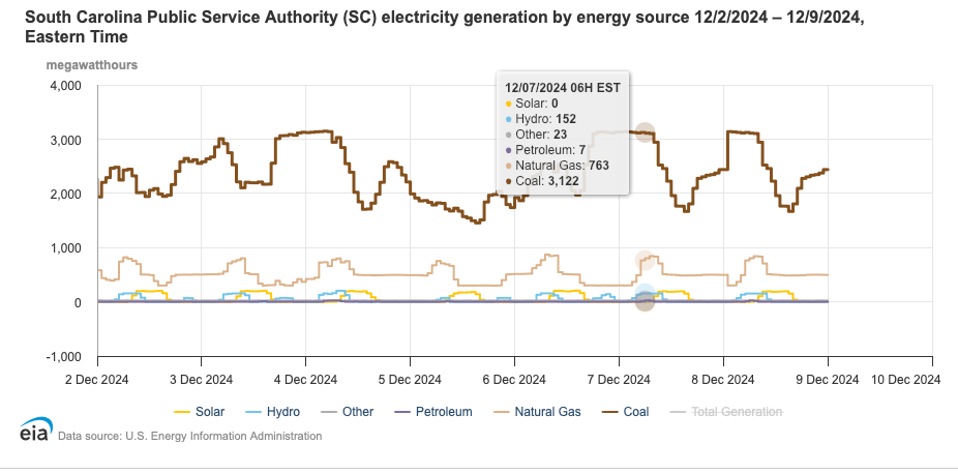
Like TVA, Santee-Cooper began with hydroelectric generation and as with TVA, the electricity demand rapidly increased to loads far in excess of the available hydroelectric capacity. Thus coal plants were built and for most of the last 80 years most of the electricity generation has been from coal fuel. This continues to be the case. The screenshot below is the electricity generation the week of December 2, 2024. The primary energy provided for the power production was 77% coal fuel at this time and it will be needed again this coming winter.
To this day most of the Santee-Cooper installed power generation capacity is coal power plants. Here is a list of their generating assets. Over 60% are dispatchable and proven to be affordable coal power. Electricity costs in our region has been amongst the lowest in the U.S. for decades. Thanks to coal fuel. As the transition to more renewables and more backup natural gas is made, the cost of Bulk Power generation will increase as it has in Germany, the UK, Hawaii, CT, MA, NJ and other states that are ahead of S.C. in transitioning from coal to more renewable energy. The so called “Energy Transition” is the root cause of increasing electric rates. Hawaii as a poster child example of a transition to expensive “Green New Deal” renewables.
What About Industry?
About a third of S.C. electricity is used by industry. This is important for U.S. security, competitiveness and for the jobs industry provides. For the low country of S.C. there are at least two very energy intensive industries; Century Aluminum and Nucor Steel. Both of these industries use hundreds of Megawatts for steel and aluminum production. The main reason the plants were built in S.C. was because of reasonable cost electricity provided by Santee-Cooper. The Century Aluminum plant at full capacity will use over 400 MW and each Nucor plant about 175 MW. These two companies alone represent 24/7 Demand that is about a quarter of the huge Cross Generating Station’s capacity.
Can We Learn From the Experiences of Germany, the UK, California, Hawaii, Connecticut and New Jersey?
Each of these states & countries have been working toward a transition away from coal and toward renewables. In each case the electric rates have escalated to the point that they have caused industries to shut down and harmed the industrial capacity of the countries or states. Electricity is the LifeBlood of an economy. Ask a knowledgeable German citizen about the results of their energy transition.
The high German electricity rates have caused many very well run and established companies to shut down and/or relocate manufacturing into other countries. Three examples are BASF, Krupp Steel and VW
The Optimum Future Electricity Generation Capacity
A Balanced generation portfolio is optimum as a hedge against fuel cost escalation, security of generation and reliability of generation. In my experience and based on the well documented experiences of other states and countries, a balanced generation portfolio of no more than 20% renewables with the balance of generation from dispatchable sources such as nuclear, gas and coal, is best. Plenty of references are listed below (also the chart above) which show the results of over-reliance on windmills solar and battery backup or BESS (Battery Electricity Storage and Supply).
Conclusions
The main point I wish to make here is that Bulk Power, that is huge amounts of electricity generation from large power plants take years, even decades to replace or to use the word more common today, Transition. Most of the vital 24/7 electricity supply to S.C. is provided by aging power plants. Examples, Oconee about 53 years, Wateree about 55, Winyah 50 and Cross about 40 years old.
As reliable, affordable and dispatchable coal plants are shut down the electric production cost will increase and along with the rising production cost, eventually increased rates.
Building new coal plants as once was planned at the Pee Dee plant site, was and still is a good idea. So is building more nuclear plants but that takes time.
My suggestion for the S.C. Legislature is to remove the Net-Zero Carbon laws that are on the books and to provide ample funds for maintenance of the existing coal plants serving S.C. so well.
Electric generation capacity of Dominion and Santee-Cooper about 12,000 MW of Bulk Power Capacity: https://datawrapper.dwcdn.net/hjyEG/5/ Duke Energy about 6600MW
The S.C. Legislature has laws on the books to exit coal power and depend on gas, nuclear, solar, wind and Battery backup systems (BESS). All of which are higher cost generation than coal. https://www.scstatehouse.gov/sess126_2025-2026/bills/3309.htm
Wind, solar and BESS systems need to be backed up by Dispatchable generation. Usually that backup (and planned for S.C) is natural gas fueled generating plants. Therefore, one reason electricity costs are higher with solar and wind is because two to four times the generation capacity is needed over a coal or nuclear plant. Solar and wind are intermittent generators dependent on nature. Solar averages about 6 hours per day of generation.
We can call it a “Bridge Fuel” or just face the reality that it now takes over 100 Quadrillion BTUs of Primary Energy to Power America each year and that Primary Energy Demand will increase in the future. America is the Saudi Arabia of coal and we have the richest and highest quality coal on the planet. Also, an infrastructure to mine it and to transport it. This treasure should be utilized for the benefit of America and all of Humankind.
There are many reasons that new Base Load coal power plants should be under construction right now. In fact, they should have been under construction ten years ago!
Dick Storm’s Top Five Reasons to Build New coal Plants Now:
Coal power plants of sufficient Base Load Generation capacity could be built within ten years or less
Coal fuel cost is stable with less volatility than gas
America has more than sufficient coal reserves within our borders to fuel new coal power plants at a stable price
America’s Primary Energy Demand is likely to exceed 120 Quadrillion BTUs per year in the next decade. Coal will provide the additional productive capacity and it has been proven to do so by existing infrastructure
Choices of Primary Energy to Fuel the World
Global energy demand hit a record 592 exajoules (EJ) in 2024 — up 2%.
So, where did it come from? • Oil: 199 EJ (33.6%) – still the #1 source • Coal: 27.9% • Gas: 25.2%
Fossil Fuels are Still Important! Together, oil, coal, and gas supplied 86.7% of global energy. Despite the MSM reports, these three fuels still provide the primary energy we need and depend on.
🔥 Keeping the lights on 🥘 Cooking our food 🚗 Driving us to work ❄️ Powering our fridges and hospitals 🏠 Keeping us warm
Powers the manufacturing that in-turn, powers the Economy 👨🌾 Keeping us alive
Vaclav Smil shows that at least half of humanity is fed by nitrogen based fertilizers — made using natural gas via the Haber-Bosch process. That’s ~4 billion people who simply couldn’t survive without hydrocarbons. Add to that the energy needed for water, hospitals, heating, and transport, and the death toll from eliminating oil, coal, and gas overnight would not be in the millions — but in the billions.
Our much maligned Hydrocarbons don’t boast about this. They just work quietly to keep us alive. Each American uses right at 300 million BTUs each year. This is an average of just under 1 million BTU/day/person.
President Trump stated it correctly at the U.N. yesterday, “Climate Policies are a big Con Job” The only thing that the transition to solar and wind has done is to drive our electric bills through the roof and causing hardship and suffering amongst our most vulnerable.
🔌 Let’s not forget the reality of the sources of PRIMARY Energy that powers the world
Electricity Generation
About a third of the primary energy is used to generate electricity and the other 2/3’s for Transportation, Industrial, Commercial and Residential use.
America uses and has used right at 100 Quadrillion BTUs of Primary Energy annually. The total of 100 Quads is bound to grow in the future owing to natural electricity demand growth of a growing population, electricfication of some transportation, through reshoring of U.S. manufacturing and AI Data Center new electricity Demand. Note from the chart below the relatively constant total Primary Energy use. It is within 5% of a constant 100 Quadrillion BTUs per year ever since about the year 2000. In my opinion, it is reasonable to expect the total primary energy demand to increase by at least 20% over the next 20 years.
Visual Capitalist has another excellent illustration of projected U.S. Electricity growth to 2050. Please keep in mind, electricity uses between 33 and 40% of available primary energy. Therefore, considering all factors, including energy security, volatility of natural gas prices, exported LNG and other facts, coal provides the readily available primary energy to generate electricity in the needed Bulk Power quantities.
Electricity is important and so is transportation, residential heating, cooking and Industrial production from viable manufacturing plants.
Conclusion
The best solution to the self inflicted electricity generation crisis is to immediately begin building new coal plants. Over 150 new coal plants were planned in 2007, then President Obama launched his all out “War on Coal” and he was successful in stopping most of them from being constructed and even worse, created policies that resulted in the shutting down and demolishing over half of the existing coal power generation capacity.
The Life-Blood of America is electricity. I presented my thoughts on this in July at the Coal Institute summer meeting. I stand behind those comments and recommendations.
Thankfully we now have President Trump and he understands the relationship of reliable, affordable electricity generation. His speech to the U.N. yesterday was spot on. May God Bless and protect President Trump and his outstanding Cabinet.
For most of the U.S. during high electricity demand periods, natural gas, coal and nuclear provide the Primary energy to provide over 75% of America’s electricity. Here is an example from July 29, 2025 during a peak load of about 745,000 MW for the lower 48 states.
The primary energy provided by gas, coal and nuclear on this day is 77%. This is for 48 states. MISO is even more dependent on gas, nuclear and coal. Here is MISO on the afternoon of July 29th. Over 79% gas, nuclear and coal. Coal was providing a vital 32.9% of total generation.
Another 250,000 MW of Bulk Power Required for 2030 perhaps 800,000 MW More by 2050
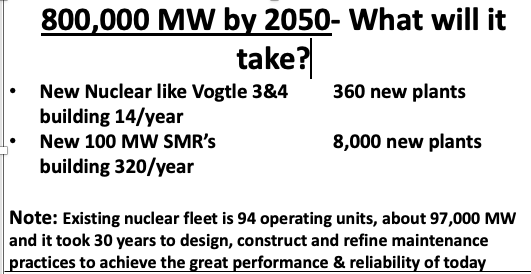
In my opinion, building 14 new large nuclear plants each year till 2050 is pure fantasy. So is building 8000 new SMRs, even though I think they are a good idea.
Natural gas plants are the easy route for Utilities to take. However, in my opinion, we have too much dependence on pipeline provided gas supply now. Also, the cost component of fuel gas for electric power production from gas turbines is about 90%. Therefore electricity production costs will nearly double if gas prices double. A Balanced Generation Portfolio is best. Here is my thoughts on a Balanced Generation Portfolio in Dick Storm’s version of a “Perfect World” of Bulk Power Supply.
The Importance of Coal Power
There are many supporters of coal power. However, we are in fact out-numbered and outshouted by many organizations that have perpetrated the Self-Sabotaging of the Life-Blood of America. I have written before on these SWAMP organizations and some links are included below for reference.
Suffice it to say, coal remains important to power America. As shown above in actual generation during this summer. Winter will prove that coal is even more important. Winter Storm Uri in 2021 showed (at least to me) the harm that premature shutting down of coal plants in Texas caused.
Increased Generation Capacity of 250,000 MW by 2030
If the U.S. electricity demand increases by 250,000 MW by 2030 and new gas turbine plants supply half of this, I suggest that the other 125,000 MW come from new coal plants. How many will it take? A lot. Here below is the Cross Generating Station of Santee-Cooper. This plant has a capacity of about 2350 MW. It would take over 50 new plants like Cross to produce 125,000 MW. Possible by 2030, probably not due to supply-chain weaknesses. However, we should start now!
Previously Published Thoughts Related to the Need for New Coal Plants in the U.S.
My comments to the American public and elected officials. It is time that you all wake up and do a little research into the primary energy that our country depends on. If competing with China is important to you, think about the advantages of using the God given treasure of energy that America has within our borders.
Electricity has been heralded as the Life-Blood of our economy. Little has been written on the fact that electricity is secondary energy and that a form of primary energy is needed to generate electricity. America has required right at 100 Quadrillion BTUs of Primary energy for the last twenty five years to power our economy, industrial production and our freedom of transportation. This is. +/- about 7 Quads. In this article I will show why coal must and should be included in the primary energy mix to provide up to about 20% of America’s primary energy for at least the next twenty years.
Electricity generation uses about a third of the total primary energy consumed in the U.S. and Primary energy comes from five main sources:
Petroleum
Natural gas
Coal
Nuclear
Renewables
The primary energy produced and consumed by the U.S. is reported by the U.S. DOE Energy Information Administration (EIA). To arrive at a standard reporting format, the primary energy is reported in BTUs (British Thermal Units). Here is the chart of primary energy use for the year 2023.
Conventional forms of energy: Petroleum, Natural Gas, Nuclear and Coal provide over 90% of the energy that is the Life-Blood of America! Solar and wind after decades of subsidies are minor contributions to the overall supply of primary energy at about 3%. Chris Wright in testimony before Congress correctly referred to wind and solar as “Parasites”. Wind and solar consume billions of investment dollars for very little benefit to our country.
How Much Energy in BTUs is Used by Each Citizen?
The chart above shows 93.6 Quadrillion BTUs of total primary energy used during 2023. If the total 93.6 Quads is divided by 340 million citizens then the per capita energy use comes out to being about 280 million BTUs per person/per year. For discussion purposes, let’s round that up to 300 million BTUs. Remember, this is total primary energy and about a third of it is used to generate electricity. The other 2/3’s is used for transportation, heating, cooking, commercial, industrial production and other residential uses.
How is Primary Energy Used?
Here is a chart of the five sectors of Primary energy use, since 1950. The five sectors being: Electricity generation, Transportation, Industrial, Residential and Commercial.
The main point of this essay is to point out that it takes a certain amount of Primary Energy to power our lives. That amount is about 100 Quads today and is projected to grow as AI and the transition to more electrification of transportation and reshoring of American manufacturing is achieved.
There are only four main sources of massive amounts of primary energy to satisfy this Demand. These are petroleum, natural gas, coal and nuclear. The expected contributions of solar and wind are almost insignificant when considered in the mix of Primary Energy.
The U.S. total primary energy consumption has remained relatively constant at about 100 Quads since the year 2000. The previous article digs into more detail of the 100 Quadrillion BTUs required to power the U.S.
Do you remember when our government leaders and many organizations were cheering to “Electrify Everything“? Perhaps this is a good time to discuss “Primary Energy”. The four sources discussed above are the viable choices at our disposal. The pro-rating energy use of each American citizen is about 315 million BTUs per year. This totals about 100 Quadrillion BTUs. If our economy is to grow, our freedom of travel maintained and our food production, comforts and conveniences kept the same, let’s say we will likely continue to require 100 Quadrillion BTUs plus the growth of 1.7-2% per year for AI, population growth and reshoring manufacturing.
Growth of 2% per year doesn’t seem like much does it? Well, let’s look at it another way. Two percent growth will result in the doubling of electricity in about 35 years. There are forecasting experts that have predicted 78% electricity Demand growth by 2050. So the 2% per year and forecasts are pretty close. Let’s stick to electricity generation which uses about a third of the total primary energy consumed.
According to American Public Power, “electricity demand in the United States will increase 2% annually and 50% by 2050, according to a new study conducted by PA Consulting and released by the National Electrical Manufacturers Association.”
“Driven by record growth in data centers and e-mobility, the study highlights innovative technology and policy solutions to maintain a reliable and affordable energy system through this new age of demand growth,” NEMA said.
“The study, “A Reliable Grid for an Electric Future,” predicts that growth in electricity demand in the United States will be driven by a 300% rise in energy consumption by data centers and a 9,000% increase in energy consumption required for e-mobility and charging, with overall electricity projected to grow from 21% of final energy use to 32% by 2050.”
“Additionally, consumption changes will vary by U.S. region and will vary across markets over time, driven primarily by data centers in the next decade and EVs in the longer term”.
“The Mid-Atlantic and Texas will see the largest data center electricity demand growth through 2035, and the Northeast and West will experience the largest electricity demand growth from EVs between 2035 through 2050.”
A Case for New Coal Plants
Previous articles by myself and others have discussed electricity growth and the need to build new coal, nuclear and natural gas power plants. Here are four:
The purpose of this essay is to emphasize the importance of using coal fuel and some reasons why I believe this to be true. The long story shortened is this:
Natural gas already dominates electricity generation and the supply-chain of new gas turbines is stretched into four or five year lead times. Another concern that I have is, energy security. Do we really want nearly 50% of our electricity generation fuel to be delivered just in time by pipelines? Coal plants have the inherent advantage of on-site energy storage of months of fuel. The same for nuclear plants which can literally store years of fuel on site. Nuclear is clean, proven and an outstanding form of power generation. In reality, we don’t need 50 or a hundred Megawatts of new generation. We need hundreds of thousands of Megawatts of new reliable, 24/7, dispatchable electricity generation. Frankly, if the 102,000 MW of coal plants that were shut down since 2010 were replaced with new ones, it would be a huge step forward! Destroying over 100,000 MW of reliable coal generation without replacing it in kind was wrong and the loss has weakened America. The planned self-inflicted energy crisis continues. Maybe not thanks to President Trump. But here is what was planned before Trump’s EO’s.
The madness of the U.S. Self-Inflicted Clean Energy Crisis continues. According to EIA and other respected news services, the U.S. Utilities plan to shut down more coal plants in the near future.
Massive new nuclear generation can be expected given ten or twenty years to rebuild the supply chain. It took about thirty years, 1956-1986 to build the first 100,000 MW of U.S. nuclear plant generating capacity. Given consistent government policies and regulations, we should be able to do it again.
More Electricity Generation is Needed, Lots More!
The answer? Build new coal plants. Let me go back to the total primary energy flows chart at the top. America runs on about 100 Quadrillion BTUs of thermal energy each year. This has been constant within +/- 10 Quads for over twenty years.
The future, if America is to remain strong, will require more Primary energy. Let’s say it will take ten more Quads. Where else can ten Quads of energy be found each year over the next five years? I would like to point out that in 2009 America used 21.8 Quads of coal.
In 2024 the coal portion of the total Primary energy had dropped to about 8 Quads. Therefore, it is proven that America, given the right policies and investments can produce at least 21.8 Quads of coal energy/year. How do I know that, easy, we did it as recent at 2009. The slide below is from my presentation to the ASME Annual meeting in Dallas, 2011.
The world is using more coal than ever. The chart below is from JoNova presentation on her blog.
Conclusions
Electricity growth is the highest it has been in decades and about 125,000 MW of new Dispatchable electricity generation is needed by 2030 and about 600,000 MW more by 2050
Gas Turbines power about 45% of America’s electricity generation now and it is mostly provided by just in time pipeline supply. National security requires more on site energy storage. Long term energy storage is provided naturally by Coal plants
Gas turbine additions are limited due to choke points in the supply-chain
New nuclear plants are also needed. However, building the needed 125,000 MW of new capacity will take decades. It took about 30 years to build the first 100,000 MW of U.S. nuclear generation capacity
A Balanced electricity generation portfolio is preferred for reliability, affordability and security. The major generation sources of over 70% of the generation should be nuclear, gas and coal power.
Coal power plants have proven to be the lowest cost producers of electricity in the U.S. Where coal plants have been shutdown, such as CT, MA, CA and Hawaii the electricity costs are the highest in America. Where coal plants continue to operate such as UT, NE, MO, WVA the electricity prices are the lowest
The Coal Power Infrastructure is still in tact. Mines, RR’s etc. and production can be doubled in the short term
Coal energy storage on site is an advantage for power security
The U.S. power equipment manufacturing supply chain was capable of producing numerous coal plants as recent as 2013. This supply chain can and should be revitalized
The rest of the world is increasing coal use for electricity generation. As outlined by Vijay Jayaraj article, GEMS and IEA reports. So should America be building new coal plants. What other fuel can satisfy the growing Demand for Primary Energy in the near future?