Coal fuel should be included in the future electricity generation portfolio based on the laws of physics, available forms of primary energy, proven economics of electric power generation and the proven track record of coal power for providing reliable, dispatchable and affordable electricity generation. The CO2 Coalition’s Angela Wheeler interviewed me for the CO2 Coalitions Podcast, “Climate De-Brief” and here are my views of the absurd anti-American energy policies, many of which are still strangling President Trump’s path to restoring America’s Greatness. Energy is, in fact, The LifeBlood of Our Economy.
Part 1:
https://youtu.be/LYcJFIhxTe0?si=eyJwQcYy7Cruwkib
Part 2:
https://youtu.be/GrmXdpNGiUw?si=hi_Cr0EfeZICxPzI
Coal as an Important Source of Primary Energy
This article will attempt to show some of the reasons why based on the merits of coal why it should be increased as in the portfolio of reliable sources of primary energy.
Speaking of BTUs, I would like to start with describing the potential sources of the primary energy America needs and is using now to supply 100 quadrillion BTUs of primary energy.
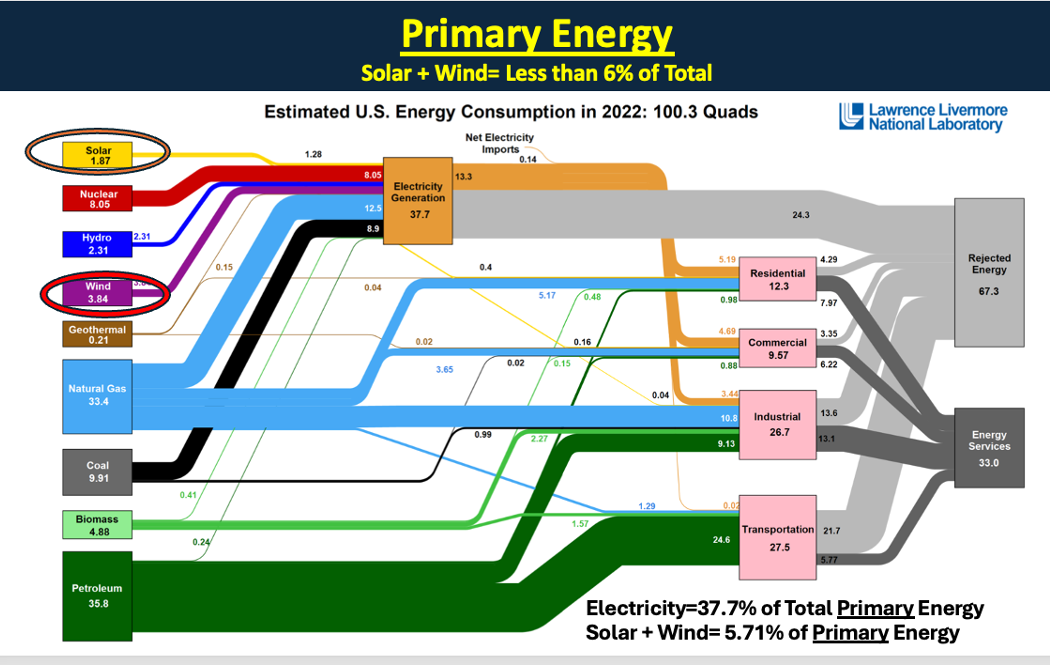
Back to Basics: Let’s Look at the Available Sources of Primary Energy
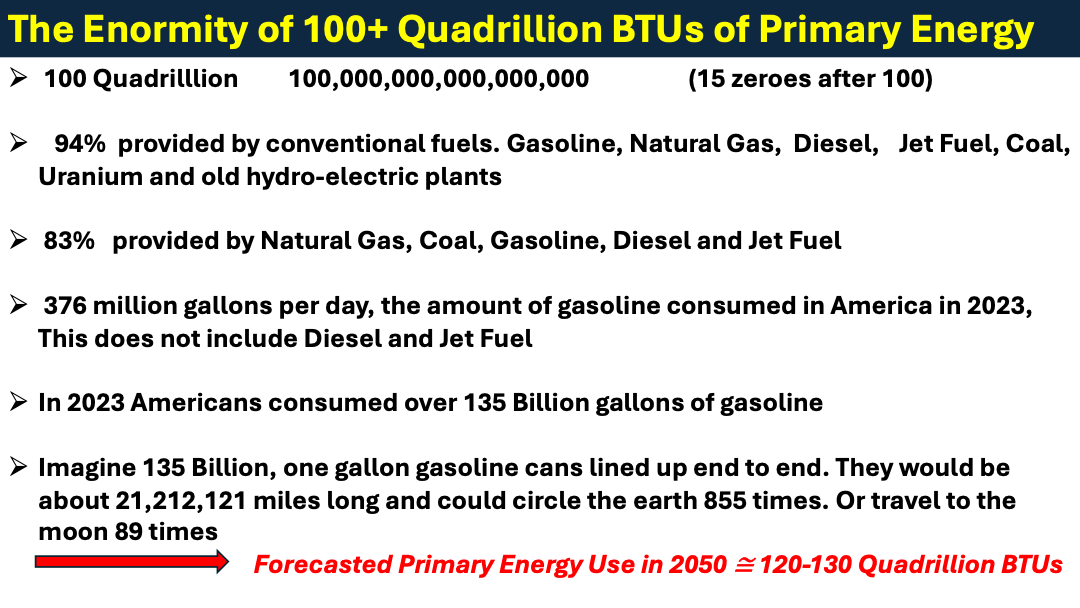
From a primary energy viewpoint, America has used right at 100 quadrillion BTUs of energy each year since about the year 2000.
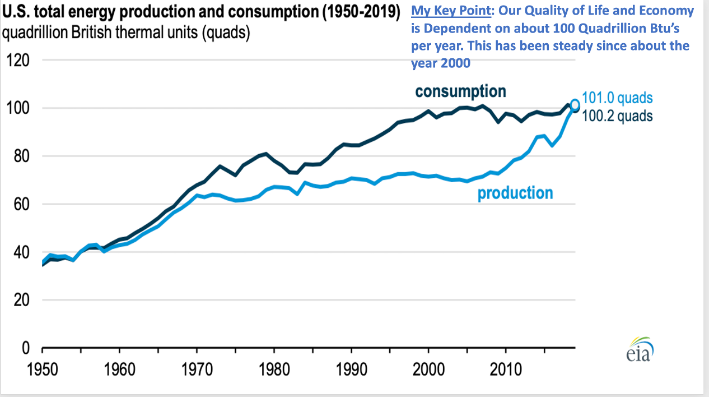
This includes all forms of energy including oil, gas, coal, nuclear and renewables. As more AI Data Centers are built, more manufacturing is reshored, more EVs placed on the highways and greater electrification is transitioned across the economy, the demand for total primary energy is expected to increase. Coal is the most practical, achievable and available addition to provide 10-30 quadrillion BTUs more per annum of growing primary energy supply. Do you remember the phrase from a couple years ago, “Electrify Everything”? Let’s get back to the basics of Primary energy and then look at the incredibly huge contribution of conventional fuels. Also, the diminutive contribution of wind and solar.
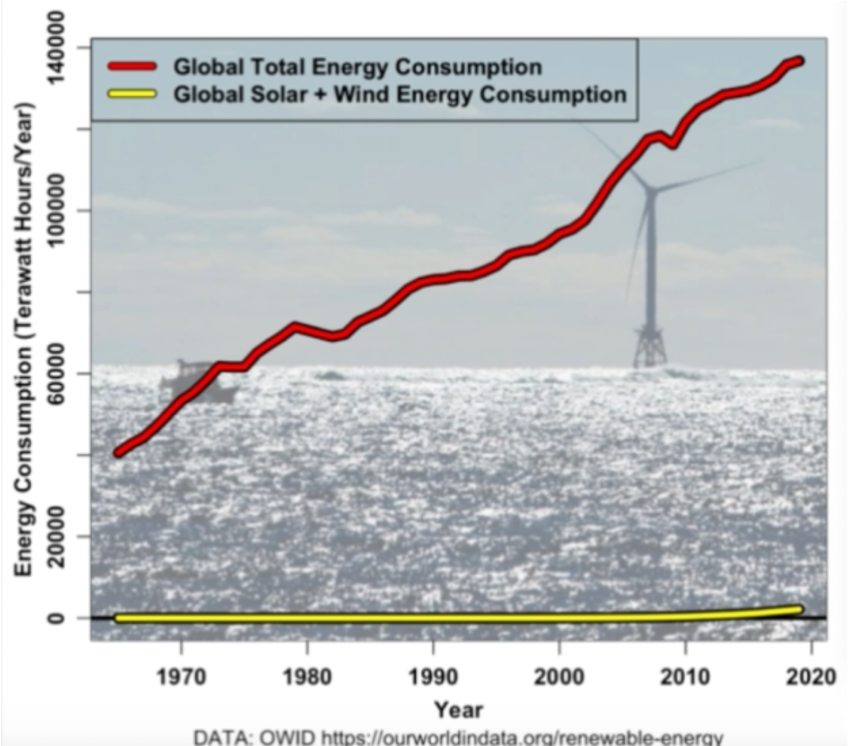
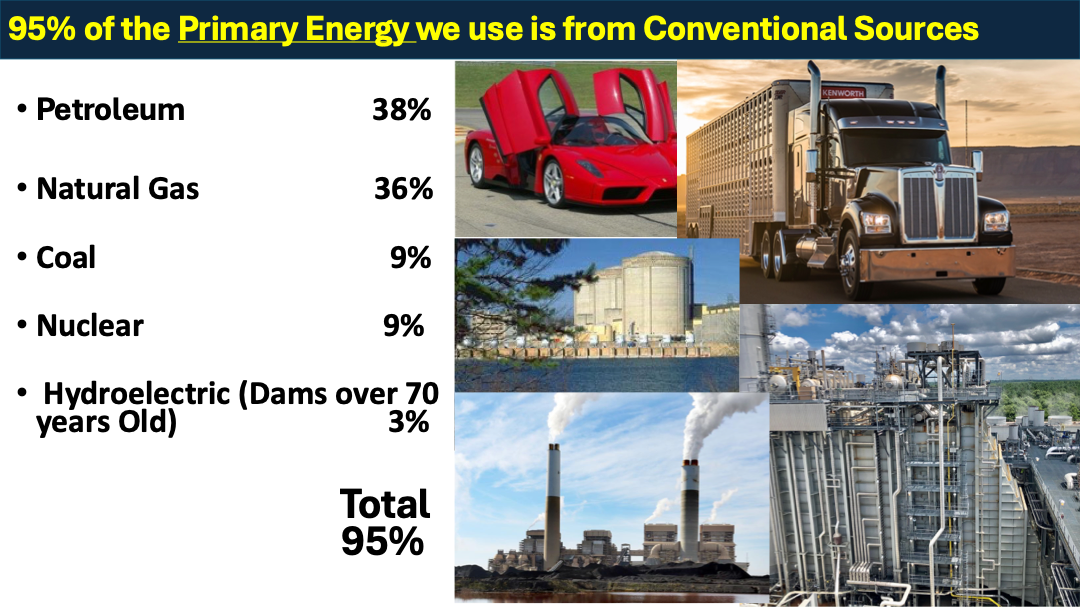
Conventional forms of energy, that is those forms of energy we have depended on for the last hundred years, still provide well over 90% of the Primary energy that we need for our economy to thrive and to power our lives.
The Enormity of 100 Quadrillion BTUs
The statistics of energy use, fuel sources, electricity generation, plant efficiencies and much more are well understood by people who read this. However, outside of our energy professional’s network there are millions of Americans that have low energy IQ’s. Some of the low energy IQ individuals create national energy policy. As a result of indoctrination by renewable energy proponents many Americans believe that wind and solar can replace coal, gas and yes, even nuclear.
The public in general, has a very weak understanding of the generation of electricity and how it is managed. Therefore, I thought I would describe in understandable terms; primary energy, electricity and the enormity of 100 Quadrillion BTUs. Perhaps this will reach people and politicians that are otherwise unaware of the magnitude of the primary energy supplied by conventional forms of energy which we absolutely need to power our lives.
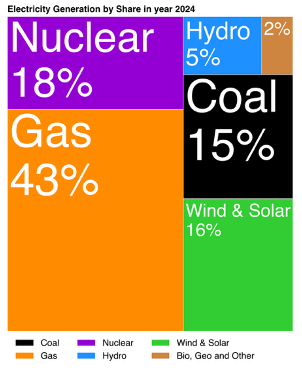
Reliable, Dispatchable and affordable Electric power generation is the Life-Blood of any country’s economy. The source of most of the electric power generation for most of the industrialized world since the Industrial Revolution has been Thermal Power generation. Even in the western countries that have attempted to transition to carbon free sources of electric power generation, thermal power continues to dominate. For the year 2024 about 76% of the electric power production was from thermal power. The primary energy of over 90 quadrillion BTUs was provided by coal, gas, nuclear, oil and Biomass.
One of the advantages of Thermal generation is just about all forms of Thermal power are dispatchable on demand. Gas turbines and Reciprocating gas engines obviously respond faster than a pulverized coal or nuclear unit, but most of the thermal power plants are in fact, dispatchable.
The demand for electricity is growing. The quantity of growth in the future in debatable however, most experts agree, electricity demand is growing and U.S. growth may require as much as 100 GW of new generation by 2030 and 800 GW of new generation by 2040. Limited battery backup is available for intermittent renewables. Proven sources of dependable, affordable and dispatchable power are needed for grid reliability.
Gas fuel provides 43% of America’s electric power generation. Nuclear is now accepted by almost everyone. However, deploying 100 GW of new nuclear power generation by 2030 is unrealistic, given the record of permitting and construction times from recent new nuclear power plants such as Vogtle 3 and 4 which took about 10 years to build. In the U.S. nuclear power provided about 808 TWh of electricity out of about 4200 TWh total or about 19%. This is commendable, however, most of the U.S. nuclear plants were built decades ago and are an average age of about 42.
Think about the need of 100 GW of new power generation by 2030. If the growth in supply was all nuclear, 100 GW would be equivalent to completing 45 new nuclear units the size of Vogtle units #3 & 4 in four years, if started today.
Included in the heading “Conventional Energy” is Hydro. Why? Because it is important, it is dispatchable and it has been around for well over 100 years. Therefore, in my view, it qualifies as being conventional. When hydropower is included with thermal power, the total Primary Energy from conventional sources exceeds 90%.
This is the primary energy that generates electricity, provides ground and air transportation, commercial & Residential heating, cooling, cooking and very importantly, industrial production. Electricity generation consumes between 33 to 40% of the world’s total primary energy.
Electrify everything was the buzz phrase of a few years ago. Let’s look at the enormity of replacing the conventional fuels we all depend on now.
Thermal electric power generation dominates U.S. electricity generation. Gas fuel has taken the lead from coal since about 2010. The total Thermal power generation in the U.S. in 2024 was about 76% Thermal generation.
The Enormity of BTUs Measured in Quadrillions
About 43% of America’s electricity was generated from pipeline supplied natural gas in 2025. It is hard to visualize 33 Quadrillion BTUs of methane, so I thought showing huge LNG tanker ships might be a way to describe the challenge of increasing America’s total Primary energy consumption from the current @ 100 Quads to the range of 120 Quads by 2050.

How About Coal?
In the year 2008 America consumed about 20 Quadrillion BTUs of coal generated electricity. Since then natural gas use has overtaken coal’s #1 position and coal in 2025 generated about 16% of America’s electricity and consumed about 10 Quadrillion BTUs. Coal has been demonized by many and is not perceived by the public to be the Treasure of American energy that I believe it is.
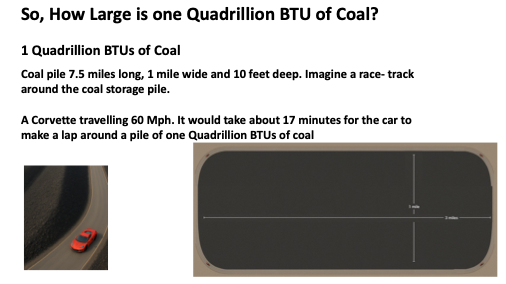
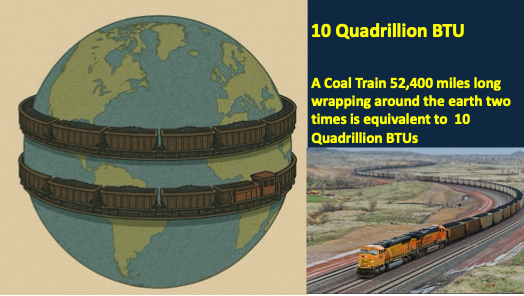
However, from the standpoints of physics, economics, proven track record, dispatchability, energy storage and reliability….Coal is an important fuel for the next twenty or thirty years. Here are thirteen advantages of coal as a source of primary energy for electricity generation:
- Coal Power is Proven Here and Now
- Energy Density
- Reliable
- Affordable and has the best record of low cost electricity production over the long term
- On-Site Fuel Storage for months
- Dispatchable
- Coal Plants are Robust and have a long life when properly maintained
- The Manufacturing Supply-Chain is Established
- America is the Saudi Arabia of Coal and has hundreds of year supply
- Operations and Maintenance Training and Protocols are Established
- Manufacturers, EPRI and Training companies all have an established library of Best O&M practices
- Flyash/Bottom Ash Use as Concrete Additive for Strength and resistance to spalling, FGD sludge byproduct used for sheetrock and also a source of Rare Earth Minerals
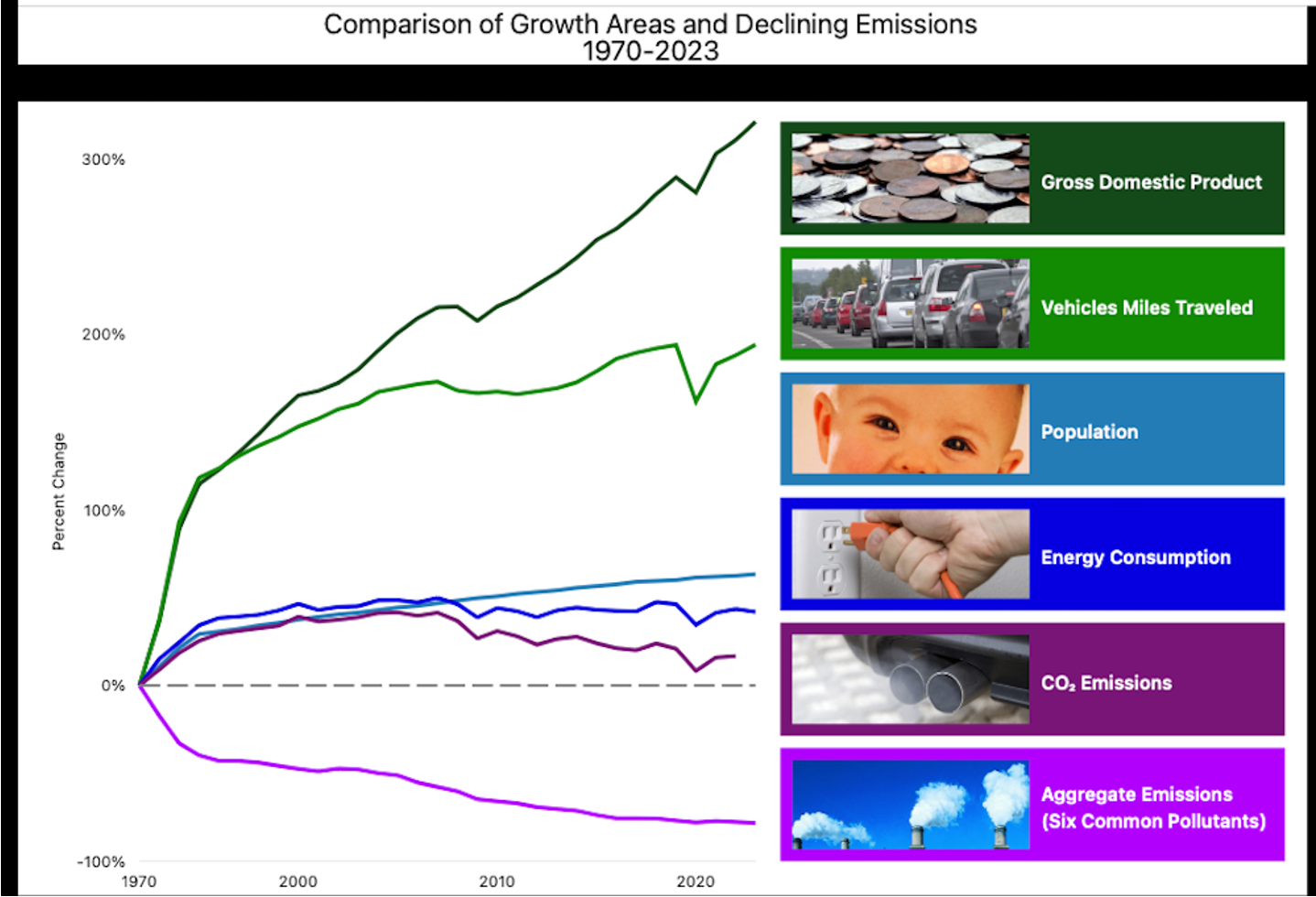
- Modern Coal Plants are clean and the emissions of major pollutants have been corrected with backend pollution control equipment. The six main pollutants have been reduced since 1970 in spite of increases in GDP, Population, auto miles driven and greater use of energy in all forms. The EPA chart below shows the progress achieved.
Conclusions
- Wind and Solar are the Highest Cost Power and Cannot Meet Demand
- More Dispatchable Bulk Power Plants Need to be Built
- Coal, Gas and Nuclear Plants provide the lowest cost, most reliable Power
- States and Countries on Path to Net-Zero Carbon are Paying a high price
- Natural Gas Prices will likely rise in the future
- Electricity prices will rise with fuel cost as well as from inflation of components and construction costs.
- Production prices of electricity will follow fuel cost
- A Balanced Generation portfolio is Beneficial as a Hedge Against Fuel Cost Volatility
- America should learn from the experiences of Germany, CA, Hawaii, CT, MA, ME, NH, NJ and other states with high electricity costs
- States and countries that have shut down coal plants have experienced increased electricity production costs. This is not a forecast, this is fact
- Building new clean coal plants are needed to continue America’s excellent record of providing reliable electricity at affordable costs.
- Coal is the default fuel to increase America’s Primary energy supply beyond 120 Quadrillion BTUs in the next decade
Part ll will cover electric power generation in the rest of the world and some of the advances of clean coal power generation.
Thank you for reading this and very truly yours,
Dick Storm, January 28, 2025
References and Info for further reading:
- EIA on Coal Power Generation updated January 2026: https://www.eia.gov/todayinenergy/detail.php?id=67084&utm_medium=email
- FIVE REASONS TO BUILD NEW COAL PLANTS NOW! COAL SHOULD BE INCLUDED AS A CRITICAL FUEL TO POWER AMERICA’S FUTURE, SEPT. 24, 2025: HTTPS://DICKSTORMPROBIZBLOG.ORG/2025/09/24/FIVE-REASONS-TO-BUILD-NEW-COAL-PLANTS-NOW-COAL-SHOULD-BE-INCLUDED-AS-A-CRITICAL-FUEL-TO-POWER-AMERICAS-FUTURE/
- Ten Hard Truths of Electricity Generation in South Carolina, the Life-Blood of the Economy, Oct. 8, 2025: https://dickstormprobizblog.org/2025/10/08/ten-hard-truths-of-s-c-electricity-the-lifeblood-of-the-economy/
- Reality of Building 32,000 MW of New Generation Capacity/Year. Solutions; Build New Coal Plants Now!, https://dickstormprobizblog.org/2025/10/22/reality-of-32000-mw-year-of-new-generation-demand-solution-build-new-coal-plants-now/
- EIA Most of new generation capacity in 2025 from Solar, Aug. 20, 2025: https://www.eia.gov/todayinenergy/detail.php?id=65964&utm_medium=email
- WSJ on Wind and Solar subsidies, Aug. 21, 2025: https://www.wsj.com/business/energy-oil/why-solar-and-wind-power-can-thrive-without-subsidies-cee47663
- Why are California Electricity Prices So High?, Sub Stack: https://open.substack.com/pub/mestes/p/why-are-californias-electricity-prices?r=kv1a9&utm_campaign=post&utm_medium=web&showWelcomeOnShare=false
- Excellent article by Tilak Doshi, Renewables are Not Cheap, Dec. 2025, WUWT, https://wattsupwiththat.com/2025/12/06/time-to-stop-pretending-renewables-are-cheap/
- Energy Bad Boys article on Electricity, Highest Rates in Red and Blue States, Dec. 13, 2025: https://open.substack.com/pub/energybadboys/p/blue-states-high-rates?utm_campaign=post-expanded-share&utm_medium=web
- Energy Bad Boys Great Chart of Electricity Prices by States, Dec. 27, 2025: https://open.substack.com/pub/energybadboys/p/visualizing-2026?utm_campaign=post-expanded-share&utm_medium=web
- Failures of the renewables transition era are insults to taxpayers.
The worlds’ population depends on insulation, wires, computers, and fertilizers that “renewables” cannot provide.
Published September 1, 2025, in America Out Loud NEWS
https://www.americaoutloud.news/failures-of-the-renewables-transition-era-are-insults-to-taxpayers/ - Inside Climate News on Maryland Matters of Why Electric Costs are Escalating: https://marylandmatters.org/2025/09/01/why-prices-are-soaring-in-the-countrys-largest-grid-region-explained-in-5-charts/
- GRIDWATCH Australia
AT 6.30 PM eastern time THE WIND WAS CONTRIBUTING 13% OF DEMAND IN THE EAST
AND 2.5% IN THE WEST OH DEAR!!
https://www.nem-watch.info/widgets/RenewEconomy/ - WHAT ABOUT TEXAS?
https://www.gridstatus.io/live/ercot - BRITAIN
https://grid.iamkate.com/ - PJM https://www.pjm.com
- MISO https://www.misoenergy.org
- Ed Ireland on TX wind and solar: https://substack.com/@edireland
- Interview with Dave Walsh on Bannon War Room, Rumble, Sept 5, 2025: https://rumble.com/v6yif84-walsh-91-of-new-capacity-power-being-built-this-year-is-solar-and-a-little-.html?e9s=src_v1_ucp_a
- Tom Shepstone Sub-Stack on Massachusetts high electric rates: https://open.substack.com/pub/energysecurityfreedom/p/political-reality-descends-upon-massachusetts?r=kv1a9&utm_campaign=post&utm_medium=web&showWelcomeOnShare=false
- Tom Shepstone on POSIGEN Failure in PA, Sept. 8, 2025: https://open.substack.com/pub/energysecurityfreedom/p/posigen-provides-yet-another-example?r=kv1a9&utm_campaign=post&utm_medium=web&showWelcomeOnShare=false
- Tom Shepstone on Wind and Solar after OBBB, Sept. 9, 2025: https://open.substack.com/pub/energysecurityfreedom/p/are-the-days-of-solar-stupidity-coming?r=kv1a9&utm_campaign=post&utm_medium=web&showWelcomeOnShare=false
- Energy Bad Boys on Electricity Rates Rising due to Renewables, yet, Trump is blamed: https://open.substack.com/pub/energybadboys/p/the-number-one-reason-trumps-policies?r=kv1a9&utm_campaign=post&utm_medium=web&showWelcomeOnShare=false
- HeatMap Newsletter: https://heatmap.news/politics/electricity-price-politics#
- POWER, Sept. 2025 on cost of solar and wind: https://www.powermag.com/solar-and-winds-hidden-price-tag-why-cost-isnt-the-whole-story/
- Fraser Institute on solar and wind cost: https://www.fraserinstitute.org/commentary/solar-and-wind-power-make-electricity-more-expensive-thats-a-fact
- Daily Caller, Sept. 2025: https://ijr.com/frank-lasee-how-wind-and-solar-are-quietly-inflating-electricity-bills/
- Forbes, Yes, Wind and Solar do Increase Electricity Prices: https://www.forbes.com/sites/michaelshellenberger/2018/04/25/yes-solar-and-wind-really-do-increase-electricity-prices-and-for-inherently-physical-reasons/
- America’s Coal: https://americascoal.substack.com/p/estimating-the-real-cost-of-electricity
- IER on cost of solar and wind: https://www.instituteforenergyresearch.org/the-grid/rising-bills-bad-blame-whats-really-driving-electricity-prices/
- Energy Policy Research Chart of world electricity prices 2024. Excellent: https://eprinc.org/wp-content/uploads/2024/08/COW2024-34-USAndEuropeanHouseholdElectricityPrices.pdf
- EPI Charts: https://eprinc.org/chart-of-the-week/?gf_protect_submission=1
- Inside Climate, Great State by State chart: https://www.linkedin.com/pulse/which-states-getting-hit-hardest-electricity-price-qybsc/
- EIA FERC Electricity and Energy Data, Sept. 2025: https://www.eia.gov/electricity/monthly/current_month/september2025.pdf
- Inside Climate News: https://insideclimatenews.org/tags/inside-clean-energy/
- Excellent Paper on the Cost of Wind and Solar across the World, Oct. 5, 2025: https://www.cis.org.au/publication/the-renewable-energy-honeymoon-starting-is-easy-the-rest-is-hard/
- Clintel report in WUWT, Jan. 3, 2026: https://wattsupwiththat.com/2026/01/03/think-tank-iref-against-all-rationality-the-eu-persists-in-its-net-zero-delusion/
- WUWT on the UK Wind Subsidies hit record high CFd’s Jan. 20, 2026: https://wattsupwiththat.com/2026/01/20/cfd-subsidies-hit-record-high-in-2025/
- Australia’s Path to Net Zero :
https://open.substack.com/pub/chrisuhlmann/p/the-state-vs-the-people?r=1bynvt&utm_medium=ios&shareImageVariant=overlay - Bjorn Lomberg: https://www.linkedin.com/posts/bjornlomborg_nytimes-and-many-other-suggest-that-the-more-activity-7350118091680313344-CTSF?utm_source=share&utm_medium=member_desktop&rcm=ACoAAAI4KQUBYW-cbQRlA1kgj9X3llGi7u6KNnQ
- Bjorn Lomberg on high cost of solar and wind: https://www.linkedin.com/posts/bjornlomborg_the-expensive-green-delusion-despite-green-activity-7331637580842594304-yJtG?utm_source=share&utm_medium=member_desktop&rcm=ACoAAAI4KQUBYW-cbQRlA1kgj9X3llGi7u6KNnQ
- Substack article by Isaac Orr and Mitch Rolling on Solar with Battery Backup, July 5th, 2025:https://energybadboys.substack.com/p/the-baseload-solar-beatdown
- Substack by Orr and Rolling in 2024 on the Myth of Cheap Solar: https://energybadboys.substack.com/p/how-to-destroy-the-myth-of-cheap
- EIA List of Electricity Rates by State: https://www.eia.gov/electricity/monthly/epm_table_grapher.php?t=epmt_5_6_a
- https://dickstormprobizblog.org/2024/03/20/hawaii-a-glimpse-into-the-future-of-the-green-new-deal-aka-inflation-reduction-act-here-is-an-update/
- Thomas J. Shepstone on Why Do Wind and Solar Need Subsidies if they are so Cheap?: https://open.substack.com/pub/energysecurityfreedom/p/why-are-solar-and-wind-still-government?r=kv1a9&utm_campaign=post&utm_medium=web&showWelcomeOnShare=false
- Electricity Rates of World: https://worldpopulationreview.com/country-rankings/cost-of-electricity-by-country
- IEA Global Energy Review, Electricity 2025: https://www.iea.org/reports/global-energy-review-2025/electricity
- Global Petroleum, Electricity Prices of World: https://www.globalpetrolprices.com/electricity_prices/
- Electricity Rates by U.S. State: https://electricityrates.com/electricity-rates-by-state/
- POWER article on China High Efficiency Coal Plants: https://www.powermag.com/chinas-pingshan-phase-ii-sets-new-bar-as-worlds-most-efficient-coal-power-plant/
- Advancements in Steam Turbine design, POWER Magazine: https://www.powermag.com/advancements-in-steam-turbine-efficiency-for-modern-power-generation-reducing-costs-and-emissions/
- Area of states for reference of solar or wind land requirements: https://the50unitedstates.com/state-sizes
- EIA Electricity consumption in 2022 : https://www.eia.gov/energyexplained/electricity/use-of-electricity.php
- ICF Electricity Load Growth Forecast to 2030 and 2050: https://www.icf.com/insights/energy/electricity-demand-expected-to-grow
- IEEE Spectrum on the April 2025 Blackout in Spain: https://spectrum.ieee.org/spain-grid-failure
- EIA Gas Prices Jan. 2026: https://www.eia.gov/todayinenergy/detail.php?id=67046&utm_medium=email
- Here is an absolutely nutty proposal, replace a reliable 2700 MW coal plant, (the Sherco Coal Plant) with solar panels. This is Minnesota where it gets very cold and also is known for heavy snowfall in the winter…, CNN report: https://www.cnn.com/2024/09/16/climate/coal-to-solar-minnesota
- Energy Bad Boys on Electricity Rates Rising due to Renewables, yet, Trump is blamed: https://open.substack.com/pub/energybadboys/p/the-number-one-reason-trumps-policies?r=kv1a9&utm_campaign=post&utm_medium=web&showWelcomeOnShare=false
- HeatMap Newsletter: https://heatmap.news/politics/electricity-price-politics#
- POWER, Sept. 2025 on cost of solar and wind: https://www.powermag.com/solar-and-winds-hidden-price-tag-why-cost-isnt-the-whole-story/
- Fraser Institute on solar and wind cost: https://www.fraserinstitute.org/commentary/solar-and-wind-power-make-electricity-more-expensive-thats-a-fact
- Daily Caller, Sept. 2025: https://ijr.com/frank-lasee-how-wind-and-solar-are-quietly-inflating-electricity-bills/
- Forbes, Yes, Wind and Solar do Increase Electricity Prices: https://www.forbes.com/sites/michaelshellenberger/2018/04/25/yes-solar-and-wind-really-do-increase-electricity-prices-and-for-inherently-physical-reasons/
- America’s Coal: https://americascoal.substack.com/p/estimating-the-real-cost-of-electricity
- IER on cost of solar and wind: https://www.instituteforenergyresearch.org/the-grid/rising-bills-bad-blame-whats-really-driving-electricity-prices/
- Energy Policy Research Chart of world electricity prices 2024. Excellent: https://eprinc.org/wp-content/uploads/2024/08/COW2024-34-USAndEuropeanHouseholdElectricityPrices.pdf
- EPI Charts: https://eprinc.org/chart-of-the-week/?gf_protect_submission=1
- Inside Climate, Great State by State chart: https://www.linkedin.com/pulse/which-states-getting-hit-hardest-electricity-price-qybsc/
- EIA FERC Electricity and Energy Data, Sept. 2025: https://www.eia.gov/electricity/monthly/current_month/september2025.pdf
- Inside Climate News: https://insideclimatenews.org/tags/inside-clean-energy/
- Excellent Paper on the Cost of Wind and Solar across the World, Oct. 5, 2025: https://www.cis.org.au/publication/the-renewable-energy-honeymoon-starting-is-easy-the-rest-is-hard/
- Clintel report in WUWT, Jan. 3, 2026: https://wattsupwiththat.com/2026/01/03/think-tank-iref-against-all-rationality-the-eu-persists-in-its-net-zero-delusion/
- WUWT on the UK Wind Subsidies hit record high CFd’s Jan. 20, 2026: https://wattsupwiththat.com/2026/01/20/cfd-subsidies-hit-record-high-in-2025/
- Australia’s Path to Net Zero : https://open.substack.com/pub/chrisuhlmann/p/the-state-vs-the-people?r=1bynvt&utm_medium=ios&shareImageVariant=overlay

