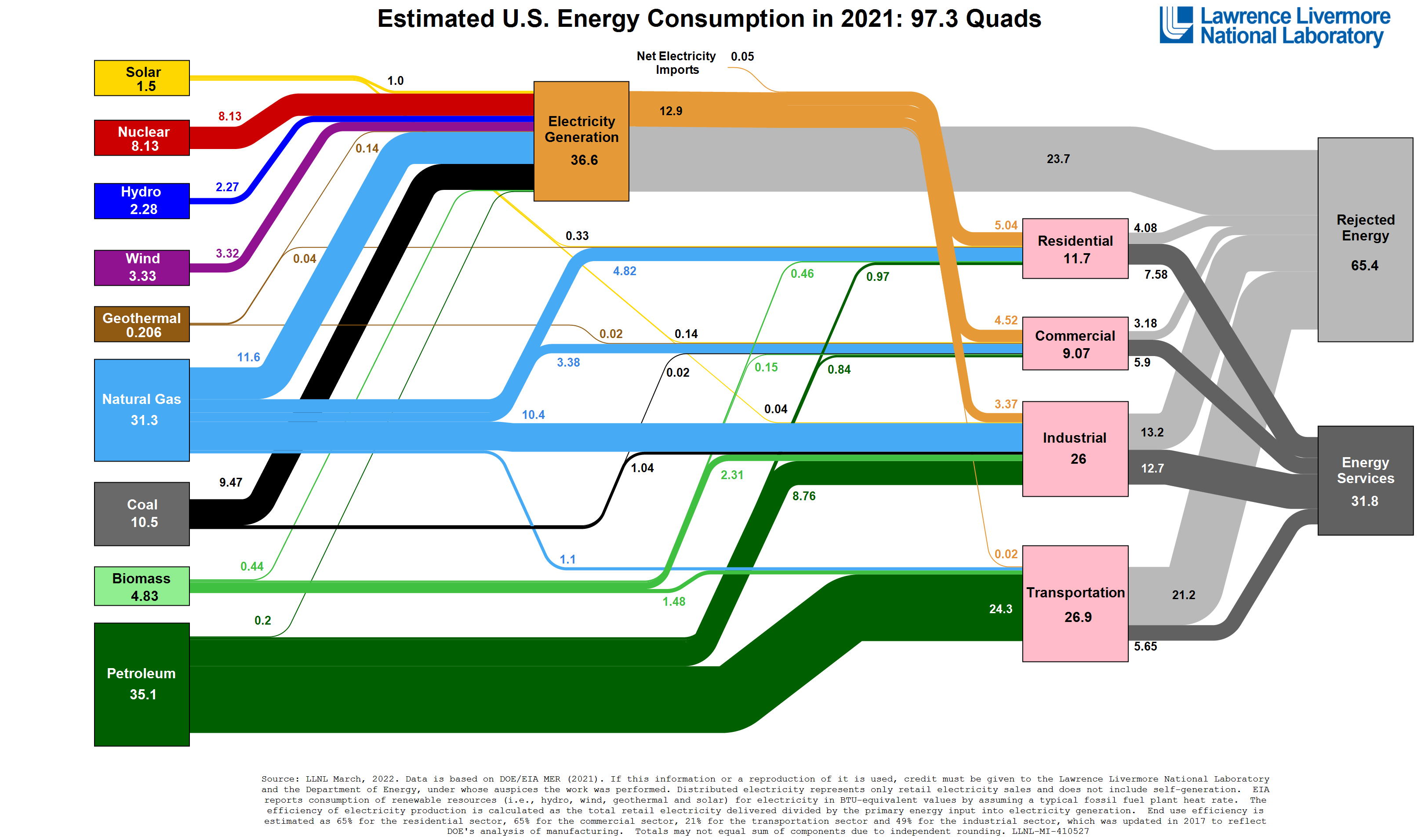
Reasonable cost, Dependable, Affordable and Dispatchable coal power generation has been mortally wounded.
We, the American People Must win the War on Coal

Who are the Enemies of Coal?
On enemies, Sun Tzu said “Know the enemy and know yourself in a hundred battles you will never be in peril. When you are ignorant of the enemy but know yourself, your chances of winning or losing are equal. If ignorant both of your enemy and of yourself, you are certain in every battle to be in peril”.(1)
Most of the American people have no idea of who the enemies of coal are. In fact, I worked in the coal power industry for about thirty years before I became aware of some of them. The true facts are, that there are multiple entities and organizations that are enemies. Let’s call them “Carbon Hating Tribes”. These Tribes include rogue Bureaucrats (alphabet agencies of the U.S. Federal Gov’t) politicians, Well funded NGO’s, Public education K-12 plus many Universities, Public Broadcasting, Billionaires who do not understand the importance of Domestically produced Primary energy, U.S. elected politicians, the United Nations, the World Economic Forum, the MSM, the Entertainment Industry, celebrities and foreign participants that wish to weaken the U.S.A. I tried to capture some of the prominent anti Carbon Tribes in one meme which I have used in my public presentations. Most of the leaders and the members of these anti-coal Tribes, are NOT elected by the U.S. citizens . I have written several previous commentaries naming some of the individuals and organizations. (6, 207, 208) A Congressional report also outlined the escalation of the war on coal during the McCarthy years at EPA in the Obama Administration. (10)
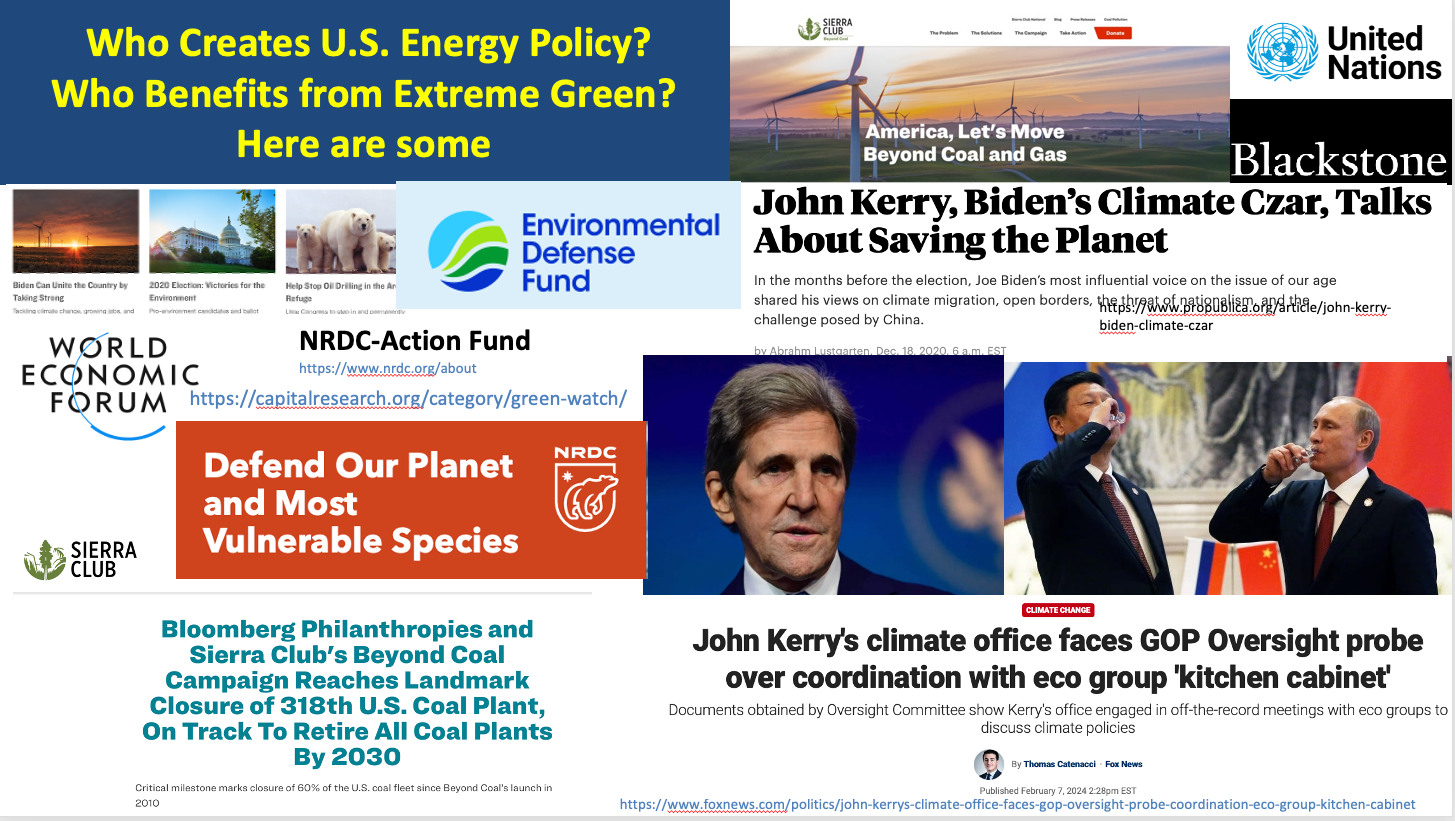
More on the influencers of Net-Zero Carbon before. Here, here and here. After years of observations from the industry and research, I am of the strong opinion that the priorities and goals of “Climate Policies” are really not about improving human health or saving the planet. Thomas Shepstone captured my thoughts in his Substack entitled, “Energy Matters If You Value the Life You Now Have and Don’t Want to Live Under Socialism” (210)
Those of us that understand energy and electricity generation are a small minority that I estimate at 3% of the population. The “Good Guys” that understand energy and electricity generation are vastly outnumbered and out shouted. The enemies of coal are also the enemies of Liberty, Freedom and Capitalism.
Are You Worried About the Future of the U.S.A.?
This excerpt from my previous blog post and it is worth repeating. This is from my commentary entitled, “Are You Worried about the Future of the U.S.A.?” I posted this the day after inauguration day, January 21, 2021.
“The November 2020 Presidential Election to put it politely did not end with the best interests of America as a priority. President Biden disingenuously said at the inauguration, that he wants to unite the country. Then he went to the Whitehouse to sign Executive Orders to Cancel the foundation of our economic growth during President Trump’s four years. He is in the highest office of the world and he has plans to use the power of that office to do as much harm as possible to America. I don’t know why the Democrat Party, Liberals & the Mainstream Media can be so hateful of America. But they are.
Their Goals seem to be to Dismantle America’s #1 Position in the world as a Beacon of freedom and to harm or kill the largest Economy on the planet. Biden’s first step to weaken the U.S.A. is to reduce Domestic Energy Production. Reasonable cost energy is a huge component of world manufacturing competitiveness. Abundant production of reasonable cost energy also creates and sustains “Jobs” too! To put it into in a four letter word Mr. Biden may understand.
I will be perfectly honest, I am concerned for the future of America. Here are some of the reasons why I am concerned…...”Continue reading on blog post here
Background of The War on Coal
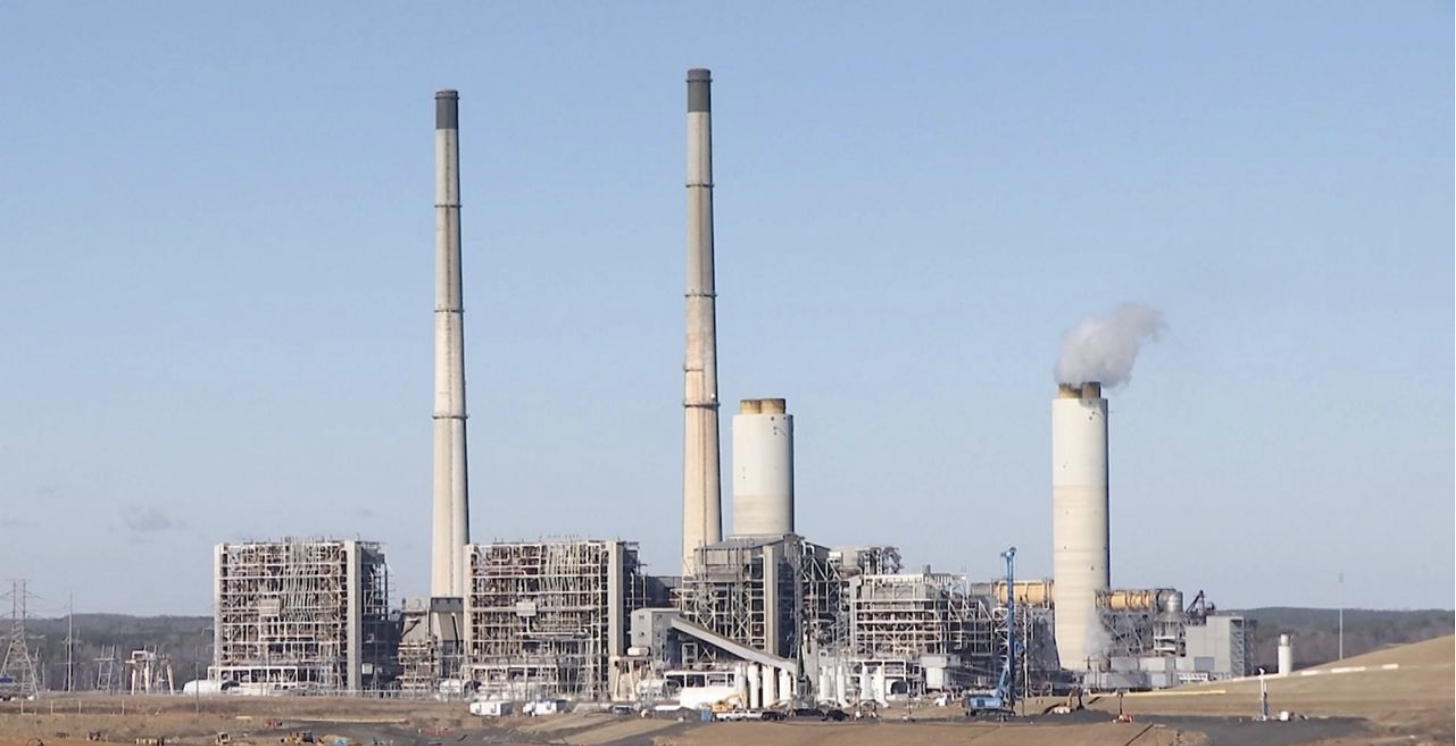
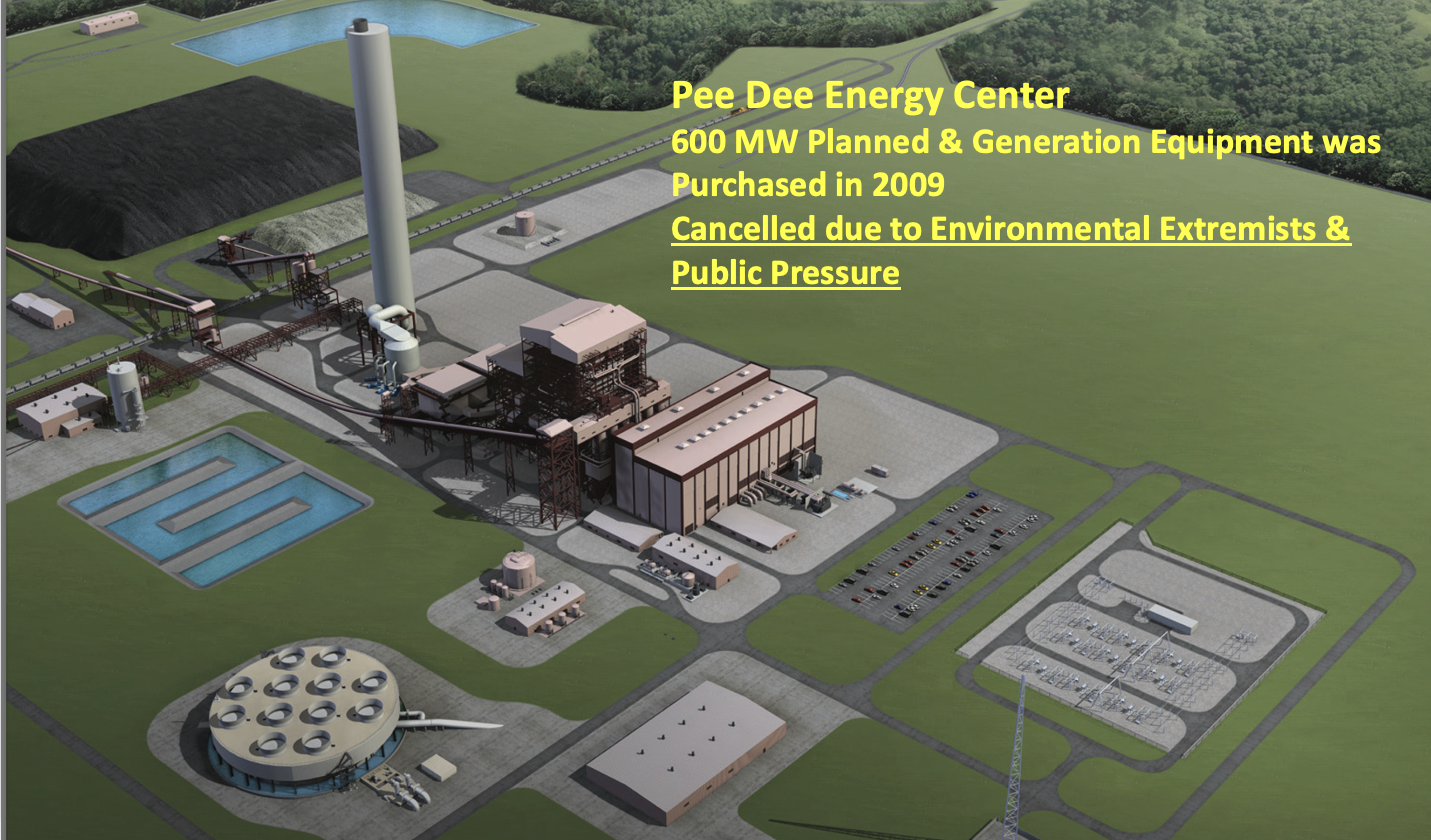
I have followed the war on coal since the 1990’s and the enemies of coal have gained strength and political power. Now with a rogue, out of control EPA and Biden as President, they have near Totalitarian Control over the entire government. In fact, Biden’s #1 Priority is/are the bogus, “Climate Policies” which have weaponized all of the government swamp Bureaucrats and all alphabet soup agencies including the EPA, BLM, SEC, Dept. of Defense, DOJ and more. This is a War on the American people and America’s productive capacity. This is a war that we must win. I have completed presentations to groups and written on the beginnings of the war on coal since about 1995 when it first dawned on me that these people in the EPA are trying to kill coal. Yes, it started during the Bill Clinton Presidency when Carol Browner was EPA Chief, and was escalated with Obama. (See the 2015 Congressional report on the Obama Carbon Mandate(10) , Here. ) Up to about 2012 about 50% of our electricity was generated by coal fueled power plants and I thought it was inexplicable and not possible that the government would wage a continuing war on the American Treasure of coal. Since 2012 over 102,000 MW’s of reliable, affordable, Dispatchable coal power generation capacity has been shut down. I presented this at the ENERUM energy Forum in Columbus, OH in 2022. (215) A modern, new clean coal plant has not been built since 2013, yet hundreds have been shut down and Demolished. (11, 12, 13, 14, 215) The two photos below are typical of how U.S. Utilities dispose of coal plants. This one is Genoa #3 of Dairyland Power, near Lacrosse, Wisconsin. Yes, it was old, but it should have been replaced with a new coal plant. The other is the Duke Sutton #3 which I was the manufacturer’s lead startup engineer in 1972.
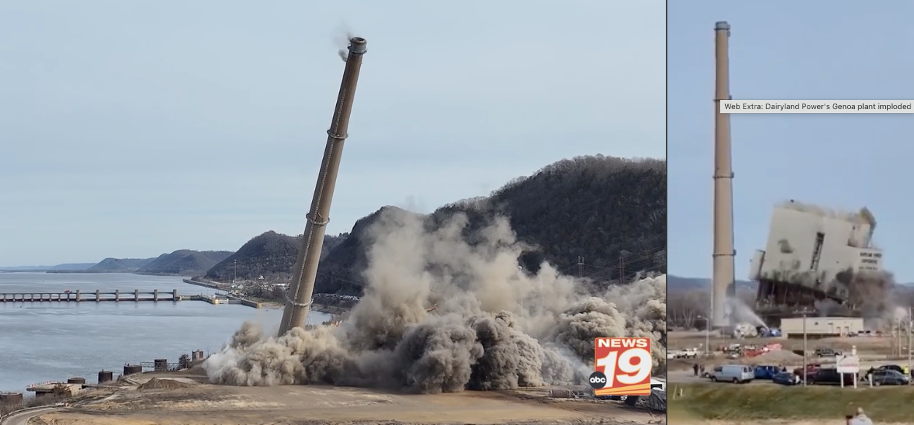
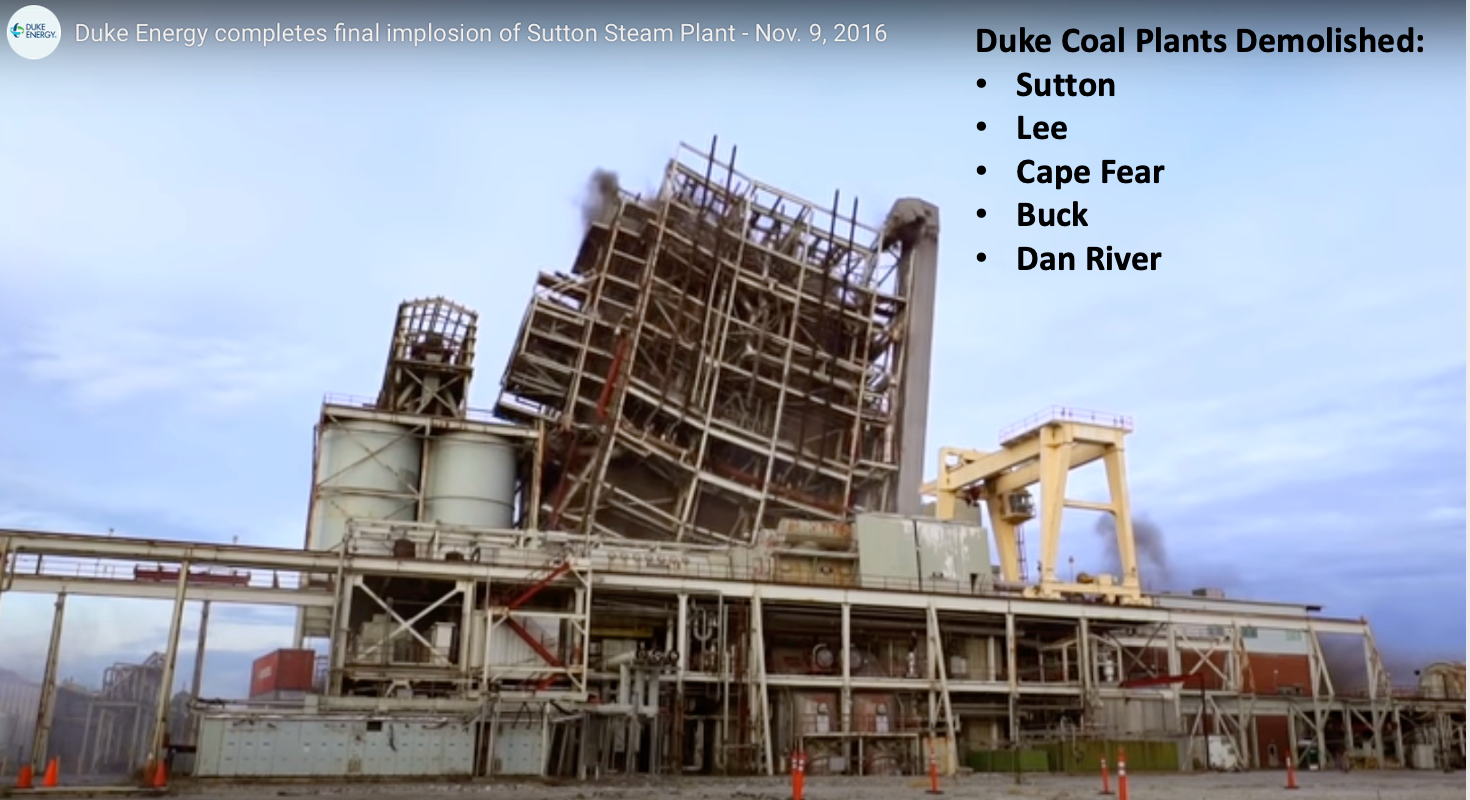
The U.S. Government is Choosing Euthanasia for our Energy & Electricity Generation Infrastructure. Why?
I saw a bizarre story in the “Free Press” about a perfectly healthy young woman that has decided to end her life. The article title: “I’m 28. And I’m Scheduled to Die in May.“I did not make this up, read it here in the Free Press. After a dozen years of watching Obama, Biden, Swamp Bureaucrats, NGO’s, the MSM, Entertainment and energy ignorant but wealthy celebrities demonize coal….the planned death of Zoraya ter Beek seems similar. The big difference is, Zoraya Ter Beek has made her decision by herself. The American people are having Euthanasia of our energy and electricity infrastructure forced on us and likely to cause economic harm, pain, suffering and deaths of our American citizens. Being done in plain sight, eyes wide open and the perpetrators have about 50% of the voters support. Wake up America!
So much for “We the People” having a say into policies that impact all of us and all that we do. (Note the meme above of energy policy influences, none were elected by the people of the U.S.)Think about loss of power, loss of gasoline availability and cancellation of public transportation. Loss of heating, HVAC, refrigeration and just about everything we depend on, including food production and distribution. Dr. Robert Hargraves wrote an excellent article on “Energy IS the Economy“. It is here in Grid Brief, Nov. 2022. I live in Hilton Head, SC. The last time I remember losing power and having gasoline shortages was Hurricane Mathew in 2016. It has been very easy for many residents to forget what loss of power meant for just a few days. In February 2021, Texas suffered a massive statewide Blackout. That was in winter and cold kills more people than summer heat. The Texas Blackout killed a minimum of 246 people. I predict that, If the EPA and the Biden Administration is not reined in, more people will die in the near future. Why? Because of Bureaucratically enacted and foolish Climate Policies. Keep in mind electricity supply is comfortably easy to sustain during the spring and fall months. The challenge is PEAK Demand periods in the summer and winter. Perhaps that is one reason the EPA and the administration release these excessively restrictive rules in the spring and fall? I wrote my commentary on “Threats to the Grid” last month. It is here. An excerpt of that commentary listing the ten largest threats to Grid Reliability follow. These are based on my experience and my opinion:
The top 10 “Threats” are ranked, with the greatest risks first. All of these risks could be mitigated if energy and environmental policies were in effect the same as they were in 2012 when the U.S. had amongst the cleanest air in the industrialized and Developed world. There is a lot of blame to be spread around, but these policies are threats to Grid reliability.
- Government Agency Climate Policies, EPA at the top, SEC, BLM, DOD, DOJ and all of government is wrongly applying “Climate First” policies rather than the Best policies for America and younger Americans to experience the “American Dream” as my generation did
- Creation of RTO’s that absolved most utilities from planning for future electric generation growth, ie, plants can be shut down without a Utility being required to replace it with like, Dispatchable generation
- Environmental Extremist/Activists that use enormous wealth to demonize carbon (and support (D) politicians against the Best interests of the U.S.A.
- Wealthy Business people who fund NGO’s to Decarbonize the western world
- The United Nations IPCC, Agenda 21, Agenda 30 and other so called “Climate Policies”
- The World Economic Forum and the members who under the guise of saving the planet are forcing policies of De-Growth, De-Industrialization and Energy Poverty on all of the people of the western world, but not the BRICS, and other countries aligned with Russia and China
- “Woke” or “Politically Correct” companies including electric Utilities and Co-Operatives that espouse solar and wind power as being capable of replacing coal, oil, gas and nuclear energy
- Public Education, K-12 and Universities that promote climate scare tactics to sway public opinion toward accepting higher energy costs and reduced reliability of energy and electricity
- World Bank, IMF, Large Banking and Investment companies that determine which infrastructure projects to finance
- Terrorists or criminal acts of sabotage When I first wrote this commentary, I placed terrorsists as last in the hierarchy of risks. Now, with millions of illegal immigrants from dozens of countries, some that are enemies of the U.S. Perhaps the priority should be higher. It is in fact, a risk to Grid reliability and Green Policies have made the Grid more vulnerable to attack.
If you are interested, here are three previous blog posts on the beginning of the War on Coal and the some of the individuals and groups that have been involved. Here, here and here. The IER has prepared an excellent report which enumerates on the vast energy resources within America’s borders. (6)
The American Coal Council Letter to Elected Officials-May 17, 2024
Emily Arthun, President of the American Coal Council prepared a letter for supporters to sign and submit to Congress. The letter is copied below and I support Ms. Arthun’s comments 100%! I have submitted to my elected officials:
“Dear Senator Graham, Senator Scott and Congresswoman Mace,
As you know, the Environmental Protection Agency (EPA) recently issued a number of new regulations, such as the Clean Power Plan 2.0 (CPP 2.0), the Mercury and Air Toxics Standards (MATS), new rules around coal combustion residuals (CCR), and others that will have direct and detrimental impact on coal-fired power plants and the people that depend on them for reliable and affordable power. I urge you to hold agencies accountable for overreach and careless rulemaking which is intended to force coal plant closures and endangers the reliability of our electric grid.
Coal supplies affordable power when other sources cannot. It plays a critical role during times of intense demand, such as during cold snaps and heat waves, ensuring that the lights stay on and the grid remains reliable. According to recent reports, electric utilities have nearly doubled their forecasts of how much additional power they’ll need by 2028 given the torrid pace of data center development and other manufacturing demands that are putting new pressures on the grid. Despite the promise of renewable energy technologies, coal remains a critical energy source that must remain in use to prevent crippling energy costs to low-income families and to ensure energy shortages do not put unmanageable pressures on the grid.
The EPA has crafted a suite of rules specifically designed to force the closure of reliable and efficiently operating coal plants. These plants are the primary source of power generation in many states, and a significant source of grid-saving baseload power across the country. Further, the EPA issued these rules while conducting zero analysis of the collective impact of the new rules on grid reliability. EPA’s rules fail to account for the fact that electricity prices are increasing above the rate of inflation, demand is expanding, grid experts are already issuing warnings concerning plant closures, and there is no adequate replacement ready for the sorely needed, dispatchable generating capacity coal provides. Further shuttering coal generation will have a devastating impact to communities and our economy.
Thank you for considering my concerns, and I hope you will take swift action to support reliable and affordable energy for United States citizens and industry.”
I hope each reader will send a similar letter to your elected officials. The EPA and extremists are at War with the American People. We the People MUST win this final battle.
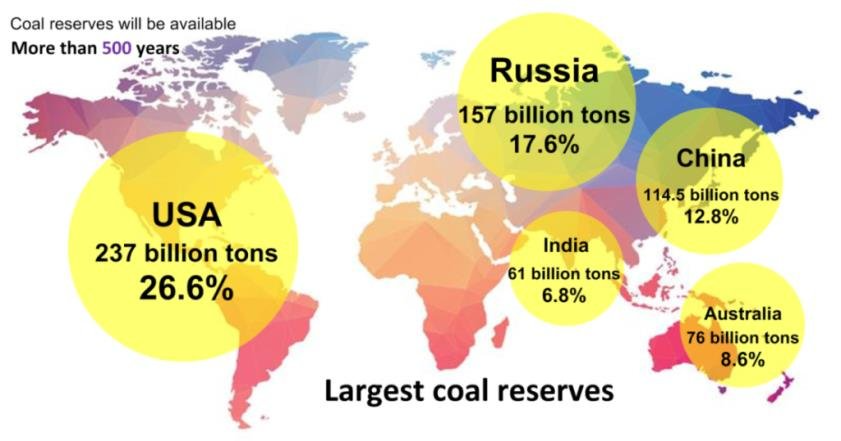
America is Blessed With Enormous Natural Resources of Critical Minerals and Including Coal, Uranium, Oil and Natural Gas. We Should Use them All!
Why would “We the People”...Not use the God given natural resources that America is Blessed with? A good question. My previous commentaries have expounded on the individuals, NGO’s, and others that have created the insane Net-Zero Carbon policies. Because I have written so much on this, I will not repeat my concerns and some would say, my rant. However, if you are interested, here are fourteen blog posts that attempt to show who and how the anti-American Climate Policies have come to be. The Biden Climate Policies must be reversed to win the War on America’s Productive capacity and the Best interests for the American People;
- Energy=Life as We Enjoy it, Aug. 22, 2022: https://dickstormprobizblog.org/2022/08/22/energy-life-that-is-life-as-we-enjoy-it/
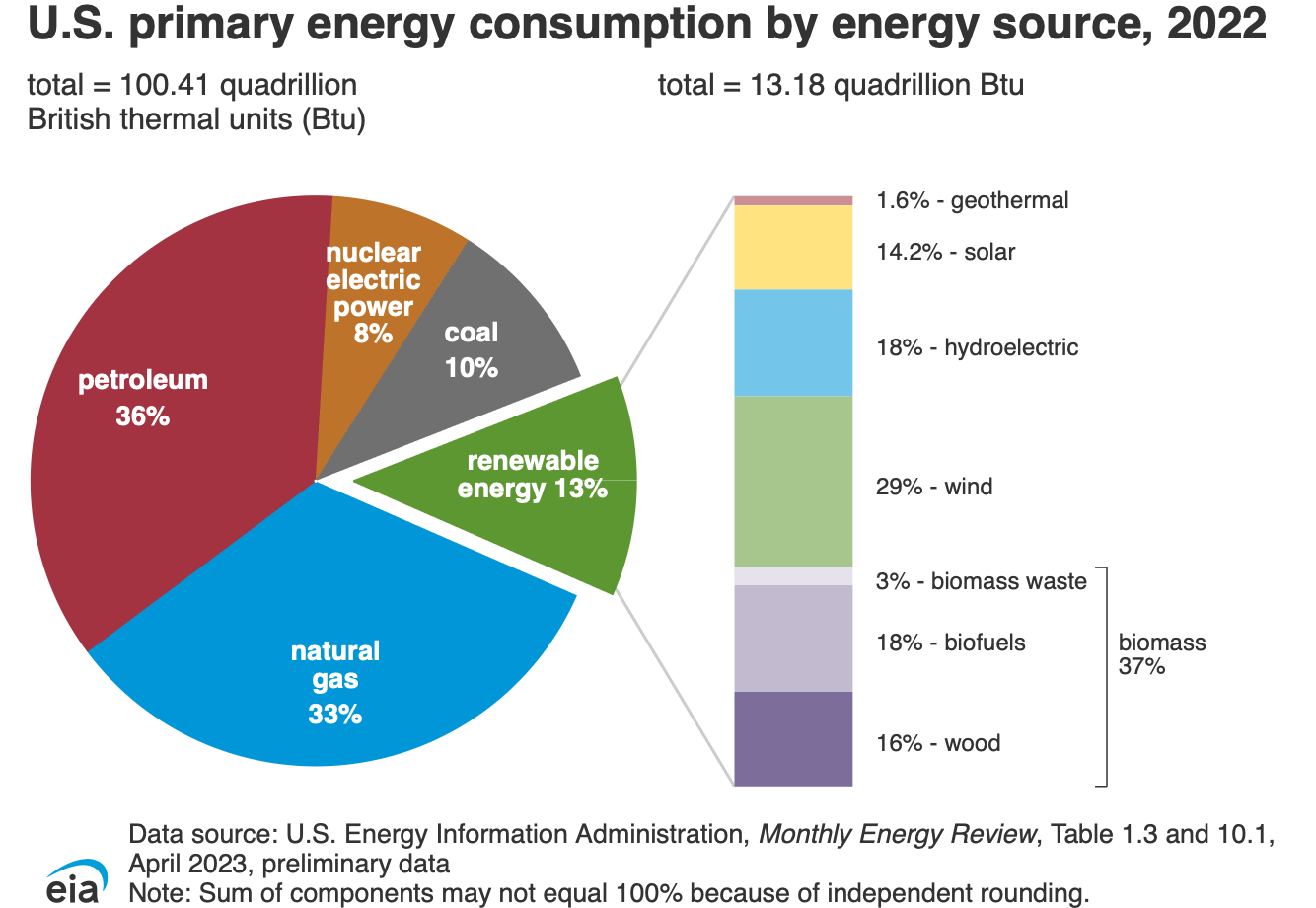
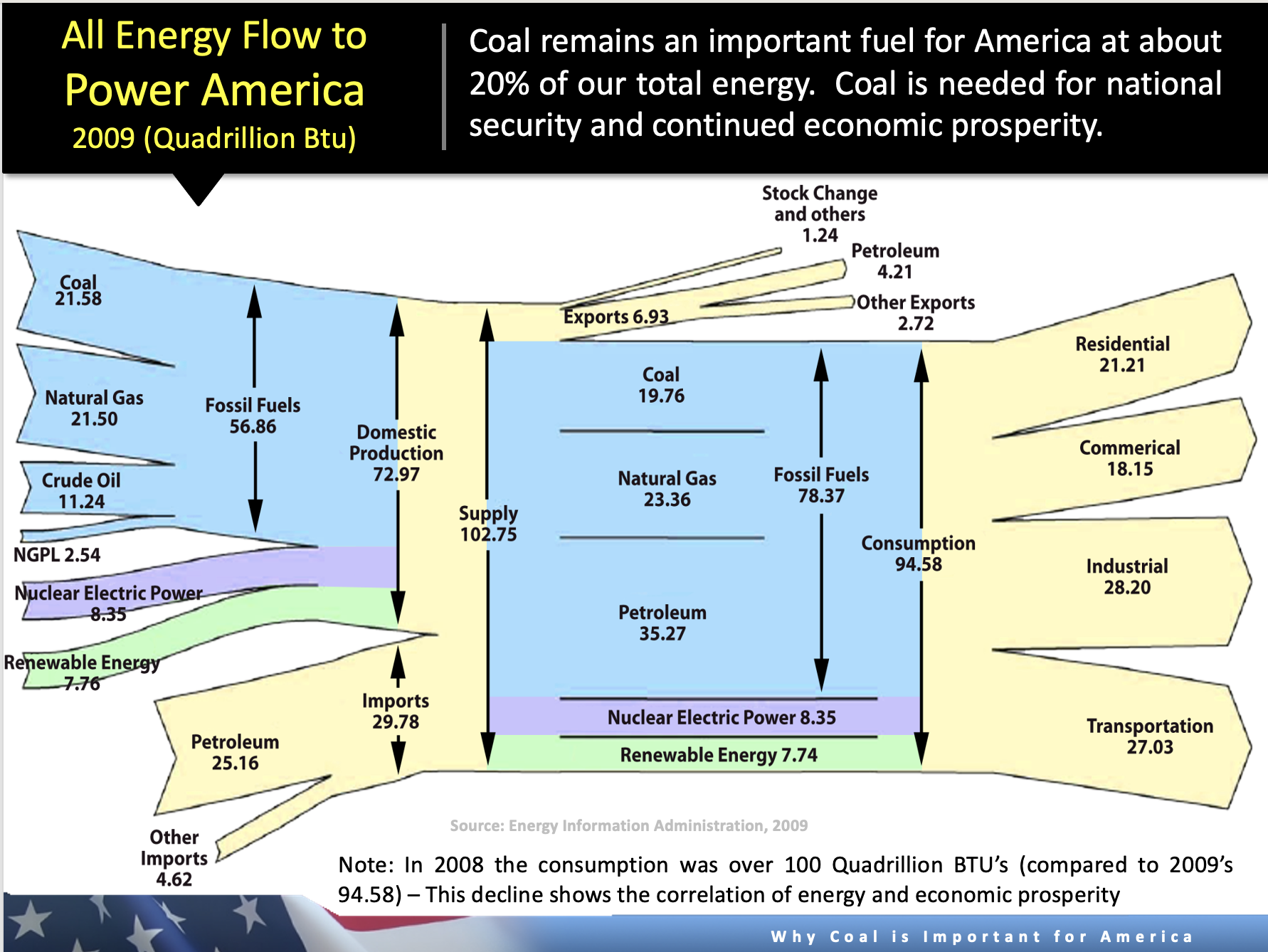
- America Needs 100 Quadrillion BTUs of Primary Energy Each Year, May 16, 2023: https://dickstormprobizblog.org/2023/05/16/back-to-basics-the-u-s-needs-100-quadrillion-btus-year-of-primary-energy/
- Pillars of Modern Civilization, Ammonia, Food, Steel, Concrete, Plastics, Aluminum, July 2022: https://dickstormprobizblog.org/2022/07/25/pillars-of-modern-civilization-all-dependent-on-energy/
- THE ERA OF RELIABLE, AFFORDABLE, ENERGY AND ELECTRICITY GENERATION: PART 1 : https://dickstormprobizblog.org/2023/10/04/the-era-of-reliable-affordable-energy-and-electricity-generation-part-1/
- The Green Energy Crisis is Here, Part 1, Sept. 17, 2023: https://dickstormprobizblog.org/2023/05/29/the-green-energy-crisis-is-here-part-1/
- The Green Energy Crisis, Part 2, “Meet Some of the People that Caused it”, June 2023: https://dickstormprobizblog.org/2023/06/14/green-energy-crisis-part-2-meet-the-policy-makers-that-caused-it/
- The Green Energy Crisis, Part 3, June 26, 2023: https://dickstormprobizblog.org/2023/06/26/green-energy-crisis-part-3-public-energy-education-is-needed-each-person-in-the-u-s-uses-about-315-million-btus-of-primary-energy-year-this-is-not-practical-or-even-possible-to-replace-with-win/
- Without New Thinking on Nuclear Power, Anti-Carbon Policy Can’t Succeed, Nov. 11, 2021 : https://dickstormprobizblog.org/2021/11/13/without-new-thinking-on-nuclear-power-anti-carbon-climate-policy-cant-succeed/
- Facing the Hard Truths of Energy, Part 1, 79 Quadrillion BTUs, The Enormity of the Fossil Energy Systems Providing Sustainable Lives, Jan. 11, 2024 : https://dickstormprobizblog.org/2024/01/11/facing-the-hard-truths-of-energy-part-1-79-quadrillion-btusthe-enormity-of-the-fossil-energy-systems-providing-sustainable-lives/
- Facing the Hard Truths of Energy, Part 2, The Reality of Replacing Conventional Forms of Energy, Jan. 2024: https://dickstormprobizblog.org/2024/02/06/facing-the-hard-truths-of-energy-part-2-some-facts-on-the-reality-of-replacing-conventional-forms-of-energy/
- Facing the Hard Truths of Energy, Part 3, The Transition that Isn’t, from the perspective of Minerals, Feb. 8, 2024: https://dickstormprobizblog.org/2024/02/08/facing-the-hard-truths-of-energy-part-3-the-transition-that-isnt-from-the-perspective-of-minerals/
- Facing the Hard Truths of Energy, Part 4, The True Agenda for Climate Policies, Feb. 13, 2024: https://dickstormprobizblog.org/2024/02/13/facing-the-hard-truths-of-energy-electricity-generation-and-environmental-protection-part-4-what-is-the-true-agenda-for-climate-policies/
- Energy Matters! March 2024 : https://dickstormprobizblog.org/2024/03/11/energy-matters/
- America Needs 100 Quadrillion BTUs of Primary Energy Each Year, May 16, 2023: https://dickstormprobizblog.org/2023/05/16/back-to-basics-the-u-s-needs-100-quadrillion-btus-year-of-primary-energy/
Closing Thoughts
Remember the poem by Martin Niemoller to describe events leading up to the Holocaust? We could paraphrase and say: First they came for coal…..
FIRST THEY CAME
First they came for the Communists And I did not speak out
Because I was not a Communist Then they came for the Socialists And I did not speak outBecause I was not a Socialist
Then they came for the trade unionists And I did not speak out
Because I was not a trade unionist Then they came for the Jews
And I did not speak out
Because I was not a Jew
Then they came for me
And there was no one left
To speak out for me.
There is a parallel strategy by the enemies of coal. Today it is a war on coal, later they will (actually, they already are) attack natural gas and oil, your freedom of transportation, what you eat, how you cook and more.. Even worse, the forces against coal are also against the one zero carbon source of carbon-free dependable, Dispatchable Bulk Power, nuclear. The Sierra Club and other extremist NGO’s have been opposed to nuclear power. So, if it is not protecting human health or the environment, then what is their motive? My friend Thomas J. Shepstone has an answer in a Substack post we corroborated on titled, “Energy Matters If You Value the Life You Now Have and Don’t Want to Live Under Socialism“
Please Consider…..
Do yourself and all Americans a favor. If you already understand energy and electricity generation, help teach those that are not well informed. My estimate is that only about 3% of the American population really understands Primary energy, electricity generation and energy economics. Here are some examples of my attempts.(23, 30, 31)
If you are one of the 97% that does not understand energy and electricity generation, (or have been indoctrinated to demonize carbon) please ask me or anyone else who does understand energy to please take time to explain how government policies and cultural indoctrination has placed America on a path of self destruction.
Yours very truly,
Dick Storm, May 18, 2024
If you are interested in digging down for more research, then here are hundreds of references to support my claim that the EPA and Environmental Zealots have America on a Net Zero Path to Destruction:
- Defense Department article on “Knowing your Enemy”: https://apps.dtic.mil/sti/citations/ADA440962#:~:text=Abstract%3A,battle%20to%20be%20in%20peril
- NERC Summer Reliability Report, May 2024: https://www.nerc.com/pa/RAPA/ra/Reliability%20Assessments%20DL/NERC_SRA_2024.pdf
- Good Substack contribution to explain Who/Why/How the Grid Reliability became “Undermined-Electrons Have Consequences” Energy IQ, by Pandreco, April 14, 2024: https://pandreco.substack.com/p/undermining-electrons-have-consequences
- Quanta Technology Study Report on Power Generation Shortages, report for America’s Power, Feb. 2024: https://americaspower.org/wp-content/uploads/2024/02/Quanta-Final-Feb-2024-3.pdf
- You Tube Lars Schernikau on Honest Pay Back of Renewables, : https://www.youtube.com/watch?v=Wa8Q8MoWfrU
- IER Report on U.S. Treasure of Energy Resources, May 2024: https://www.instituteforenergyresearch.org/wp-content/uploads/2024/05/2024-North-American-Energy-Inventory.pdf
- Wide Awake Media website. Videos and info from the Common Sense Viewpoint: https://wide-awake-media.com
- FERC Order #1920 is a costly shell game”, Increased Transmission & Distribution is Not Helpful, by Travis Fisher, May 2024: https://travisfisher.substack.com/p/fercs-order-no-1920-a-costly-shell
- “We Keep Being Told Renewables are Cheap, But Our Electric Bills Keep Getting Higher” A review of the true costs of renewables in WUWT, May 2024: https://wattsupwiththat.com/2024/05/17/debunking-the-cheap-renewables-myth/
- Congressional Report on the Obama Carbon Mandate, 2015: http://www.scientificintegrityinstitute.org/USSEWP080415.pdf
- Dick Storm Presentation to Columbus Energy Forum, Columbus, Ohio August 2022: https://www.linkedin.com/posts/richard-storm-00557810_presentation-and-speakers-notes-from-august-activity-7068650158862827520-B-_W?utm_source=share&utm_medium=member_desktop
- Dick Storm Panel comments at Powergen International-2024: https://www.linkedin.com/posts/richard-storm-00557810_i-had-the-honor-of-being-on-a-powergen-panel-activity-7156046708139782144-zPoZ?utm_source=share&utm_medium=member_desktop
- Dick Storm Blog post, What would it take to achieve Net-Zero Carbon by 2050? : https://dickstormprobizblog.org/2023/01/12/what-would-it-take-for-net-zero-electricity-generation-by-2050/
- Dick Storm Blog post, Wake up Americans: https://dickstormprobizblog.org/2023/09/20/please-wake-up-america-your-energy-and-electricity-generation-reliability-are-at-risk/
- Grid Brief, “Energy IS the Economy” by Robert Hargraves, Nov. 15, 2022: https://www.gridbrief.com/p/guest-feature-energy-economy
- A Thriving Economy and Clean Air Too, Oct. 23, 2020 : https://dickstormprobizblog.org/2020/10/23/part-6-a-thriving-economy-and-clean-air-too/
- “Energy Matters If You Value the Life You Now Have and Don’t Want to Live Under Socialism” https://open.substack.com/pub/energysecurityfreedom/p/energy-matters-if-you-value-the-life?r=kv1a9&utm_campaign=post&utm_medium=email
- 114th Congress, Majority Staff Report, Obama’s Carbon Mandate, August 2015: http://www.scientificintegrityinstitute.org/USSEWP080415.pdf
- War on Carbon Accomplishes Two Things, Jan. 30, 2021: https://dickstormprobizblog.org/2021/01/30/us-war-on-carbon-accomplishes-two-things/
- Dick Storm Blog, “The Stupidity of Net-Zero Carbon”. Oct. 2021: https://dickstormprobizblog.org/2021/10/13/the-stupidity-of-net-zero-carbon/
- Dick Storm Blog, “What is Endangered, “Climate or Freedom” 2021: https://dickstormprobizblog.org/2022/02/27/what-is-endangered-climate-or-freedom-this-is-the-sub-title-of-the-book-blue-planet-in-green-shackles/
- Dick Storm Blog on Biden EO to Cancel Keystone Pipeline, March 2021: https://dickstormprobizblog.org/2021/03/03/presidential-executive-order-signed-by-biden-that-will-harm-the-u-s-economy/
- Short Link to OLLI Course Understanding Net Zero, March 20, 2023: https://wp.me/p5DzAo-No
- Website: https://dickstormprobizblog.org https://wordpress.com/posts/dickstormprobizblog.orgDick Storm Link: What Would it Take to Reach Net Zero Carbon by 2050: https://dickstormprobizblog.org/2023/01/12/what-would-it-take-for-net-zero-electricity-generation-by-2050/
- America Has No Energy Policy, So What are You Going to do About it”: https://dickstormprobizblog.org/2022/12/03/america-has-no-energy-policy-so-what-are-you-going-to-do-about-it
- Comparison of China and U.S. Energy Use, January 2023: https://dickstormprobizblog.org/2023/01/18/comparison-of-china-energy-electricity-generation-with-u-s-a/
- Energy and Economic Prosperity, Dick Storm Blog, Nov. 18, 2022: https://dickstormprobizblog.org/2022/11/18/energy-and-economic-prosperity-2/
- Americas Treasure of Fossil Fuels, Nov. 2022: https://dickstormprobizblog.org/2022/11/26/americas-treasure-of-fossil-fuels/ Short link: https://wp.me/p5DzAo-Bn
- America’s Treasure of Fossil Fuels: https://wp.me/p5DzAo-Bn
- Dick Storm March USCB-OLLI Course LinkedIn Link, Part 1: https://www.linkedin.com/posts/richard-storm-00557810_my-uscb-olli-course-understanding-net-zero-ugcPost-7039925623305248769-Qe6u?utm_source=share&utm_medium=member_desktop
- Part 2: https://www.linkedin.com/posts/richard-storm-00557810_uscb-olli-understanding-net-zero-part-2-activity-7039928018206695424-s6i7?utm_source=share&utm_medium=member_desktop
- Energizing the Public on the Impossibility of Achieving Net-Zero Carbon: https://dickstormprobizblog.org/2023/03/20/educating-and-energizing-the-public-on-energy-policy-and-the-impossibility-of-powering-america-with-wind-and-solar/
- Back to Basics, America Needs 100 Quads per Year of Energy: https://dickstormprobizblog.org/2023/05/16/back-to-basics-the-u-s-needs-100-quadrillion-btus-year-of-primary-energy/
- Energy=Life, The Importance of Energy to Power our Lives: https://dickstormprobizblog.org/2022/08/22/energy-life-that-is-life-as-we-enjoy-it/
- Liberty Energy Report, “Bettering Human Lives” : https://www.libertyenergy.com/wp-content/uploads/2022/08/Bettering-Human-Lives-Liberty-Energy-ESG-Report-2021-Spreads-Web-2.pdf
- Science Matters on the Roots of Environmentalism, Jan 2023: https://rclutz.com/2023/01/06/from-nature-conservation-to-climate-calamity/#like-28807
- EIA 2021 Electricity Generation Statistics: https://www.eia.gov/energyexplained/electricity/electricity-in-the-us-generation-capacity-and-sales.php
- Bjorn Lomborg Science Direct, Jan. 2023: https://www.sciencedirect.com/science/article/pii/S0040162520304157
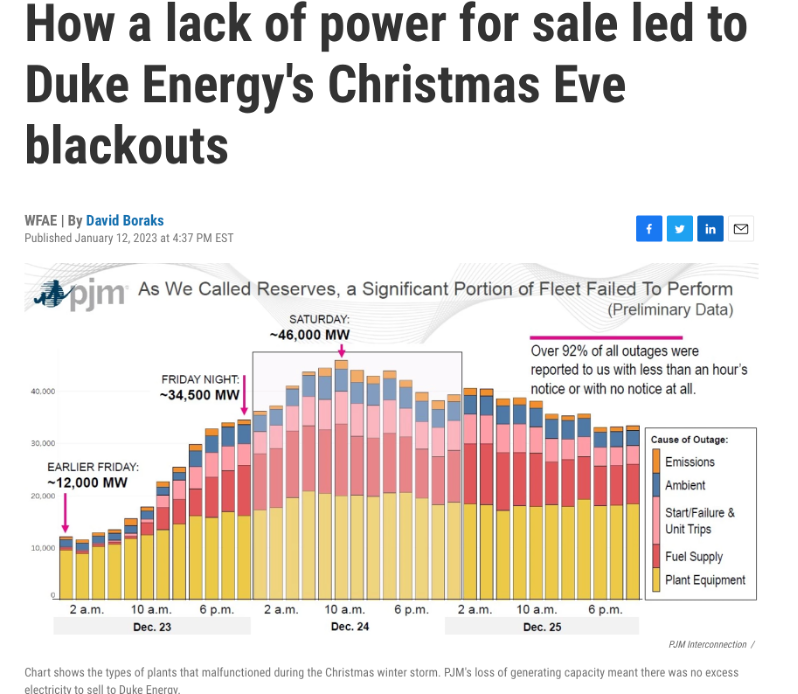
- TVA Rolling Blackouts report in Tennessean, Jan, 2023: https://www.tennessean.com/story/news/local/2022/12/23/why-tennessee-valley-authority-ordered-rolling-blackouts-in-nashville/69754538007/
- N.C. Utilities Commission Testimony of Bradford Muller of Charlotte Pipe and Foundry, Blackouts, Christmas 2022:https://starw1.ncuc.gov/NCUC/ViewFile.aspx?Id=54fbaba6-76d3-4367-abe2-ee3f8fade516
- North State Journal article on NC Electricity Policies by Bradford Muller: https://nsjonline.com/article/2023/01/muller-the-christmas-catastrophe-near-miss/
- WUNC Report on Cold Weather Blackouts in N.C. https://www.wunc.org/2023-01-06/cold-weather-blackouts-challenge-conventional-wisdom-on-reliability
- Great Plains Institute Warning, Aug 2022 of Blackouts due to insufficient Generation capacity: https://betterenergy.org/blog/qa-blackout-risks-underscore-resilience-reliability-investment-needs-for-us-power-grid/
- MISO Blackout Warning from Riverland Energy: https://riverlandenergy.com/miso-maximum-generation-warnings
- E&E News on Blackout warning, August 2022: https://www.eenews.net/articles/why-the-midwest-worries-about-future-blackouts/
- American Experiment Article, in Minnesota discussing Blackout risks, June 2022: https://www.americanexperiment.org/why-the-risk-of-blackouts-in-minnesota-continues-to-grow/
- Net Zero Watch, UK Experience with Wind Farms, January 7, 2023: https://mailchi.mp/86e68627c77f/payments-for-windfarms-to-switch-off-soar-to-quarter-billion-pounds-193411?e=9e46528ac6
- World Nuclear Association Info on Nuclear Power Contribution to Reducing Manmade Carbon Dioxide Emissions: https://www.world-nuclear.org/information-library/energy-and-the-environment/nuclear-energy-and-sustainable-development.aspx
- Solar Disappointment in the Southwest, National Review, Jan 4, 2023: https://www.nationalreview.com/2023/01/a-bright-shining-disappointment/
- ESG Directive from Biden, reported in Oil & Gas Journal, Jan. 2023: https://www.ogj.com/general-interest/government/article/14288039/biden-administration-directs-agencies-to-prioritize-ghg-reductions
- CO2 Coalition: https://co2coalition.org
- Physicist Wallace Manheimer on CO2, January 2023: https://ccsenet.org/journal/index.php/jsd/article/view/0/47745 Abstract here: https://ccsenet.org/journal/index.php/jsd/article/view/0/47745
- National Mining Assoc.: https://nma.org/facts-stats-and-data/
- E&E News, TVA Bellefonte Nuclear Plant for auction: https://www.eenews.net/articles/for-sale-2-unfinished-reactors-with-hope-for-jobs/
- E&E News Electric Hummer fueling EV Backlash: https://www.eenews.net/articles/how-the-hummer-is-fueling-a-backlash-against-electric-trucks/
- Ron Clutz Post, Before Biden, Trump Accomplishments: https://rclutz.com/2023/01/15/the-good-old-days-b-b-before-biden/#like-28933
- Elements Visualization of sources of Power by Fuel, U.S. & Canada: https://elements.visualcapitalist.com/biggest-sources-of-electricity-by-state-and-province/
- Elements Best Commodities of 2022: https://elements.visualcapitalist.com/the-top-10-best-and-worst-performing-commodities-of-2022/
- China to Build 16 GW POWER Mag: of Solar-Coal-Wind, Jan. 2023: https://www.powermag.com/china-breaks-ground-on-massive-16-gw-solar-wind-coal-project/
- Forbes on China Generating Capacity, about 2,390 GW, Feb 2022: https://www.forbes.com/sites/thebakersinstitute/2022/04/26/coal-to-power-chinas-energy-transition/?sh=7437abc81b9e
- EIA China Energy Facts, 2021 : https://www.eia.gov/international/overview/country/CHN
- IEA China Energy Feb 2022: https://www.iea.org/countries/china
- Carbon Brief.org: https://www.carbonbrief.org/analysis-what-does-chinas-coal-push-mean-for-its-climate-goals/
- World of CO2 new website, Jan. 2023: https://www.the-world-of-co2.org
- Science Matters by Ron Clutz: https://rclutz.com/2023/01/17/world-of-co2-infographics-2/comment-page-1/#comment-44254
- Carbon Footprint by country, World Population Review : https://worldpopulationreview.com/country-rankings/carbon-footprint-by-country
- WUWT Weaponizing Alarmism on Climate, Steven Koonin and Jordan Peterson: https://wattsupwiththat.com/2023/01/17/unsettled-climate-and-science-dr-steven-koonin/
- Davos 2023, China to Boost Oil Demand by at least 500,000 BBL’s/day: https://energynow.com/2023/01/davos-2023-china-to-boost-oil-demand-by-up-to-500000-bpd/
- State of American Energy by API President, Jan. 2023: https://mail.google.com/mail/u/0/?tab=wm&ogbl#search/vbourdonneau%40gmail.com/FMfcgzGrcFgJPkrZzLBrPqccDjVNsTTl
- State of American Energy Report by API: https://events.api.org/reports/soae-2023/
- Rare Earths from coal: https://www.renuva.com
- PA Pundits, Pursuit of the Impossible” Net Zero: https://papundits.wordpress.com/2022/12/21/net-zero-the-pursuit-of-the-impossible/?blogsub=subscribed#subscribe-blog
- WSJ, Chinese Projects around world are failing, January 19, 2023: https://www.wsj.com/articles/china-global-mega-projects-infrastructure-falling-apart-11674166180?mod=trending_now_news_1
- Jay Lehr Tribute with many references on page, Jan. 21, 2023: https://wattsupwiththat.com/2023/01/21/climate-change-weekly-459-remembering-jay-lehr-scholar-truth-seeker-friend-eternal-optimist/
- C. Paul Smith “Closing Argument on the Climate Change Hoax”: https://www.cpaulsmith.com/palmyra-bookstore/the-climate-change-hoax-argument/
- Grid Down PowerUp: https://griddownpowerup.com
- Global Electricity Prices: https://www.globalpetrolprices.com/electricity_prices/
- EMP Commission Reports: http://www.empcommission.org
- Energy Dept. Report on Transformers for Grid: https://www.energy.gov/oe/addressing-security-and-reliability-concerns-large-power-transformers
- Detailed report on Transformer Manufacturers of world, see pgs 19-23 on suppliers: https://www.energy.gov/sites/prod/files/2014/04/f15/LPTStudyUpdate-040914.pdf
- WSJ AMERICA SELF-SABOTAGES GRID: https://www.wsj.com/articles/america-self-sabotages-its-electrical-grid-renewable-fossil-fuel-power-11672685320
- US Grid Real Time power: https://www.eia.gov/electricity/gridmonitor/dashboard/electric_overview/US48/US48
- WUWT The Future of Oil : https://wattsupwiththat.com/2023/01/24/does-the-oil-industry-have-a-future-part-i/
- WUWT The Future of Oil pt 2: https://wattsupwiththat.com/2023/01/26/should-nations-stop-using-fossil-fuels-part-ii/
- WUWT The Future of Oil Pt #3: Master Resource: https://www.masterresource.org/mexico-energy-policy/oil-inustry-salazar-2/
- National Review, Russians Fund Environmentalists: https://www.nationalreview.com/2022/12/how-russia-backed-environmentalism-is-leading-to-blackouts-in-new-england/
- German Extremists, Funded by Russia: https://www.nationalreview.com/2022/01/putins-green-fifth-column/
- Harvard Misinformation/Study on Fossil Fuels: https://seas.harvard.edu/news/2021/02/deaths-fossil-fuel-emissions-higher-previously-thoughthttps://thethoriumnetwork.com/2022/04/21/episode-15-clean-air-and-water-not-with-fossil-fuels-around-death-by-fossil-unintended-consequences-chapter-7-part-1/
- Dr. Timothy Ball Paper on the Deliberate Corruption of Science, 2014: https://www.alachuacounty.us/Depts/epd/EPAC/BOOK%20REVIEW%20-%20‘THE%20DELIBERATE%20CORRUPTION%20OF%20CLIMATE%20SCIENCE%20by%20TIM%20BALL.pdf
- Tim Ball, CO2 is not a pollutant 2018: https://www.technocracy.news/tim-ball-the-evidence-proves-that-co2-is-not-a-greenhouse-gas/
- Ugly Wind Farms Headed for Magic Valley Idaho, The Federalist, January 26, 2023: https://thefederalist.com/2023/01/27/climate-extremists-hideous-wind-farms-are-coming-to-your-backyard/
- World Nuclear Assoc. and EPRI Presentations, Dec. 2022: https://epri.box.com/s/8uu46f5hoo3x9loni23qvvmdopz7eg62
- Real Clear Energy, “Are you Really against Fossil Fuels?”: https://www.realclearenergy.org/articles/2023/01/24/are_you_really_against_fossil_fuels_read_this_before_you_answer_877363.html
- WUWT Climate Alarmists Greatest Fear, Jan. 29, 2023: https://wattsupwiththat.com/2023/01/29/the-climate-alarmists-greatest-fear/
- Being Pro-Nuclear isn’t enough, POWER Magazine, Feb. 2023: https://www.powermag.com/being-pro-nuclear-wont-be-enough-heres-why/?oly_enc_id=6322G7698190D8A
- Charlie Munger’s Warning on printing too much cash. Interesting and worrisome, Jan. 2023: https://www.youtube.com/watch?v=iH2ddOyw8KU
- Washington Examiner Feb, 2, 2023: https://www.washingtonexaminer.com/restoring-america/fairness-justice/anti-police-and-environmentalist-activists-share-the-same-goal-the-destruction-of-the-american-system
- Ken Wilson, P. Eng. Canada, IPCC vs. Facts, CO2 Coalition Feb.. 2023: https://co2coalition.org/publications/ipcc-vs-the-facts-the-case-for-climate-realism/
- CO2 Coalition, Publications, All Excellent: https://co2coalition.org/publication_category/member-publications/
- GWPF UK Study, Where are the Engineers” By Professor Michael Kelly : https://www.thegwpf.org/content/uploads/2020/05/KellyDecarb-1.pdf
- GWPF NZ Professor, Michael Kelly: http://www.bryanleyland.co.nz/power-industry-stuff.html
- Samuel Furfari, “Hydrogen, an old Idea and still Windy”: https://www.europeanscientist.com/en/features/hydrogen-a-century-old-idea-and-still-windy/
- New England Electricity Sources during cold February week: https://blackmon.substack.com/p/saturdays-energy-absurdity-meredith/comments
- U.S. Dept of Energy Plan to Net Zero on NPR Feb. 4, 2023: https://www.npr.org/2023/02/02/1148370220/biden-renewable-energy-goals
- Paul Harvey, “If I Were the Devil” : https://www.youtube.com/watch?v=S9NoQHgjM_0
- Canary Media Electrify Everything, Feb. 6, 2023: https://www.canarymedia.com/articles/electrification/home-of-the-future-climate-friendly-electrified-and-closer-than-ever?utm_campaign=canary&utm_medium=email&_hsmi=244754760&_hsenc=p2ANqtz–6rlMJjZBNphFujAKeUSOclhM7MDo3MAq3t8u3MAn-Hv5pscN1RZ8R1qq_RNf10dSqng0r9Wbyq214_bxo0U_i_LgE4Bn5CS-Zttgn5ClFXBvgoBU&utm_source=newsletter
- Judith Curry Blog, 2016, “Balancing the Grid” : https://judithcurry.com/2016/09/12/balance-and-the-grid/
- American Coalition of Clean Coal Energy, 2016 Report on Economics: http://www.americaspower.org/wp-content/uploads/2016/06/Family-Energy-Costs-2016.pdf
- WUWT on Use of Academic Studies, Feb 7, 2023, Includes good links to Planning Engineer and Economic consequences of unreliable power: https://wattsupwiththat.com/2023/01/12/academics-and-the-grid-part-i-i-dont-think-that-study-means-what-you-think-it-means/
- USGS List of Critical Materials/Metals: https://www.usgs.gov/news/national-news-release/us-geological-survey-releases-2022-list-critical-minerals
- Stanford Univ. Clean Energy Course: https://web.stanford.edu/group/efmh/jacobson/WWSBook/WWSBook.html
- NMA Blog (National Mining Assoc): https://mineralsmakelife.org/blog/how-to-make-2023-the-year-of-minings-renaissance/
- Master Resource, Does the Oil Industry Have a Future?: https://www.masterresource.org/mexico-energy-policy/oil-industry-salazar-1/
- Capital Research Center Publication, Dec. 2022: https://capitalresearch.org/app/uploads/Capital-Research-2022-8.pdf?blm_aid=59207
- The Critic: “The End of Civilization, 2035” : https://thecritic.co.uk/2035-the-end-of-civilisation/
- New York Post, Get Ready for Lights out and Heat off in 2040: https://nypost-com.cdn.ampproject.org/c/s/nypost.com/2023/02/09/get-ready-for-the-lights-and-heat-to-go-out/amp/
- The Critic: Energy Planning in the UK, a Horror Story: https://thecritic.co.uk/british-energy-planning-a-horror-story/
- WUWT Climate Activists Celebrate your Utility Bill Pain, Profitability of Protesting Fossil Fuels: https://wattsupwiththat.com/2023/02/12/atlantic-climate-activists-celebrate-your-utility-bill-pain/
- Ron Clutz, “There will be Hell to Pay from Social and IRA Spending Binge: https://rclutz.com/2023/02/11/therell-be-hell-to-pay/#like-29514
- Power Outage Tracking web sites:
https://lnkd.in/gEyJJX-Y
https://poweroutage.us/
https://www.iso-ne.com/ - Daniel Yergin on LinkedIn, Energy Transition Confronts Reality, Feb. 14: https://www.linkedin.com/pulse/energy-transition-confronts-reality-daniel-yergin/?trackingId=tuMcIZAi2b0pHD5sopvB9w%3D%3D
- Energy World, Feb. 13 “EU Warns US on A Crisis Mode Overhaul of Energy Market” and Change to Green Energy: https://energy.economictimes.indiatimes.com/news/power/countries-warn-eu-against-crisis-mode-overhaul-of-energy-market/97855704
- Finland GTK Time to Wake up Slide Presentation: https://www.gtk.fi/en/research/time-to-wake-up/
- Heartland Institute 2015 Summary of Obama Carbon Rules: https://heartland.org/opinion/senate-exposes-epa-green-group-secret-collusion-on-carbon-rules/
- CNBC Interview with Liberty Energy CEO, Chris Wright: https://lnkd.in/gyeD9Jdf
- NZ/UK Professor Michel Kelly & Bryan Leyland Web page: http://www.bryanleyland.co.nz/power-industry-stuff.html
- Professor Michael Kelly web page: https://www.thegwpf.org/content/uploads/2020/05/KellyDecarb-1.pdf
- WUWT Electricity Prices Rising Due to Wind & Solar Installations, Feb. 22, 2023: https://wattsupwiththat.com/2023/02/20/wind-solar-and-household-electricity-prices/
- Climate Depot website for renewables production costs: https://www.climatedepot.com/2018/01/25/who-would-have-thought-nations-with-more-renewables-have-more-expensive-electricity/
- Vogtle Nuclear Plant Update, also info on SCE&G Summer 2&3, Feb. 20, 2023: https://wattsupwiththat.com/2023/02/21/still-more-vogtle-nuclear-delays-how-will-it-end/
- Union of Concerned Scientists Clarification on Nuclear Power, 2018: https://wattsupwiththat.com/2018/11/23/ucs-clarifies-stance-on-nuclear-power/
- “Renewables are cheaper than 99% of coal plants” Utility Dive, Feb. 9, 2023: https://www.utilitydive.com/news/renewables-cheaper-energy-than-99-percent-of-us-coal-plants-just-energy-transition/642393/
- Presentation by Nat Bullard on Renewables and total world energy, January 2023: https://www.nathanielbullard.com/presentations
- Electricity Rates in U.S. : https://quickelectricity.com/cost-of-electricity-per-kwh-by-state/
- Power Lines Map, U.S. Geosciences: https://atlas.eia.gov/apps/eia::all-energy-infrastructure-and-resources/explore
- Daily Skeptic, Feb. 23, 2023, by 30 year Reuter’s veteran Journalist “I Thought CO2 Was Causing Global Warming, I was Wrong”: https://dailysceptic.org/2023/02/23/when-i-covered-climate-change-for-reuters-i-thought-co2-was-to-blame-for-rising-temperatures-i-was-wrong/
- Europe’s Industry Crippled by high Energy Costs NYT, Sept. 2022: https://www.nytimes.com/2022/09/19/business/europe-energy-crisis-factories.html
- Power Engineering article on Hydrogen Hub: https://www.power-eng.com/policy-regulation/doe-encourages-33-groups-to-submit-regional-clean-hydrogen-hub-applications/
- Is Green Energy China’s Trojan Horse? Western Standard by Joseph FOURNIER, OCT. 2022: https://www.westernstandard.news/opinion/is-green-energy-the-chinese-communist-partys-trojan-horse/article_6bbc2b04-50a5-11ed-bdc4-9b18b8d01f80.html
- China to build 106 GW of new coal plants March 2023: https://chinadialogue.net/en/energy/two-sessions-chinese-provinces-push-coal-and-clean-energy/
- WUWT Post, ”Gas Generated Electricity is less expensive than Wind”: https://wattsupwiththat.com/2023/03/03/gas-power-is-cheaper-than-wind-despite-carbon-briefs-claims/
- Dr. Judith curry, Climate Uncertainty review by WUWT: https://wattsupwiththat.com/2023/03/03/judith-curry-part-1-presentation-about-her-new-book-tom-nelson-podcast-77/
- WSJ LNG Paths from Texas to France: https://www.wsj.com/articles/american-fracked-gas-ukraine-invasion-europe-import-9e5cc725?mod=hp_lead_pos7
- Alex Epstein, Talking Points on the Importance of Energy for Human Flourishing: https://alexepstein.substack.com/p/some-of-my-favorite-talking-points?utm_source=substack&utm_medium=email
- WUWT Energy and Military Strength, March 3, 2023: https://wattsupwiththat.com/2023/03/03/russias-biggest-weapon-and-chinas-too-is-fossil-fuel-energy/
- Has Al Gore ever been right on Climate? Capital Research Center, March 2023: https://capitalresearch.org/article/al-gores-30-years-of-climate-errors-part-1/?blm_aid=59207
- Feasibility of Achieving Net-Zero Carbon by 2050, by Professor Michael Kelly: https://wattsupwiththat.com/2023/03/04/feasibility-for-achieving-a-net-zero-economy-for-the-u-s-by-2050/
- Wind Power Report by IRENA : https://www.irena.org/Energy-Transition/Technology/Wind-energy
- Judith Curry Website on Cost of wind power: https://judithcurry.com/2015/05/12/true-costs-of-wind-electricity/f https://judithcurry.com/2015/05/12/true-costs-of-wind-electricity/
- The Conversation on Why are Household Electricity Prices Going Up If Wind is so Cheap?: https://theconversation.com/renewables-are-cheaper-than-ever-so-why-are-household-energy-bills-only-going-up-174795
- Boston Energy Costs High, Feb. 2023: https://www.bostonsolar.us/solar-blog-resource-center/blog/why-are-energy-costs-so-high-this-winter/
- Electricity Prices U.S. by EIA, Feb. 2023: https://www.eia.gov/outlooks/steo/tables/pdf/7ctab.pdf
- PSU-Basic Economics of Power Generation: https://www.e-education.psu.edu/eme801/node/530
- Global Energy Institute, Chamber of Commerce, Electricity Costs across the U.S.A. :https://www.globalenergyinstitute.org/average-electricity-retail-prices-mapc
- Combustion Engineering Archived photos,: https://www.timesfreepress.com/news/2018/jun/01/made-chattanooga/
- You Tube, Foreign video of Nuclear Reactor being manufactured: https://www.nuclear-power.com/nuclear-power-plant/nuclear-reactor/reactor-pressure-vessel/
- 41 Realities on Energy, By Mark Mills:
https://fee-org.cdn.ampproject.org/c/s/fee.org/articles/41-inconvenient-truths-on-the-new-energy-economy/amp - WSJ EV Sales Jolt, Jan 2023: https://www.wsj.com/articles/u-s-ev-sales-jolted-higher-in-2022-as-newcomers-target-tesla-11672981834
- CFACT Electricity Prices Soaring where Wind Power is high % of generation: https://www.cfact.org/2023/03/07/electricity-prices-are-soaring-in-heavy-wind-energy-states/?mc_cid=993d261e3e&mc_eid=2f8550900e
- Climate Fact Check from Junk Science, March 7, 2023: https://junkscience.com/wp-content/uploads/2023/03/Climate-Fact-Check_February-2023-Edition_v2.pdf
- CFACT, Ron Stein excellent essay on the importance of Energy, March 2023: https://www.cfact.org/2023/03/08/american-suppression-of-fossil-fuels-courts-a-national-security-disaster/
- Climate Policies will Cost Germany 960 + Billion and still will not make much difference…..:https://wattsupwiththat.com/2023/03/08/claim-climate-change-will-cost-germany-960-billion-by-2050/
- WSJ Coal Provides the Fuel Needed for Germany to Keep the Lights on in 2022: https://www.wsj.com/articles/germany-coal-energy-electricity-renewables-4700b442?mod=opinion_lead_pos2
- Visual Capitalist Coal in Asia, March 2023: https://elements.visualcapitalist.com/asias-biggest-sources-of-electricity-by-country/
- Daily Caller. Biden’s EPA Rule to Kill Off Coal Plants, March 8, 2023: https://www.google.com/url?q=https://dailycaller.com/2023/03/08/biden-epa-new-regs/&source=gmail&ust=1678615516765000&usg=AOvVaw0di3ndkkR73iVUOKpvIzfh
- World Nuclear News, France to Build more Nuclear Plants: https://www.world-nuclear-news.org/Articles/French-Senate-adopts-bill-on-accelerating-nuclear
- Capital Research Center on Al Gore’s 30 years of wrong predictions: https://capitalresearch.org/article/al-gores-30-years-of-climate-errors-part-1/
- James Brooks, RBAC on bringing improved living conditions to Billions: https://rbac.com/rbacs-role-in-bringing-energy-to-a-billion-people/
- Cyrus Brooks Video on Renewables, Outstanding communication in 2 minutes: https://www.linkedin.com/posts/cyrus-brooks-03274713_energy-power-energybills-ugcPost-7040102595239055360-BoVt?utm_source=share&utm_medium=member_desktop
- The Real Price of Wind and Solar: https://www.wsj.com/articles/renewable-energy-balancing-costs-united-kingdom-energy-bills-9795e48d?mod=opinion_lead_pos4
- Cowboy State Daily, March 2023: https://cowboystatedaily.com/2023/03/10/letter-to-the-editor-children-should-be-taught-what-energy-is-so-they-can-fight-idiocy/
- NOAA Sea Level Rise Viewer: https://coast.noaa.gov/slr/#/layer/slr/2/-8988661.48972888/3793092.6353016817/12/satellite/none/0.8/2050/interHigh/midAccretion
- Maurice Strong Story: http://ielts-yasi.englishlab.net/wizard_baca_grande_1990.pdf
- China, Sinopec CCS Plant, Feb. 2023: https://cen.acs.org/business/investment/Sinopec-completes-China-first-large-carbon-capture-plant/100/i5
- Self Sabotage the Electric Grid: WSJ January 2023: https://www.wsj.com/articles/america-self-sabotages-its-electrical-grid-renewable-fossil-fuel-power-11672685320
- The Christmas Grid Emergency: https://www.wsj.com/articles/the-christmas-electric-grid-emergency-11672091317?mod=article_inline
- Capital Research Testimony by Scott Walter May 2022: https://capitalresearch.org/app/uploads/2022-May-4-Testimony-Finance-Subcom-IRS.pdf
- Capital Research Center, Green watch: https://capitalresearch.org/category/green-watch/
- NRDC Activist Facts, Influence Watch: https://www.activistfacts.com/organizations/19-natural-resources-defense-council/
- Donn Dears website, Politics of Energy Policy part 2 and links to purchase his books: https://ddears.com/2022/08/08/the-politics-of-energy-part-2/
- Ron Clutz “Science Matters”, website and his take on green Energy: https://rclutz.com/2023/03/17/multiple-choice-question-re-green-energy/#like-30057
- Dr. Roy Spencer Website on Atmospheric Science https://www.drroyspencer.com/
- Slavery and Child Labor at the Core of Elites’ Green Energy Obsession, by H. Sterling Burnett, https://heartland.org/opinion/climate-change-weekly-464-slavery-and-child-labor-at-the-core-of-elites-green-energy-obsession/
- American Suppression of Fossil Fuels Courts a National Security Disaster, By Ronald Stein P.E. https://heartland.org/opinion/american-suppression-of-fossil-fuels-courts-a-national-security-disaster/
- WSJ The Real Price of Wind and Solar, Renewables Cost More: https://www.wsj.com/articles/renewable-energy-balancing-costs-united-kingdom-energy-bills-9795e48d?mod=opinion_lead_pos4
- World’s Climate Scientists Told to Cover Up the Fact the world has not warmed in 15 years, Daily Mail, UK: https://www-dailymail-co-uk.cdn.ampproject.org/c/s/www.dailymail.co.uk/news/article-2425775/amp/Climate-scientists-told-cover-fact-Earths-temperature-risen-15-years.html
- TED Talk Nuclear Power Is Our Best Hope to Ditch Fossil Fuels | Isabelle Boemeke on the need for more nuclear power: https://www.youtube.com/watch?v=ESAaz9v4mSU
- WUWT March 20th, 2023, UN- IPCC Climate Warming Report: https://wattsupwiththat.com/2023/03/20/ipcc-issues-their-annual-final-climate-warning/
- David Blackman Energy Absurdity , EU Renewables, March 25, 2023: https://open.substack.com/pub/blackmon/p/sundays-energy-absurdity-about-those?r=kv1a9&utm_campaign=post&utm_medium=web
- Ed Ireland SubStack on Gas Pipelines, March 21, 2023: https://edireland.substack.com/p/energy-factoid-the-least-us-interstate?utm_source=substack&utm_medium=email
- Texas Grid Stability example: https://edireland.substack.com/p/the-texas-power-grid-was-minutes
- Who is Brave Enough to Enter the Oil Patch These Days? BOE Report by Terry Etam: https://boereport.com/2023/03/21/column-who-is-brave-enough-to-enter-the-oil-patch-these-days-a-salute-to-the-few-courageous-and-needed/
- WUWT, March 22, 2023, World Energy Use Will Continue to Grow and so Will the Demand for Fossil Fuels: https://wattsupwiththat.com/2023/03/22/world-energy-data-confirms-fossil-fuels-will-dominate-future-global-energy-use/
- Ron Clutz, Science Matters on Greta Thunberg, March 23, 2023: https://rclutz.com/2023/03/23/greta-thunberg-phd-theology/#like-30179
- Climate Etc, Dr. Judith Curry web site: https://judithcurry.com
- Utility Dive article on NuScale SMR: https://www.utilitydive.com/news/nuscale-power-small-modular-reactor-smr-ieefa-uamps/645554/?utm_source=Sailthru&utm_medium=email&utm_campaign=Newsletter%20Weekly%20Roundup:%20Utility%20Dive:%20Daily%20Dive%2003-25-2023&utm_term=Utility%20Dive%20Weekender
- WUWT Summary of Technical Arguments with IPCC Report, March 27, 2023: https://wattsupwiththat.com/2023/03/27/weekly-climate-and-energy-news-roundup-545/
- The Great Food Reset, Unherd, EU by Thmoas Fazi, March 28, 2023: https://unherd.com/2023/03/the-great-food-reset-has-begun/
- George’s Musings (George Angwin) March 23, 2023 Replacing Fossil with Renewables: https://gtangwin.substack.com/p/renewables-only-grid
- March 29, 2023, Dr. Samuel Furfari, Hydrogen, A 100 year Old Windy Idea, Still Windy:https://blog.friendsofscience.org/2023/03/29/hydrogen-a-century-old-idea-and-still-windy/
- Power Engineering Magazine, March 2023, Brown’s Ferry New Generator Field: https://www.power-eng.com/nuclear/browns-ferry-nuclear-reactor-back-in-service-with-a-new-main-generator/?utm_source=power_engineering_newsletter&utm_medium=email&utm_campaign=2023-03-31
- Framatome You Tube video of steam generator replacement: https://youtu.be/RqGFI76yj9E
- Framatome Manufacturing video: https://www.youtube.com/watch?v=a9WfWIKkXsc
- Bjorn Lomborg Science Direct, Jan. 20233: https://www.sciencedirect.com/science/article/pii/S0040162520304157
- Transformers, WUWT Nov. 2022: https://wattsupwiththat.com/2023/03/14/power-transformer-shortage-is-wreaking-havoc-in-the-u-s/
- The interaction between heliophysics and the U.S. power grid, this technical webpage is a good place to start. https://www.aer.com/science-research/space/space-weather/
- Dick Storm Blog post, “Wake Up Americans!” Sept. 21, 2023: https://dickstormprobizblog.org/2023/09/20/please-wake-up-america-your-energy-and-electricity-generation-reliability-are-at-risk/
- Influencers of U.S. Energy Policy, January 4, 2023: https://dickstormprobizblog.org/2023/01/04/influencers-of-american-energy-policy/
- A good introduction to Grid vulnerability, June 18, 2020 by Chris Said, Ph.D. is at https://chris-said.io/2020/06/18/everything-ive-learned-about-solar-storm-risk-and-emp-attacks/
- An assessment of threats to the American power grid” by Weiss and Weiss (2019) https://link.springer.com/article/10.1186/s13705-019-0199-y
- The web link for the 2008 DTIC report cited above regarding transformer vulnerability has changed. See page 41 of 208 of the report at https://apps.dtic.mil/sti/pdfs/ADA484672.pdf or http://www.empcommission.org/docs/A2473-EMP_Commission.pdf
- “Ensuring Electricity Infrastructure Resilience Against Deliberate Electromagnetic Threats” https://crsreports.congress.gov/product/pdf/R/R47339
- Newsweek article on Transformer Attacks, Dec. 2022: https://www.newsweek.com/physical-attacks-power-substations-multiple-states-1765225
- Wind and Inadequate Batteries for Backup: https://stopthesethings.com/2023/03/24/permanent-no-hopers-batteries-no-solution-for-wind-solars-inherent-intermittency/
- Dick Storm presentation to ENERUM, August 2022: https://www.linkedin.com/posts/richard-storm-00557810_presentation-and-speakers-notes-from-august-activity-7068650158862827520-B-_W?utm_source=share&utm_medium=member_desktophttps://www.linkedin.com/feed/update/urn:li:activity:7056884647858765824?updateEntityUrn=urn%3Ali%3Afs_feedUpdate%3A%28V2%2Curn%3Ali%3Aactivity%3A7056884647858765824%29
- Reuters, Old Nukes Threatened by Parts Obsolescence, April 2023: https://www.reuters.com/business/energy/nuclear-life-extension-plans-tested-by-obsolete-components-2023-04-05/
- China Permits Two Coal Plants each Week during 2022: https://energyandcleanair.org/publication/china-permits-two-new-coal-power-plants-per-week-in-2022/
- Energy and Clean Air GEM: www.energyandcleanair.org
- Energy Transfer Video, Life, it Takes Energy: https://ittakesenergy.com
- Alex Epstein, Fossil Fuels Improve Life: https://www.prageru.com/video/fossil-fuels-the-big-picture?utm_source=Iterable&utm_medium=email&utm_campaign=campaign_6613857
- Why are Electric Bills Increasing if more installations of cheap renewable power are being installed?: https://www.prageru.com/video/why-are-utilities-so-expensive
- Daily Caller, Earth Day, Celebrating Failures 2023: https://www.google.com/url?q=https://dailycaller.com/2023/04/21/opinion-earth-day-celebrates-a-half-century-legacy-of-failure-mike-mckenna/&source=gmail&ust=1682352284111000&usg=AOvVaw0rbUb-Jii4B5UE4dV41uuU
- WSJ on What Drives the Division of Rural and Urban Voters, April 18, 2023: https://www.wsj.com/articles/what-drives-political-polarization-geography-republicans-democrats-manufacturing-culture-elites-4256ab4c?mod=Searchresults_pos1&page=1
- NY Electricity Generation, “Non-Reassuring” Future, WUWT April 22, 2023: https://wattsupwiththat.com/2023/04/23/another-non-reassuring-report-on-new-yorks-energy-future/
- Dick Storm Blog, “Pillars of Modern Civilization, Energy & Food & Quality of Life”: https://dickstormprobizblog.org/2022/07/25/pillars-of-modern-civilization-all-dependent-on-energy/
- Dick Storm Blog “Educating & Energizing the Public on the Impossibility of Powering America with Wind and Solar” March 2023: https://dickstormprobizblog.org/2023/03/20/educating-and-energizing-the-public-on-energy-policy-and-the-impossibility-of-powering-america-with-wind-and-solar/
- Canadian Pipeline Sabotage by Anarchists, Feb. 2023: https://www.vancouverislandfreedaily.com/news/trend-of-escalating-violence-coastal-gaslink-decries-pipeline-sabotage-claims-on-anarchist-site/
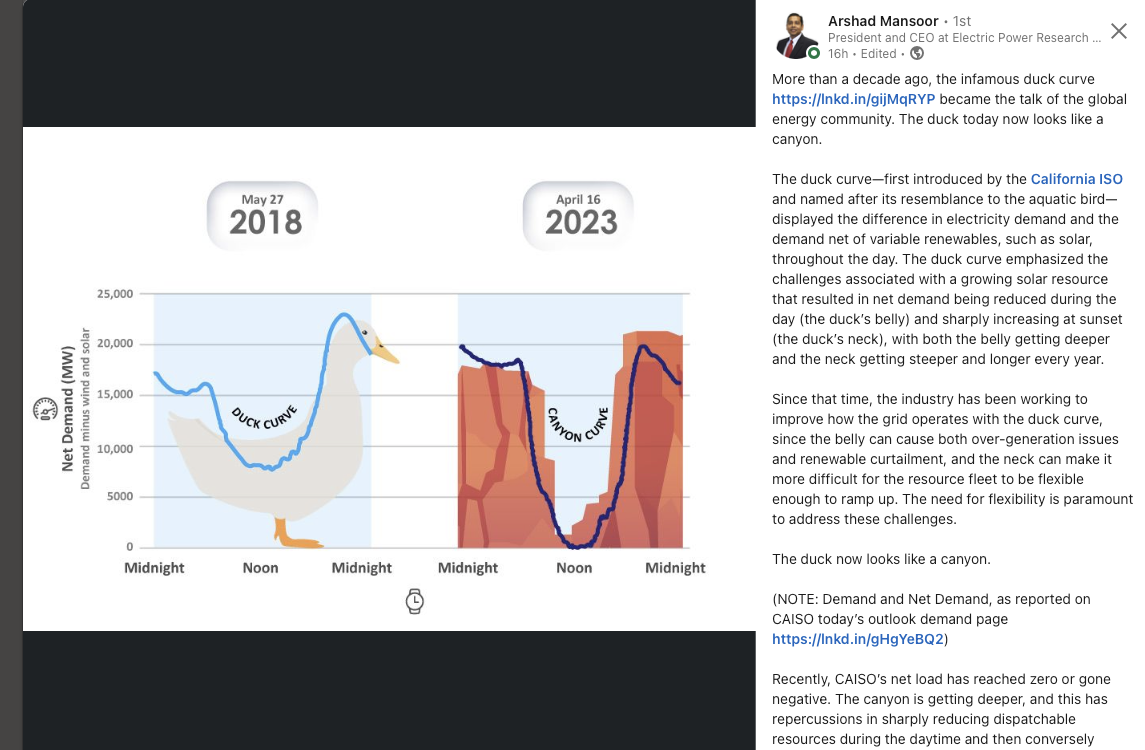
- EPRI Post on the CAISO “Duck Curve changed to Canyon Curve” of Electric Load: https://www.linkedin.com/posts/activity-7056612841755181056-SCPK?utm_source=share&utm_medium=member_desktop
- CAISO Website: https://www.caiso.com/TodaysOutlook/Pages/default.aspx
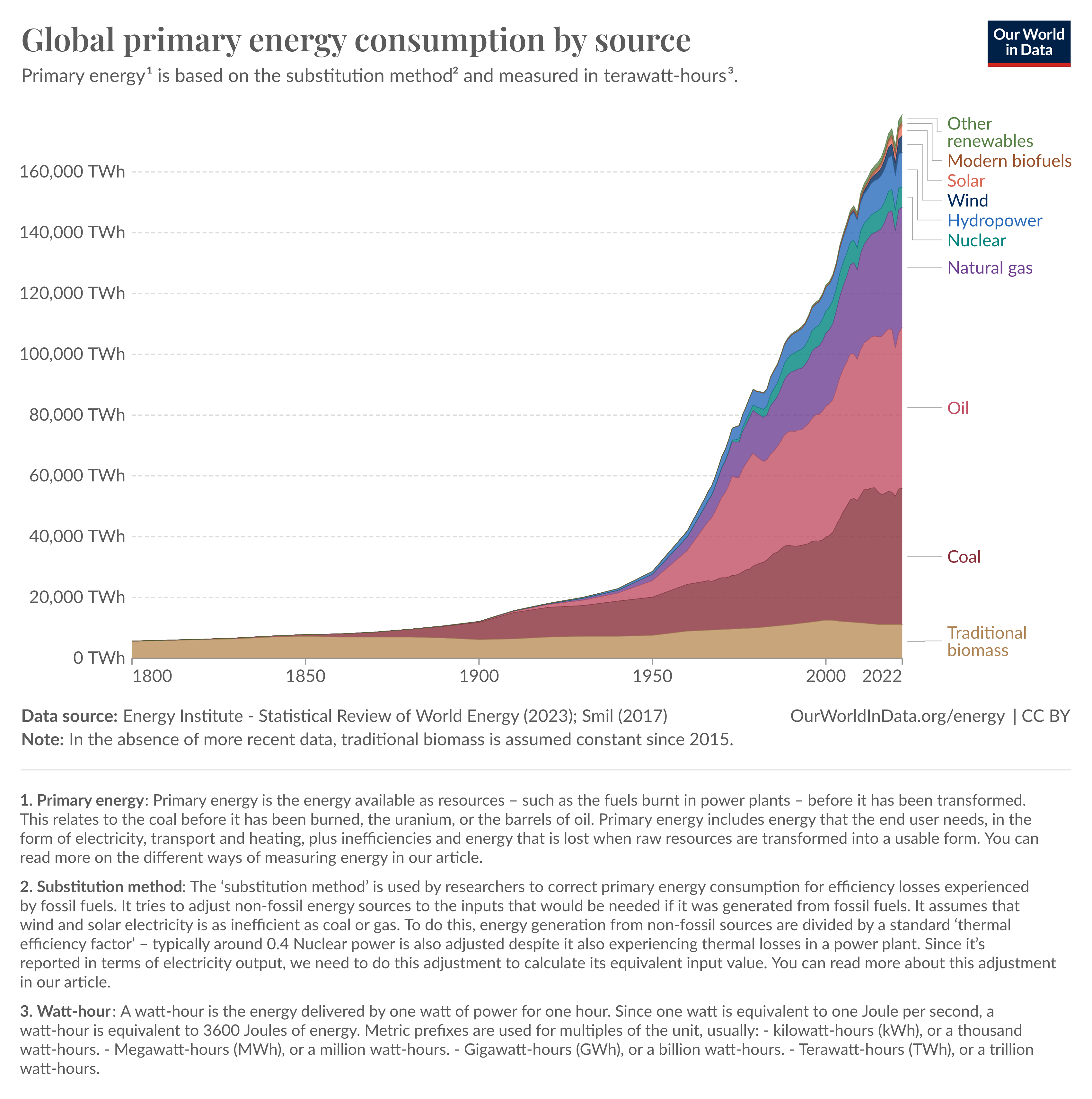
- Our World in Data Carbon Intensity of countries of the world: https://ourworldindata.org/grapher/carbon-intensity-electricity
- CFACT, “Why Net Zero Is Neither Possible Nor Desirable, the Canadian Example”: https://www.cfact.org/2021/07/12/why-net-zero-is-neither-possible-nor-desirable-the-canadian-example-part-one/
- Hackaday “New Renewables are Overwhelming the U.S. Grid” April 2023: https://hackaday.com/2023/04/17/new-renewable-energy-projects-are-overwhelming-us-grids/
- Dick Storm, LinkedIn Post of “America Has No Energy Policy”, ENERUM Presentation, August 2022: https://www.linkedin.com/posts/richard-storm-00557810_storm-presentation-to-columbus-energy-forum-ugcPost-7056884646923440128-ZQLR?utm_source=share&utm_medium=member_desktop
- Harvard Wind Study shows Greater Environmental Impact & Land Requirements than Originally Thought for Renewables: https://news.harvard.edu/gazette/story/2018/10/large-scale-wind-power-has-its-down-side/
- Solar and Wind Turbine Materials Requirements, from LinkedIn post: https://www.linkedin.com/posts/arihashahi_energy-renewableenergy-renewableenergy-activity-7053119817586778112-4XZy?utm_source=share&utm_medium=member_desktop
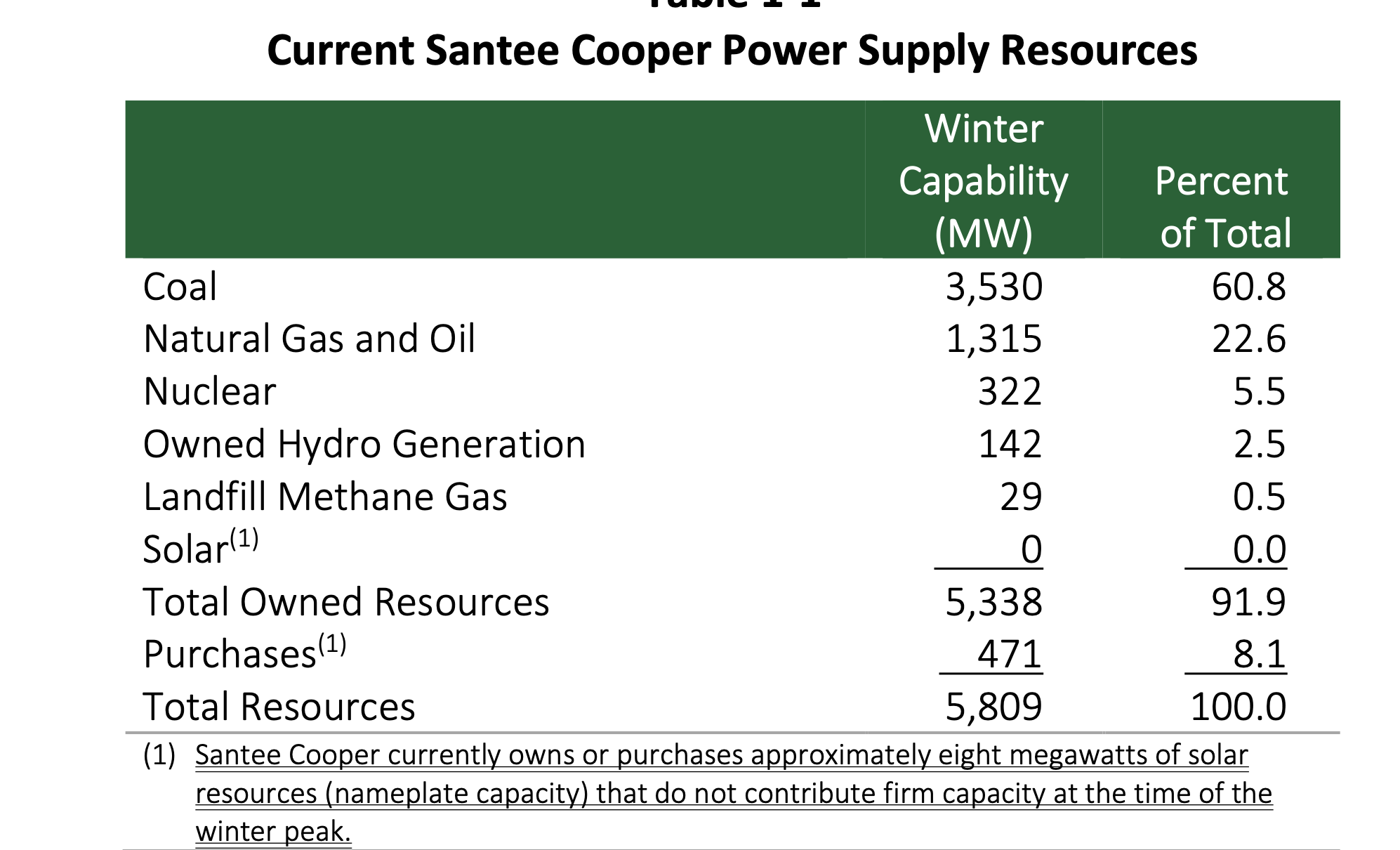
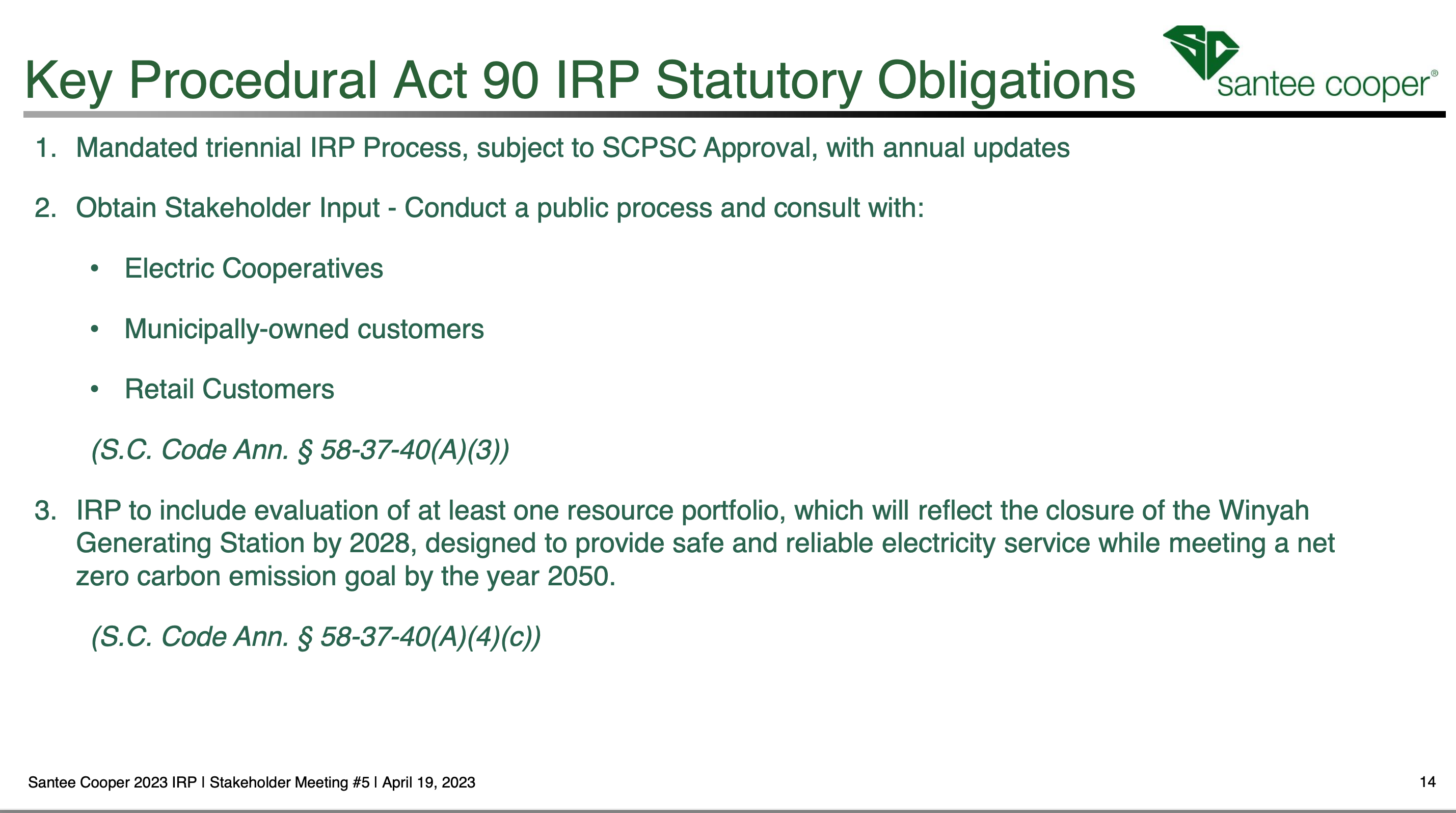
- Dick Storm Blog, Santee-Cooper IRP Comments: https://dickstormprobizblog.org/2023/04/27/how-can-a-6000-mw-regional-utility-in-2030-which-likely-will-be-a-9000-mw-utility-in-2050-achieve-net-zero-carbon/
- EIA April Energy Outlook Charts and Data, April, 2023: https://www.eia.gov/totalenergy/data/monthly/
- WUWT Military Urged to go Total Electric by Biden-Granholm, April 29, 2023: https://wattsupwiththat.com/2023/04/29/joe-biden-wants-every-us-military-vehicle-to-be-climate-friendly/
- The Right Stuff Climate Stuff, Tom Moser: https://www.youtube.com/watch?v=1-gHWcrCK7w
- Why Batteries Cannot Backup solar and Wind generation: https://stopthesethings.com/2023/04/29/grand-delusion-why-battery-storage-cant-fix-wind-solars-intermittency-problem/
- Blackrock and U.N. start of “ESG” Investing Policies: https://unherd.com/2023/03/blackrocks-tyrannical-esg-agenda/
- EIA 2011 Report on Energy, Good reference 1900-2011: https://www.eia.gov/totalenergy/data/annual/pdf/aer.pdf
- NREL Report on Electrification to 2050: https://www.nrel.gov/docs/fy18osti/72096.pdf
- UN Climate News: https://news.un.org/en/story/2022/10/1129892?_gl=1*1nhukiq*_ga*MTM1NjA2Njg4OS4xNjgyODY3NDQ5*_ga_TK9BQL5X7Z*MTY4Mjg2NzQ0OS4xLjEuMTY4Mjg2NzYzOS4wLjAuMA..
- UN-Climate page: https://unfccc.int/process-and-meetings/the-paris-agreement#:~:text=The%20Paris%20Agreement%20is%20a,France%2C%20on%2012%20December%202015.
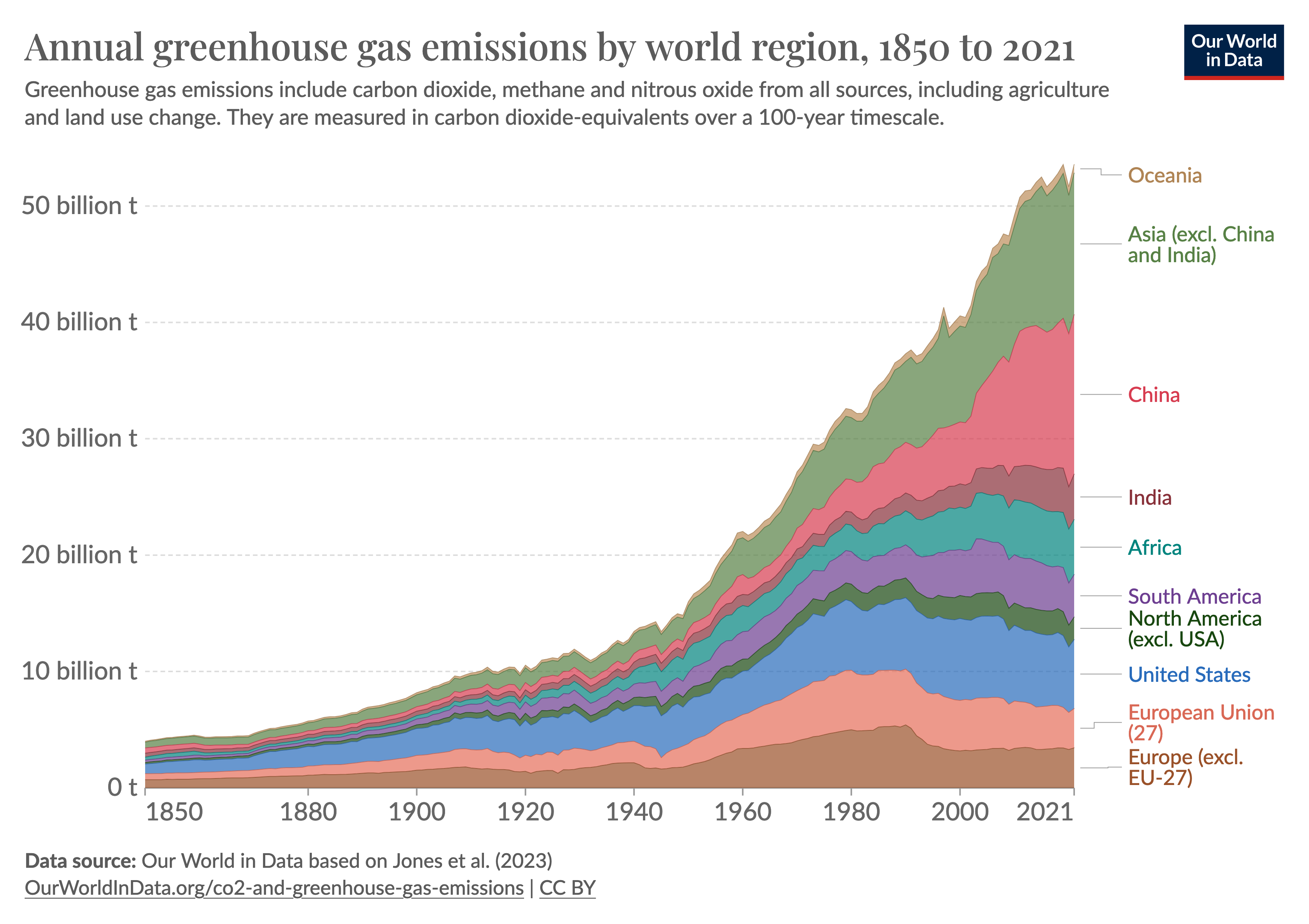
- Our World in Data Charts of CO2: https://ourworldindata.org/co2-and-greenhouse-gas-emissions
- IEA Executive Summary 2022 World Energy Outlook: https://www.iea.org/reports/world-energy-outlook-2022/executive-summary
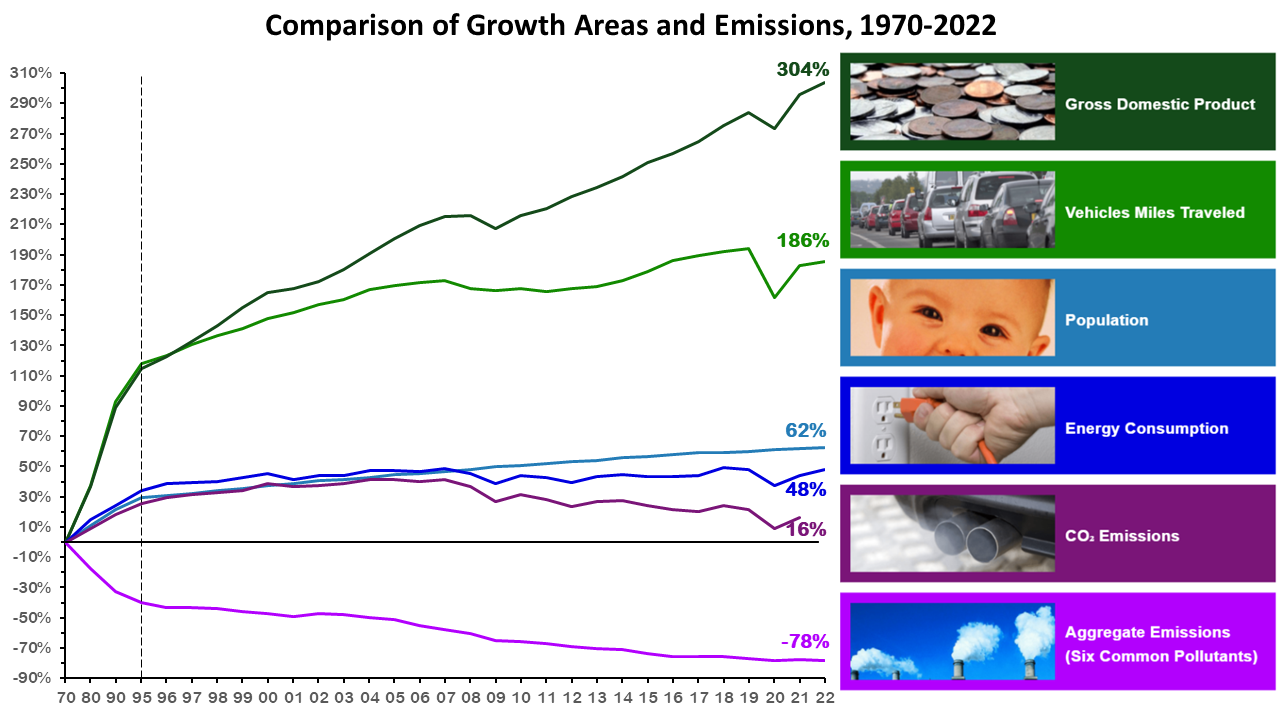
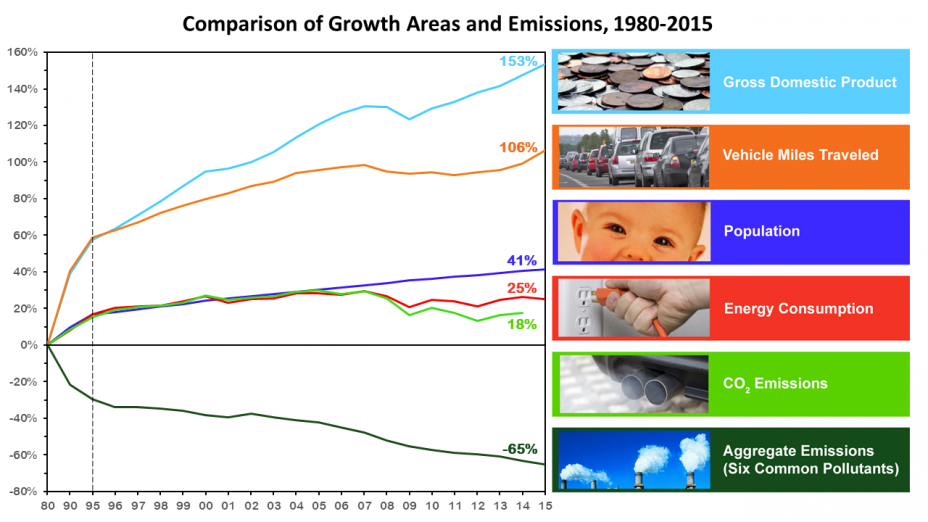
- EPA Air Quality, National Summary: https://www.epa.gov/air-trends/air-quality-national-summary
- Yale Report on Deaths from “Blackouts” : https://environment-review.yale.edu/true-cost-power-outages-0
- Sutton Plant Implosion video, 2016: https://youtu.be/miSapiaJTpM
- Boardman Plant Implosion: https://www.youtube.com/watch?v=u0azahkPUVA
- 60 Minutes program on Vulnerability of Electric Grid: https://www.youtube.com/watch?v=65siHaUPsRM
- EIA October 2022 Energy Outlook: https://www.energy.gov/sites/default/files/2022-11/05%20October%2027%20-%20EIA%20Annual%20Energy%20Outlook%202022.pdf
- EEI EV’s in market 2030: https://www.eei.org/News/news/All/eei-projects-26-million-electric-vehicles-will-be-on-us-roads-in-2030
- EIA NZE 2050 Report: https://www.energy.gov/sites/default/files/2022-06/IEA%2C%20Net%20Zero%20by%202050_1.pdf
- WUWT Energy Crisis creates a Food production crisis due to fertilizer shortages: https://wattsupwiththat.com/2023/05/11/entire-global-food-supply-at-risk-from-disastrous-response-to-so-called-nitrogen-crisis/
- ELECTREK article on Chinese EV’s to dominate market: https://electrek.co/2023/05/11/chinas-ev-surge-threatens-legacy-automakers-market-dominance/
- Dr. Judith Curry Review of CLINTEL report analyzing IPCC-AR6: https://judithcurry.com/2023/05/13/clintels-critical-evaluation-of-the-ipcc-ar6/
- CLINTEL website: https://clintel.org
- Capital Research Center, Green Watch: https://capitalresearch.org/category/green-watch/
- WUWT Disclosure of Billionaire Climate Extremists influencing state and Federal Climate policy, good links within the document, May 22, 2024: https://wattsupwiththat.com/2024/05/22/more-billionaire-climate-machinations/
- Biggest engine in the world: https://www.youtube.com/watch?v=IiwMJe9_vcQ
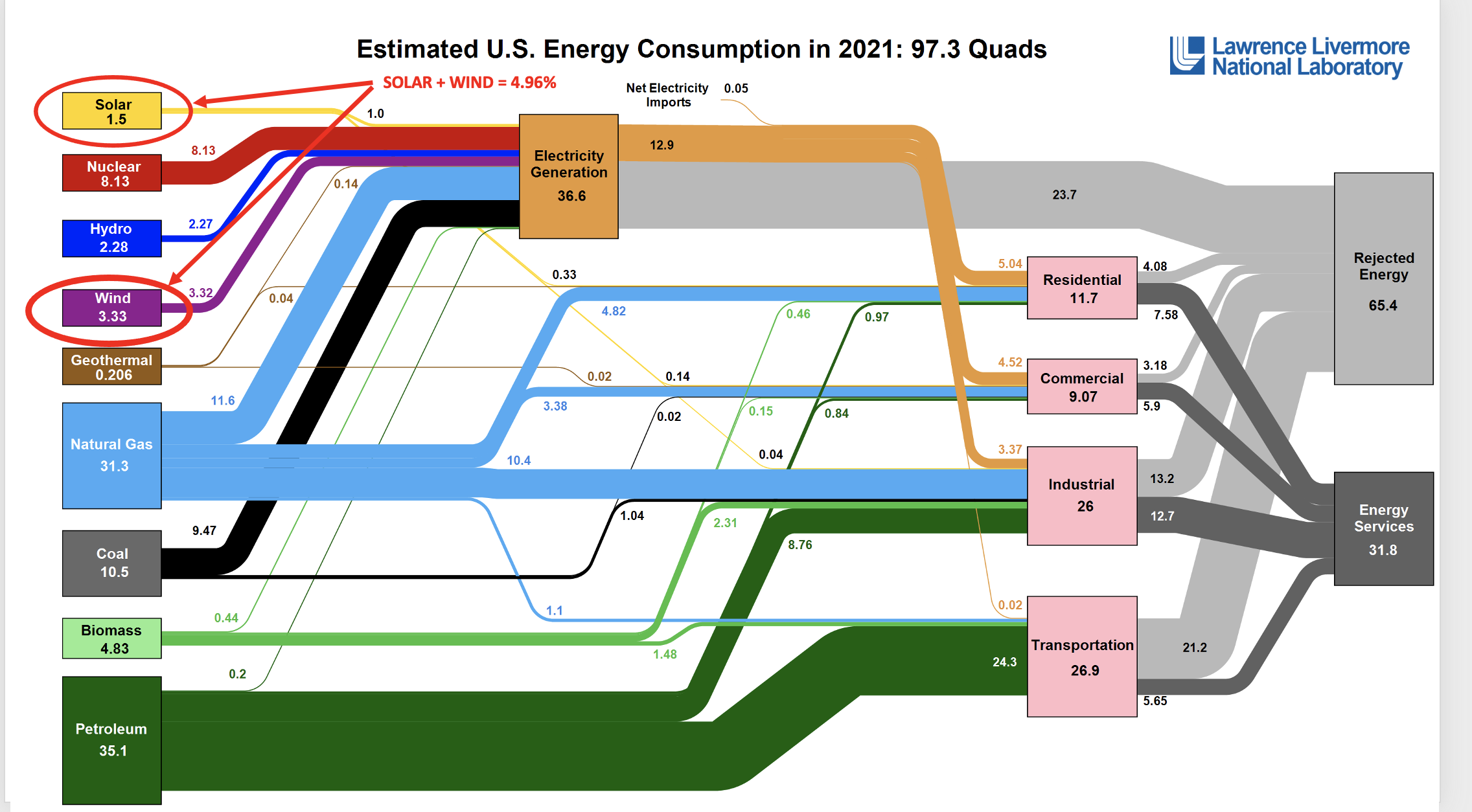
- LLNL Energy Flow Chart: https://flowcharts.llnl.gov/sites/flowcharts/files/2022-04/Energy_2021_United-States_0.png
- Dick Storm Blog, May 16, 2023, U.S. Needs 100 Quads/year: https://dickstormprobizblog.org/2023/05/16/back-to-basics-the-u-s-needs-100-quadrillion-btus-year-of-primary-energy/
- Heritage.org interview, Keeping the Lights on, event page is here https://www.heritage.org/energy-economics/event/keeping-the-lights-america-looking-ahead-power-grid-reliability and I believe the recorded video will be posted soon
- Vermont Yankee Nuclear Power Plant History, started in 1958: https://jackdevanney.substack.com/p/the-rise-and-fall-of-yankee-rowe?utm_source=substack&utm_medium=email
- Energy Markets Time to complete new connections to Grid, Berkely Lab: https://emp.lbl.gov/queues
- Washington Post article on Grid connections: https://www.washingtonpost.com/climate-environment/2023/05/18/permitting-reform-clean-energy-debt-ceiling/?utm_source=Sailthru&utm_medium=email&utm_campaign=Issue:%202023-05-18%20Utility%20Dive%20Newsletter%20%5Bissue:50602%5D
- Copied link of post of NERC Summer Reserves Warning May 18, 2023: https://www.linkedin.com/posts/richard-storm-00557810_two-thirds-of-north-america-is-at-risk-of-activity-7064912009884041216-DNHX?utm_source=share&utm_medium=member_desktop
- Ron Clutz Blog, including You Tube of Jimmy Dore explanation of Google Biasing Propaganda on “Climate Change”: https://rclutz.com/2023/05/22/google-screens-your-climate-info/#like-31222
- WUWT on Smearing Journalists that do not agree with “Woke & UN-IPCC Manmade Global Warming narrative: https://wattsupwiththat.com/2023/05/23/regime-climate-censorship-enforcer-newsguard-the-tragic-case-of-zack-fishman/
- Rachel Carson’s Silent Spring, 60 years later, Fails Test of Time, WUWT: https://wattsupwiththat.com/2023/05/17/carsons-silent-spring-fails-test-of-time-new-york-times-verdict-in-2007/?utm_source=rss&utm_medium=rss&utm_campaign=carsons-silent-spring-fails-test-of-time-new-york-times-verdict-in-2007
- WUWT-Global Surface Temperature comparison of MSM and science based trend by data: https://wattsupwiththat.com/uah-version-6/
- Forbes article on Environmental Groups Harming the Poor, https://www.forbes.com/sites/tilakdoshi/2023/05/23/environmental-ngos-in-the-global-south-saviors-of-humanity-or-predatory-special-interests/?sh=78c19c9e59aa
- NextEra Energy web site: https://www.nexteraenergy.com
- Congressional Research Service State of Electric Utilities, 1973-1984: https://www.cbo.gov/sites/default/files/99th-congress-1985-1986/reports/doc10b-entire_1.pdf
- Earth Overshoot.org on world population: https://www.overshootday.org/newsroom/country-overshoot-days/
- https://www.overshootday.org/newsroom/country-overshoot-days/
- Paul Harvey, 1964, “If I Was the Devil” You Tube: https://www.youtube.com/watch?v=S9NoQHgjM_0
- Mining of Rare Earth Minerals has a Dirty Little Secret, by FEE, May 2023: https://fee.org/articles/green-energy-has-a-dirty-secret/?utm_source=email&utm_medium=email&utm_campaign=2020_FEEDaily
- EPA opposes Petrochemical Industries in Louisiana using Taxpayer funds, Forbes: https://www.forbes.com/sites/davidblackmon/2023/05/25/how-epa-funds-the-petrochemical-industrys-opposition/?sh=7c39025a7176
- Rigzone-“Will We Hit Net Zero Carbon by 2050” May 30, 2023: https://www.rigzone.com/news/will_the_world_hit_net_zero_by_2050-30-may-2023-172906-article/?utm_campaign=DAILY_2023_05_30&utm_source=GLOBAL_ENG&utm_medium=EM_NW_F1
- Germany Loses Trust in Automotive Manufacturing of the Future, June 1, 2023: https://www.euractiv.com/section/transport/news/germany-loses-trust-in-its-future-as-the-worlds-automotive- leader/?utm_source=piano&utm_medium=email&utm_campaign=9717&pnespid=vONsDj0fa6YB3fWaozvrE4vTu0KuBJd4J.jlxrB69EVmIi05WkT6eEKuNWblScX1gKHYP2iqCw
- The Decline of the American Empire, By “The Burning Platform” June 2023 : https://www.theburningplatform.com/2023/05/31/fall-of-american-empire-and-descent-into-a-new-dark-ages/
- Master Resource, Free Markets Energy Blog: https://www.masterresource.org/reading-list/
- Ed Ireland on China and EV’s June, 5, 2023: https://edireland.substack.com/p/electric-vehicle-boom-may-force-china?r=kv1a9&utm_medium=ios&utm_campaign=post
- Top Ten Energy Companies by Energy Digital : https://energydigital.com/articles/top-10-energy-companies-by-market-cap
- The Federal War on your Life-Style, WUWT, June 8, 2023: https://wattsupwiththat.com/2023/06/07/the-federal-war-against-your-lifestyle/
- Robert Bryce, No Uranium for Nuclear, June 9, 2023: https://robertbryce.substack.com/p/no-u
- Ken Braun on Leftist Organizations Funding anti Fossil Fuels: https://capitalresearch.org/article/nuclear-power-hating-hypocrites-part-1/
- World Economic Forum Doesn’t Even Hide their Intent to Create Decline of the Western World: https://mail.google.com/mail/u/0/?ogbl#inbox/FMfcgzGsnBbvwcrFHbjLsNkzqTMKjvCP
- WEF Urban Mobility Paper, May 2023: https://www3.weforum.org/docs/WEF_The_Urban_Mobility_Scorecard_Tool_2023.pdf?utm_source=substack&utm_medium=email
- David Blackmon Energy Absurdities: https://blackmon.substack.com/?utm_source=cross-post&utm_campaign=434821&utm_medium=email
- David Blackmon, Democrats Patiently Wait for Power Positions: https://blackmon.substack.com/p/the-energy-absurdity-of-the-week-031
- E&E News Democrats into Power Positions, May 2023: https://www.eenews.net/articles/how-green-new-dealers-became-washington-power-players/
- John Kerry Speech on “The Great Reset” New American, Nov. 2020: https://thenewamerican.com/john-kerry-talks-great-reset-at-world-economic-forum/
- The Great Reset movement toward World Totalitarianism, Hillsdale College Lecture by Michael Rectenwald: https://imprimis.hillsdale.edu/what-is-the-great-reset/
- John Kerry Targets Agriculture at WEF Speech, May 2023, Fox News: https://www.foxnews.com/politics/john-kerry-targets-agriculture-part-climate-crusade
- WEF Limiting Private Cars: https://www.internationalfreepress.com/2023/06/wef-document-calls-for-limiting-private.html
- WEF on Degrowth, June 2022: https://www.weforum.org/agenda/2022/06/what-is-degrowth-economics-climate-change/
- WEF Calls to reduce vehicles by eliminating ownership, Aug. 2022: https://www.climatedepot.com/2022/08/01/world-economic-forum-calls-to-reduce-private-vehicles-by-eliminating-ownership/
- Sierra Club and Abortion Alignment, On the Issues, : https://www.ontheissues.org/Celeb/Sierra_Club_Abortion.htm
- U.N., Planned Parenthood and Sierra Club Alignment Sept. 2015: https://unfoundation.org/media/un-foundation-planned-parenthood-federation-of-america-sierra-club-announce-winners-of-first-ever-why-we-care-youth-emerging-leaders-for-reproductive-rights-contest/
- Sierra Club & NRDC Environmental Groups Urge Support for Affordable Care Act and Reproductive Rights, March 2017: https://content.sierraclub.org/press-releases/2017/03/environmental-groups-urge-support-affordable-care-act-and-planned-parenthood
- Sierra Club & Planned Parenthood Join Conferences to Explain Sex and the Environment. Nov. 2007, Catholic News Agency, : https://www.catholicnewsagency.com/news/11091/sierra-club-joins-planned-parenthood-to-offer-conferences-on-sex-and-the-environment
- Professor Michael Kelly, UK, June 2017: https://www.soci.org/news/general-news/professor-michael-kelly-lecture
- FERC Energy Regulator States, “Power Grid is Facing Dire Consequences Due to Coal & Gas Retirements”, “WUWT June 2023: https://wattsupwiththat.com/2023/06/13/federal-energy-regulatory-commissioner-mark-christie-power-grid-is-facing-dire-consequences-due-to-coal-gas-retirements/
- Donations to DeSantis Election Campaign by Duke and NextEra Utilities, June 2023: https://jacobin.com/2023/03/ron-desantis-florida-utility-companies-power-shutoffs-republican-party
- Electrical Disconnection by Utilities, June 2023 : https://bailout.cdn.prismic.io/bailout/49a01c18-5c8d-4821-ae22-5ee09a089cba_Powerless+in+the+US_Report.pdf?ref=the-lever
- Dark Money from Utilities to Elected Officials or Candidates, The Guardian: https://www.theguardian.com/us-news/2023/jun/15/us-power-companies-political-lobbying-donations-nonprofit
- Electric Power Company Donations; https://www.energyandpolicy.org/campaign-finance-reports-reveal-utility-industry-contributions/
- Daily Signal list of companies that donate to Planned Parenthood, Aug. 2015: https://www.dailysignal.com/2015/08/19/more-companies-that-have-donated-to-planned-parenthood/ and
- https://www.dailysignal.com/2015/07/21/meet-the-41-companies-that-donate-directly-to-planned-parenthood/
- More companies that donate to PP: https://www.partnersforethicalcare.com/planned-parenthood-donors
- JTF donations of 25 million to Democrats: https://jtf.org/follow-the-money-planned-parenthood-donated-25m-to-democrats-since-2000/
- INTEL and others that promote Zero Population Growth and Planned Parenthood: https://www.christianpost.com/voices/meet-the-biggest-planned-parenthood-supporter-in-corporate-america.html
- Open Secrets Donations to Planned Parenthood, 2022: https://www.opensecrets.org/outside-spending/detail/2022?cmte=Planned+Parenthood&tab=donors
- AMAC Article on Planned Parenthood Funding, 2017, over 962,000 abortions and $1.3 Billion in “Donations”: https://amac.us/may-not-support-planned-parenthoodbut-favorite-companies/
- 2nd Vote website of companies that contribute $1.3 Billion to Planned Parenthood, 2017: https://www.2ndvote.com/planned-parenthood/
- John Kerry on BBC: https://www.bbc.com/news/science-environment-57135506
- John Kerry coordination with Green Groups, Fox News: https://www.foxnews.com/politics/republicans-probe-john-kerrys-ties-eco-groups-efforts-shield-oversight
- Robert Bryce Substack on the “Iron Law of Electricity” Increases in coal use around the world, June 17, 2023: https://robertbryce.substack.com/p/the-iron-law-of-electricity-strikes
- California Globe, California’s Electricity Policy Failure, June 18, 2023: https://californiaglobe-com.cdn.ampproject.org/c/s/californiaglobe.com/articles/the-failure-of-california-electricity-policy-in-one-image/amp/
- World Bank report, June, 2023, De-Tx Development, Mis-Use of Fertilizers & DeGrowth: https://openknowledge.worldbank.org/server/api/core/bitstreams/61d04aca-1b95-4c06-8199-3c4a423cb7fe/content?utm_source=substack&utm_medium=email
- NJ ROI (Return On Info) : https://www.roi-nj.com/2023/05/17/roi-influencers/energy-utilities-roi-influencers/roi-nj-presents-the-roi-influencers-energy-and-utilities/?utm_source=ROI-NJ+MAIN+Newsletter+List+%282%2F4%2F19%29&utm_campaign=ee9cbf68df-EMAIL_CAMPAIGN_2023_06_20_02_53&utm_medium=email&utm_term=0_-ee9cbf68df-%5BLIST_EMAIL_ID%5D
- Capital Research Video on Green Ties to China: https://capitalresearch.org/article/how-china-designed-american-environmental-policy/
- China Influence of U.S. Green Groups and U.S. Environmental Policy, Capital Research Center video: https://capitalresearch.org/article/how-china-designed-american-environmental-policy/
- Capital Research Center on Teen Vogue Influence of young female voters on Democrat policies: https://capitalresearch.org/article/teen-vogue-training-young-female-leftists/
- Good Energy News Reference: https://oilprice.com
- German Industry Shutting Down and Moving, due to high energy process, CNBC June 21, 2023 : https://www-cnbc-com.cdn.ampproject.org/c/s/www.cnbc.com/amp/2023/06/21/high-german-energy-prices-are-seeing-some-companies-relocate-bdi.html
- EIA Notice of Change in Calculating/Reporting Solar Primary Energy to use 3412 Btus/kWh, June 23, 2023: https://www.eia.gov/totalenergy/data/monthly/change/
- WUWT Global Surface Temperature Chart 1880-2022: https://wattsupwiththat.com/uah-version-6/
- “Why Climate Change is Not an Emergency”, CO2 Coalition Presentations, May 27, 2023: https://co2coalition.org/media/why-climate-change-is-not-an-emergency/
- Time Magazine, “The Modern World Can’t Exist Without These Four Ingredients. They All Require Fossil Fuels”, Vaclav Smil May 2022: https://time.com/6175734/reliance-on-fossil-fuels/
- ERCOT Dashboard: https://www.ercot.com
- EU Report and long list of references on the “DeIndustrialization of Europe” by forcing wind power on the citizens:
https://us1-campaign–archive-com.translate.goog/?u=a15449610a1df64c85f7499e1&id=5b33ebcfdc&e=59342c48f8&_x_tr_sl=auto&_x_tr_tl=en&_x_tr_hl=auto - Causes of Blackouts in Europe, excellent paper, Jan. 2022: https://www-science–climat–energie-be.translate.goog/2022/01/07/les-blackouts-leurs-causes-et-consequences-economiques/?_x_tr_sl=auto&_x_tr_tl=en&_x_tr_hl=auto
- Energy Institute Resources for Data and Statistics, June 2023: https://www.energyinst.org/statistical-review/resources-and-data-downloads
- NERC Summer Reliability Report, May 2023: https://www.nerc.com/pa/RAPA/ra/Reliability%20Assessments%20DL/NERC_SRA_2023.pdf
- Balancing Energy Security, Affordability, the Economy, Decarbonization and Security, Energy Policy Research Foundation: https://assets.realclear.com/files/2023/06/2210_eprinc_balancing_energy_security_affordability_and_decarbonization.pdf
- The Rise and Fall of the American Grid, American Affairs Journal, Fall, 2022: https://americanaffairsjournal.org/2022/08/the-rise-and-fall-of-the-american-electrical-grid/
- WSJ article on $400 Billion Loans for Green Energy: https://www.wsj.com/articles/green-energy-climate-loans-49fda73b?mod=hp_lead_pos7
- WSJ Small towns benefit in green IRA spending: https://www.wsj.com/articles/climate-legislation-inflation-reduction-act-small-towns-eb0ce798?mod=article_inline
- WUWT on the “Myth of Replacing Fossil Fuels”: https://wattsupwiththat.com/2023/07/03/the-myth-of-replacing-fossil-fuels/
- Brattle Group Podcast: https://energymarketspodcast.buzzsprout.com/1568110/13142849
- Nuclear Power in the 1960’s. Great info: https://whatisnuclear.com/news/2023-07-03-film-about-pm1-microreactor-in-wyoming.html
- National Center for Education Statistics, Degrees in 2021: https://nces.ed.gov/fastfacts/display.asp?id=37 and https://nces.ed.gov/programs/coe/indicator/cta
- America’s Power, Editorial on the Importance of Coal, July 10, 2023: https://americaspower.org/the-need-for-sensible-epa-rules/
- America’s Power Key Takeaways of Winter Storm Elliott Report on the importance of coal: https://americaspower.org/new-report-evaluates-the-performance-of-electricity-resources-during-storm-elliott/
- Net Zero Reality Coalition: https://www.cfact.org/netzerorealitycoalition/
- WUWT On National Academy of Engineering Summer Report on decarbonization, July 11, 2023: https://wattsupwiththat.com/2023/07/11/national-academies-climate-junk-summit-7-11-7-12-is-open-to-all/
- EPA Regulations will Destroy the American Power Grid, Ed Ireland Substack: https://edireland.substack.com/p/epa-proposes-anti-fossil-fuel-regulations?r=kv1a9&utm_medium=ios&utm_campaign=post
- Energy & Economic Prosperity of Various Countries of the world, There are no Rich Countries that do not Manufacture Products: https://www.linkedin.com/posts/richard-storm-00557810_electricity-income-activity-7084913097718562816-foX7?utm_source=share&utm_medium=member_desktop
- Nuclear in the 1960’s. Our predecessors got lots of things done:
https://whatisnuclear.com/news/2023-07-03-film-about-pm1-microreactor-in-wyoming.html - Robert Bryce Substack on “Carbon Myopia” and the need of 3 Billion people on the planet that need to be lifted from poverty: https://robertbryce.substack.com/p/carbon-myopia/comments
- I, Pencil, by Foundation for Economic Education, 1958: https://fee.org/resources/i-pencil/
- Rivotto Clean Energy Now: https://rivotto.webflow.io
- Clintel Report, “There is No Climate Emergency” : https://clintel.org/wp-content/uploads/2022/06/WCD-version-06272215121.pdf?utm_source=substack&utm_medium=email
- Daily Skeptic on John Clauser Slamming the Corrupt Science used to create a “Climate Emergency” : https://dailysceptic.org/2023/07/14/nobel-physics-laureate-2022-slams-climate-emergency-narrative-as-dangerous-corruption-of-science/?utm_source=substack&utm_medium=email





























 Dick Storm's Thoughts on Energy, Education, Economic Prosperity & Environmental Blog