Tag Archives: nuclear-power

Musings of a Nuclear Engineer and a Coal Power Engineer on the Bulk Power Supply for the Future

This document summarizes discussions of Don Spellman, a senior nuclear engineer, retired U.S. Navy Submarine officer and Dick Storm, a retired coal power engineer. We have had ongoing discussions for several years regarding the inadequacy of new replacement of Dispatchable or Base Load capable coal and or nuclear power plants. Therefore, We decided to jointly write this article to share our views.

Introduction

America’s Grid grew from the days of Edison, Tesla and Westinghouse to about the 1990’s in an orderly, well planned manner. Both wholesale and retail electricity was both reliable and affordable. America’s Grid was the best in the world. Up until that time, planning for growth was done by regional, regulated utilities such as Duke Power, Virginia Electric Power Company (VEPCO), Carolina Power & Light (CP&L), Philadelphia Electric, Potomac Electric Power Company (PEPCO), Delmarva Power, South Carolina Electric and Gas (SCE&G), Santee-Cooper and so forth. Each of these Regional Utilities were accountable for future new generation planning, selecting the most appropriate new generation capacity and planning for growth. That was then. About 1990 there became a movement to De-Regulate Electric Utilities and to separate electricity generation from Transmission and Distribution. Not all states agreed to this, but many did and the huge PJM Interconnection which includes most of the northeast between NJ and Illinois serves as a controlling agency to determine which power generation will be utilized based on the lowest price bid. PJM and the other RTO’s such as MISO, ERCOT, NY-ISO, NE-ISO, CAISO serve as “Air Traffic Controllers” to direct Bulk Power from the least cost generators. It should be mentioned, of the once fine Regional Utilities mentioned above that have merged with others and become part of the PJM Interconnection, at this writing, Santee-Cooper in South Carolina remains as one of the sole survivors. The S.C. Legislature may yet kill it, but as of today, Santee- Cooper is alive and well and still generates most of it’s electricity from reliable, affordable coal and 322 MW of joint ownership with Dominion Energy in the Summer nuclear plant.

Well, this de-Regulation model worked pretty well when we had an abundance of excess generation capacity, (1990-12012 when nuclear and coal provided about 70% of America’s electricity. It continued to work pretty well as the U.S. entered the “Shale Gas Revolution” about 2012 and natural gas became a lower cost fuel than coal. The EPA’s War on Coal hit its stride during the Obama administration and the Endangerment Finding was made a law, thus essentially outlawing the building of new coal plants. Electricity prices continued to be reasonable due to the switching of Bulk Power domination by coal and nuclear to natural gas. As long as gas remained below $3.00/ million BTU, this was no problem. Then the government incentives for wind and solar continued to escalate and become attractive for both private generators and for Regulated Utilities. More and more wind and solar was forced onto the Grid and backup generation capacity has been by natural gas turbines. Long story shortened, what was a very reliable Grid with regional accountability for investing in new generation capacity has become a hodgepodge of Dysfunctional Regulations and Rules/laws. Meanwhile, the public has been wrongly indoctrinated into believing that wind, solar and batteries are less expensive and more environmentally acceptable than coal or nuclear power.

The two senior engineer authors of this article have watched this horrible breaking of our once well-tuned, reliable and well managed Bulk Power Supply and we remember the low cost, reliable electricity provided in in 2008 which was about 70% coal and nuclear power. About 50% coal and 20% nuclear. In the author’s opinions and experience, coal and nuclear are the two sources that must be deployed quickly to keep America’s Grid reliable, resilient and affordable. This is based on a combined 100+ years of experience. Our Bios are at the end.

Electricity Load Growth till 2050, Expected Demand and Needed Generation Resources

From FERC – “U.S. electricity demand is projected to surge by 20% to 25% by 2030 compared to today’s levels. This sudden spike—driven by the AI and data center boom, industrial reshoring, and electric vehicle adoption—means that peak grid demand will jump from 760 GW to an estimated 850–930 GW.” 

From NERC – “The North American electric grid faces intensifying reliability risks over the next decade as demand growth driven by data centers and artificial intelligence threatens to outpace resource additions”, according to the 2025 Long-Term Reliability Assessment (LTRA) released Jan. 29 by the North American Electric Reliability Corporation (NERC).

90 GW of New Dispatchable Generation is Needed by 2030

Total PEAK electric load of the lower 48 states is expected to rise from 760 GW to 850 GW by 2030. So, let’s do the math

(850 – 760 = 90GW minimum needed by 2030. (= 90 GW/4 yrs = 22 GW per year). “

The U.S. currently has about 1400 GW of installed generation capacity. About 97 GW of existing nuclear generation with anaverage age of about 40 to 60 years. Therefore the 90 GW  minimum  needed capacity by 2030 according to FERC is about a 12% increase in total generation capability. This new generation should be capable of 24/7 Dispatchable or Base Loadcapable. Only nuclear, coal and natural gas generators can provide base load capacity plus being able to “follow the load” at peak summer and winter needs. 

Nuclear power plants once on-line can achieve a 96% base load capacity factor as Duke Energy has proven. Well run coal plants can achieve a 24/7 capacity factor of over 75% when properly operated and maintained. Future electricity load growth of the magnitude of 100-170 GW by 2030 has been forecasted by FERC, NEMA, ICF and others. This amount of new generation is realistically impossible to build in four years.

90 GW of New Dispatchable Generation by 2030, What are the Options?

The electricity growth in the next decade, if we are to continue a growing economy and including improve industrial production, power EV’s, AI-Data Centers and is not hyperbole or exaggerated growth expectations, to expect electricity peak Demand to grow and require 90 GW New Generation. We think this is a realistic estimate.

Annual Additions Needed: 850 – 760 = 90 GW minimum needed by 2030. (= 90 GW in 4 yrs is  22 GW per year). So, the U.S.will need to add about 22 GW of generation capacity every year to keep up, roughly double the historical pace. 90 GW/year is about 7 –  1300 MW nuclear units or 15 – 800 MW coal plants or 10 – 880 MW Combined Gas Cycle gas plants or, obviously, a mix of these discounting the contribution from wind or solar units as they do not provide base load capacity nor load following capability and have very low capacity factors.

The new generation capacity in our analysis should be all Dispatchable power generation capacity. Dispatchable means it can respond to demand immediately, as soon as it is needed to meet peak power summer and winter loads. Reliable and either Dispatchable or Base Load generation of Bulk Power has been proven over decades to be affordable by Nuclear, Coal and Gas fueled thermal power plants

How About Building an appropriate number of New Coal Plants by 2030 or 2050?

To put this in perspective of new coal plants. Let us look at the Cross Generating Station owned and operated by Santee-Cooper in the lowlands of South Carolina. This coal plant has modern FGD and emissions controls. It is an example of a clean coal plant The four units, each about 600 MW in capacity was constructed between 1984 and 2005. The 4-unit plant is rated at 2350 MW. Let that sink in. This is about the same generation capacity as the Vogtle nuclear expansion of units 3 and 4 which took over ten years to build. The coal plant below was constructed over a 20 year period.

90 GW of new Dispatchable Generation is the equivalent of 38 plants similar to Cross Generating Station

Dr. William Happer of the CO2 Coalition presented a description of a modern coal fueled power plant with Alice’s breath. The slide from Dr. Happer’s presentation is show below.

The numbers are “Ball Park” approximate for a coal power plant. For a nuclear power plant, of course, the cooling tower plume would have no CO2 and only water vapor. Such as is shown below in the photo of the Vogtle nuclear power plant.

Above is a picture above of the 2 new 1000 MW Vogtle Nuclear units. The white plume emitted from a modern nuclear plant is entirely water vapor and even purer than the above picture of Alice’s breath. 

Georgia Power’s Plant Vogtle expansion. This is about 2,000 MW of new capacity that was installed in the last dozen years. That 2,000 MW of new capacity required $35 Billion dollars of capital expenditure including the initial fuel load and 12 years to complete. Delays were primarily due to poor management practices, changing regulations. and supply chain issues. This plant has two similar sized Westinghouse reactors with an experienced workforce available at an existing plant. It still took 12 years to complete.

If the 90 GW of new capacity could be achieved by building new nuclear units like Plant Vogtle, then it would take about 77 new 1,300 MW Vogtle like nuclear units 3 & 4 to be built in the next 10 to 25 years. Current reorganization at the Nuclear Regulatory Commission should lead to a significant reduction in nuclear plant construction time and cost.

Don Spellman spent 20 years in the nuclear NAVY, 11 years consulting to 4 new build reactors related to design control and configuration management and then 26 years at Oak Ridge National Laboratory as a lead engineer for nuclear fuel development, implementation of DOE’s Mixed Oxide Fuel Facility at Savannah River National Laboratory and implementation at ORNL of a spent fuel examination facility.  Therefore, the comments and discussion regarding nuclear are from an experienced nuclear power engineer.

How About Building An Appropriate Number of Combined Cycle Gas Fueled Plants by 2030?

An 880-megawatt (MW) gas-fired electric plant usually operates as a combined-cycle unit, capturing waste heat to generate extra electricity. A notable regional example is the Delta Energy Center: An 880-MW combined-cycle plant located in Pittsburg, California. Natural gas is the default fuel for power generation for quick response new power generation. Every new MW of new bulk power that is installed by wind and solar generation must be backed up by dispatchable bulk power that can to be brought on-line when the sun sets and the wind stops. Gas powered generation It is the easiest form to get permitted to build. Utility executives like gas because it is also the least capital cost. Because of these economic realities in a thoroughly dysfunctional regulatory environment, natural gas has risen to become the primary fuel source for power generation. Now at about a 43% of the total U.S. electricity generation. Natural gas has replaced coal as the  primary energy source since the revolutionary advances in hydraulic fracturing for natural gas production which became commercially viable about 2010. Before the shale gas revolution, coal provided about 50% of electricity production and nuclear about 20%.

Here is a picture of a typical CCGT power plant. This one is 600 MW. Notice the stack plume? This is mostly water vapor from the combustion of hydrogen in the natural gas fuel. Each pound of hydrogen when combusted, creates nine pounds of water, thus the extreme white plume of water vapor on a cold winter day.

Back to CCGT capacity to meet the 90 GW of new generating capacity by 2030. It would take 102 (880 MW each) units such as the Delta plant in California to produce 90 GW.

America Needs a Balanced Generation Portfolio for the Grid

Combined cycle power plants (CCPPs) are highly efficient systems that generate electricity efficiently and cleanly. However, in our opinion, America is too dependent on pipeline supplied gas supplies now and increasing the CCGT fleet will only exacerbate that single fuel dependence. For Grid reliability, resiliency and to provide adequate quantities of affordable Bulk Power, we believe a Balanced Generation Portfolio is optimum. Such as, shown below.

Fuel is the Major Cost Component in the Production of Electricity in a Gas Power Plant

Natural gas has been abundant and cheap since the Shale Gas Revolution which began about 2010. The U.S. produces more gas than any other country and has begun exporting as LNG. The cost of gas, however, has been volatile and will likely remain volatile based on Global demand. Here is a chart comparing the cost of gas to coal over the last 44 years.

The cost component of power production from a CCGT is about 90% fuel cost. Thus, if the fuel cost doubles as it has in the past during extreme demand periods, so does the production cost of electricity double. Thus, our recommendation of a Balanced Generation Portfolio which includes coal and nuclear generation. Another consideration is national security and Grid Resilience. If nearly 50% of America’s Bulk Power is generated from pipeline supplied gas and there is a major pipeline failure, then power shortages can occur. A coal plant has on-site fuel storage capability for months, nuclear, years of on-site energy storage. Batteries, hours.

Historical Bulk Power Generation When Coal and Nuclear Provided Approx. 70% of America’s Power

These were the good old days. In 2010 Coal provided about 50% and nuclear about 20% of the fuel for America’s Bulk Power Supply.

The chart of electricity cost trend in the U.S. by states below is from 1978-2025 by the St. Louis Federal Reserve.

Compare the electricity costs from when nuclear and coal provided over 70% of America’s electricity to after 2020 when the “Green New Deal” also known as the Inflation Reduction Act” was passed into law. After spending billions on wind and solar, the electricity costs have steadily risen and the future electricity supply reliability is compromised. Here is a trend of electricity prices across the U.S. since the huge investment in wind and solar and the destruction of reliable coal plants without replacing with in-kind, Dispatchable power generation capacity.

St. Louis Federal Reserve Graph of U.S. Electricity Rates 1980-2025

The map of the U.S.A. below with electricity costs by state is from 2010 data. As shown by the St. Louis Fed. graph above, since 2010 electricity rates have grown about 75%.

Conclusions

  • Since about 2012 American energy policy has been created by academics, politicians, NGOs, green energy advocates, educational institutions, the UN, the WEF, the MSM and others, none of which have any practical experience in electric power generation such as the authors of this article. The energy policy was driven by ideology and politics, not science, engineering or sound economics
  • America’s misguided energy policies have Self-Sabotaged the U.S. Bulk Power Supply by shutting down reliable coal and nuclear plants Since 2010, over 150 GW of Dispatchable or Base-Load capable nuclear generation has been shut down.
  • The destructive Net-Zero Carbon path set by Congress and most states, is still in place. This inspiration of President Trump’s energy policies to apply common-sense and science based solutions is helpful. However, President Trump’s Executive Order Declaring and Energy Emergency has NOT yet moved the private sector to begin the process of building the number of new coal plants needed to meet the anticipated electricity generation increases of the future
  • The authors of this article are not the sole experts that understand the shortage of future Bulk Power Supply. There are also well respected organizations that have been publishing reports as outlined by us. Examples: FERC and NERC
  • A true electricity shortage and severely escalated electricity production costs are predicted beginning December 2016 due to the dereliction of duty of energy policy makers at both the Federal and state levels.
  • Building the needed nuclear and coal power generation over the next decade will be difficult for many reasons. Amongst them: Rebuilding the U.S. Domestic Supply-Chain will take time, including both talent in the workforce as well as manufacturing capacity, Regulations must be abolished, including the EPA Endangerment Finding, New Source Review and other Rules, State Regulations, Utility management strategy to use the lowest cost fuels and reversing the public indoctrination which demonized coal and nuclear, by educating the public on the true facts of electric power generation

Respectfully submitted,

Richard F. (Dick) Storm

Donald Spellman

Dick Storm and Don Spellman Bio’s

Dick Storm is a registered Professional Engineer with over 50 years experience in electric power generation with coal power after graduating from Williamson in 1962. Began work with B&W in Nuclear and Special Products but transferred to the B&W Power Generation Division, due to being a young person that hated the paperwork of nuclear regulations and red tape. He then began working in acceptance and special performance testing of coal plants and fuel burning equipment as a B&W Results Engineer.  In 1969 joined Riley Stoker as a Senior Service engineer to lead new plant startups. Served as a senior or lead startup engineer at numerous major coal plants over 300 MW size, including; Tampa Electric, City of Lakeland, Jacksonville Electric Authority, SCE&G, and CP&L Sutton #3.

In 1972, joined Carolina Power and Light Company and progressed from lead startup engineer on the 720 MW Roxboro #3. After startup, he was promoted to Operations Superintendent at Roxboro Generating Station, 1973-1977. 

Began the Technical Services Group at Flame Refractories, Inc. 1977 -1992. This engineering services group specialized in applied solutions to improve large high pressure boiler performance, reliability, project management of plant upgrades and pressure part renewal and modifications for reduced emissions and improved Heat-Rate

Then, in 1992, Founded Storm Engineering, later, Storm Technologies and Fabricated Solutions.
Storm Technologies, Inc. and the Fabrication Facilities have grown since Dick’s retirement in 2012 to present under the direction of Danny Storm.  

Storm now serves as a consultant and part-time instructor of short courses in continuing education programs at USCB-OLLI courses and with Storm Technologies, Inc. Seminars. Has volunteered to present energy and electricity generation courses in Schools and Colleges.
Over the years have authored numerous articles for POWER Magazine, published technical papers and presentations.

Donald J. Spellman

In 1980, Mr. Spellman completed a successful 20-year military career in Navy nuclear submarines reaching rank of Lieutenant Commander and qualification as Nuclear Submarine Chief Engineer Officer. During his Navy career, Mr. Spellman received a Bachelor of Science degree in Electrical Engineering from Purdue University supported by the U.S. Navy and completed Master of Science studies in Ocean Engineering (nuclear programs) at the University of Rhode Island. in 1976. In 1976 He received a Commendation from the Commander U.S. Pacific Fleet for service as Navigator USS Snook during a Western Pacific deployment. 

 After Navy retirement, Mr. Spellman served as a project manager for Gas-Cooled Reactor Associates (GCRA) from 1980 to 1982, he provided supervision and technical direction for research and development of the modular high-temperature gas-cooled reactor.

 After 1982 he was employed for 10 years in various roles as an engineering and management consultant for Management Analysis Company to the commercial nuclear power industry. He was responsible for directing utility assumption of design responsibilities after construction completion as a principal reviewer on the reactor plant Change Control Boards and conducted design change reviews at three different reactor plants.

In 1991, Mr. Spellman joined Oak Ridge National Laboratory as a member of the DOE Technical Standards Program and later as the Program Manager for ORNL support for the Fissile Materials Disposition Program Domestic Reactors Project in support of the Department of Energy (DOE) Office of Materials Disposition (NA-23). He had responsibility for technical support, research and development, and programmatic tasking associated with the U.S. reactor option for disposition of weapons-grade plutonium as mixed-oxide nuclear fuel. Mr. Spellman was a member of the DOE Source Evaluation Board for the selection of a prime contractor to provide design, construction, and operation of the Mixed Oxide Fuel Fabrication Facility at the Savannah River National Laboratory. Additionally, at ORNL he guided laboratory nuclear fuel development activities primarily related to nuclear fuel post irradiation hot cell examinations. He was a member of the ORNL High Flux Isotope Reactor (HFIR) independent safety oversight committee (Reactor Operations Review Committee). Primary responsibility for this committee was to periodically review operations and maintenance activities at HFIR and review periodic updates to the HFIR Safety Evaluation Report to the Department of Energy.

In 2017, Mr. Spellman retired from Oak Ridge National Laboratory after 26 years of service. Since retirement from ORNL, he served as a Subject Matter Expert on retainer back to the laboratory and for various other tasking for Xcel Engineering, Inc., Oak Ridge, TN.

References and factual based technical information for further reading and reference

  1. Drivers of Electricity Growth: https://gridstrategiesllc.com/wp-content/uploads/FINAL-2025-LTRA-Review.pdf
  2. NERC December 2025 Report on resource Inadequacy: https://www.nerc.com/newsroom/resource-adequacy-risks-intensify-across-north-america-as-demand-growth-surges
  3. POWER Magazine on Load Growth and Inadequate Bulk Power Supply: https://www.powermag.com/nerc-warns-long-term-grid-reliability-risks-mounting-from-surging-demand-lagging-resources/
  4. NERC Long Term Electricity Demand: https://www.nerc.com/globalassets/our-work/assessments/nerc_ltra_2025.pdf
  5. Cross Generating Station: https://grokipedia.com/page/cross_generating_station
  6. Roxboro Generating Station: https://grokipedia.com/page/roxboro_power_station
  7. EIA on Coal Plant Shut Downs since 2010: https://www.eia.gov/todayinenergy/detail.php?id=67427
  8. Dick Storm presentation to the ASME Plenary Meeting in Dallas, TX, summer 2011 on the importance of coal power
  9. NERC Long Term Assessment:   https://www.nerc.com/globalassets/our-work/assessments/nerc_ltra_2025.pdf
  10. EIA on Fuels for electricity generation 1950-2025: https://www.eia.gov/energyexplained/electricity/electricity-in-the-us.php
  11. Grid Strategies on Load Growth: https://gridstrategiesllc.com/wp-content/uploads/2023/12/National-Load-Growth-Report-2023.pdf
  12. https://www.ferc.gov/news-events/news/fact-sheet-ferc-takes-action-supercharge-americas-grid-efficiency-reliability-and
  13. https://www.ferc.gov/news-events/news/presentation-report-2026-summer-energy-market-and-electric-reliability-assessment
  14. Over half of coal plant capacity will be shut down by 2026 by IEEFA (Institute for Energy Economics and Financial Analysis: https://ieefa.org/resources/us-track-close-half-coal-capacity-2026
  15. NEMA Electricity Growth Forecast to 2050 to be about 50%: https://www.makeitelectric.org/wp-content/uploads/Documents/News_Blogs/grid-reliability-study-nema-deck.pdf
  16. NEMA now predicts 55% capacity increase by 2050: https://www.publicnow.com/view/A42C2BC3294ACB64F9720CBD22AEC44186D3DE72
  17. Utility Dive on Load Growth in next five years: https://www.utilitydive.com/news/electricity-load-growing-twice-as-fast-as-expected-Grid-Strategies-report/702366/ 
  18. EIA on Coal Plant Shut Downs since 2010: https://www.eia.gov/todayinenergy/detail.php?id=67427
Existing EPA Rules Increase Costs and Will Cause Rationing of Electricity in South Carolina, if Endangerment Finding is NOT Repealed

Cost of Power in S.C. will Increase and Electricity Availability will Decrease. I will try to explain why…

Earlier this week I was honored to share the instructional duties of a short course on EV’s with my friend Henrik de Gyor at USCB-OLLI in Bluffton, S.C. Later, my friend Thomas Shepstone published the fact sheets that we provided to the 75 or so attendees to the course. It was enjoyable and satisfying to share our experiences and knowledge with this group, which had very good Energy IQ’s and good questions.

One takeaway for me was the reminder that charging EV’s in a few years is going to be problematic if the sales of EV’s picks up and they become very popular. Why? Because the Bulk Electric power supply to charge them is under siege by remaining Federal and state Regulations and laws. Namely, the EPA-“Endangerment Finding”. This Rule which basically considers CO2 a pollutant, is the at the heart of the government’s “War on Fossil Fuels”. Remember when Obama’s Administration increased the Fleet Fuel Mileage standard to 54.5 mpg”? Many engineers and car enthusiasts wondered, “How could that ever happen, it is impossible to obtain a fleet average fuel economy of 54.5 mpg with a fleet of 3500 pound+ cars and SUV’s that American’s love”. The answer, force most people to drive EV’s whether we want them or not.

Up till now, the general public has not been affected by this extreme and restrictiveRule. Call it law. But, if not repealed it will weaken America, drive electricity prices higher and provide government more control of our freedoms. I have written previous articles on Santee-Cooper, the EPA Endangerment Finding and importance of Electricity.

Over 100 links of relevant technical and political references are included at the end. These are to provide confidence for the reader that the conclusions written here are in-fact, well thought out & researched.

Let me explain below what it means from an electricity generation viewpoint and the harm these Federal EPA Rules have done to impact the people of my adopted state of South Carolina.

Bulk Power Supply to Palmetto Electric

Let me be specific and discuss the Bulk Power Supply for our area, the low country of South Carolina. One of the few regions in the U.S. that still has a regional utility. This region is supplied electricity by Palmetto Electric which is a cooperative. Palmetto Electric does not generate electricity, they transmit and distribute electricity to homes and businesses in our area. They do a very good job at it. Palmetto Electric obtains its primary supply of Bulk Electric Power from Santee-Cooper. (the term Bulk Power refers to huge quantities of electricity measured in Megawatts). Santee-Cooper is also known as “South Carolina Public Service Authority”. This is a state owned agency and is governed by the Legislature of S.C. and so far is independent of Regionasl RTO’s (Regional Transmission Operators) such as the massive PJM Interconnection. I hope our state remains independent!

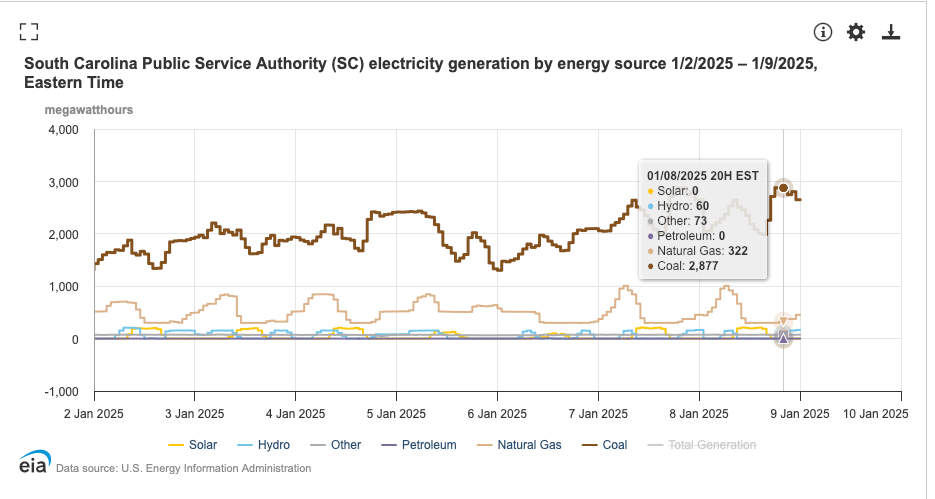
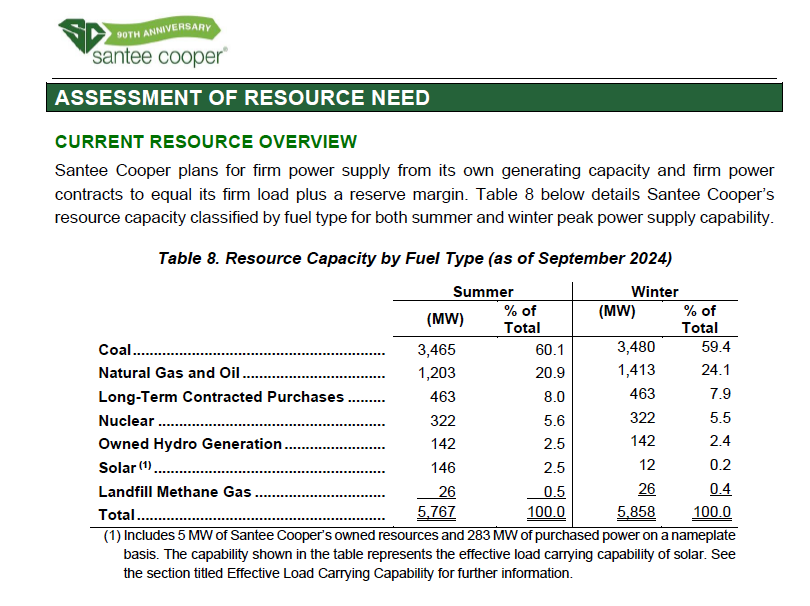
The generation assets of Santee-Cooper are listed below, this is from the latest IRP (Integrated Resource Plan). According to Santee-Cooper’s facts, Coal power plants represent 60.1% of the total owned generation. Natural gas 20.9% and Solar 2.5%. This is where Palmetto Electric obtains nearly all of the Bulk Power used on Hilton Head, Bluffton and other areas served by Palmetto Electric. On January 8th, 2025 coal power provided over 88% of the electricity generated. That is because it was needed then and coal also was the lowest cost fuel at that moment. So, the percentages of installed capacity do not necessarily match actual generation.

Here is a graph of the actual generation, by fuel for a cold week in January 2025.

Why are Electricity Rates Rising?

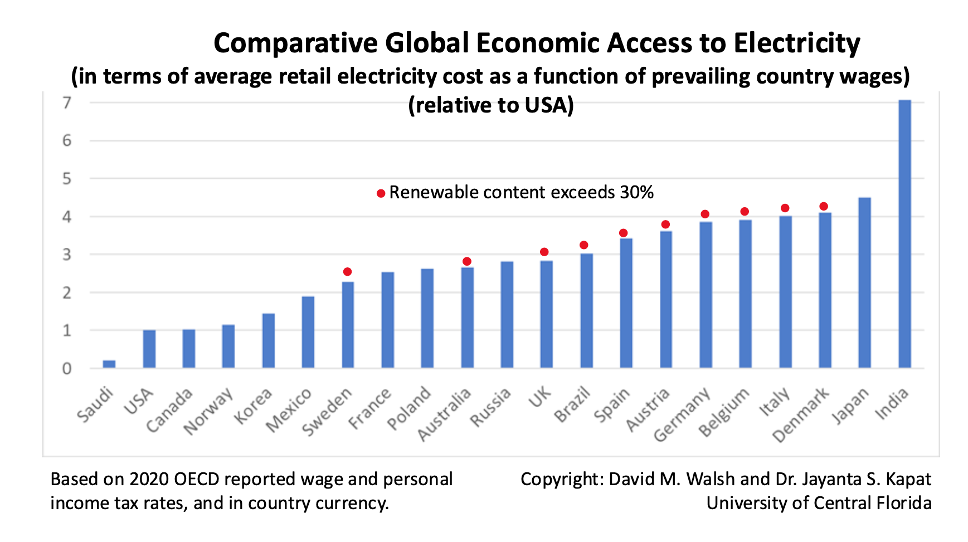
The path to replacing coal power with solar, natural gas, wind and Battery Electric Storage Systems (BESS) will be at enormous cost. Worse yet, wind and solar are intermittent generation. They only generate when the wind is blowing and the sun shining, this is obvious to most everyone, but the BESS promoters claim Battery storage will smoothen the generation through the day. (It may for a few hours, but not days). Further, this has been tried by Hawaii, Germany, UK and California and the cost of electricity has risen significantly in each of these locations. Last September I was invited to Liberty University by my friend Dave Walsh. Dave is an energy expert from Florida who has done extensive studies on the Retail cost of electricity. Below is a chart of the ten lowest and the ten highest cost electricity prices in the United States. The highest costs of generation are in the states that are the most aggressive in shutting down coal plants. The low costs in Washington & Oregon are due to the locally abundant and inexpensive hydropower. The other eight low cost electricity states all use significant amounts of coal power, just as Santee-Cooper does now.

Coal power has numerous advantages

Amongst the advantages are:

  • Least cost fuel to generate electricity (from above chart and past history of power costs in S.C.)
  • Coal fuel cost has been stable for decades
  • They are Dispatchable when electricity Demand increases, load can be increased to satisfy Demand
  • Proven Reliability
  • Most resilient in cold weather
  • Long lasting, robust power plants
  • On-site fuel storage capacity for months, unlike pipeline provided natural gas which the flow can be interrupted if there is a control problem or physical damage to the pipeline providing fuel flow to the power plant

Planning to shut these reliable coal plants down is Planning for higher cost & less reliable electricity

Why do I say that? Because that is what has occurred in every location it has been tried. Such as Germany, UK, Hawaii, Canary Islands, California, Denmark and more. Here is some more data provided by my friend Dave Walsh on the cost of electricity in selected countries. This chart is as of last summer 2024. The red dots above the bars indicate more than 30% wind and/or solar on the respective Grids.

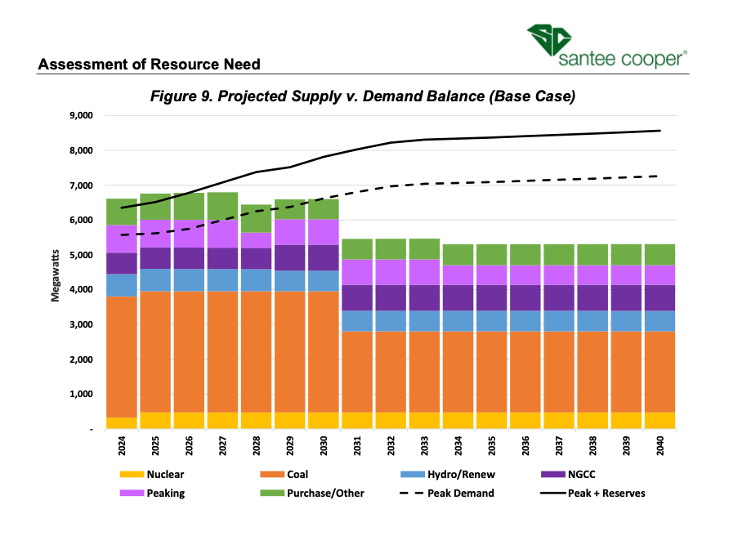
The chart above is titled “Comparative Global Economic Access to Electricity”. It is not only cost, it is also a matter of power reliability. In many countries electricity is rationed and industry has been downsized due to either the high cost or the unavailability of electricity. There are reference links provided at the end if you are interested in more details of De-Industrialization due to certain other countries “Self Sabotaging their electricity Infrastructure”. Two are Germany and the U.K. Interestingly, the Panel Discussion at Liberty University that Dave Walsh and I were involved with was titled, “The Impacts of the Coming Self-Inflicted Electricity Generation Crisis”. My written notes and presentation are included in the references. President Trump has declared a “National Energy Emergency”. He is correct in doing so. Let’s take a look at the current planning for South Carolina electricity generation and expected Demand through 2040. The chart below is from Santee-Cooper’s latest (September 2024) IRP.

The dotted black line that shows about 6700 MW Demand in 2030 is about 1700 MW above the installed capacity planned to be owned by Santee-Cooper in 2030. This deficit is planned to be filled with purchased power from other Utilities or IPP’s (Independent Power Producers) and the construction of more natural gas generation. Maybe supplying Bulk Power to meet Demand is possible, but there is a gap between Supply and Peak Demand. Further, if we check the IRP’s for the neighboring Utilities of Duke Energy and Dominion, they too are planning to exit coal about the same time. (Back to the anti-American EPA Rules).

Build nuclear some say. OK, but remember, it took Georgia Power about ten years to build Units 3 & 4 at Plant Vogtle and they cost about 34 Billion dollars. The final cost was well over expected. By the way, Georgia Power, another neighboring and connected Utility recently updated their IRP to keep coal plants running that had previously been announced to be closed.

Long story short, the fact is, the least cost Bulk Power Supply in this region is from the coal plants.

Until new nuclear plants can be constructed and started up, these coal plants need to be properly maintained and…In my opinion, more new coal plants, such as the once planned (and equipment purchased) Pee Dee Coal Plant should be built. Why? for two reasons. To satisfy the growth in Demand and do so with reasonable cost equipment using the most reasonable cost fuel that is proven. By the way, the cost of electricity production in a Thermal plant 75-92% fuel cost. That’s right, double the cost of natural gas in a gas plant and the production cost of electricity nearly doubles with it.

One outstanding plan was to build the 600 MW Pee Dee County coal plant. This was properly planned in 2008, but stopped in 2011 due to environmental activism against CO2 production of coal fuel. Here is an artists depiction of that plant

I remember Mr. Bill McCall, (now retired) then a senior executive at Santee-Cooper presenting a case for why it was needed. He was right. It should not have been canceled. Of course, the Summer nuclear plant expansion of units 2 and 3 was also a good plan. References below if you are interested in the history of the Summer units 2 and 3. Topics for another day. Let’s get back to the likely difficulty of keeping South Carolina’s existing high electricity Demand industries (Nucor and Century Aluminum are just two) and also, supplying power to provide a transportation fuel to thousands of EV’s in 2032.

Charging Your EV in 2030

I have tried to show how electricity may become limited when the coal plants are shut down. Also, as they are replaced with plants that burn natural gas, the electricity prices are likely to be higher. Have you heard the terms “Demand Response” and “Smart Meters”? These are polite terms for “Rationing”. Demand Response of the utility shutting off your water heater or your air conditioner for a few moments or an hour is not a big deal. However, in 2032 when you come home and plan to charge your EV, it may not be allowable until late at night. Maybe not a problem? But, maybe you would like to charge your EV to be available just as your current ICE powered vehicle is available on a moments notice? I encourage you to read the Santee-Cooper IRP and follow the news on power generation in South Carolina. Yes, South Carolina is a leader in nuclear power, our state ranks #3 in the nation. But for our region, only 322 MW of power come from the Summer Unit #1 nuclear plant. Therefore, the existing EPA Rules, in particular the “Endangerment Finding” will impact all of those served by Palmetto Electric.

Conclusions

  1. The EPA Endangerment Finding needs to be repealed so that Utilities can get back to proper planning of affordable, reliable electricity generation
  2. The State Legislature should push back on extreme EPA Rules that are rooted in political bias, not protection of human health or the environment
  3. The Pee Dee Coal Plant should be constructed, as was planned in 2008.

Our state Senator Tom Davis understands energy and electricity generation better than most. I wish him good success in improving the Energy IQ of his colleagues in the Legislature. My Congressional Representative is Nancy Mace, I will be writing her as well. I encourage my friends to do likewise. If our elected representatives do not hear from us, South Carolina’s electricity prices and availability may match California or Hawaii’s in the future.

Respectfully,

Dick Storm, February 28, 2025

References and Reading for Additional Research

  1. President Trump’s National Energy Emergency EO: https://www.whitehouse.gov/presidential-actions/2025/01/declaring-a-national-energy-emergency/
  2. The Kingdom of Heaven Runs on Righteousness, The Kingdom of Earth Runs on Energy, Oct. 3, 2024:  https://dickstormprobizblog.org/2024/10/03/heaven-runs-on-righteousness-earth-runs-on-energy/
  3. Here is a linkedIn post I made: Dick Storm LI Post on SC Energy policies and failed coal and nuclear plant plans: https://www.linkedin.com/feed/update/urn:li:activity:7184184178920312833?utm_source=share&utm_medium=member_desktop
  4. How Can a 6,000 MW Utility that will be a 9,000 MW Utility in 2050, become Net-Zero Carbon? April 2023: https://dickstormprobizblog.org/2023/04/27/how-can-a-6000-mw-regional-utility-in-2030-which-likely-will-be-a-9000-mw-utility-in-2050-achieve-net-zero-carbon/
  5. Dick Storm’s views on the 2009 EPA-Endangerment Finding”: https://wp.me/p5DzAo-1ZW
  6. Texas Tribune report on Feb. 2021 cold weather storm deaths: https://www.texastribune.org/2022/01/02/texas-winter-storm-final-death-toll-246/#:~:text=Texas%20has%20added%2036%20more,disasters%20in%20the%20state’s%20history.
  7. South Carolina Legislation to achieve Net-Zero Carbon and replace coal generation with carbon free primary energy: https://www.scstatehouse.gov/sess124_2021-2022/bills/3194.htm
  8. Thomas J. Shepstone Substack on Dick Storm’s “Primer on How to Ensure Electricity Security (and How to Destroy It)”:  https://open.substack.com/pub/energysecurityfreedom/p/a-primer-on-how-to-ensure-energy?r=kv1a9&utm_campaign=post&utm_medium=web&showWelcomeOnShare=false
  9. Thomas J. Shepstone substack article. “A Balanced Energy Portfolio is Critical but South Carolina Doesn’t Seem Get It” : https://energysecurityfreedom.substack.com/p/a-balanced-energy-portfolio-is-critical?utm_source=profile&utm_medium=reader2
  10. Post & Courier article on Power Demand increase from Data Centers, April 2024: https://www.postandcourier.com/opinion/editorials/google-data-centers-energy-hogs/article_1c7b558c-062b-11ef-836f-87365c650aef.html
  11. WLTX News on Data Center Power Requirements, April 2024: https://www.wltx.com/article/news/local/south-carolina-energy-data-centers/101-9a055fc9-e66f-4e3e-bebb-c58f5b7c1ab5
  12. POWER Magazine on stopping construction of Pee Dee Coal Plant in 2009: https://www.powermag.com/south-carolinas-santee-cooper-shelves-2-billion-coal-plant-project/
  13. Inside Climate News, 2011:  https://insideclimatenews.org/news/05042011/coal-plant-canceled-south-carolina-santee-cooper-parts-for-sale/
  14. Engineering News Record, 2016: https://www.enr.com/articles/23106-santee-cooper-nixes-plans-for-proposed-2-2-billion-pee-dee-energy-campus
  15. Post and Courier, 2009: https://www.postandcourier.com/news/pulling-the-plug-on-pee-dee-plant/article_3372de17-64a1-5d91-aaea-84c83fcc792f.html
  16. Global Energy Monitor article on Pee Dee coal plant:  https://www.gem.wiki/Pee_Dee_Generating_Facility
  17. Battle Between Reality and Fantasy in Nuclear Power in Pacific Northwest, Substack, Dec. 12, 2024: https://open.substack.com/pub/energysecurityfreedom/p/a-battle-between-climate-fantasy?r=kv1a9&utm_campaign=post&utm_medium=web&showWelcomeOnShare=true
  18. POWER on Nuclear Fuel Supply, Dec. 2024: https://www.powermag.com/six-companies-tapped-for-2-7-billion-leu-push-to-boost-domestic-nuclear-fuel-supply/?utm_source=omeda&utm_medium=email&utm_campaign=pwrnews+eletter&oly_enc_id=3214I3524889A9B
  19. Dick Storm panel notes for presentation, “Impacts of the U.S. Self-Inflicted Electricity Crisis”, Liberty University, Sept. 2024: https://www.linkedin.com/feed/update/urn:li:activity:7266497381574098944?utm_source=share&utm_medium=member_desktop
  20. LinkedIn Wish Bakshi on the German Energy experience: https://www.linkedin.com/feed/update/urn:li:activity:7271156730317750272?utm_source=share&utm_medium=member_desktop
  21. LinkedIn Post on “Clean Energy Funding” by Mark Lewis: https://www.linkedin.com/feed/update/urn:li:activity:7270766274668892160?utm_source=share&utm_medium=member_desktop
  22. Recurrent Blackouts in New York by 2026: https://www.linkedin.com/feed/update/urn:li:activity:7269663571012161536?utm_source=share&utm_medium=member_desktop
  23. LinkedIn post of Liberty University presentation by David Walsh, Sept. 2024: https://www.linkedin.com/feed/update/urn:li:activity:7266777394617749504?utm_source=share&utm_medium=member_desktop
  24. EPSI (Electric Power Supply Institute) News release Dec. 17, 2024: https://epsa.org/with-nerc-declaring-urgent-need-for-energy-resources-competition-essential-to-meet-the-moment/  
  25. NERC Generation Retirements Infographic, Dec. 17, 2024: https://www.nerc.com/pa/RAPA/ra/Reliability%20Assessments%20DL/NERC_LTRA_Infographic_2024.pdf
  26. NERC Long Term Reliability Assessment, Dec. 2024: https://www.nerc.com/pa/RAPA/ra/Reliability%20Assessments%20DL/NERC_Long%20Term%20Reliability%20Assessment_2024.pdf
  27. Dr. Nicholas Kokel Blog on the history of Energy: https://portfolio-pplus.com/Communicator/Details/1023
  28. Lars Schernikau on advantages of nuclear power: https://unpopular-truth.com/2024/02/22/advantages-of-nuclear-energy/
  29. IEA World Energy report: https://www.iea.org/reports/world-energy-outlook-2023
  30. POWER Magazine Coal references: https://www.powermag.com/category/coal/
  31. Washington Free Beacon report on CCP funding of Climate Extremists in the U.S. Dec. 19, 2024: https://freebeacon.com/energy/ex-ccp-officials-steered-millions-to-us-based-green-groups-universities-for-climate-initiatives/
  32. IEA World Coal Consumption: https://www.iea.org/data-and-statistics/charts/global-coal-consumption-2000-2026
  33. Report, Indian Summary of the Role of SMR Reactors in the Energy Transition, May 2023: https://www.niti.gov.in/sites/default/files/2023-05/The-Role-of-Small-Modular-Reactors-in-the-Energy-Transition-05162023.pdf  
  34. Lars Schernikau video “Unpopular Truth of Energy”: https://unpopular-truth.com/why-read-the-unpopular-truth/
  35. Daily Skeptic on German Policy Failures, Dec. 27, 2024: https://dailysceptic.org/2024/12/27/germanys-economic-and-political-suicide/
  36. EIA Net Generation over decades, by fuel source: https://www.eia.gov/electricity/data/browser/  
  37. Mike Caravaggio LI graph of cost of power in 48 states by Coal %: https://www.linkedin.com/posts/michael-caravaggio_was-playing-with-the-eia-electricity-data-activity-7281036749697376257-Jqig?utm_source=share&utm_medium=member_desktop
  38. Summer Nuclear Plant Builders Solicited by Santee-Cooper, Jan. 2025: https://www.theregister.com/2025/01/27/sc_nuclear_reactors_ai/
  39. Doug Sheridan LI post on the cost of Batteries for backup of solar and wind: https://www.linkedin.com/posts/sheridandoug_bess-renewables-power-activity-7174507881050910720-7Y24?utm_source=share&utm_medium=member_desktop
  40. Hawaii Electric Update by Civil Beat, Feb. 1, 2024: https://www.civilbeat.org/2024/02/hawaiian-electric-gets-the-green-light-on-its-190-million-resiliency-plan-to-harden-the-grid/
  41. Hawaii Electric Update, Sept. 2023 on “Setting the Record Straight” on the Highest Cost Electricity in Nation: https://www.civilbeat.org/2023/09/setting-the-record-straight-on-resilience-and-renewables/
  42. ASCE Report/update on the 180 MW Battery storage at Hawaii Electric, March 12, 2024: https://www.asce.org/publications-and-news/civil-engineering-source/civil-engineering-magazine/article/2024/03/large-battery-energy-storage-system-now-operating-in-hawaii
  43. Civil Beat article, “Huge Battery Storage Replaces last Coal Plant,” January 2024: https://www.civilbeat.org/2024/01/a-huge-battery-has-replaced-hawaiis-last-coal-plant/
  44. Huge Kapolei Battery Plant Replaces Coal at Hawaii Electric, Canary Media, Kapolei battery is officially online. The pioneering project is a leading example of how to shift crucial grid functions from fossil-fueled plants to clean energy. January 2024: https://www.canarymedia.com/articles/energy-storage/a-huge-battery-has-replaced-hawaiis-last-coal-plant
  45. Hawaii Electricity Rates Highest in nation, KHON March 5, 2024: https://www.khon2.com/local-news/hawaii-1-for-expensive-electricity-were-being-priced-out/
  46. EIA List of U.S. Electricity Rates, December 2023, Hawaii Top Rate for Residential $0.416/kWh: https://www.eia.gov/electricity/monthly/epm_table_grapher.php?t=epmt_5_6_a
  47. Marc Christie to Gulf States, March 10, 2024: https://www.rtoinsider.com/73336-ferc-christie-warns-very-dark-place/
  48. Heritage Foundation on the De-Industrialization of Europe, Feb. 2024: https://www.heritage.org/energy/commentary/high-electricity-prices-have-europe-facing-deindustrialization-dont-let-it-happen.
  49. Hawaii, Green New Deal, A Glimpse into the Future, June 3, 2020: https://dickstormprobizblog.org/2020/06/03/hawaii-a-gimpse-into-the-future-of-the-green-new-deal/
  50. The Importance of Energy to Power Our High Quality Lives, Aug. 25, 2020: https://dickstormprobizblog.org/2020/08/25/the-importance-of-energy-to-power-high-quality-of-life-part-1/
  51. The Importance of Energy to Power Our High Quality Lives, Part 2, Aug. 28,2020 : https://dickstormprobizblog.org/2020/08/28/the-importance-of-energy-part-2-our-energy-sources/  
  52. The Importance of Energy, Part 3, Heat Engines, Sept. 9, 2020: https://dickstormprobizblog.org/2020/09/09/the-importance-of-energy-part-3-heat-engines-a-primer/
  53. The Importance of Energy for Economic Prosperity, Part 4, The Rise of the U.S and the Rise of China from an energy perspective: https://dickstormprobizblog.org/2020/09/21/part-4-the-importance-of-energy-to-economic-prosperity/
  54. Dick Storm thoughts on the “Green New Deal” , Oct. 10, 2020: https://dickstormprobizblog.org/2020/10/10/part-5-dick-storms-thoughts-on-the-green-new-deal/
  55. A Thriving Economy and Clean Air Too, Oct. 23, 2020 : https://dickstormprobizblog.org/2020/10/23/part-6-a-thriving-economy-and-clean-air-too/
  56. China’s Influence in the World and the Need to Reshore American Manufacturing, Nov. 3, 2020 : https://dickstormprobizblog.org/2020/11/03/chinas-economic-influence-in-the-world-and-some-thoughts-on-the-need-to-reshore-american-manufacturing/  
  57. Thank You President Trump, Nov. 13, 2020 : https://dickstormprobizblog.org/2020/11/13/thank-you-president-trump/
  58. Are You Worried about the Future of America? Jan. 21, 2021 Thoughts on Energy Policies, Industrial and Economic Growth: https://dickstormprobizblog.org/2021/01/21/are-you-worried-about-the-future-of-america/
  59. My Paid Energy Awareness Ad, 2015: https://dickstormprobizblog.org/2021/01/28/my-paid-ad-for-energy-awareness-in-2015-here-we-go-again/
  60. U.S. War on Carbon Accomplishes Two Things, Weakens America, Enriches China, Jan. 30, 2021: https://dickstormprobizblog.org/2021/01/30/us-war-on-carbon-accomplishes-two-things/
  61. Blue Planet in Green Shackles, What is Endangered, Climate or Freedom”: https://wp.me/p5DzAo-nD
  62. All Fuels are Important, A Review of Competitive Electricity Generation and Supply of Needed Transportation Fuels : https://dickstormprobizblog.org/2021/02/10/all-fuels-are-important-a-review-of-the-reality-of-competitive-electricity-generation-and-the-supply-of-needed-transportation-fuels/  
  63. Texas and Coal Power,  6,000 MW of Coal Power Generation is Missed, Feb. 19, 2021: https://dickstormprobizblog.org/2021/02/19/texas-and-coal-power-6000-mws-of-coal-plant-capacity-is-missed/
  64. Executive Orders to Weaken the U.S. Economy, March 3, 2021: https://dickstormprobizblog.org/2021/03/03/presidential-executive-order-signed-by-biden-that-will-harm-the-u-s-economy/
  65. Energy and Some People Who Contributed to the Rise of America, March 31, 2021: https://dickstormprobizblog.org/2021/03/31/energy-and-notable-people-who-contributed-to-the-rise-of-america/ 
  66.  Earth Day, Let’s Celebrate True Sustainability of Our High Quality of Life, April 22, 2021: https://dickstormprobizblog.org/2021/04/22/earth-day-lets-celebrate-true-sustainability-and-a-continuance-of-our-high-quality-of-life/
  67. The War on Carbon, How it Came to Be” October 2021: https://dickstormprobizblog.org/2021/10/16/the-war-on-carbon-how-it-came-to-be/
  68. Energy and Economic Prosperity, My Thoughts, a presentation to the Delaware County Bar Association, July 2016: https://dickstormprobizblog.org/2016/07/25/energy-and-economic-prosperity-my-thoughts-dick-storm/
  69. Primary Energy that American’s are Accustomed to: 830,000 BTUs per Day/Person, Sept. 2021: https://dickstormprobizblog.org/2021/09/16/830000-btus-per-day-person/
  70. The Stupidity of Net-Zero Carbon, Oct. 2021: https://dickstormprobizblog.org/2021/10/13/the-stupidity-of-net-zero-carbon/
  71. America’s Treasure of Fossil Fuels, Update of 2011 presentation to ASME: https://dickstormprobizblog.org/2022/11/26/americas-treasure-of-fossil-fuels/
  72. American Dream = 100 Quadrillion BTUs per Year April 7, 2022: https://dickstormprobizblog.org/2022/07/04/american-dream-100-quadrillion-btus/
  73. Providing a Sustainable Million BTUs per Day/Person, May 17,  2022: https://dickstormprobizblog.org/2022/05/17/providing-a-sustainable-million-btus-per-day-per-person-by-fuel-source/
  74. A Short History of Power Generation, Part 1, 1850-1955, January 2022: https://dickstormprobizblog.org/2022/01/14/a-short-history-of-energy-electricity-and-how-our-high-quality-of-living-came-to-be-high-human-development-index-part-1-1850-1955/
  75. A Short History of Power Generation, Part 2:  https://wp.me/p5DzAo-k6
  76. A Short History of Power Generation, Part 3: https://wp.me/p5DzAo-ll
  77. A Short History of Power Generation, Part 4: https://wp.me/p5DzAo-n4
  78. Energy=Life as We Enjoy it, Aug. 22, 2022: https://dickstormprobizblog.org/2022/08/22/energy-life-that-is-life-as-we-enjoy-it/
  79. “The War on Carbon, How it Came to Be”, Oct. 16, 2021: https://dickstormprobizblog.org/2021/10/16/the-war-on-carbon-how-it-came-to-be/
  80. Energy and Economic Prosperity, Jan. 11, 2021: https://dickstormprobizblog.org/2022/01/03/energy-and-economic-prosperity/https://dickstormprobizblog.org/2022/01/03/energy-and-economic-prosperity/
  81. Energy and World Peace, April, 2022: https://dickstormprobizblog.org/2022/04/05/energy-world-peace/
  82. Without New Thinking on Nuclear Power, Anti-Carbon Policy Can’t Succeed, Nov. 11, 2021 : https://dickstormprobizblog.org/2021/11/13/without-new-thinking-on-nuclear-power-anti-carbon-climate-policy-cant-succeed/
  83. The Rise and Fall and Rise Again  of Nations and the  Realities of Energy: https://dickstormprobizblog.org/2023/08/15/the-rise-fall-and-rise-again-of-nations-and-the-realities-of-energy/
  84. America Needs 100 Quadrillion BTUs of Primary Energy Each Year, May 16, 2023: https://dickstormprobizblog.org/2023/05/16/back-to-basics-the-u-s-needs-100-quadrillion-btus-year-of-primary-energy/  
  85. Pillars of Modern Civilization, Ammonia, Food, Steel, Concrete, Plastics, Aluminum, July 2022: https://dickstormprobizblog.org/2022/07/25/pillars-of-modern-civilization-all-dependent-on-energy/
  86. U.S. Energy Information Administration (EIA),  S.C. Energy Profile: https://www.eia.gov/state/print.php?sid=SC
  87. U.S. EIA, Electricity explained: https://www.eia.gov/energyexplained/electricity/electricity-in-the-us-generation-capacity-and-sales.php
  88. S.C. Energy Office, Charts and discussion of S.C. energy and electricity generation: https://south-carolina-energy-office-1-1-scors-eo.hub.arcgis.com/pages/electricity-data#clcw7fc2k
  89. EIA Dashboard, this shows the actual generation by fuel and region in real time: https://www.eia.gov/electricity/gridmonitor/dashboard/electric_overview/balancing_authority/SC
  90. Santee-Cooper Integrated Resource Plan for future electricity generation assets. This is the latest 2024 update: https://www.santeecooper.com/About/Integrated-Resource-Plan/Reports-and-Materials/Santee-Cooper-2024-IRP-Update.pdf
  91. China’s Nuclear Power Plants: According to the World Nuclear Safety Council, as of September 2021, China had 52 nuclear reactors in operation and another 18 under construction, representing a total nuclear power generation capacity of approximately 51 GW.
  92. Additionally, China plans to build many more nuclear reactors in the coming years, with the goal of increasing its installed nuclear power capacity to 70 GW by 2025. https://nuclear-energy.net/nuclear-power-plants/list/china
  93. EIA Information on Nuclear Plants in China, updated, May 2024: https://www.eia.gov/todayinenergy/detail.php?id=61927&trk=public_post_comment-text
  94. U.S. Nuclear Fuel is mostly imported, Jan 25, 2025: https://www.eia.gov/todayinenergy/detail.php?id=64444
  95. World Electricity Growth projected to be 4%/year by IEA through 2027: https://www.linkedin.com/posts/alessandro-blasi-6579a66_entering-the-age-of-electricity-in-a-chart-activity-7297539477021839360-l5te/?utm_source=share&utm_medium=member_ios&rcm=ACoAAAI4KQUBYW-cbQRlA1kgj9X3llGi7u6KNnQ
  96. Four more Westinghouse Reactors to be built in China, Westinghouse Nuclear News: https://info.westinghousenuclear.com/news/four-westinghouse-ap1000-reactors-in-china
  97. New Coal Power in China, Report by Global Energy Monitor-CREA, Feb. 2025: https://energyandcleanair.org/wp/wp-content/uploads/2025/02/CREA_GEM_China_Coal-power_H2-2024_FINAL.pdf
  98. Battery Electricity Storage Systems References (BESS)
  99.  Grid Scale BESS (Battery Electricity Storage Systems) Info by NREL (Dept. of Energy): https://www.nrel.gov/docs/fy19osti/74426.pdf
  100. Canary Media Report on Moss Landing Vistra Battery Fire, January 2025: https://www.canarymedia.com/articles/batteries/moss-landing-the-worlds-biggest-grid-battery-just-caught-fire-again
  101. “Felicity Ace” ship sinking with approx. 4,000 cars due to Lithium battery fire off the coast of Portugal, February 2022: https://maritime-executive.com/article/report-volkswagen-sued-by-mol-for-the-loss-of-felicity-ace-car-carrier
  102. Maritime fire of 500 vehicles disaster of “Freemantle Highway” by G-Captain News July 2023: https://gcaptain.com/k-line-confirms-nearly-500-electric-vehicles-on-burning-car-carrier-in-the-north-sea/
  103. References and Further Reading on EV’s and Hybrid VehiclesThomas Shepstone article “EV’s-Green Transition or Green Delusion” : https://open.substack.com/pub/energysecurityfreedom/p/green-transition-or-green-delusion?r=kv1a9&utm_campaign=post&utm_medium=web
  104. Georgia Power IRP Update, January 2025 to show the need to keep coal plants running: https://www.georgiapower.com/news-hub/press-releases/georgia-power-files-2025-irp-plan-to-meet-energy-needs.html
  105. POWER ENGINEERING Magazine article on Georgia Power revised IRP, Jan. 2025: https://www.power-eng.com/gas/georgia-power-proposes-uprates-life-extensions-for-generation-assets-in-latest-resource-plan/
  106. Duke Energy Carolinas, News to review the existing IRP, January 2025: https://www.duke-energy.com/our-company/about-us/irp-carolinas
  107. Duke Energy Carolinas, IRP-2023: https://www.duke-energy.com/our-company/about-us/irp-carolinas/prior-plans
  108. Dominion Energy-IRP 2023 (South Carolina) which shows plans to replace coal plants with natural gas capacity before 2030: https://cdn-dominionenergy-prd-001.azureedge.net/-/media/pdfs/global/company/irp/sc/desc-integrated-resource-plan-2024.pdf?rev=42a0728dbf894c979aefc95151401fcb
  109. Study Destroys Basis for EPA – Climate Regulations, Watts Up With That https://wattsupwiththat.com/2025/03/20/study-destroys-basis-of-epa-climate-regulations/

Facing the Hard Truths of Energy, Part 3: The Transition that Isn’t, from the Perspective of Minerals

The Finland GTK organization has provided comprehensive and well researched information on the challenges of providing adequate minerals for the future. I recommend referring to their excellent work. (1) Also, the National Mining Association has excellent information on their web page. (2) The current slogan for the NMA is, “Minerals Make Life”. I would add, minerals, lots of minerals are also needed for the transition to more renewable power generation. Even then, as a friend pointed out to me, the exotic minerals do not produce electricity until they are incorporated into final products such as solar panels or wind turbines. Electricity produced from renewables cannot make the products needed by society. See Ron Stein’s explanation for more on the importance of crude oil. (8, 9)

Mining and Power

My background and expertise is in electric power generation, not mining. So, why am I writing this if I am not a mining expert? The reason is, although my experiences are in combustion and power, over the last 60 years or so I traveled the world with involvement in power plants and ore processing facilities that provided electricity and combustion systems required for the mining of aluminum, copper, coal and steel. The fact is that both internal combustion engine powered vehicles and EV’s, all require lots of copper, steel and aluminum. As technologies advance for more reduced carbon power generation and use, so will the requirements for Rare Earth minerals, Uranium as well as the more common metals. Aluminum requires the most electricity for smelting of all common metals, about 5 kWh per pound. Copper mining requires a fair amount of electricity as well. For example, I once worked at the Freeport-McMoran copper mine in Irian Jaya (now called West Papua) and it had 180 MW of conventional generation just to run the ore processing equipment. A good read is the Forbes Wilson book, “Conquest of Copper Mountain” which is better than fiction on the story of how one of the largest copper mines in the world came to be. (7)  Let’s get back to minerals and metals.

Time to Wake Up!

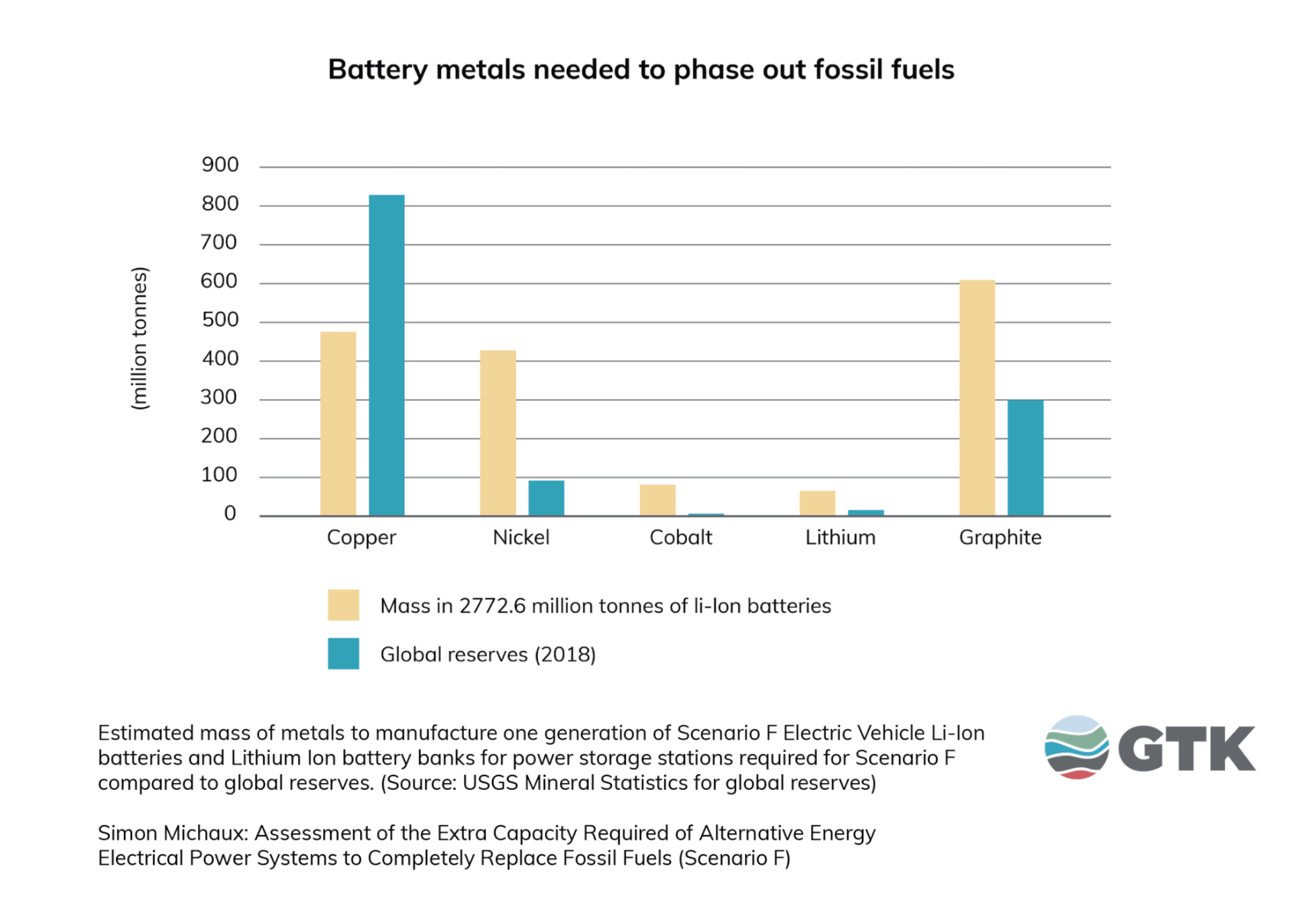
This is the title of the GTK report and I have taken the liberty of using some of the illustrations from GTK. The first slide in the GTK presentation shows the relationship of metal/minerals required by 2050 compared to the current world use of coal, oil and gas. My previous articles have elaborated on the need to supply the U.S. alone with 100 Quadrillion BTUs of energy. Mr. Michaux provides the graphic below as another approach to communicating the need of minerals.

From GTK Time to Wake Up: https://www.gtk.fi/en/research/time-to-wake-up/

The metals and minerals needed for batteries alone is enormous. GTK shows the relationship of minerals used now and minerals needed as more power generation is produced from renewables and more electricity is used for transportation.

Energy is required to produce these metals. Lots of energy, both primary energy such as Diesel fuel as well as electricity which is secondary energy. For example, take a look at the 400 ton mine haul truck below. This modern and efficient truck uses a 4,000 hp Diesel engine for propulsion. Keep in mind that ore deposits are mostly dirt with a little bit of metal. Typical rich copper deposits are about 1 -2% copper. So, it takes about 50-100 tons of ore to produce one ton of copper. Plus, lots of energy for processing. I also worked at a gold mine in Nevada and there the gold content of the ore was 0.2 ounce per ton of dirt and rock. So, it takes huge haul trucks to move a lot of dirt and rock for these small percentages of metal.

Conclusions

The path to Net-Zero Carbon is not possible by 2050 for many reasons. The one limitation highlighted in this article is the need for enormous quantities of new metals and critical minerals. Also, huge amounts of energy to power the mining, processing and manufacturing. The U.S. government regulations are biased against mining as well as against conventional energy use. Our government seems to hate to use our natural resources. Another slogan used by the NMA that I saw bumper stickers at a Trona mine was “If it isn’t Grown, it is Mined”. See the Competitive Enterprise Institute list of 10,000 Commandments. (6) I invite the reader to visit the web sites of GTK and the National Mining Association. They are experts in minerals and metals and offer outstanding information on their web sites.

What about Nuclear Power?

Nuclear power generation provides the greatest amount of carbon free electricity. Nuclear is the most likely solution for reduced carbon electricity expansion.  Since the 1990s, despite ample domestic reserves, the U.S. has increasingly relied on imported uranium for use in nuclear power plants. Our near complete import reliance for uranium is concerning, including 60 percent of our uranium imports coming from Russia, Kazakhstan and Uzbekistan. The U.S. is currently heavily reliant on China for advanced rare earth materials needed for EVs, wind energy, and other advanced technologies, including those needed for national defense. This need not be the case, whether for uranium, rare earths or other energy materials. The NMA has further information on uranium, rare earth minerals and mining. (2, 4)

Yours truly,

Dick Storm, Feb. 7, 2024

References

  1. GTK Finland- “Time to Wake Up”: https://www.gtk.fi/en/research/time-to-wake-up/
  2. National Mining Association: https://nma.org
  3. Caterpillar 797F Haul Truck specifications: https://www.lectura-specs.com/en/model/construction-machinery/rigid-dump-trucks-caterpillar/797f-11691916
  4. Uranium sources for U.S. nuclear power generation, NMA: https://nma.org/2023/08/22/domestically-produced-uranium-2/
  5. EIA Where our Uranium comes from: https://www.eia.gov/energyexplained/nuclear/where-our-uranium-comes-from.php
  6. Competitive Enterprise Institute, Government Regulations Review, 10,000 Commandments: https://cei.org/studies/ten-thousand-commandments-2023/#:~:text=Ten%20Thousand%20Commandments%20is%20the,the%20U.S.%20economy%20at%20large.
  7. A great read not only fascinating but also better than fiction! The story of the development of a copper mine in Irian Jaya, Indonesia: “The Conquest of Copper Mountain” by Forbes Wilson, 1981
  8. Ron Stein’s Energy Library, “Breezes and Sunshine Cannot Manufacture Anything, Electricity Cannot Exist Without Oil”: https://www.americaoutloud.news/todays-materialistic-world-cannot-survive-without-crude-oil/
  9. Ron Stein, “Breezes & Sunshine Cannot Manufacture Anything, Electricity Cannot Exist Without Crude Oil” : https://www.americaoutloud.news/breezes-and-sunshine-cannot-manufacture-anything-electricity-cannot-exist-without-crude-oil/
  10. Gatestone Institute on Leadership, “Boeing’s Missing Bolts”, Leadership at the top affects more than aircraft manufacturing Quality Assurance: https://www.gatestoneinstitute.org/20394/boeing-leadership-crisis
  11. US Manufacturing “Boom” Misinformation, Daily Signal, Aug. 17, 2023: https://www.dailysignal.com/2023/08/17/bidens-manufacturing-boom-is-manufactured-malarkey/
  12.   How Washington Strangled American Manufacturing, EPOCH Times, Feb. 12, 2024, Federal Regulations undermine efforts to restore and expand American manufacturing : https://www.theepochtimes.com/opinion/how-washington-regulation-strangled-american-manufacturing-5585825?utm_source=partner&utm_campaign=BonginoReport
  13. Daily Signal page with numerous Commentary articles on Gov’t &  Federal Regulations,  : https://www.dailysignal.com/tag/government
  14. Daily Signal with more Commentary on Federal Regulations: https://www.dailysignal.com/tag/regulations
  15. 22 Million Acres of Western land to be used for solar power, according to BLM, Such a waste of beautiful lands: https://www.hcn.org/articles/solar-energy-biden-plan-will-earmark-millions-of-acres-of-public-land-for-solar-development/