Background: Bulk Power Supply in the S.C. Lowcountry
The wholesale (Bulk Power) electricity providers serving our region are Santee-Cooper (officially the South Carolina Public Service Authority, or SCPSA) and Dominion Energy (which replaced South Carolina Electric & Gas as the Investor-Owned Utility). Most of Palmetto Electric’s Bulk Power comes from Santee-Cooper.
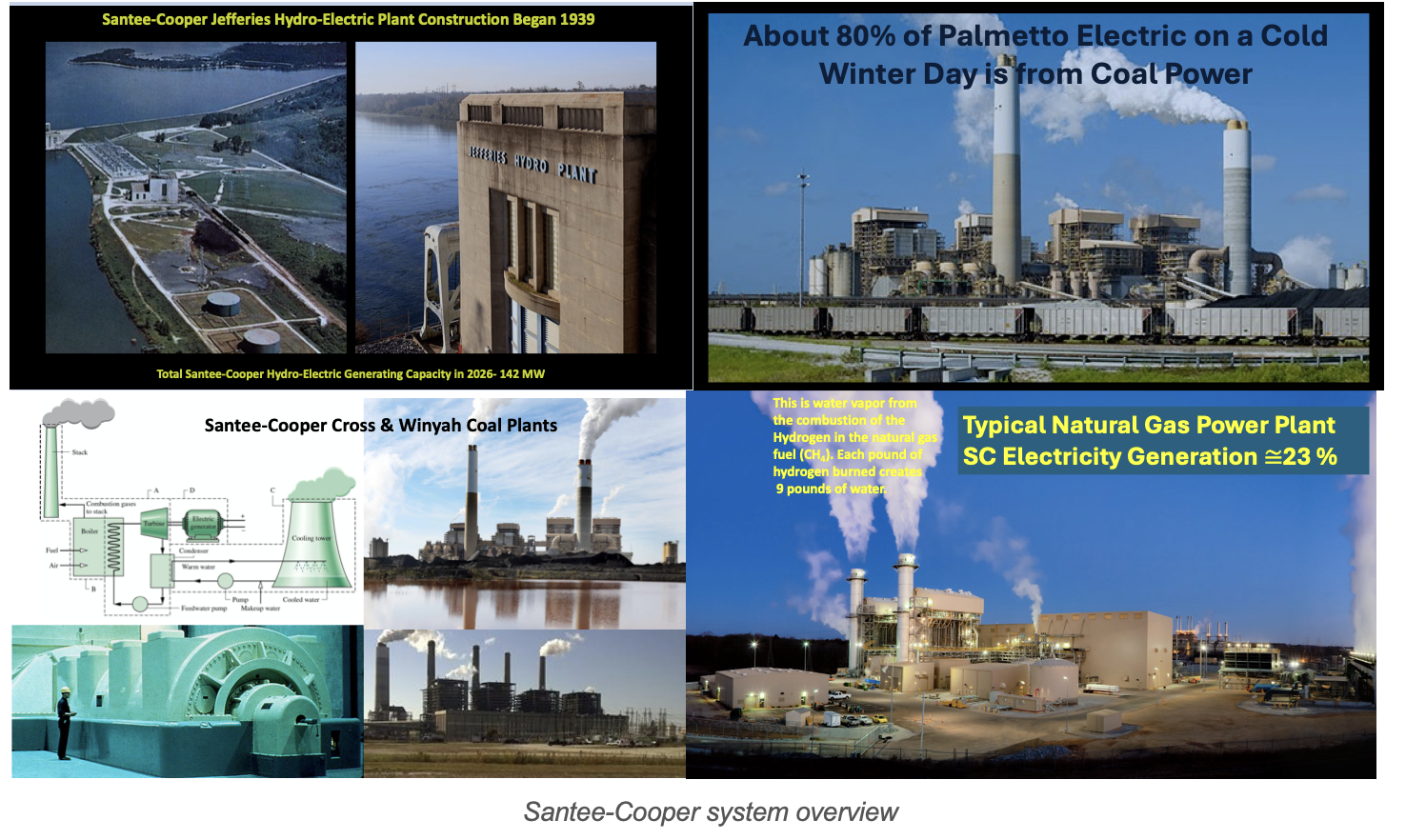
Santee-Cooper is a state-owned agency operating since the 1930s. Its first electricity was generated in 1941 from the Jefferies hydroelectric dam at Moncks Corner. Today, SCPSA’s hydroelectric plants still operate with a combined capacity of 142 MW.
Since 1941, population growth, industrial expansion, and regional electrification have driven steadily increasing electricity demand. During peak-load periods, SCPSA now generates up to approximately 5,000 MW. Over more than 80 years, coal has been the primary energy source, keeping production costs at or below the U.S. average—a commendable achievement.
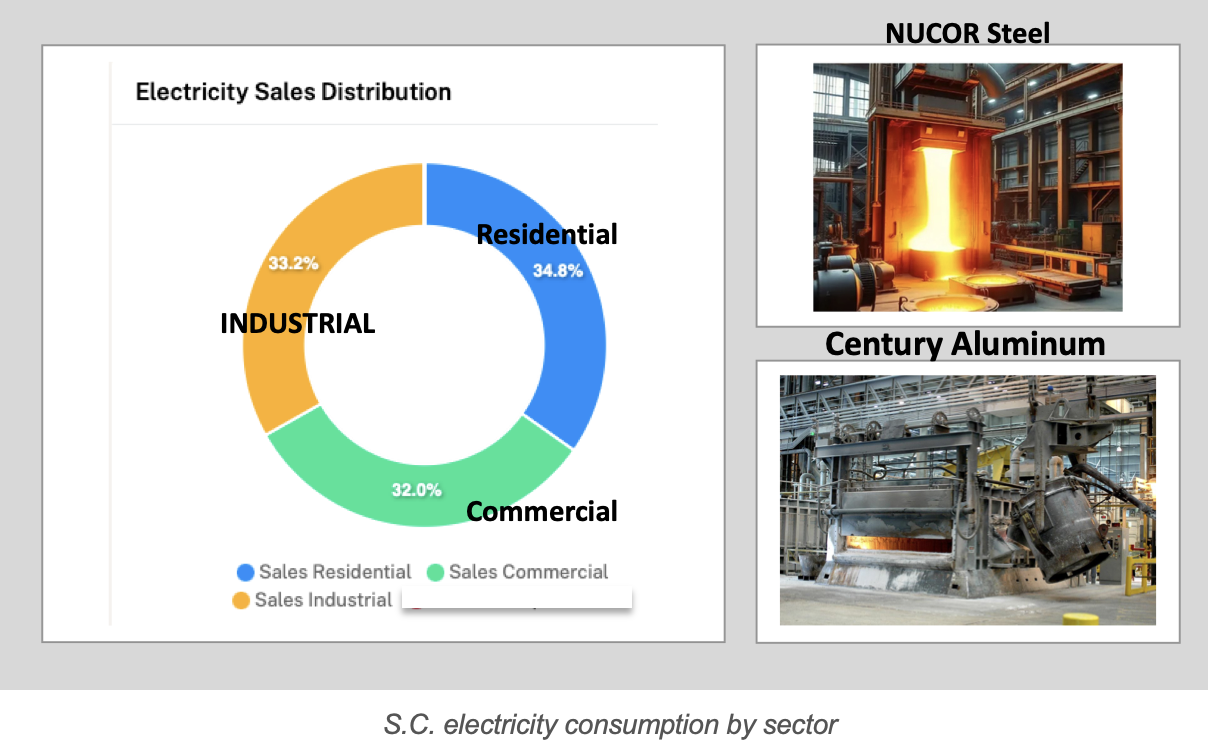
This low-cost electricity attracted energy-intensive industries, most notably NUCOR Steel and Century Aluminum. Affordable coal-fired power was the decisive factor in locating these facilities in South Carolina. This has benefited heavy industry and all citizens of the region, including our area around Bluffton and Hilton Head Island.
How South Carolina Uses Its Electricity
Industrial, Residential, and Commercial customers each consume approximately one-third of total S.C. electricity generation. NUCOR, Century Aluminum, and other industrial customers consume about a third of all electricity generated by S.C. utilities.
The Scale of Industrial Energy Demand
Aluminum and steel production are extremely energy-intensive. It takes approximately 6 kWh of electricity to produce just one pound of aluminum from aluminum oxide powder—and that is only to create raw ingots, not including the energy to refine bauxite ore or form finished products.
At full production, NUCOR and Century Aluminum together consume more Bulk Power on a given day than the entire island of Hilton Head uses during its highest winter peak-load demand day.
Affordable electricity supports economic prosperity, employment, and national security—in addition to keeping our homes heated and cooled.
Coal-Fired Generating Stations in The Low Country of S.C.
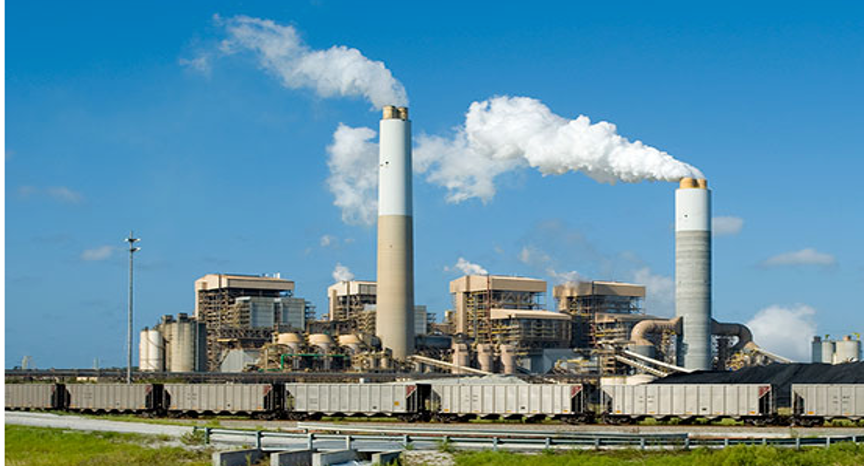
The Cross Generating Station, located about 100 miles north of Hilton Head Island, has four units built between 1983 and 2009 with a combined capacity of approximately 2,390 MW. All four units are equipped with stack-cleaning equipment; the visible stack plume is harmless water vapor.
Winter Storm Fern Proved the Importance of Coal-Fueled Electricity Generation
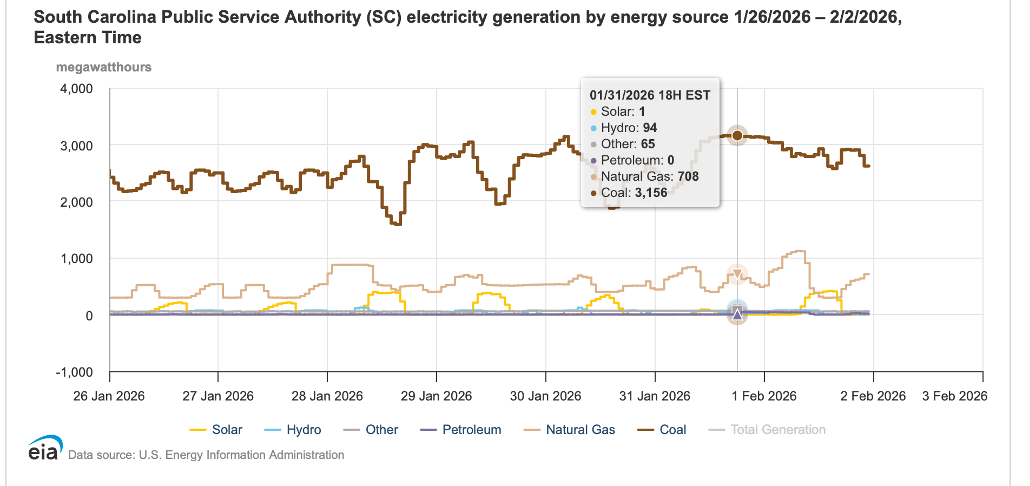
Cross and Winyah coal plants provided over 80% of the electricity consumed in the S.C. Lowcountry during the Winter Storm Fern peak demand period (January 26 – February 4, 2026). Natural gas and solar generation are also shown in the chart below. Not shown: the 322 MW of nuclear generation from Santee-Cooper’s one-third share of V.C. Summer Nuclear Plant.
The chart above is the actual “Bulk Power Supply” as generated by SCPSA, which provides the wholesale power to Palmetto Electric. Note that over 80% is from coal generation. Also, note the small contribution of solar. Not shown is the 322 MW of nuclear generation from Dominion Energy.
The Net Zero Carbon Mandate and Rising Costs
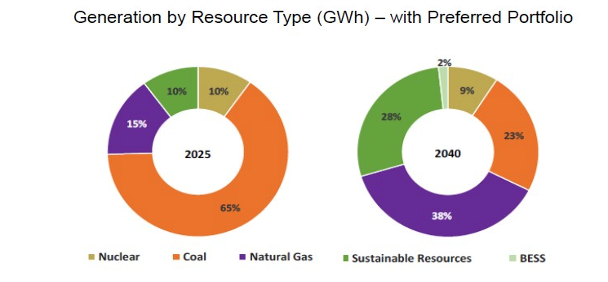
The least-cost fuels for electricity generation are coal and nuclear. However, SCPSA and other S.C. utilities have been ordered by the S.C. Legislature to transition away from coal toward Net Zero Carbon. The path ahead is described in the Santee-Cooper Integrated Resource Plan (IRP).
As can be seen on the portfolio transition, the plan is to reduce coal from over 55% to about 23% by 2040.
The S.C. Legislation to Increase Electricity Costs
South Carolina law (S.C. Code Ann. §58-37-40) directs the retirement of coal-fired generation:
Santee-Cooper’s analysis demonstrated that the Net Zero CO₂ by 2050 portfolio would be higher in costs and involve more risk for customers than the Economically Optimized Portfolio. Several supplemental analyses were performed reflecting the retirement of the Winyah generating station by end of 2028 or 2030.
This is the fundamental reason electricity costs will rise in the years ahead. The transition from reliable, affordable coal generation is a transition to higher-cost production. This is not a forecast—it is fact, based on the experience of countries and U.S. states already further along in the Net Zero transition.
Understanding Your Electric Bill
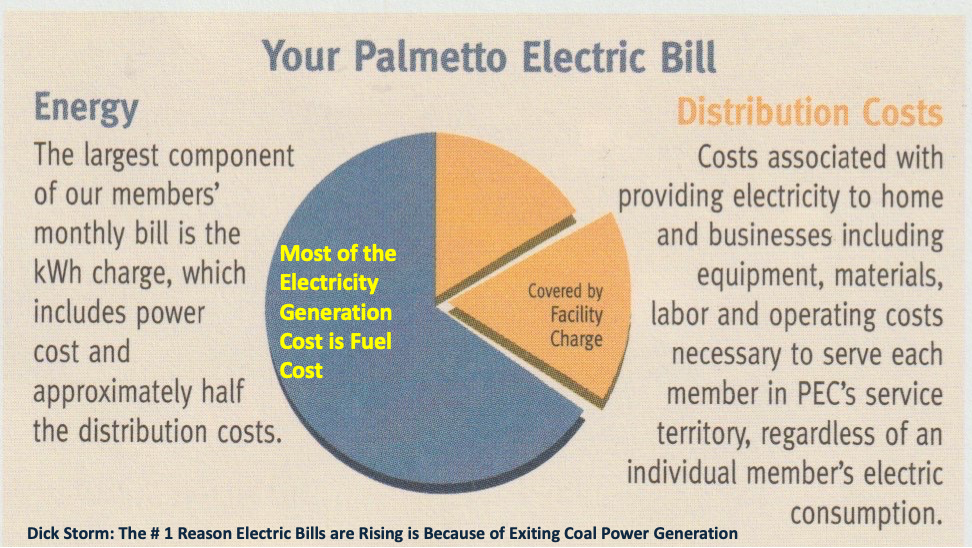
The major component of electricity production cost is primary energy (fuel). When wholesale power costs rise, retail electric bills follow. For a Combined Cycle natural gas plant, fuel alone constitutes about 90% of production cost. If natural gas prices double, so does the cost of electricity. Coal is a low-cost, price-stable source of primary energy, benefiting all ratepayers.
Why Transitioning to Renewables Raises Electricity Costs
The Core Problem: Backup Power
When the sun is not shining and the wind is not blowing, power must be supplied immediately by backup generation. In the U.S., that backup has primarily been natural gas. In some cases—Hawaii and New England—diesel, kerosene, and jet fuel have been used when other sources were unavailable.
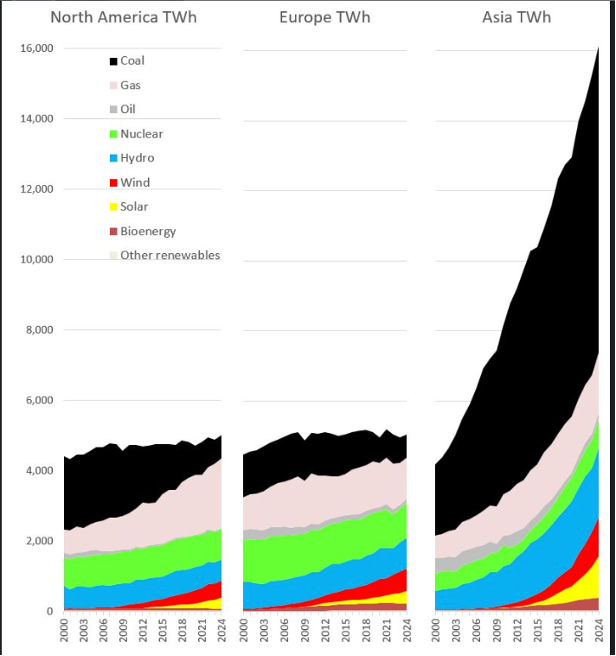
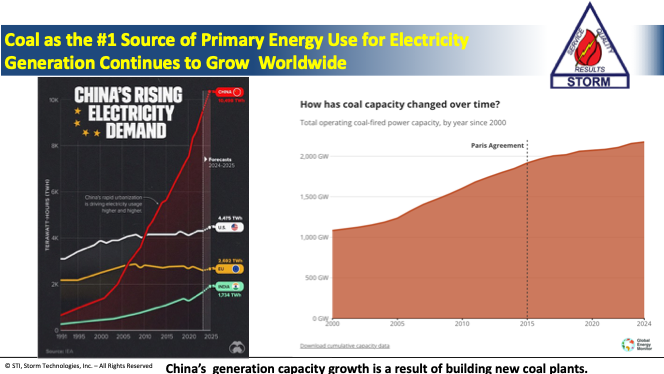
Electricity must be generated the instant it is needed. Wind and sunshine may be free, but backup power is not. The charts below show world generation by fuel. Note the coal consumption of Asia compared to the U.S.
This shows the absurdity of the path to Net-Zero Carbon when the entire world coal consumption is considered. If America’s coal consumption went to zero, it would barely make a difference in total CO2 emissions.
Credit for the chart above goes to Mr. Mike Caravaggio who prepared and posted on LinkedIn.
Case Study: Hawaii — An Energy Island
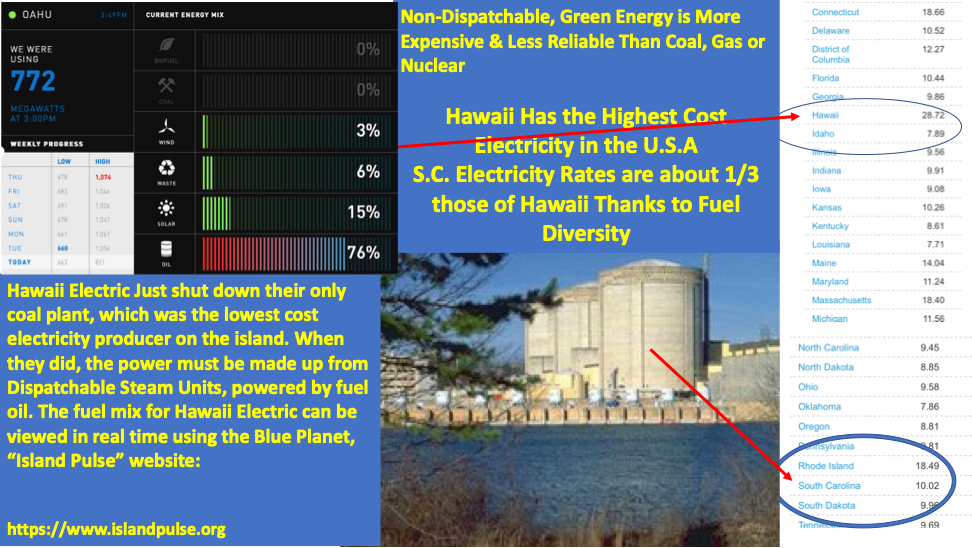
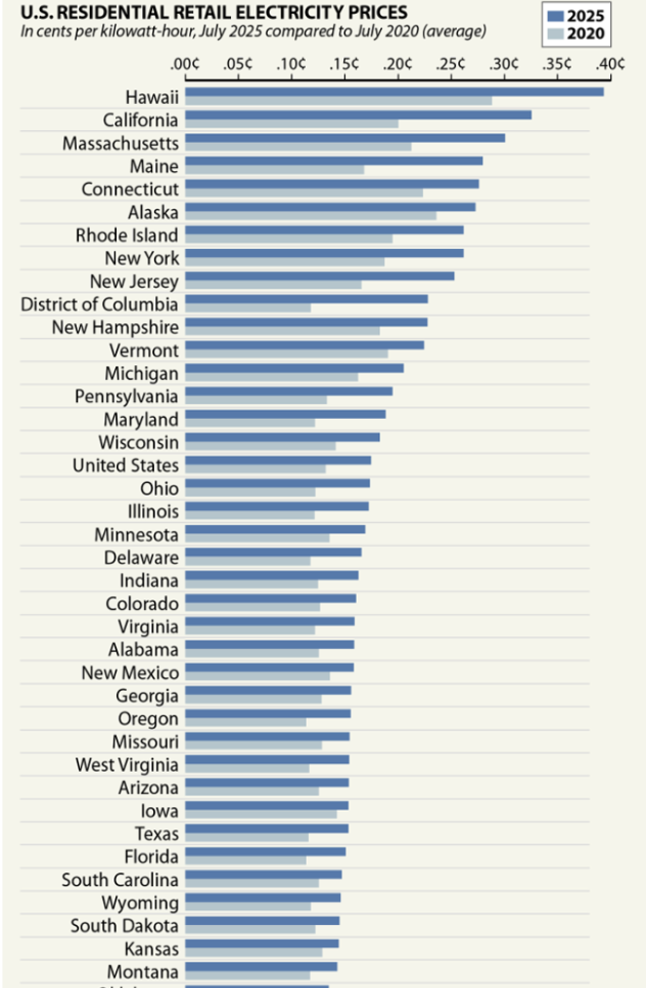
Hawaii is not connected to the mainland grid, making it a telling example. In 2021, 76% of its generation fuel was diesel. Hawaii once had a 180 MW coal plant that produced its lowest-cost electricity—even with imported coal. After transitioning to renewables, diesel backup became dominant when the sun set or wind dropped. Because diesel is among the most expensive generation fuels, Hawaii now has the highest electricity rates of all 50 states.
Case Study: New England
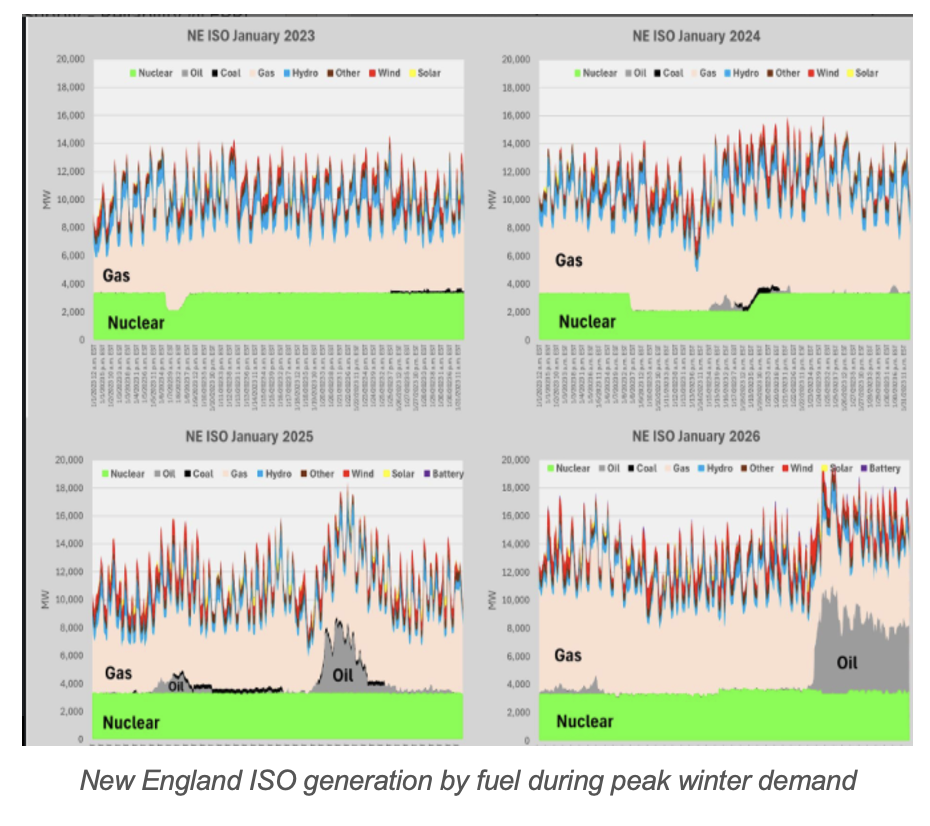
States that have retired coal plants have experienced sharply escalating costs, including California, Massachusetts, New Hampshire, Rhode Island, Connecticut, Vermont, and Maine. During Winter Storm Fern, New England generated roughly one-third of its electricity from diesel for several days. Their plan to import Canadian hydropower failed when Canada needed its own capacity during extreme cold.
Electricity Costs by State
The pattern is clear: states with the least coal power tend to have the highest electricity costs.
The state of Tennessee for some reason was not included in the chart above. TN does in fact have some of the lowest electricity costs in the U.S. according to: https://findenergy.com/tn/ The low cost is attributed to a lot of old hydroelectric power, considerable nuclear and a still large coal fleet. TN average electricity cost is about $0.129/kWh.
Case Study: Germany
Germany began its coal transition in 2011 under the Energiewende policy. Once Europe’s strongest manufacturer, Germany has experienced de-industrialization driven by skyrocketing electricity costs—now approximately $0.33/kWh, even higher than Hawaii.
Dr. Lars Schernikau is an energy expert and knows a lot about European energy policies, including Germany. Here is a quote from Dr. Schernikau in the Engineering News:
Schernikau was bluntly pessimistic about the true financial viability of wind and solarenergy on a grid scale.
“There is no way you can make honest money with wind and solar. It’s not possible. When I say honest money, I mean without somebody else’s money, because you are living off somebody’s subsidies, which is paid by taxpayers,” he said.
He illustrated this by pointing to the economic problems with high solarpenetration in markets such as Germany, where an oversupply of solarenergy has led to a significant drop in prices. In May, for example, the price of solarenergy in Germany fell by 50%, reducing the earnings of solar producers. Negative power price days are at an all time high in Germany and other countries, Schernikau pointed out.
The impact of high electricity costs on households was another area of concern. Schernikau cited a March report from the German government auditor Bundesnetzagentur, which revealed that energy poverty in Germany had risen to 25%, meaning one in four households is now classified as energy poor.
So, I would ask. Why is South Carolina following the same Net Zero path of Germany?
Natural Gas for Electric Power Generation
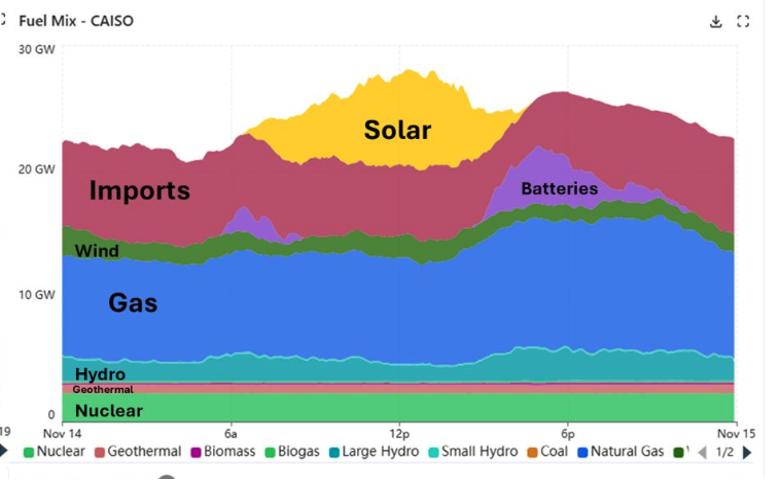
Intermittent sources like solar and wind must be backed up by dispatchable generation—gas turbines or reciprocating engines (RICE). The chart below shows a typical daily generation profile in California. Solar (yellow) is strong for about six hours; as the sun sets, Dispatchable power must ramp up sharply.
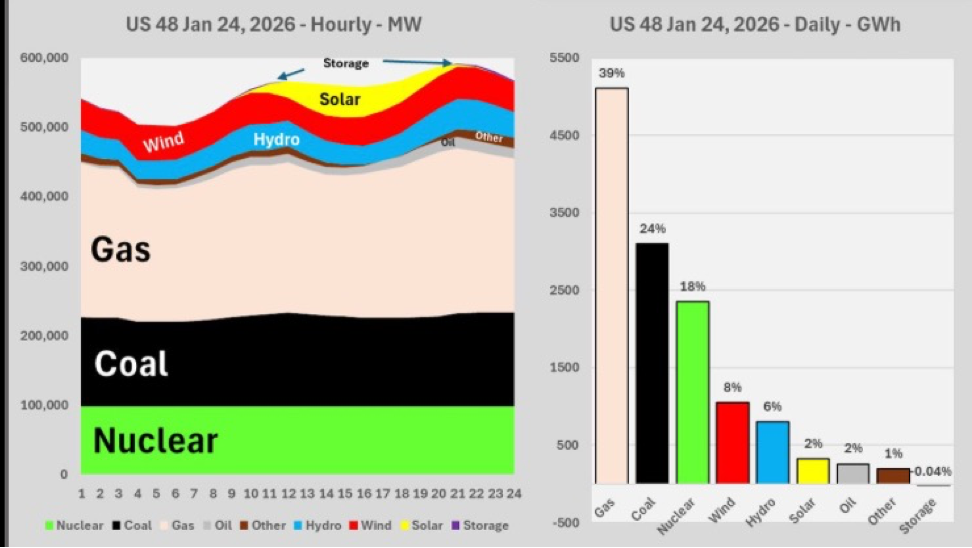
Here is the generation by fuel for the lower 48 states for the first 24 days of January 2026. Thanks again to Mike Caravaggio from EPRI for posting this on LinkedIn.
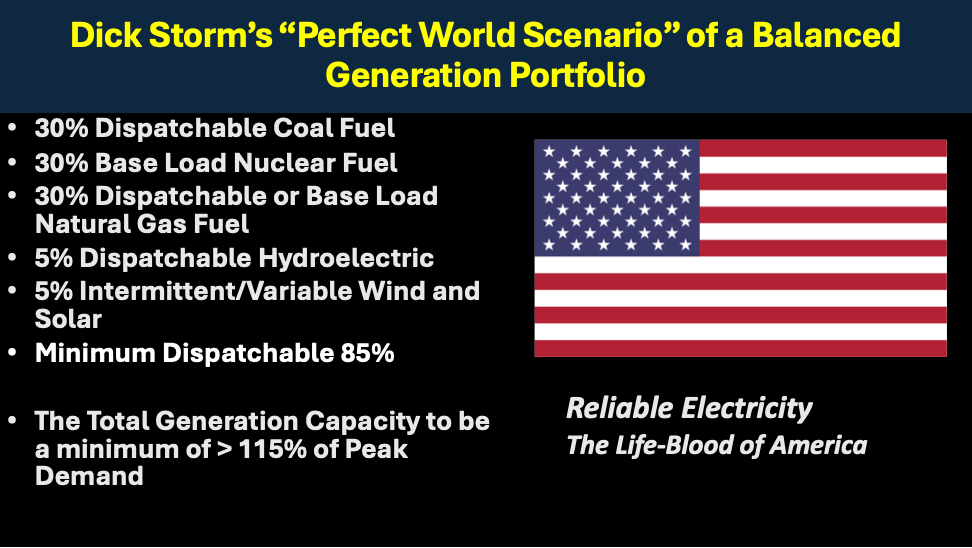
A reliable Grid should have a balanced generation portfolio. In my experience, 85% Dispatchable or Base load generation works well and has been proven.
A balanced generation portfolio works best with at least 85% dispatchable power generation capacity.
Fuel Price Stability: Coal vs. Natural Gas
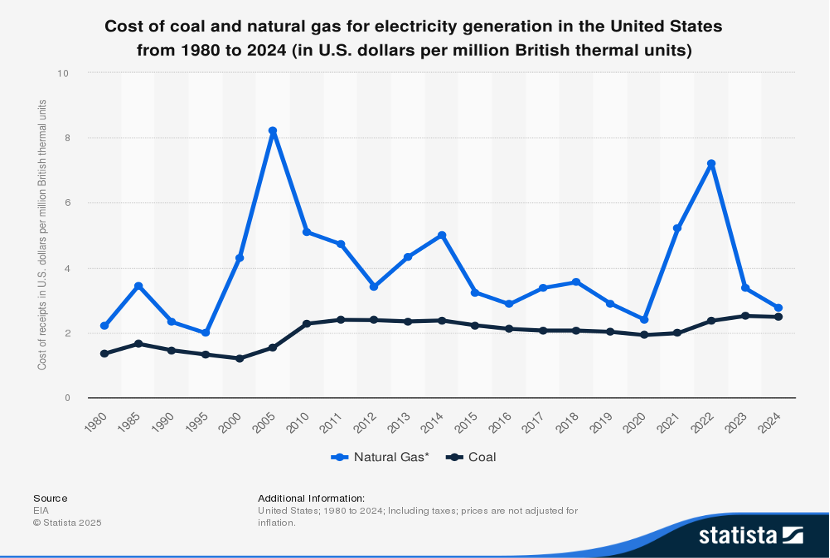
Natural gas prices are volatile, especially during winter when home heating competes with power generation for pipeline capacity.
A key point on the generation of electricity: The fuel cost is the single largest component of the operating dollar for the production of electricity. So, if much solar and wind is installed, then it must be backed up with Dispatchable electricity generation. Usually in the U.S., that fuel for Dispatchable, backup power is natural gas. As can be seen from the examples of New England, California, Hawaii, Germany and the UK, the cost of that backup fuel matters when retail electricity prices are compared.
The chart below compares natural gas prices (blue) with coal prices (black) since 1980.
Conclusions
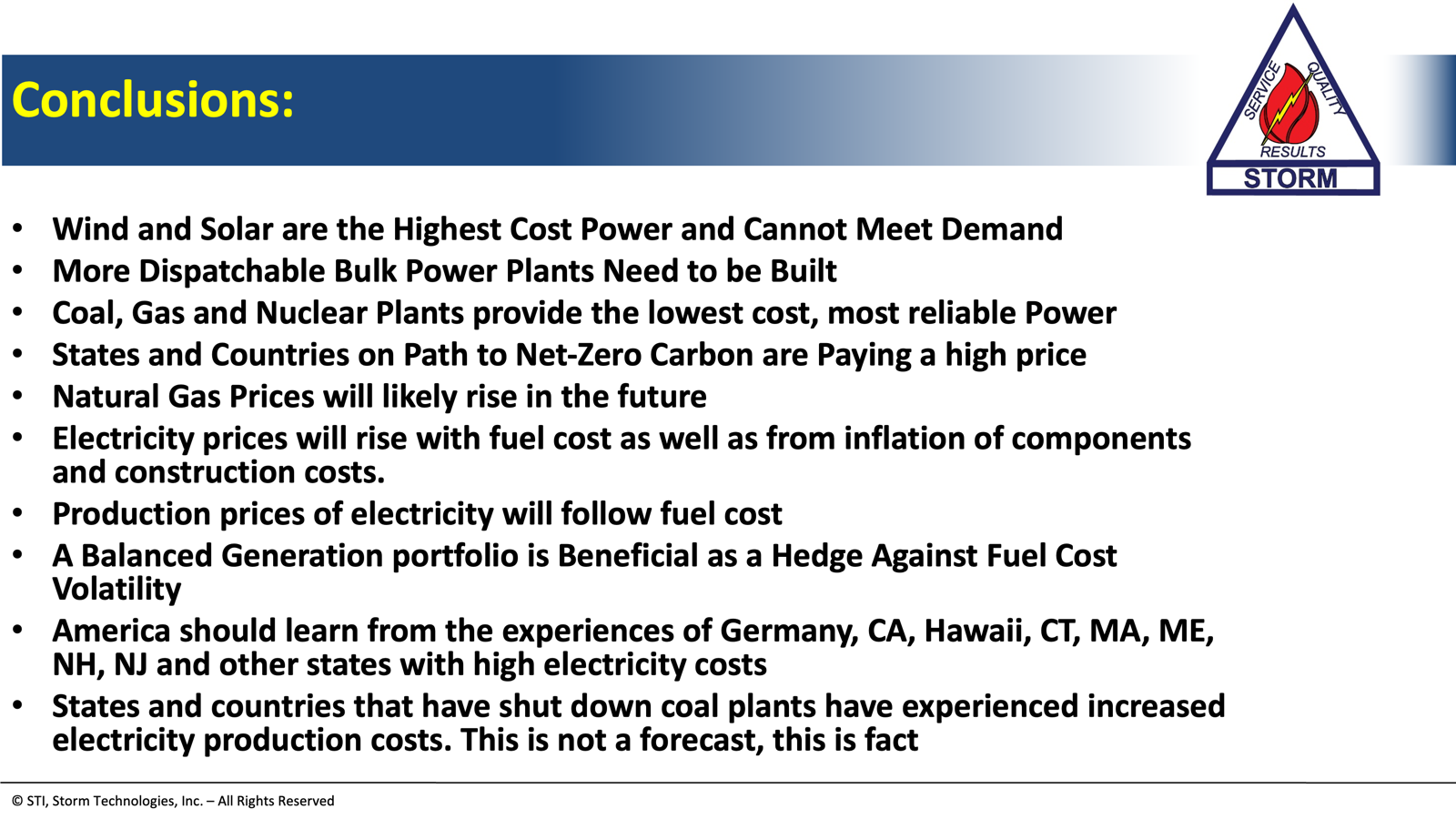
Coal provides the fuel to generate reliable electricity at amongst the lowest cost in the world. This is based on actual results and actual rates, not on economic models or expert opinions.
Modern coal plants like Cross are clean; their ash is recycled for cement and sheetrock manufacture.
Nuclear is excellent but new construction takes a decade and costs tens of billions (Vogtle 3 & 4: 10 years, $30+ billion).
Natural gas already provides ~43% of U.S. electricity (2025)—a high share for a pipeline-delivered fuel. Coal plants balance price volatility and store weeks of fuel on-site, an intrinsic grid security advantage.
The author recommends the S.C. Legislature repeal the Net Zero Carbon law and allow SCPSA and AI Data Center developers to pursue new coal-fueled generation
Part 2 will follow and show some more reasons why wind and solar although using “Free” fuel, cost more.
The thermal performance of the existing coal fleet can be improved by applying proven and reasonable cost mechanical tuning solutions. Coal power generation has many advantages when done with excellence in operations and maintenance. This article is based on my presentation to the EPRI Heat-Rate Conference last week and it is written for experienced electric power generation professionals, thus this is somewhat technical. The purpose is to show both the importance of coal power and to highlight some of the opportunities to improve coal plant thermal performance.
First, Apply the Fundamentals!
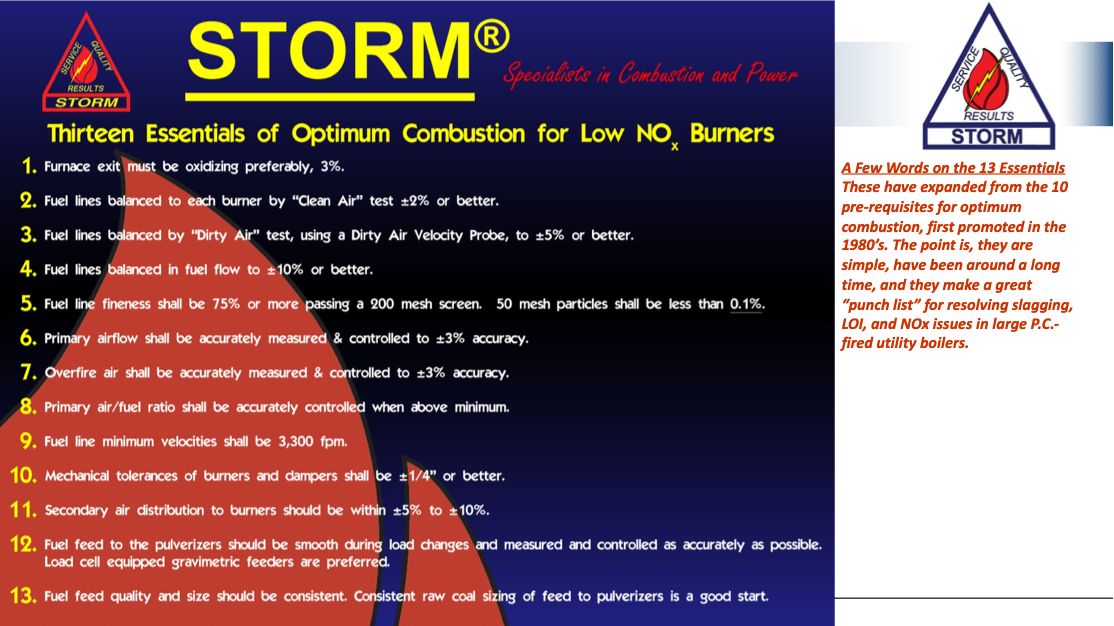
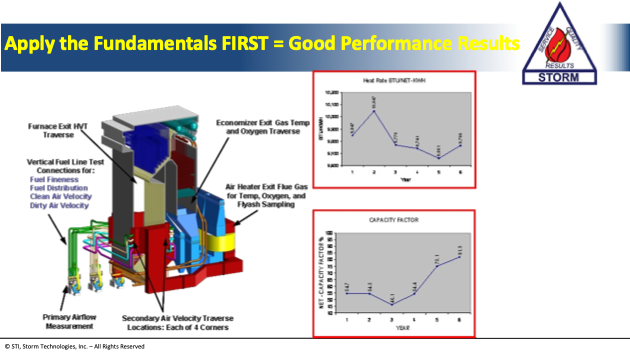
Our approach to coal plant performance improvement has always been: First apply the fundamentals which we refer to as the 13 Essentials for Optimum Combustion and the 22 Boiler Controllable Heat-Rate Variables. More on these later. After these have been applied, then consider modifications and upgrades of bottlenecking components.
The charts of coal use in the world below highlight the absolute importance of coal power as a major source of primary energy. Paraphrasing Mark Twain’s comment on seeing his Obituary, and applying it to coal: “The reporting of the demise of coal has been greatly exaggerated”...
Coal Remains Vital as a Source of American Primary Energy
Some of us nuts and bolts practical engineers knew the importance for coal fuel to meet the demand of last week’s winter storm. The U.S. Grid Dashboard helped document that need. However, this seems new to many academics and government policy makers.
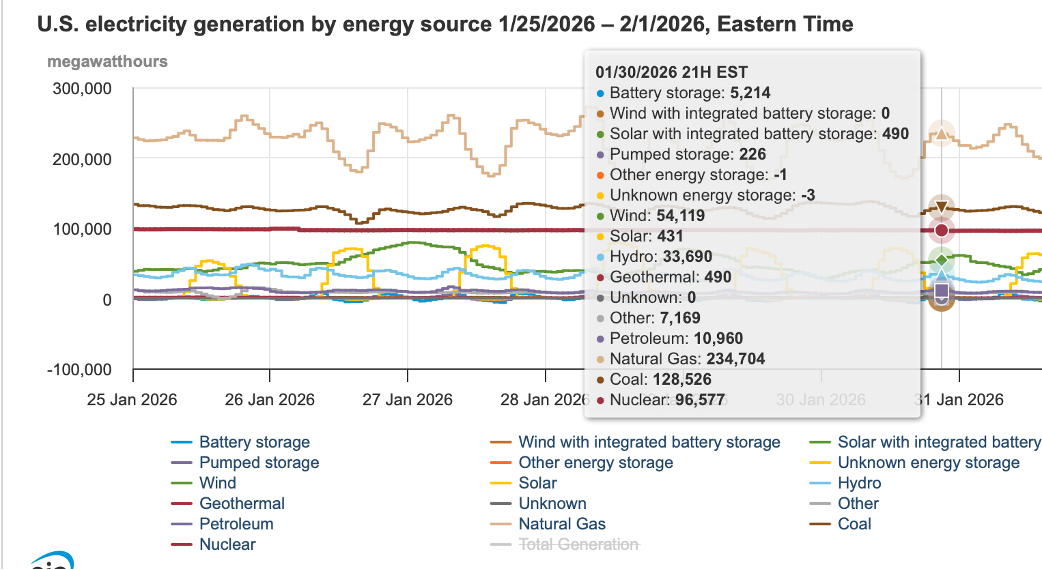
In fact, here is the U.S. electricity generation by fuel for January 30th. Note that coal is shown generating 128,526 MW. This is about 22% of the total generation. During this cold period, this is a very important 22% of Dispatchable and affordable generation.
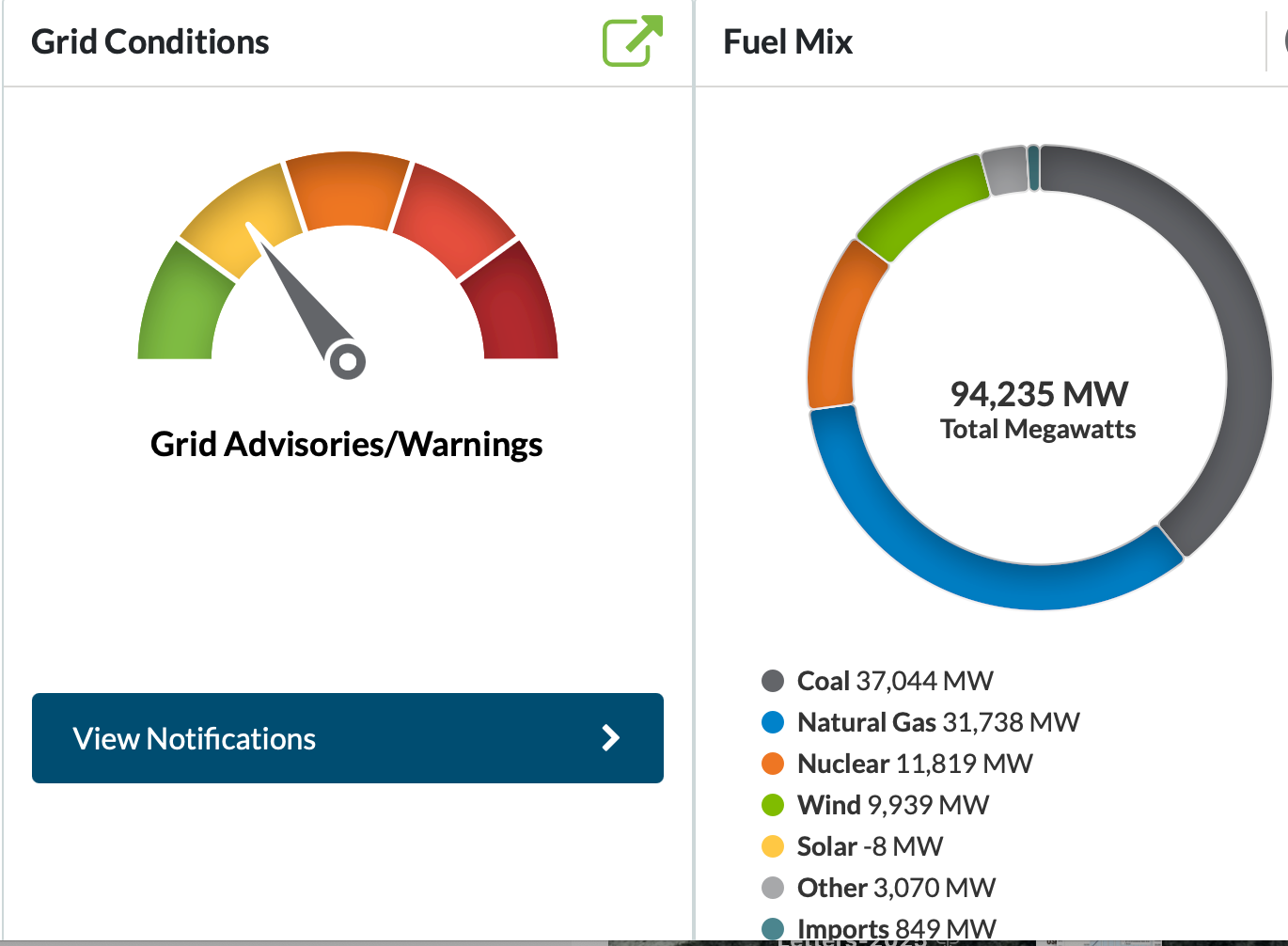
Coal powered well over 60% of the low country of South Carolina last week. To be fair, SCPSA owns about 322 MW of Summer nuclear plant and that power is not shown on the display below. Like many areas of the U.S. coal, nuclear and gas provided over 80% of the total electricity generation.
The chart below is a screenshot of MISOENERGY. For this region, coal was over 39% during winter storm Fern.
Coal literally saved the Grid during winter storm Fern. And, nearly all of the expert forecasts of electricity Demand show about 100,000 MW of new generation needed by 2030. So, my question is, why aren’t new base load coal plants under construction right now?
The charts above show the importance of coal as recent as last week. However, the Deep State Bureaucrats, NGOs. state Legislatures (including red states like S.C.) and much of the public still resist facing the energy reality that coal offers many advantages for at least the next two decades. Well, let’s move on to getting the best performance from the existing coal fleet by first, applying the fundamentals!
Getting the Inputs Right
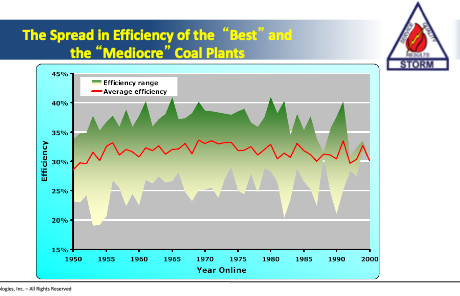
Achieving excellence in operating a coal plant takes hard work and vigilance of paying attention to the details. Rankine plants are tough, resilient and forgiving but when attention is paid to the details it can make a huge difference in heat rate. Here is a typical spread of plant efficiencies as performed by an NETL study.
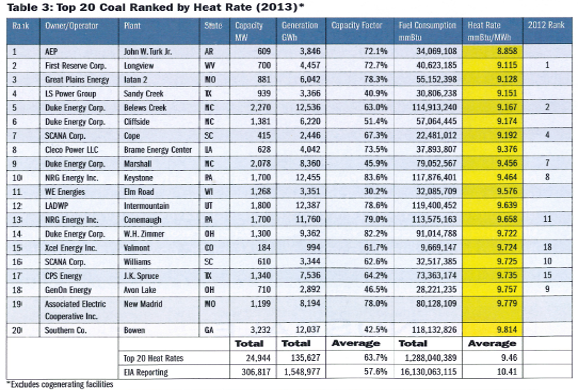
This is old timey data but, in my experience, it represents the spread between the Best Run and those that are run with Mediocrity. The chart below is from Electric Light and Power, Nov./Dec. 2014. This shows the top 20 Rankine Cycle coal plans for the year 2013. Net Heat-Rate for that year. Excellence in O&M as well as design. Notice, Turk Plant at the top of the list. More on Turk later.
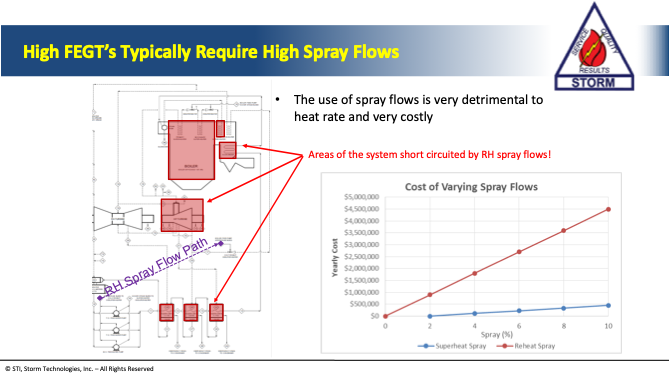
I coauthored an article in POWER Magazine with Dr. Robert Peltier entitled, “How Stealth Losses in Combustion Can Lower Efficiency”. This article was based on experiences and proven results. It has been shown that by excellence in O&M, Heat-Rates can be influenced by as much as 1,200 BTU/kWh. Later a couple examples will be shown where the magnitude of 500 BTUs/kWh in Heat-Rate improvements were achieved by applying the 13 Essentials and the 22 Boiler Controllable Variables. This was accomplished by testing to identify the opportunities and then correcting them. Most of the improvements have been through optimizing primary airflow, improving coal fineness, correcting air in-leakage and reducing upper furnace exit gas temperatures (FEGT). The reduced FEGT then improves thermal performance by reducing S.H. and R.H. de-superheating spray water flow and reducing cycle losses from soot blowing.
Getting the Inputs Right!
The first step to optimizing combustion and heat rate, is to apply the 13 Essentials. All 13 are important, but nine of the 13 are pulverizer, fuel and fuel line related. This list of 13 essentials is the best and most important single document for optimizing combustion on a large PC Fired Utility Boiler. I am dead serious. These are NOT optional for a pulverized coal fueled boiler.
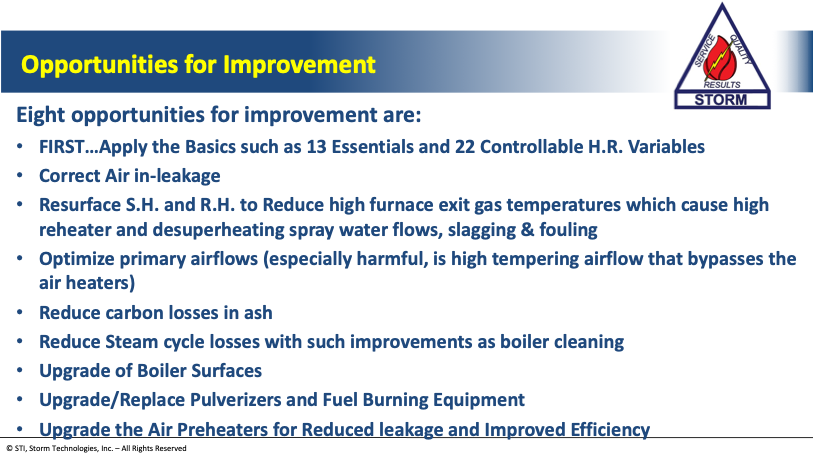
Some of the most common opportunities for improvement that we have found and then corrected for mechanical tuning with great results are:
Pulverized coal fineness
High Primary Airflow
High FEGT due to secondary combustion
Air In-Leakage
Air Heater Leakage
Fuel line imbalance
Secondary air imbalance
Burner tuning optimization
I know that there are other combustion tuning and controls manufacturers believe that airflow management to different zones of the furnace is not important, However, it is our experience that airflow management is in fact, crucial. We know from experience that these do work very well and where we have implemented the 13 Essentials they have always created a positive result for improved efficiency, reduced slagging, less tube metal overheating, best NOx performance, improved ESP (Electrostatic Precipitator) performance and more.
The correction of these individual items then complement each other to provide synergy which compounds the improvements. Such as: Reducing high primary airflows will usually result in better fineness, lower flyash carbon in ash losses, reduced upper furnace gas temperatures (FEGT), reduced sootblowing, less de-superheating spray water flows and reduced dry gas losses as a result of lowered tempering air flows. When all 13 Essentials have been earnestly applied and the O&M Team bought in on constantly maintaining them with vigilance, good RESULTS have been achieved. I will provide a couple examples later in this discussion.
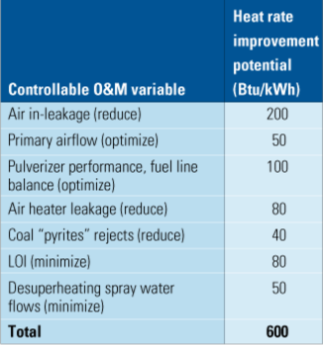
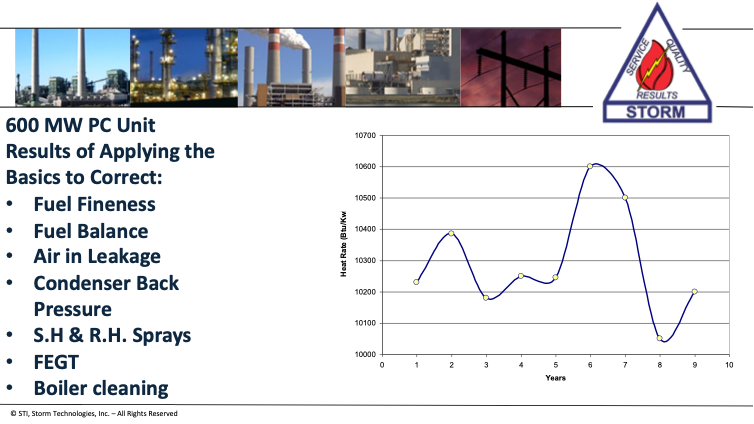
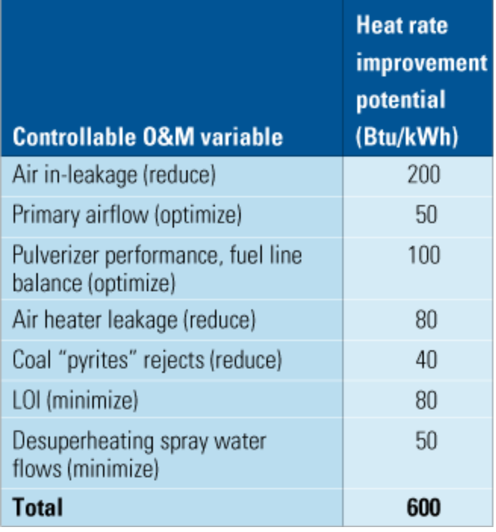
The potential improvements and the synergism between them is shown on the chart below to show how about 600 BTUs/kWh in Heat-Rate can be achieved by focusing on boiler and combustion optimization. The data and examples shown have been proven in full size coal power plants and in at least one complete Utility that adopted the approach over a several year period.
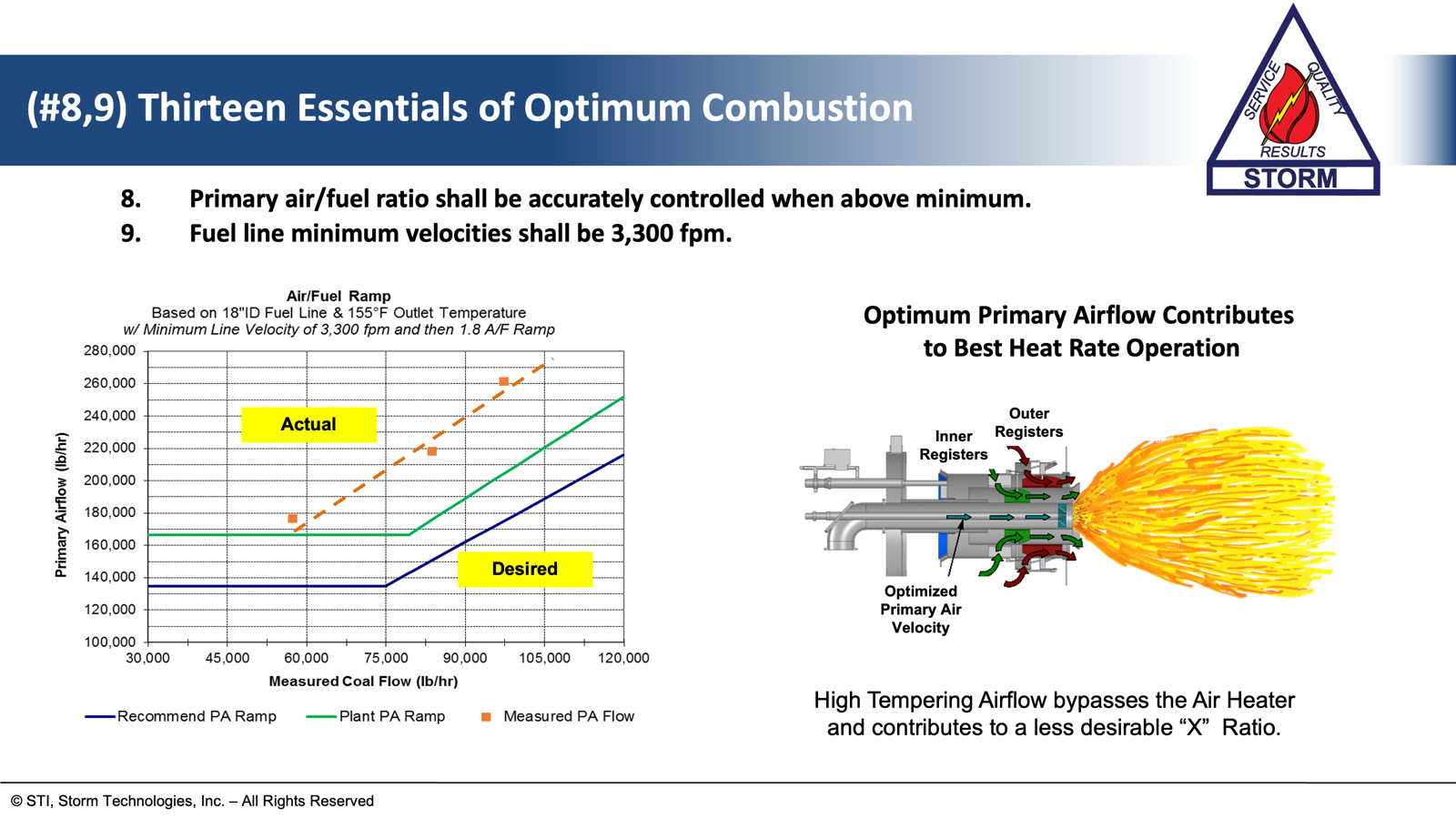
Here is a figure which shows several of the most important “Essentials” of optimum combustion. Key to best coal fineness, best airheater “X” Ratio, fuel balance and good reliability is, a repeatable and optimized Primary air curve. An example of a preferred primary airflow ramp is shown below.
Pulverizer performance is important and it has been our experience, that unless pulverizers are undersized, the fineness and fuel distribution can be corrected to within the parameters of 75% passing 200 mesh and 1.8 #air/#fuel and +/- 10% Fuel line balance. Truly, the pulverizers are the heart of a PC fired boiler.
One of the simplest tests to ascertain whether high carbon in ash is due to combustion issues or pulverizer performance is to run a three-part flyash carbon in ash test. First, obtain a representative ash sample and pass a measured quantity through a 200 mesh sieve. Then measure the LOI (Loss on Ignition) of the coarse and fine particles. If most of the carbon loss is in the coarse particles, then the high loss due to carbon in ash is pulverizer performance related. If high LOI in the fine particles, then fuel balancing, air balancing or high post combustion air in-leakage is the problem. I am not one to promote shortcuts, but this is an easy test to conduct and it is very informative with regard to combustion performance and pulverizer performance. However, the flyash sample MUST be Representative!
Stealth Heat-Rate Losses
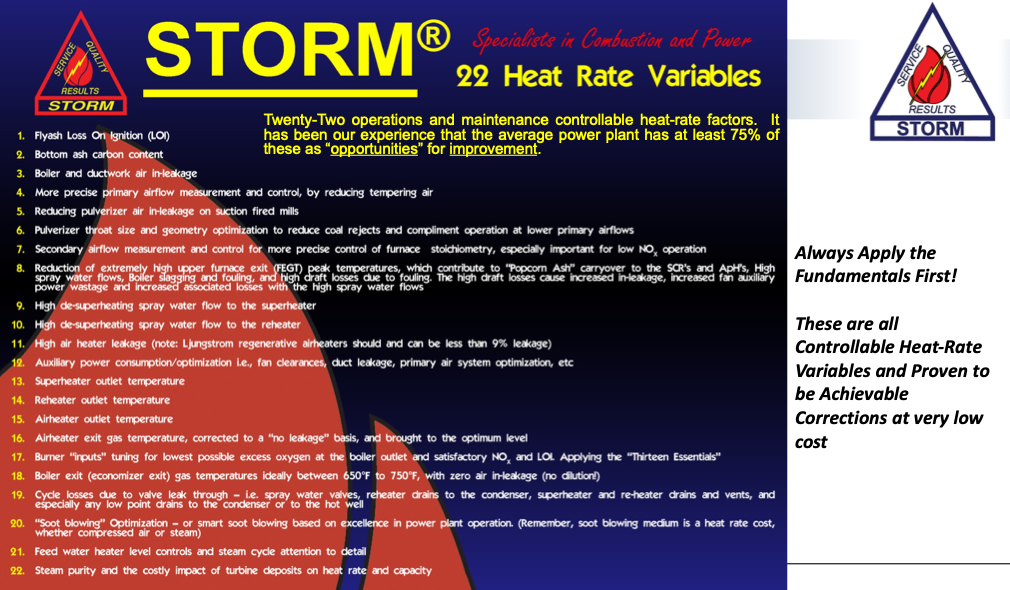
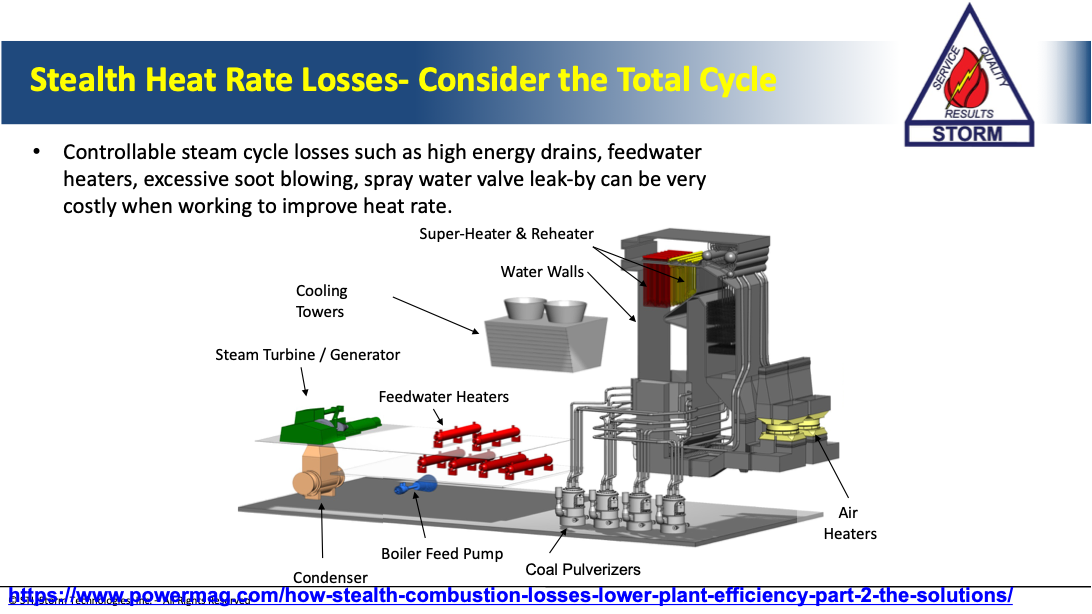
Stealth heat rate losses are those losses in Rankine Cycle efficiency due to controllable losses, some are located at the Boiler Island. Here is a list of 22 Controllable Losses that are controllable by optimization of the steam generator and combustion system performance.
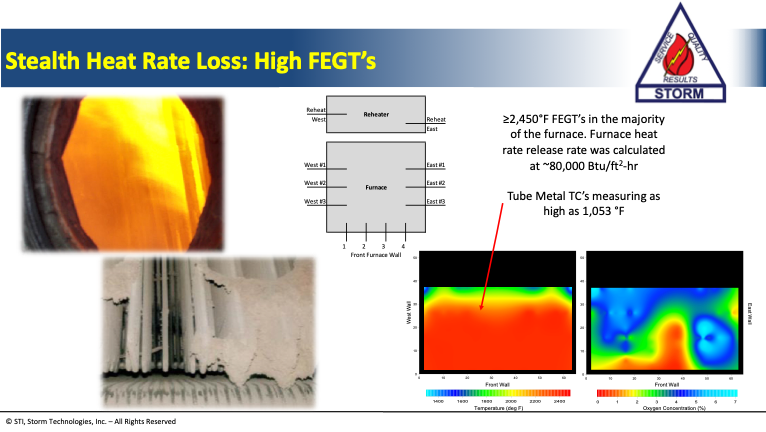
Application of these practical steps have been accomplished on numerous single units and on several total utility systems. All Utility boiler furnace exit gas temperatures should be in the range of 2,150 degrees F. to 2,,300 degrees F. Often, the first indication of a problem is in the use of an HVT probe with a 310 ss radiation shield and the metal and thermocouple literally melt. The melting temperature of 310 ss is about 2,900 degrees F. The pre-requisite for achieving good furnace performance is to apply the 13 Essentials as covered above and when the are, lower FEGT’s are attainable. (FEGT=Furnace Exit Gas Temperature)
The stealth losses compound together because of poor furnace combustion, this leads to flame quenching, overheated S.H. and R.H. tube metals, high S.H. and R.H. spray water flows, higher exit gas loss, slagging and fouling, increased draft loss, increased sootblower operation and consequent cycle steam losses, increased fan horsepower and carbon in ash losses. These seemingly small, individual issues when corrected, compound to create significant heat rate improvements as will be shown later. Never underestimate the adverse impact of poor pulverizer performance on overall unit Heat-Rate!
High primary airflow contributes to poor coal fineness, higher FEGT, increased NOx, high metal temperatures in the S.H. and R.H., requires increased soot blower operation, fouls the convection pass, air heater and SCR and much more. High primary airflows are very commonly found by our test teams. One of the most frequent opportunities for improvement.
Non-optimized combustion then creates Rankine cycle Thermodynamic losses through increased de-superheating water spray flows. The R.H. sprays are particularly harmful to Heat-Rate.
Case Studies of Large Utility Steam Generator Successes
Here is an example of a 450 MW 2400 psi/1000/1000 unit which has a design best heat rate of about 9,200 Btus/kWh. In this case study the 13 essentials were applied but these alone did not correct the high FEGT. To correct secondary air imbalances windbox baffles and perforated plates were installed in the burner inlets. These secondary airflow system changes corrected secondary air maldistribution. The result was about a 300-500 Btu/kWh heat rate improvement.
However, the largest economic gain came from improved fuel flexibility where lower cost coal with a lower fusion temperature could be burned and this provided better generation economics and increased load factor operation, which also helped to achieve a better heat rate from the increased operational hours at higher loads.
The next case study is a 600 MW class 2400/1000/1000 unit in northern Kentucky. The heat rate was about 1,000 Btu above achievable. Again, first step was the application of the 13 essentials for combustion optimization. But also, a very effective team effort was organized by the plant manager to place priority on all of the heat rate factors on the steam generator and all of the balance of plant. Including the condenser cleaning and cooling tower fill corrections.
The results of the coordinated efforts of the operations and maintenance team plus the heat-rate engineer and Storm Technologies testing, resulted in a step change in heat rate improvement of about 800 Btus/kWh. The primary pre-requisite for this success was TEAMWORK! All of the O&M Team bought in on the approach and the end result was extremely gratifying to all.
The main factors in this unit’s success were: Pulverizer optimization, fuel balancing, optimized primary airflow program (reduced PA flows), secondary air balancing, correcting air in leakage, correction of cooling tower fill problems, reducing secondary combustion, reduced high spray flows, reduced soot blower operation, reduced air preheater leakage and reduced system losses.
The typical opportunities that are found are worth about 600 Btus/kWh in heat rate improvement. Here is a breakdown of where these opportunities are typically found:
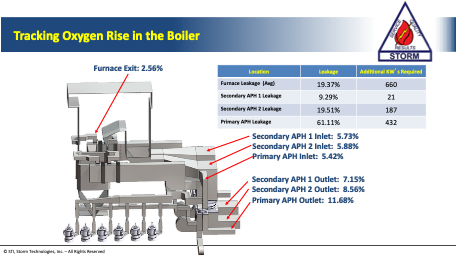
A frequently found opportunity is air in-leakage. Especially on older boilers. Any air that enters the boiler setting without passing through the air preheater, constitutes a Dry Gas Loss. Also, if it is large enough, can contribute to secondary combustion due to low furnace oxygen content, upper furnace secondary combustion and high FEGT’s.
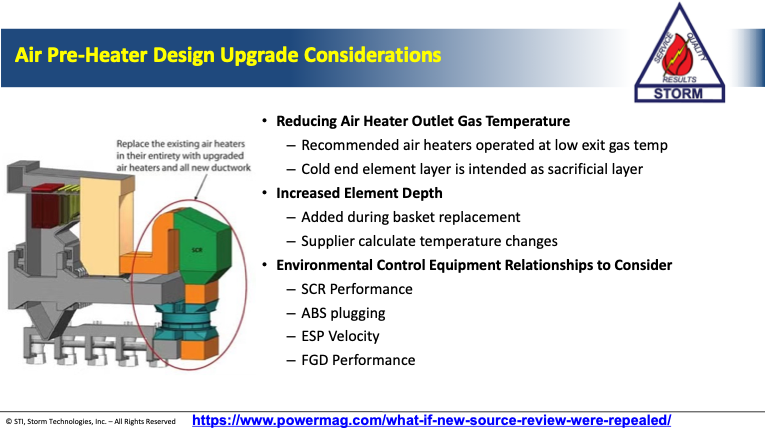
The air preheater is the last heat trap on 99% of all the coal plants we have worked. Improving the performance or ultimately replacing the air preheaters with newer, reduced leakage and higher efficiency preheaters can drastically improve overall unit performance.
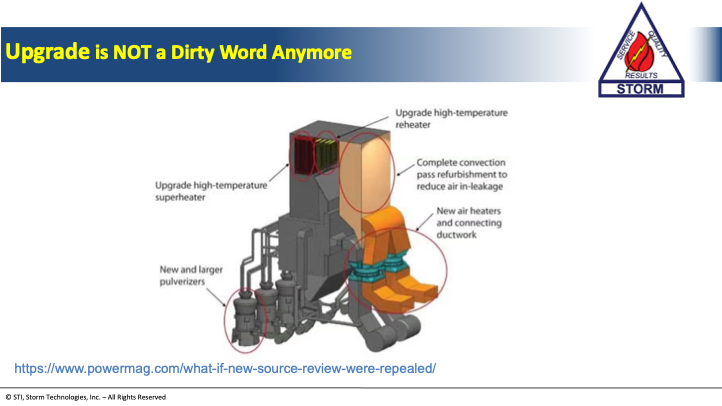
For older plants and especially those that have poor performing air preheaters such as the Rothemuhle type, then installing an upgraded new air preheater can provide a step change in improved performance. It is my hope that New Source Review and any other restrictive Regulations against modifications to improve performance are gone forever.
Another upgrade option is to change the superheater and/or Reheater surface areas for optimum steam temperatures and overall performance. Also, possible changes in tube lane spacing, sootblower lane erosion protection and upgraded higher alloy tubing.
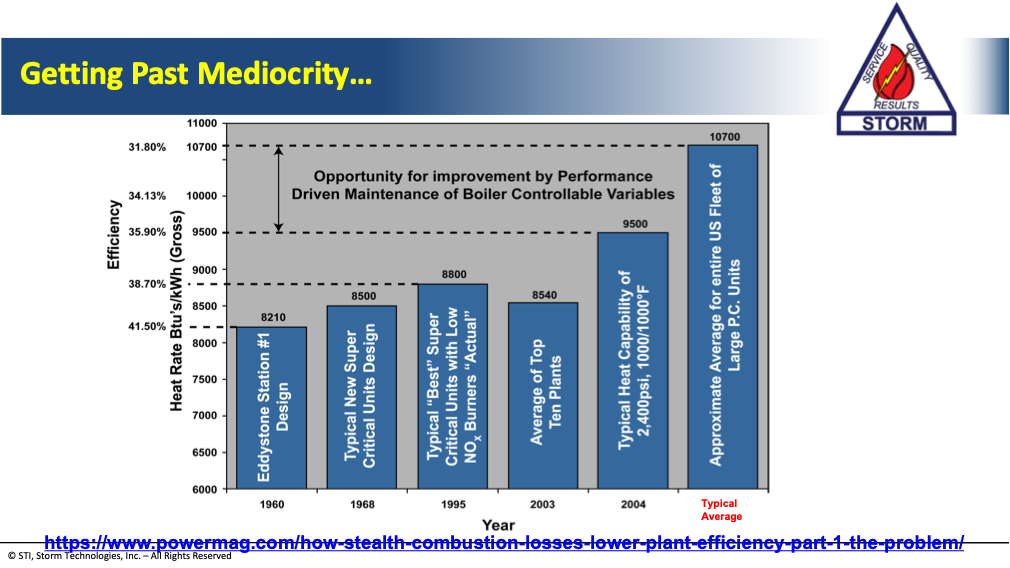
America’s last new coal plants went into service over a dozen years ago. Three of the newest and highest efficiency units are Duke’s Cliffside, AEP’s Turk and Kansas City Gas and Electric’sIatan. All of these are supercritical and capable of heat rates of about 8,300-9,000 Btus/kWh. About 38-41% thermal efficiency. https://www.powermag.com/plant-of-the-yearkcpls-iatan-2-earns-powers-highest-honor/ The Europeans, Japanese and Americans advanced the state of the art for Rankine cycle plants to approach 42% thermal efficiency. These improvements were in steam turbines, steam generator design and metallurgy. Then, we stopped building coal plants. The Chinese, on the other hand, had the advantage of applying all of the improvements that the west had achieved and then they kept on working to advance the state of the art even further. Indeed they have approached 50% thermal efficiency with their coal plant designs. However, the Chinese plant Heat-Rates are reported on a fuel LHV basis. To be a fair comparison to the Best units in America, such as Turk or Cliffside the efficiencies should be based on the fuel HHV. These Chinese units (and Turk and Cliffside) have been featured in Power Magazine.
The American advancement of coal plant design in the modern age, for the best thermal efficiency possible, began with the Eddystone Unit # 1 designed in the 1950’s.
Quest for Improved Thermal Efficiency
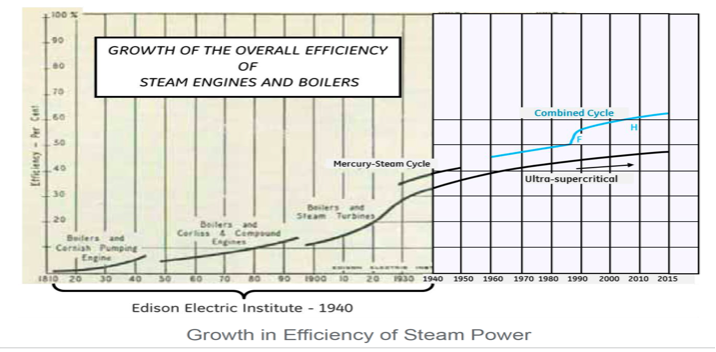
In my personal experiences, I began my career in the power industry in 1962. This is when Philadelphia Electric’s Eddystone Station was new. Eddystone started up in 1960. At that time, this was the most efficient power plant in the world. Steam conditions were at throttle pres. 5,000 psi 1,250 degree Superheat and two stages of Reheating at 1,050 degrees F. The design Heat-Rate from 1950’s technology was 8230 Btu/kWh or 41% thermal efficiency. Since that time, America’s coal fleet has held pretty steady for the “Best” coal plants. Eddystone was the “Best” in 1960 at 41% Thermal efficiency. The most recent U.S. Ultra-supercritical plants, Turk, Cliffside and Iatan are capable of about the same efficiency as Eddystone was. However, I should mention that today’s clean coal plants use much more auxiliary power to drive the Flue Gas Cleanup equipment. FGD, SCR, ESP’s, Baghouses etc. These were not yet invented when Eddystone started up and therefore were not installed at Eddystone. For new plants such as Turk to achieve similar thermal performance with the backend environmental cleanup gear represents a true advancement in the state of the art.
The above chart shows the Thermal Efficiency progress of heat engines, since the days of Edison, Tesla and Westinghouse. As can be seen on the chart, the U.S. gas turbine fleet has progressed amazingly well and has reached design capabilities of over 60% thermal efficiency.
At the end of my EPRI presentation I showed the POWER Magazine information on the Chinese Pingsham, Phase ll coal plant that is advertised as being nearly 50% efficient. This is based on steam conditions of 4,500 psi 1100 degrees F. steam temperatures with two stages of Reheat at 1100 degrees F. (close to Eddystone #1) The EPRI Heat-Rate Conference is a technical meeting and the people in attendance are very sharp. It was quickly pointed out that the efficiency attributed to Pingsham ll of 49+% is based on fuel LHV and not HHV. Thus, the performance of Pingsham is just a couple points above the AEP Turk Plant in Arkansas. The John Turk Ultra-Supercritical coal plant went into operation in 2012 and is about 39% efficient. The steam conditions at Turk are: 3500psi throttle, 1100 degree S.H. and 1100 degree Reheat. Design Heat-Rate of Turk is 8730 Btus/kWh (39% Thermal efficiency)
My point is, the Chinese have taken advantage of all of the engineering and operational experiences gained in the U.S. and Europe and built on these developments, experiences and knowledge to provide further advancements. Even though modest, the newest Chinese coal plants are in-fact more efficient than the U.S. newest coal plants. The Turk coal plant was started up in 2012 and only one other since then. Duke Cliffside #6, 2013, which is similar overall efficiency as Turk. Another outstanding coal plant of high efficiency, built around the same time is the Prairie States Plant in Illinois. Another point is the fact that the EPA restricted efficiency improvements for about 30 years. That is, if a U.S. coal plant implemented improvements to increase efficiency, they would be severely penalized. Now, with an energy friendly administration, the EPA “New Source Review” Rule, should not be a deterrent to implementing performance and even capacity improvements. In my view, the existing U.S. coal fleet should be capable of being upgraded in capacity, reliability, fuel flexibility and efficiency. In my Power Magazine article published in 2009, I showed several examples of plants that could be improved with new S.H. surfaces, larger fans, upgraded pulverizers and modifications such as these. The word “Upgrade” is or at least should not, be a dirty word.
The Demise of Coal Has Been Drastically Exaggerated
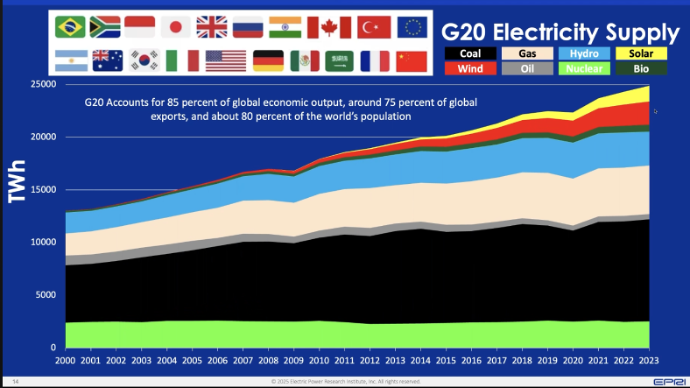
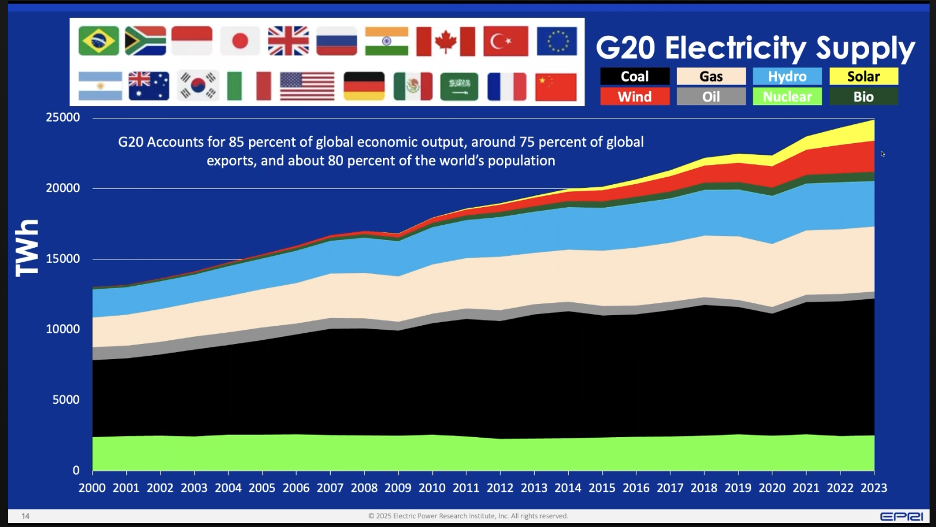
Borrowing Mark Twain’s quote on the premature posting of his obituary, coal is needed, it is being widely utilized and it will not be easily replaced as a form of primary energy. Here below is a chart of electricity generation 2000-2023 from the G-20 nations presented by EPRI. Electricity generation from all fuels has steadily increased and will accelerate the electricity growth during the next 20 years.
As mentioned above, the U.S. worked hard at advancing thermal power generation efficiency. Gas turbines and combined cycle plants have made great progress. However, the war on coal stopped American progress for improving coal plant efficiency which effectively stopped in 2012. On the other hand, China continued to improve coal plant efficiency. Here below is one example of applied excellence in obtaining coal plant efficiency. I should point out that the 49+% Thermal Efficiency is based on the fuel LHV. Still, a commendable effort and results to achieve overall thermal performance in the high 40’s% is the Best I am aware of.
Coal: America’s Treasure of Primary Energy, Why Not Use it?
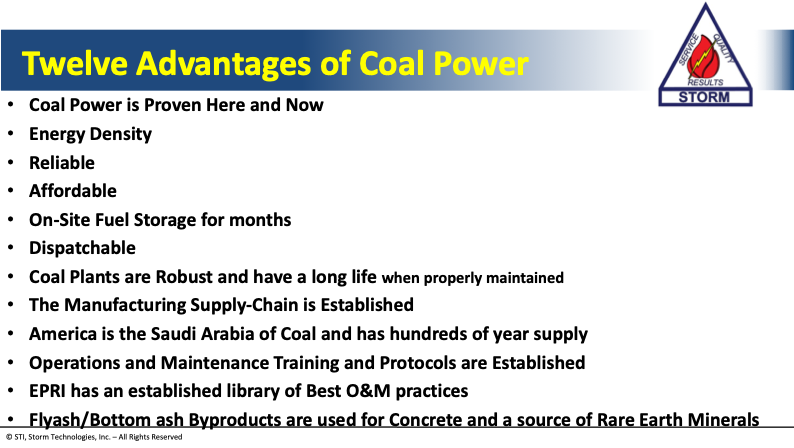
Coal power has at least a dozen solid advantages for electricity generation. Winter Storm Fern during the week of January 30, 2026 proved the importance and resiliency of coal plants. Even older plants that have not had the optimal maintenance once practiced. For reference, here is my list of the top dozen reasons that coal power is important.
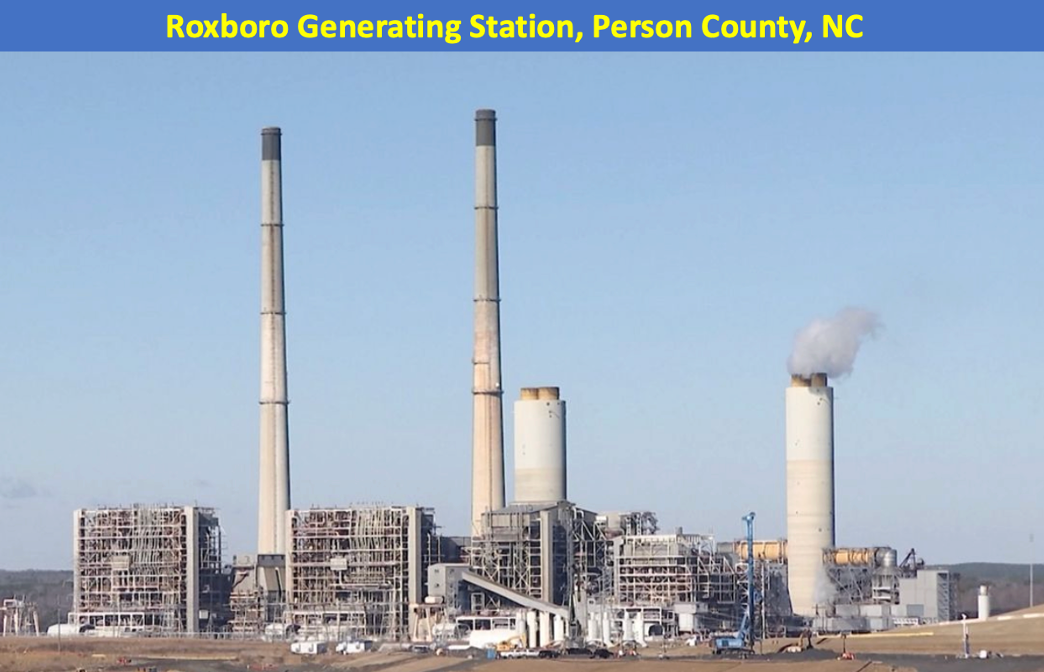
Another important reason for new coal plants is that to provide the future demand in electricity growth, it is the most viable sources of primary energy to be utilized. I wrote on this before here and here. The electricity growth forecasts all show increases of about 100 GW needed by 2030 and about 800 GW by 2050. This is a lot of power and not easily built in 25 years. For example, the Roxboro coal generating station is four units and is capable of about 2400 MW when it is in top condition. Here is a photo of Roxboro Generating Plant. The first unit started up in 1966 and the newest one about 14 years later. Over 16 years of duration from the first contract signing till the 4th and last unit became commercial. Picture building 40 plants like this in four years to achieve the needed 100 GW of new Dispatchable generation by 2030. We can hope and wish. Sadly, the limitations of the Supply-Chain of manufactured components and craftspersons make this an impossible task today.
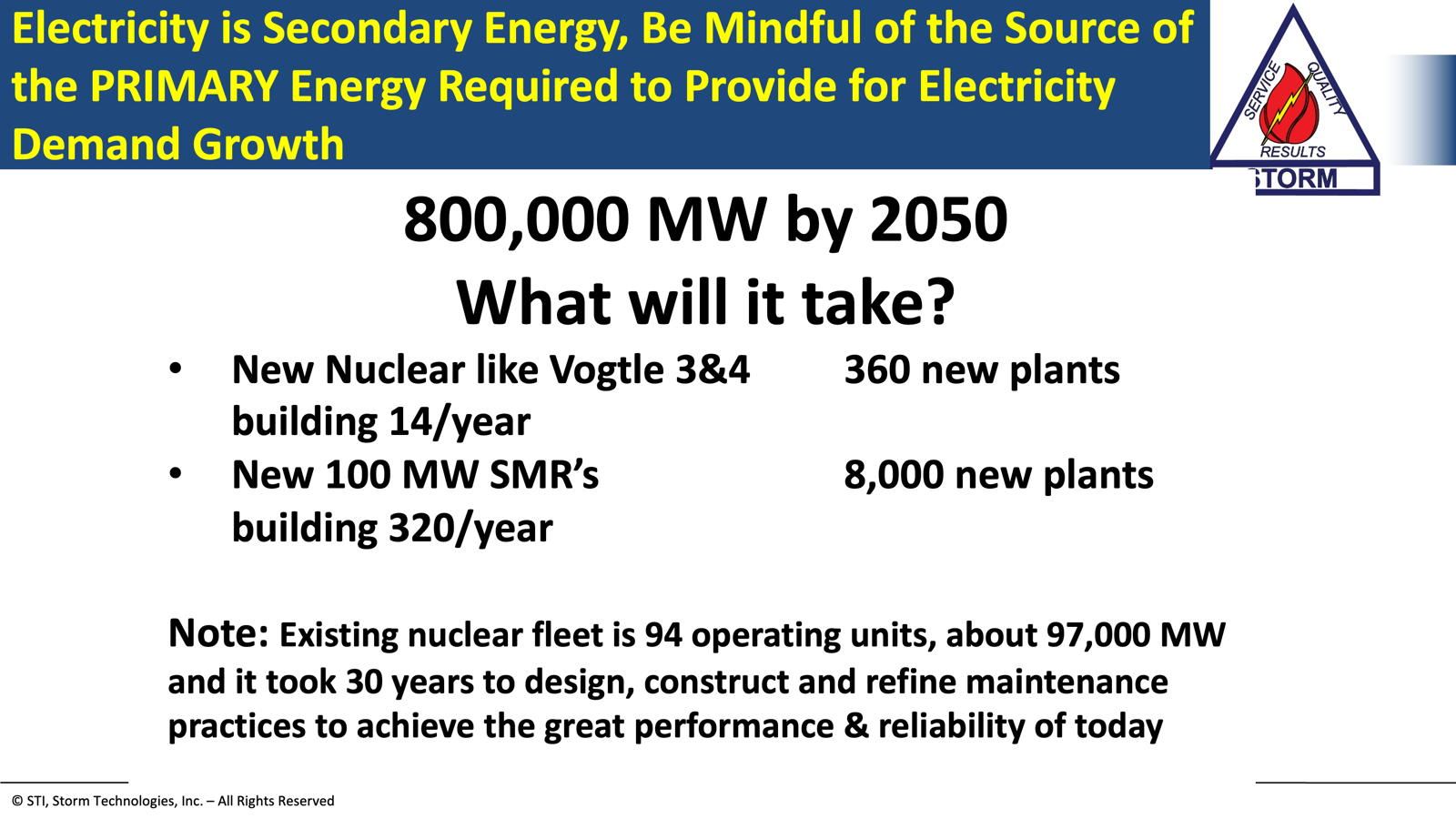
So, what are the alternatives? Here is my view of what it will take. Nuclear is loved by everyone today. However, it took Southern Company about ten years to build Vogtle 3&4 which is about 2,200 MW of new Base Load capacity. This is a great plant, now the largest nuclear plant in the U.S., but building 14 of these each year just doesn’t seem plausible.
Conclusions
Thank you for reading this. There are numerous additional articles listed below in the references.
Yours very truly,
Dick Storm, Feb. 7, 2026
The words “Modifyand Upgrade” re dirty words with the EPA for about 30 years. Thanks to a misguided EPA the U.S. existing coal plants were forbidden to be upgraded in any way other than back end environmental emission eqpment installation. Now, the EPA-NSR should no longer be a fctor. References and for further reading:
The term BULK POWER means just that, Bulk Power in hundreds and thousands of Megawatts. America needs huge Bulk Power generation additions of about 30,000 MW per year, not small scale R&D projects of variable generation or unproven new SMRs. Perhaps some time in the future renewables and new nuclear will be viable and competitive. However for now, we need 100-800 GW of new electricity generation to replace the more than 200 GW of reliable coal plants that were either shut down or planned for shut down soon. Satisfying the growing electricity demand of the future requires lots (Lots= 30,000 MW each year) of new generation capable of 24/7 generation.
When I joined CP&L in 1973 I entered a door emblazoned with a sign: Bulk Power Supply. Then I thought the name odd and frankly, I have not seen it since. However behind that door were the men and women that managed the generation assets of CP&L which at the time was only about 5,000 MW. The Bulk Power Supply came from seven fossil plants. Those plants were; Cape Fear, Weatherspooon, H.F. Lee, Sutton, Roxboro, Asheville and Robinson, including (1973) one lone nuclear (H.B. Robinson #2) and some small hydroelectric plants in the western corner of N.C. Bulk Power Supply was measured in Megawatts. Many of those coal units (CP&L has been absorbed into Duke Energy of the Carolinas) have been shut down. Most of them have been demolished as shown on the video of the Sutton plant implosion.
These coal plants should have been replaced with new coal generation plants of higher efficiency and even better flue gas cleaning. America is paying a price which will rise further, for the loss of this vital generation capacity without replacing it in kind.
The Bulk Power Supply of America needs to grow by about 800 GW by 2050. Increasing the Bulk Power Supply is a huge challenge which has been vastly underestimated. Do the math. Building new 800,000 MW of capacity in 25 years is 32,000 MW per year of new dispatchable, reliable and affordable new capacity.
Unfortunately, I think many Utilities and government officials have under-estimated the enormity of building 800 GW of new power generation. I tried to lay out my perspective in a presentation to the Coal Institute in July. 800 GW of new generation capacity is equivalent to building over 325 coal plants the size of Duke Energy’s Roxboro Coal Plant (2462 MW) or building 360 new nuclear units such as Southern Company’s Vogtle Units # 3 & 4. (2200 MW)
How About the Primary Energy to Generate 800 GW of New Electricity Generation?
As mentioned above, many experienced authors of energy and electricity generation do not dwell on the importance of primary energy, so I will. Primary energy is not magic and it is not free as the proponents for wind and solar suggest.
The results are now in for “the Global Science Project” of experimentation with wind and solar aka “The Green New Deal”. One simply has to observe the actual electricity prices in Germany, Hawaii, Spain, California, the UK and Scandinavia to know that wind and solar cost more, are not reliable and of course they are not dispatchable.
Primary Energy
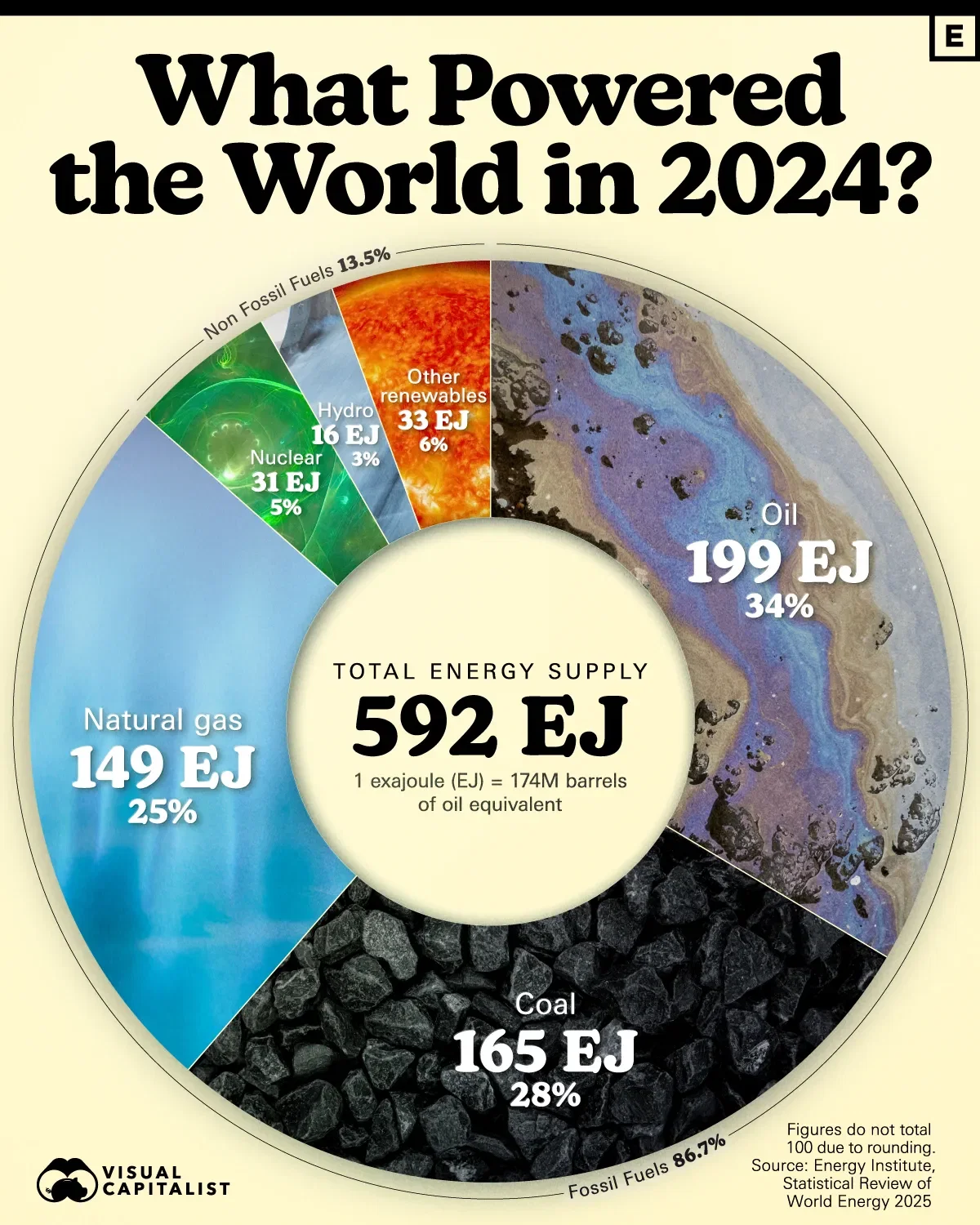
Electricity is secondary energy, it must be produced from Primary energy. In the vernacular of physics one Kilowatt hour of electricity is equivalent to 3,412.6 BTUs of thermal energy. Thermal energy has proven to be the most reliable, dispatchable and affordable. The reporting of Total Energy use by countries and the world is usually done in BTUs for U.S. customary units or in Exajoules in International units. The total world, according to the IEA has used right at 600 Exajoules (rounded from 592) and is shown below in a graphic from the Visual Capitalist. The conversion of EJ to Quadrillion BTU is EJ x 0.9478=QBTU. Example 592 EJ x 0.9478= 562 Quadrillion BTU.
The U.S. uses almost one fifth of the world’s primary energy. A reminder that economic prosperity is driven by energy. America is still the world’s #1 economy and therefore it should not be a surprise that we use almost a fifth of the world’s total primary energy consumption. This is Primary energy used not only for electricity generation but also for transportation, Industrial production, heating, cooking and commercial uses. Remember the phrase “Electrify Everything?”
The First Prerequisite to a thriving economy is that there must be available, reliable and affordable Primary energy to generate that electricity.
America Uses about 100 Quadrillion BTUs Annually of Primary Energy
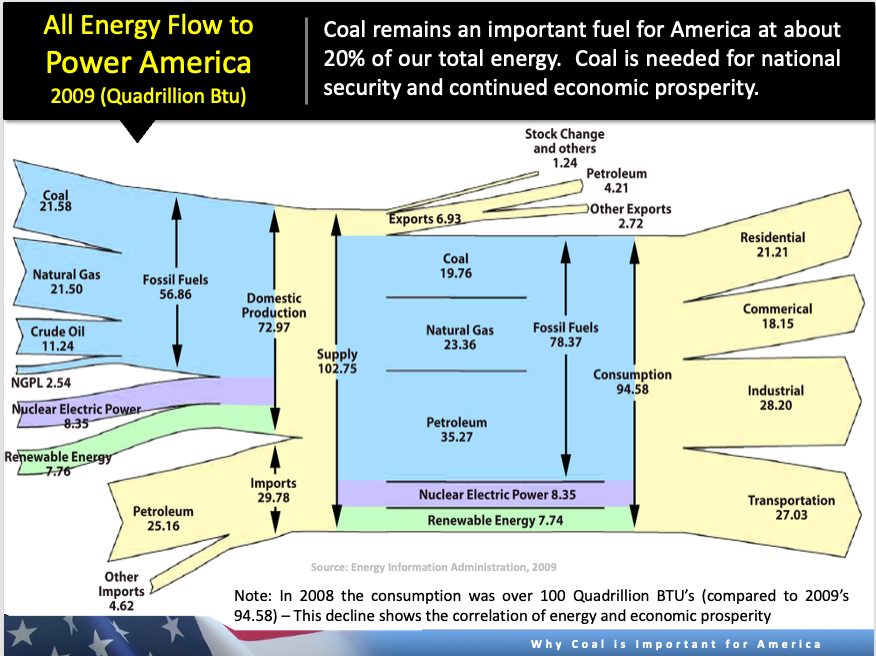
The LLNL Sankey Diagram shown below details the Primary Energy flows from sources to consumption. The U.S. has used right at 100 Quadrillion BTUs for the last 20 years. A little more than a third of total primary energy is used for electricity generation. (37.7%)
The chart above is from 2022. The one below from 2009. I used this chart in a presentation to the ASME in 2011 to attempt to impress the members with the importance of coal. At the time, America was using coal for about 45% of our electricity generation and the primary energy used to generate that power was about 20 Quadrillion BTUs of coal fuel. As can be seen from the two charts, natural gas increased about 10 Quads and coal decreased a similar amount. Basically, substituting natural gas for coal power production.
Self Sabotaging of the U.S. Bulk Power Supply
Since President Obama’s two term escalated war on coal over 50% of America’s reliable, affordable, Dispatchable and energy secure power generation has been shut down. I have called this self-sabotage. Mostly as a result of Federal Regulations, especially the politically inspired (not based on human health or science) EPA Endangerment Finding. But also due to NGOs and other voices working very effectively to demonize coal power. America had the most reliable, least expensive electricity supply in 2010 and the forces against coal power have steadily weakened our energy security, reliability and affordability. Electricity prices are climbing and will continue to do so as more unreliable, variable generation is forced onto the Grid, and backed up by natural gas fuel. Low prices of natural gas are not guaranteed into the future and fuel is the major cost component for thermal power generation. If the fuel cost doubles, so does the production cost of electricity.
The chart below from the IEEFA shows the path of coal free power generation. Some states and countries are ahead of my state of S.C. and the electricity costs in those states that have shut down their coal plants has escalated sharply. Germany has suffered from significant De-Industrialization as a result of forcing wind and solar on the nation. If America continues the path set by Net-Zero Carbon advocates, we all will join Hawaii, California, Spain, Germany, the UK, Massachusetts and Connecticut with higher cost power and possible de-industrialization.
Thanks to President Trump and Chris Wright, America’s energy regulatory policy is somewhat corrected. However, some states, even S.C. still have laws on the books to exit coal. I feel this is energy suicide. Coal is a national treasure that should be utilized. In fact, in my opinion, it is the best and only viable choice of primary energy to provide the needed electricity generation between now and 2050. A coal plant should be able to be built in four years. We have done it before and can do it again!
The Future 2025-2050
Electricity generation capacity will need to increase dramatically over the next 25 years. The projected growth has been well documented by many others including Stephen Heins, Thomas J. Shepstone, Jr., the ICF, NEMA and others. What is needed is an enormous amount of new, Dispatchable, reliable and affordable Bulk Power. About 800,000 MW of new Bulk Power. he workforce challenge is a topic to cover on another day.In my analysis, nuclear will play an important part. So will natural gas. However, there are three limits to just how much nuclear and natural gas can supply. These three constraints are Supply-Chain, pipelines and achieving a Balanced generation portfolio. The nuclear supply chain limits have been discussed before and although proven and an excellent clean choice, nuclear seems decades away before the needed capacity can be built. For example, it took America over 30 years (1957-1987) to design and build the existing nuclear fleet of about 97,000 MW of capacity. We now need eight times the nuclear fleet that was built over 30 years. Keep in mind, the legacy nuclear units built 1957-1987 were constructed when the Supply-Chain was well established, there were thousands of trained and experienced engineers at B&W, Combustion-Engineering and Westinghouse and craftsmen were much more abundant in the workforce. Many experienced engineers and craftsmen are now retired. Rebuilding the workforce is a topic for another day.
“Just in Time” Primary Energy
Today about 45% of the U.S. electricity generation at peak times is provided by natural gas through “just in time” pipelines. Not only is the Supply-Chain of new gas turbine plants limited but so are the pipelines and fuel supply. In my analysis, we already have too much dependence on pipeline provided natural gas. Remember the Colonial Pipeline Hack of 2021? Coal plants have the inherent advantage of being capable of storing several months of fuel on site.
The best choice for a Balanced Portfolio then, in my analysis is to build new coal plants. In Dick Storm’s Perfect World of Power Generation, I would like to see a Balanced generation portfolio of 30% coal, nuclear, gas, with 10% renewables. Illustration from the Coal Institute presentation.
Conclusion
The policy planners and utilities have gravely underestimated the growth of electricity Demand and now are catching up by using the “Easy Button” of purchasing gas turbines for backup power for wind and solar. Most of the capital being invested in new generation in this calendar year is for solar, wind and BESS (Battery Electricity Storage). This is a mistake that will cost Americans dearly.
President Trump, Chris Wright and Lee Zeldin have done the best they can to correct decades of poor flawed planning by the EPA and Congress with the Inflation Recovery Act version of the New Green Deal. However, many states and large Utilities still remain on a foolish path toward Net-Zero Carbon. For example, Here are five articles on U.S. and South Carolina Energy Policies:
America needs to begin building new Dispatchable, affordable and proven reliable Bulk Power Generation as soon as possible. As I see it, the best source of the needed primary energy to satisfy the demand is America’s own treasure of coal reserves. Think about the needed capacity in terms of 32,000 MW per year for 25 years. That my friends is a heavy lift. As a country we must unite behind President Trump to get this done…Wake up Americans!
We can call it a “Bridge Fuel” or just face the reality that it now takes over 100 Quadrillion BTUs of Primary Energy to Power America each year and that Primary Energy Demand will increase in the future. America is the Saudi Arabia of coal and we have the richest and highest quality coal on the planet. Also, an infrastructure to mine it and to transport it. This treasure should be utilized for the benefit of America and all of Humankind.
There are many reasons that new Base Load coal power plants should be under construction right now. In fact, they should have been under construction ten years ago!
Dick Storm’s Top Five Reasons to Build New coal Plants Now:
Coal power plants of sufficient Base Load Generation capacity could be built within ten years or less
Coal fuel cost is stable with less volatility than gas
America has more than sufficient coal reserves within our borders to fuel new coal power plants at a stable price
America’s Primary Energy Demand is likely to exceed 120 Quadrillion BTUs per year in the next decade. Coal will provide the additional productive capacity and it has been proven to do so by existing infrastructure
Choices of Primary Energy to Fuel the World
Global energy demand hit a record 592 exajoules (EJ) in 2024 — up 2%.
So, where did it come from? • Oil: 199 EJ (33.6%) – still the #1 source • Coal: 27.9% • Gas: 25.2%
Fossil Fuels are Still Important! Together, oil, coal, and gas supplied 86.7% of global energy. Despite the MSM reports, these three fuels still provide the primary energy we need and depend on.
🔥 Keeping the lights on 🥘 Cooking our food 🚗 Driving us to work ❄️ Powering our fridges and hospitals 🏠 Keeping us warm
Powers the manufacturing that in-turn, powers the Economy 👨🌾 Keeping us alive
Vaclav Smil shows that at least half of humanity is fed by nitrogen based fertilizers — made using natural gas via the Haber-Bosch process. That’s ~4 billion people who simply couldn’t survive without hydrocarbons. Add to that the energy needed for water, hospitals, heating, and transport, and the death toll from eliminating oil, coal, and gas overnight would not be in the millions — but in the billions.
Our much maligned Hydrocarbons don’t boast about this. They just work quietly to keep us alive. Each American uses right at 300 million BTUs each year. This is an average of just under 1 million BTU/day/person.
President Trump stated it correctly at the U.N. yesterday, “Climate Policies are a big Con Job” The only thing that the transition to solar and wind has done is to drive our electric bills through the roof and causing hardship and suffering amongst our most vulnerable.
🔌 Let’s not forget the reality of the sources of PRIMARY Energy that powers the world
Electricity Generation
About a third of the primary energy is used to generate electricity and the other 2/3’s for Transportation, Industrial, Commercial and Residential use.
America uses and has used right at 100 Quadrillion BTUs of Primary Energy annually. The total of 100 Quads is bound to grow in the future owing to natural electricity demand growth of a growing population, electricfication of some transportation, through reshoring of U.S. manufacturing and AI Data Center new electricity Demand. Note from the chart below the relatively constant total Primary Energy use. It is within 5% of a constant 100 Quadrillion BTUs per year ever since about the year 2000. In my opinion, it is reasonable to expect the total primary energy demand to increase by at least 20% over the next 20 years.
Visual Capitalist has another excellent illustration of projected U.S. Electricity growth to 2050. Please keep in mind, electricity uses between 33 and 40% of available primary energy. Therefore, considering all factors, including energy security, volatility of natural gas prices, exported LNG and other facts, coal provides the readily available primary energy to generate electricity in the needed Bulk Power quantities.
Electricity is important and so is transportation, residential heating, cooking and Industrial production from viable manufacturing plants.
Conclusion
The best solution to the self inflicted electricity generation crisis is to immediately begin building new coal plants. Over 150 new coal plants were planned in 2007, then President Obama launched his all out “War on Coal” and he was successful in stopping most of them from being constructed and even worse, created policies that resulted in the shutting down and demolishing over half of the existing coal power generation capacity.
The Life-Blood of America is electricity. I presented my thoughts on this in July at the Coal Institute summer meeting. I stand behind those comments and recommendations.
Thankfully we now have President Trump and he understands the relationship of reliable, affordable electricity generation. His speech to the U.N. yesterday was spot on. May God Bless and protect President Trump and his outstanding Cabinet.
Several of my friends and myself have given presentations and written reports on how America has created energy and electricity generation policies that will Self-Sabotage electricity reliability. Last year I wrote on my blog, “Threats to the Electric Grid” with an emphasis on harmful U.S. EPA policies. At the time of writing, I was aware of Chinese mischief with large Utility scale transformers, but had not thought about the seriousness of this threat. Last week, I was contacted by my friend Dave Walsh and asked to join him and several others on a panel with Frank Gaffney for a webinar entitled, “Inside Our Wires: The CCP Has Penetrated Our Electric Grid, Will Xi Destroy It?” The question threaded through the discussion: “is this part of the CCP’s Unrestricted Warfare?”. The webinar is summarized below.
It is beyond dispute that the so-called “Green New Deal “– and the misleadingly named Inflation Reduction Act that has massively subsidized its adoption – has greatly weakened the reliability of America’s most critical of critical infrastructures: the electric “grid.” That has been the practical effect of the putative “sustainable energy movement” with its obsessive focus on reducing, if not eliminating altogether, coal-fired power-generation, nuclear energy and even natural gas-powered dual-cycle turbines.
Such problems are being exacerbated by governmental and commercial interest in artificial intelligence and the necessary, vast expansion in the number of data centers around the country, with their endless appetite for additional power for operating and cooling their server farms. Such demand is, in turn, translating into greater and greater reliance on the principal source of “green” solar panels, windmills and electric batteries, namely the Chinese Communist Party (CCP).
Recent revelations that inverters associated with such Chinese products have been equipped with “kill switches” that would disable or even destroy them remotely make the prospect of serious, sustained and/or catastrophic interruptions of power at the hands of the CCP a distinct prospect. Ditto the 400+ Chinese-manufactured high-voltage transformer that comprise the backbone of our grid, at least two of which have been shown to have similar “backdoors.”
The Committee on the Present Danger: China webinar May 22, 2025 explores how on earth these potentially nation-ending vulnerabilities were ever allowed to exist in the first place, let alone to metastasize to the clear benefit of our mortal enemy, the CCP, as they have. The panel will also consider what must be done immediately to mitigate them.
Moderator: Frank Gaffney, President, Institute for the American Future; Vice Chairman, Committee on the Present Danger: China
Panelists:
Col. Grant Newsham, U.S. Marine Corps (Ret.) – Topic: “The CCP Inside Our Wires: The Strategic Implications” Charles “Sam” Faddis – Topic: “The CCP’s Imbedded Trojan Horses: Donald Trump’s Effort to Shut Them Down; Joe Biden’s Reversal of His Directive”
Dave Walsh – Topic: “The Magnitude of the CCP Threat to Our Most Critical of Critical Infrastructures – The U.S. Electric Grid – and What Can We Do About It? ” Dick Storm – DickStormProBizBlog.org – Topic: “How Did the CCP Get Inside the Grid: The CCP’s ‘Old Friends,’ the Red-Green New Deal and the Challenge of Our Time”
As is often the case when one becomes involved in a meeting/discussion such as this, new and different perspectives are learned….as in my case. I came away enlightened from the experience of being with these gentlemen. The purpose of this article is to share the information that I learned last Thursday. I think it is important to do so.
My Take Aways From The Webinar
I will summarize my take aways. However, the full transcript is available for anyone interested in reading it and of course, the video link is included above. I will list those points that I think are very important and unfortunately, not very well known by the American people due to malpractice of the MSM.
The CCP has been working on penetrating our Grid for many years
The politicians that pushed the “Green New Deal” which morphed into the “IRA” may have been influenced by foreign Dark Money to deliberately create self sabotaging energy policies, referred to as “Climate Policies” See the Capital Research Center reports listed in the references at the end for more information
America’s Supply-Chain has been weakened by De-Industrialization of the U.S. and much manufacturing being transferred to China
China is the beneficiary of U.S. De-Industrialization
America’s Reliable and Dispatchable Generation Capacity has been steadily reduced since 2010
Over 90% of New Generation Capacity installed to replace coal plants, has been solar and/or wind
Electricity generation Reserves have declined from about 25% a decade ago to about 15% and are still declining
The Supply-Chain of Engineering and Craft Labor Talent, raw materials and manufacturing is NOT as capable today as it was in 2010
America’s Grid is vulnerable to nefarious actors, whether Russian, Chinese or other
A Reminder of the CCP Plan, Unrestricted Warfare
About February 2020 a friend sent me a link to a New Delhi news program, WION, – Gravitas, with Palki Sharma Upadhyay the reporter. The courageous lady presented a 15 minute or so program on how the CCP had spread the Wuhan lab created virus as part of unrestricted biological warfare. The book “Unrestricted Warfare” and its theme of increasing China’s strength in the world and overcoming U.S. strength was highlighted. I saved an MP3 version of that program. Interestingly, I could not find a live link of that particular program today. It appears to have disappeared? Here is another one from 2021 where Ms. Sharma discusses the CCP and unrestricted warfare plans about a year later.
The book “Unrestricted Warfare” is available on Amazon.
One of the better-known alternatives in this book is the idea of attacking networks. Networks are increasingly important in not only data exchange but also transportation, financial institutions, and communication. Attacks that disable networks can easily hamstring large areas of life that are dependent on them for coordination. One example of network warfare would be shutting down a network that supplies power.
If there is a significant failure in the power grid caused by the attack, massive power outages could result, crippling industry, defense, medicine, and all other areas of life.
Conclusions and Summary
For many years since Obama was President, I wondered what was he and the Democrats thinking? Why were they working to implement policies that would weaken America? The fact is, the climate policies of Obama, Biden and the key Democrats in Congress, whether intentional or from green indoctrination has in fact, weakened America’s infrastructure and made us vulnerable to outside nefarious actions. The reading list below will augment the video discussion of PresentDangerChina.org
Thankfully, now Donald Trump is President and we can pray that God will continue to Bless America. There is a lot of work to do to correct years of poor energy policies.
General Robert Spaulding on YouTube, discussing China’s “Unrestricted Warfare”: Robert Spaulding on China’s “Unrestricted Warfare” 2020 on YouTube https://www.youtube.com/watch?v=PT8LRZAonQA















 Dick Storm's Thoughts on Energy, Education, Economic Prosperity & Environmental Blog