Conventional Energy, Including Coal is the Life-Blood of America

Electricity has been heralded as the Life-Blood of our economy. Little has been written on the fact that electricity is secondary energy and that a form of primary energy is needed to generate electricity. America has required right at 100 Quadrillion BTUs of Primary energy for the last twenty five years to power our economy, industrial production and our freedom of transportation. This is. +/- about 7 Quads. In this article I will show why coal must and should be included in the primary energy mix to provide up to about 20% of America’s primary energy for at least the next twenty years.

Electricity generation uses about a third of the total primary energy consumed in the U.S. and Primary energy comes from five main sources:

  • Petroleum
  • Natural gas
  • Coal
  • Nuclear
  • Renewables

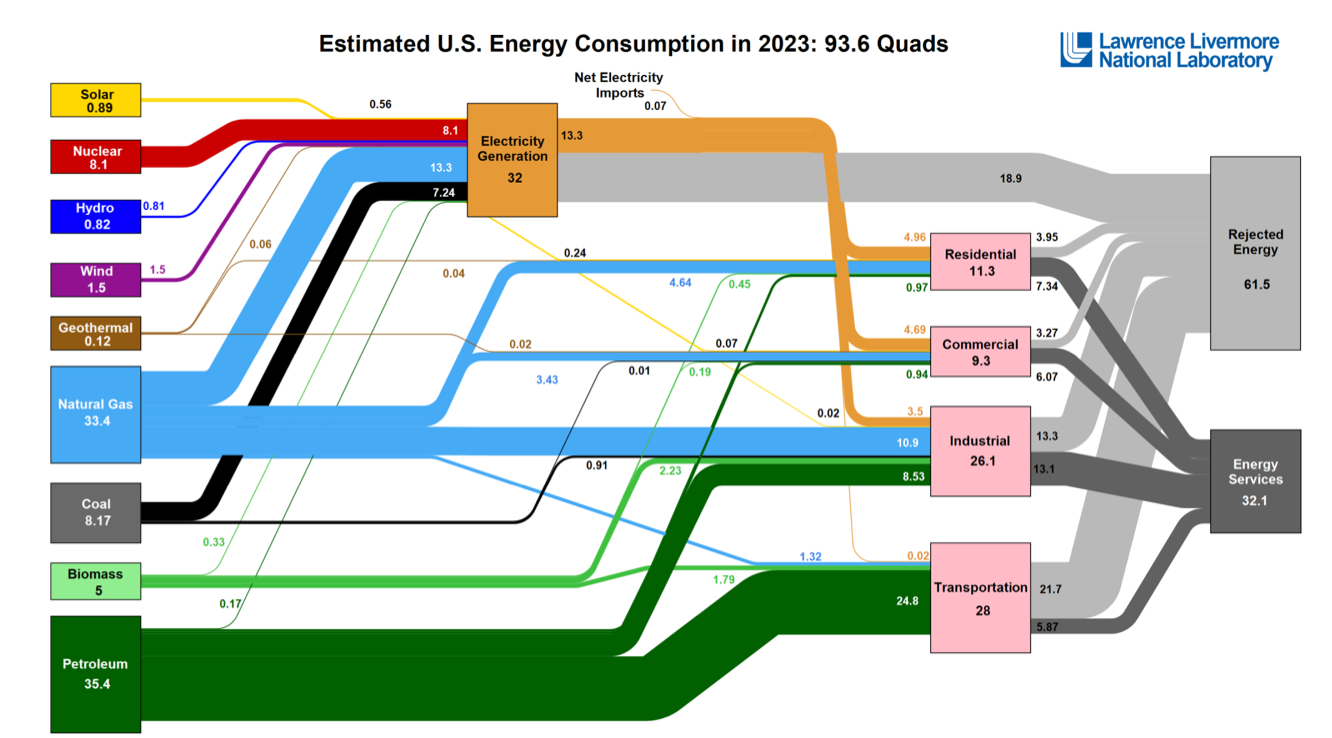
The primary energy produced and consumed by the U.S. is reported by the U.S. DOE Energy Information Administration (EIA). To arrive at a standard reporting format, the primary energy is reported in BTUs (British Thermal Units). Here is the chart of primary energy use for the year 2023.

Conventional forms of energy: Petroleum, Natural Gas, Nuclear and Coal provide over 90% of the energy that is the Life-Blood of America! Solar and wind after decades of subsidies are minor contributions to the overall supply of primary energy at about 3%. Chris Wright in testimony before Congress correctly referred to wind and solar as “Parasites”. Wind and solar consume billions of investment dollars for very little benefit to our country.
How Much Energy in BTUs is Used by Each Citizen?

The chart above shows 93.6 Quadrillion BTUs of total primary energy used during 2023. If the total 93.6 Quads is divided by 340 million citizens then the per capita energy use comes out to being about 280 million BTUs per person/per year. For discussion purposes, let’s round that up to 300 million BTUs. Remember, this is total primary energy and about a third of it is used to generate electricity. The other 2/3’s is used for transportation, heating, cooking, commercial, industrial production and other residential uses.

How is Primary Energy Used?

Here is a chart of the five sectors of Primary energy use, since 1950. The five sectors being: Electricity generation, Transportation, Industrial, Residential and Commercial.

The main point of this essay is to point out that it takes a certain amount of Primary Energy to power our lives. That amount is about 100 Quads today and is projected to grow as AI and the transition to more electrification of transportation and reshoring of American manufacturing is achieved.

There are only four main sources of massive amounts of primary energy to satisfy this Demand. These are petroleum, natural gas, coal and nuclear. The expected contributions of solar and wind are almost insignificant when considered in the mix of Primary Energy.

The U.S. total primary energy consumption has remained relatively constant at about 100 Quads since the year 2000. The previous article digs into more detail of the 100 Quadrillion BTUs required to power the U.S.

Do you remember when our government leaders and many organizations were cheering to “Electrify Everything“? Perhaps this is a good time to discuss “Primary Energy”. The four sources discussed above are the viable choices at our disposal. The pro-rating energy use of each American citizen is about 315 million BTUs per year. This totals about 100 Quadrillion BTUs. If our economy is to grow, our freedom of travel maintained and our food production, comforts and conveniences kept the same, let’s say we will likely continue to require 100 Quadrillion BTUs plus the growth of 1.7-2% per year for AI, population growth and reshoring manufacturing.

Growth of 2% per year doesn’t seem like much does it? Well, let’s look at it another way. Two percent growth will result in the doubling of electricity in about 35 years. There are forecasting experts that have predicted 78% electricity Demand growth by 2050. So the 2% per year and forecasts are pretty close. Let’s stick to electricity generation which uses about a third of the total primary energy consumed.

According to American Public Power, “electricity demand in the United States will increase 2% annually and 50% by 2050, according to a new study conducted by PA Consulting and released by the National Electrical Manufacturers Association.”

“Driven by record growth in data centers and e-mobility, the study highlights innovative technology and policy solutions to maintain a reliable and affordable energy system through this new age of demand growth,” NEMA said.

“The study, “A Reliable Grid for an Electric Future,” predicts that growth in electricity demand in the United States will be driven by a 300% rise in energy consumption by data centers and a 9,000% increase in energy consumption required for e-mobility and charging, with overall electricity projected to grow from 21% of final energy use to 32% by 2050.”

“Additionally, consumption changes will vary by U.S. region and will vary across markets over time, driven primarily by data centers in the next decade and EVs in the longer term”. 

“The Mid-Atlantic and Texas will see the largest data center electricity demand growth through 2035, and the Northeast and West will experience the largest electricity demand growth from EVs between 2035 through 2050.”

A Case for New Coal Plants

Previous articles by myself and others have discussed electricity growth and the need to build new coal, nuclear and natural gas power plants. Here are four:

Vijay Jayaraj, CO2 Coalition, Big Beautiful Coal Here for Many More Years. Despite Green Demonization: https://wattsupwiththat.com/2025/06/17/big-beautiful-coal-here-for-many-more-years-despite-green-demonization/

Joanne Nova on Coal Plant Approvals of the worldhttps://joannenova.com.au/2025/06/not-dying-global-approvals-of-coal-plants-back-up-to-2015-high/

Coal Power, It is the End Result that Matters! Coal plants provide the lowest cost, most reliable electricity:  https://dickstormprobizblog.org/2025/03/28/coal-power-it-is-the-end-result-that-counts/

The Solution to America’s Electricity Generation Crisis: Build New Coal Plants Now! https://dickstormprobizblog.org/2025/04/18/the-solution-to-the-nations-coming-electricity-reliability-crisis-build-new-coal-plants/

The purpose of this essay is to emphasize the importance of using coal fuel and some reasons why I believe this to be true. The long story shortened is this:

Natural gas already dominates electricity generation and the supply-chain of new gas turbines is stretched into four or five year lead times. Another concern that I have is, energy security. Do we really want nearly 50% of our electricity generation fuel to be delivered just in time by pipelines? Coal plants have the inherent advantage of on-site energy storage of months of fuel. The same for nuclear plants which can literally store years of fuel on site. Nuclear is clean, proven and an outstanding form of power generation. In reality, we don’t need 50 or a hundred Megawatts of new generation. We need hundreds of thousands of Megawatts of new reliable, 24/7, dispatchable electricity generation. Frankly, if the 102,000 MW of coal plants that were shut down since 2010 were replaced with new ones, it would be a huge step forward! Destroying over 100,000 MW of reliable coal generation without replacing it in kind was wrong and the loss has weakened America. The planned self-inflicted energy crisis continues. Maybe not thanks to President Trump. But here is what was planned before Trump’s EO’s.

The madness of the U.S. Self-Inflicted Clean Energy Crisis continues. According to EIA and other respected news services, the U.S. Utilities plan to shut down more coal plants in the near future.

Massive new nuclear generation can be expected given ten or twenty years to rebuild the supply chain. It took about thirty years, 1956-1986 to build the first 100,000 MW of U.S. nuclear plant generating capacity. Given consistent government policies and regulations, we should be able to do it again.

More Electricity Generation is Needed, Lots More!

The answer? Build new coal plants. Let me go back to the total primary energy flows chart at the top. America runs on about 100 Quadrillion BTUs of thermal energy each year. This has been constant within +/- 10 Quads for over twenty years.

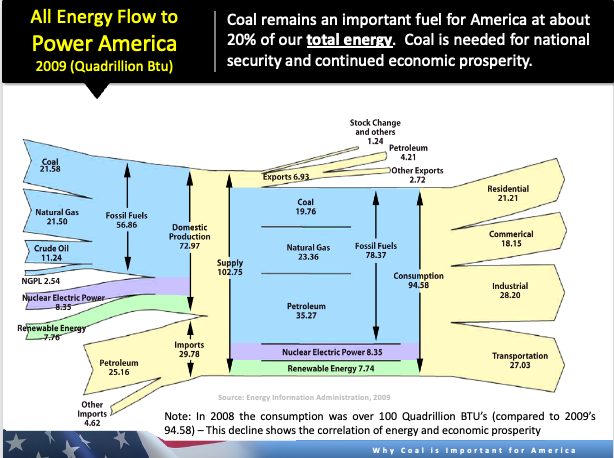
The future, if America is to remain strong, will require more Primary energy. Let’s say it will take ten more Quads. Where else can ten Quads of energy be found each year over the next five years? I would like to point out that in 2009 America used 21.8 Quads of coal.

In 2024 the coal portion of the total Primary energy had dropped to about 8 Quads. Therefore, it is proven that America, given the right policies and investments can produce at least 21.8 Quads of coal energy/year. How do I know that, easy, we did it as recent at 2009. The slide below is from my presentation to the ASME Annual meeting in Dallas, 2011.
The world is using more coal than ever. The chart below is from JoNova presentation on her blog.

Conclusions

  • Electricity growth is the highest it has been in decades and about 125,000 MW of new Dispatchable electricity generation is needed by 2030 and about 600,000 MW more by 2050
  • Gas Turbines power about 45% of America’s electricity generation now and it is mostly provided by just in time pipeline supply. National security requires more on site energy storage. Long term energy storage is provided naturally by Coal plants
  • Gas turbine additions are limited due to choke points in the supply-chain
  • New nuclear plants are also needed. However, building the needed 125,000 MW of new capacity will take decades. It took about 30 years to build the first 100,000 MW of U.S. nuclear generation capacity
    • A Balanced electricity generation portfolio is preferred for reliability, affordability and security. The major generation sources of over 70% of the generation should be nuclear, gas and coal power.
  • Coal power plants have proven to be the lowest cost producers of electricity in the U.S. Where coal plants have been shutdown, such as CT, MA, CA and Hawaii the electricity costs are the highest in America. Where coal plants continue to operate such as UT, NE, MO, WVA the electricity prices are the lowest
  • The Coal Power Infrastructure is still in tact. Mines, RR’s etc. and production can be doubled in the short term
  • Coal energy storage on site is an advantage for power security
  • The U.S. power equipment manufacturing supply chain was capable of producing numerous coal plants as recent as 2013. This supply chain can and should be revitalized
  • The rest of the world is increasing coal use for electricity generation. As outlined by Vijay Jayaraj article, GEMS and IEA reports. So should America be building new coal plants. What other fuel can satisfy the growing Demand for Primary Energy in the near future?

Dick Storm, June 18, 2025

References and information for further research:

  1. American Public Power Association report on electricity growth in the U.S. by 2050: https://www.publicpower.org/periodical/article/study-sees-dramatic-rise-us-power-demand-2050
  2. EIA Coal Plant Retirements, Feb. 2025: https://www.eia.gov/todayinenergy/detail.php?id=64604
  3. Dick Storm presentation to ASME Annual Meeting 2011
  4. America Requires 100 Quadrillion BTUs per year to power our economy, industrial production, transportation and high quality of life: https://dickstormprobizblog.org/2024/07/02/visualizing-100-quadrillion-btus-of-primary-energy-coal-should-remain-in-our-energy-mix/
  5. The Reality of Electrifying Everything,  April 9, 2024: https://dickstormprobizblog.org/2024/04/09/the-reality-of-electrifying-everything-and-the-primary-energy-required-to-generate-the-electricity/
  6. IER Report on Coal Use in 2024: https://www.instituteforenergyresearch.org/fossil-fuels/coal/global-coal-use-hits-another-historic-record-in-2024/
  7. IEA-Coal-2024: https://iea.blob.core.windows.net/assets/a1ee7b75-d555-49b6-b580-17d64ccc8365/Coal2024.pdf
  8. Visual Capitalist-2019-Every Power Plant Mapped: https://www.visualcapitalist.com/mapped-every-power-plant-in-the-united-states/
  9. POWER Magazine, January 2025 report on world coal power with emphasis on China: https://www.powermag.com/coal-continues-to-lead-chinas-record-levels-of-power-generation/
  10. NPR-New Orleans, Jan. 2025 excellent report with links to useful info, Coal Was on the Way Out, Then Surge in Electricity Demand Changed: https://www.wwno.org/coastal-desk/2025-01-09/coal-was-on-its-way-out-but-surging-electricity-demand-is-keeping-it-alive-costing-customers-and-the-planet  
  11. Global Energy Monitor Update of Coal Plants Shut Down in U.S. https://www.gem.wiki/Coal_plant_retirements
  12. POWER Magazine, April 2025 on Electric Power Growth and Shortages: https://www.powermag.com/nations-power-operators-warn-congress-of-a-coming-reliability-shortfall/?utm_source=omeda&utm_medium=email&utm_campaign=pwrnews+eletter&oly_enc_id=3214I3524889A9B
  13. Lars Schernikau, “Unpopular Truths” Newsletter on the decline of German Industry due to failed energy policies: https://sh1.sendinblue.com/3gvdip76f0lpfe.html?t=1744529565190  
  14. EIA Stats on Past & Future Generation, April 2025: https://www.eia.gov/electricity/annual/?mkt_tok=ODI0LU1IVC0zMDQAAAGZ43WWFr9wNO8tPTOKgsmgwPPWNk8RGWot7DxVoIoE1kJAseIHl5QOIFpB76qfZCFPWq3TXGNoBegkdD42BBUBalqtXixFnxyn9aADnl2Y44Sbvxc
  15. EIA List of electricity generation plants, by fuel source, 2013-2023: https://www.eia.gov/electricity/annual/table.php?t=epa_04_02_a.html
  16. NERC Long Term Reliability Assessment Report and including, Data Center Load Growth, December 2024: https://www.nerc.com/pa/RAPA/ra/Reliability%20Assessments%20DL/NERC_Long%20Term%20Reliability%20Assessment_2024.pdf
  17. Beautiful Clean Coal and it is Affordable too, Stephen Heins, Isaac Orr and Mitch Rolling! https://open.substack.com/pub/stephenheins/p/headline-beautiful-clean-coal-is?r=kv1a9&utm_campaign=post&utm_medium=email
  18. We Need More Energy, Lots More Energy, by Stephen Heins, Chris Wright and Shan Sankara : https://open.substack.com/pub/stephenheins/p/headline-chris-wright-by-shan-sankara?r=kv1a9&utm_campaign=post&utm_medium=web&showWelcomeOnShare=false
  19. POWER Magazine on the surge in Gas Turbine sales, four year lead times, April 2025: https://www.powermag.com/gas-powers-boom-sparks-a-turbine-supply-crunch/
  20. Cowboy State Daily, Good News for Coal Plants: https://cowboystatedaily.com/2025/04/18/politically-red-wyoming-utah-and-idaho-talk-break-from-power-giant-pacificorp/
  21. Grid Security Now website: https://securethegrid.com
  22. WUWT Roger Ciazza on the implications of extreme weather on renewable power reliability: https://wattsupwiththat.com/2025/04/13/implication-of-assessment-of-extreme-renewable-resource-lulls/
    Santee-Cooper enacts higher rates for AI Centers:  https://thisweekinenergy.substack.com/p/scs-state-owned-utility-enacts-higher
  23. Gas Turbine World: https://gasturbineworld.com/category/forecasts/
  24. NEMA Study on Electric Growth through 2050, April 2025: https://www.makeitelectric.org/wp-content/uploads/2025/04/grid-reliability-study-nema-deck.pdf
  25. Global Energy Monitor on world coal plants and 2024 being the largest coal consuming year in world history: https://globalenergymonitor.org/report/boom-and-bust-coal-2025/
  26. Big Beautiful Coal Here for Many More Years. Despite Green Demonization: https://wattsupwiththat.com/2025/06/17/big-beautiful-coal-here-for-many-more-years-despite-green-demonization/
  27. IEA Global Coal Report 2025: https://www.iea.org/reports/global-energy-review-2025/coal
  28. WSJ on Gas Peak, May 17, 2025: https://www.wsj.com/business/energy-oil/trump-oil-gas-shale-production-decline-db5e0f7c?st=3TqMZq&reflink=desktopwebshare_permalink
  29. Kathryn Porter, Watt Logic on the Affordability of Net-Zero Carbon, May 2025: https://watt-logic.com/2025/05/19/new-report-the-true-affordability-of-net-zero/
  30. EIA Today in Energy, May 22, 2025:  https://www.eia.gov/todayinenergy/?utm_medium=email
  31. Our World in Data, World Energy Sources: https://ourworldindata.org/electricity-mix
  32. American Public Power website of U.S. Generation Resources, 2025: https://www.publicpower.org/resource/americas-electricity-generating-capacity
  33. EIA Report and Graphic Charts of total Energy Used in 2024: https://www.eia.gov/totalenergy/data/flow-graphs/total-energy.php

The Reality of Returning Major Power Generation Equipment Manufacturing to the U.S.

Before I go any further please know that I support President Trump and his policies to return manufacturing to America. Ever since NAFTA in the 1990’s America has hemorrhaged manufacturing capacity. I presented my views on the harm of China entering the WTO in a 2016 presentation to the Delaware County Bar Association (PA) and also on my personal observations in Stanly County, NC during the 1990’s. Here and Here. The U.S. Climate policies begun during the Obama administration have destroyed over half of the U.S. Dispatchable, Reliable and Affordable coal power generation fleet. I wrote an article on, “How the War on Carbon weakens America and strengthens China” in 2021. This is a Self-Inflicted electricity generation crisis. The Obama and various NGO’s “War on Coal” killed about 125,000 MW of coal plant generation capacity and perhaps more egregiously along with them, the supply-chain to manufacture them.

So, what do we do now? (Hint: do as the Chinese are doing, read to the bottom)

The Challenge: Build 150,000 MW of New Gas, Nuclear and Coal Power Generation by 2030 and 800,000 MW of New Electricity Generation Capacity by 2050

For purposes of this essay the electricity growth of 150,000 MW of new electricity generation capacity is needed by 2030 and 800,000 MW by 2050.

Electricity Demand, According to ICF:

  • U.S. electricity demand is expected to grow 25% by 2030 and 78% by 2050
  • U.S. peak electricity demand is expected to grow 14% by 2030 and 54% through 2050
  • Residential retail rates could increase between 15% and 40% by 2030, depending on the local market

The Graph of Electricity Demand to 2050 below is from the ICF Report, May 2025. Notice they show coal power disappearing by 2040. 78% growth in 2050 is adding 1,014,000 MW to the current 1,300,000 MW of currently installed generation capacity. The 1,300 GW number is from America’s Public Power.

I tend to agree on the ICF load growth forecast but not on the exit of coal.

I believe the enormous generation growth from wind, solar, hydrogen, battery and geothermal is wishful thinking, a fantasy that many Bureaucrats, politicians and sadly, state policymakers and “Woke” Utility execs seem to believe.

Plans to exit coal are neither prudent or realistic. It is a Self-Inflicted limit to economic growth and if continued, will cause electricity Rationing.

Dave Walsh and myself participated in a panel discussion at Liberty University’s CEO Summit in Sept. 2024. The title of the panel was “Impacts of the Self-Inflicted Electricity Generation Crisis”. We laid out our views of the destruction of reliable, affordable, dispatchable power generation that was being destroyed by so called, “Climate Policies”. This loss of reliable generation capacity without replacement in-kind has created a future electricity generation crisis. Two previous articles cover the facts and information of our presentations at Liberty University, here and here.

Shortages and Rationing of Electricity

Rationing is referred to by Utilities, ICF, other recognized consultants and Bureaucrats as “Demand Response”. It simply means that electricity will be rationed for charging your EV or running your air conditioner at the whim of your electricity provider. Why? because no utility or IPP is accountable for planning future generation as integrated Regional Utilities once were such as the old Duke Power of the 1970’s, Philadelphia Electric, Santee-Cooper and hundreds more. Worse yet, unreliable, intermittent solar and wind has been forced onto the Grid with tax subsidies, thus weakening Grid reliability when power is needed at peak periods.

Demand Response sounds less threatening to the public than “Rationing”. Unfortunately, the path forward by many (most) Utilities is a path of shortages and rationing, by intention. Remember the old phrase? “Failing to plan is planning for failure”?

Power for the U.S.A

Power for the U.S.A. was the title of Donn Dears website, and I find it useful here. Donn Dears last book “Clean Energy Crisis” offered Donn’s calculations of what he forecasted as being needed by 2050 if all electricity was to be generated by carbon free sources. Here is what Mr. Dears calculated in 2023, before the AI Demand became so well publicized:

Donn Dears Forecast on “New Carbon-Free Generation Needed by 2050”:

  • 881 new nuclear plants equivalent to Plant Vogtle’s last two units, each about 1,100 mw’s
  • 3,918,996 MW of new solar plus BESS (Battery Electric Storage Systems to back it up at night)
  • 995,141 wind turbines of 2.5 MW each.

In conclusion, Mr. Dears states this is unachievable. So do I believe that building 881 new nuclear plants by 2050 is unrealistic. Many other’s who are experienced in power generation share these concerns of supply chain weakness.

A previous blog article discussed the “Clean Energy Crisis” and referenced Mr. Dears book. Then, Ron Stein and myself coauthored an article on a path forward with conventional forms of electricity generation, here. Let’s expand that discussion to show the challenge of building 150,000 MW of new coal electricity generation plants and 400,000 MW of new nuclear plants. It is a given that by 2050 gas turbine powered generating plants can be built to make up the difference, but not ALL. Keep in mind, some forecasts predict that over 1,000 GW of new 24/7 electricity generation will be required by 2050. Therefore, the new capacity discussed herein is very conservative.

The Supply-Chain for 125,000-150,000 MW of New Coal Power Generation

America had the manufacturing capacity in 2008 to build 150,000 MW of new coal plants. In fact, over 150 new plants were well along in the planning stages then, before the Obama Carbon Mandate killed them.

Energy and Electricity are the Economy. Electricity has been the Life-Blood of the economy of any Developed or Developing nation for over 100 years. To not plan for adequate primary energy and electricity generation for the future is to be un-American or even, anti-American. Let’s get into what I suggest.

Examples of Manufacturing Capacity that Need to be Replaced

Somehow….America needs Capital Investment in similar facilities as the Combustion-Engineering’s Chattanooga works had in 1975. This needs to be started ASAP. Here is an aerial picture of this magnificent facility when it was in operation.

The facility was over 88 acres under roof and included capabilities for manufacturing steel tubing, waterwalls, heavy walled headers, fabrication of tube assemblies as described above for the Roxboro superheater and also nuclear reactors and steam generators. I intentionally used the adjective magnificent to describe it. Here is a quote from my friend Tom who worked at C-E during this time period:

The facility evolved and progressed over many years to become the pearl of manufacturing prowess that it was in 1975. Combustion-Engineering in these times was capable of producing steam generators that could power about 25,000 MW of electricity generation capacity each year. The business volume in 1977 dollars was about $1 Billion/year. The manufacturing volume was almost equal to the business profits of aftermarket maintenance and repairs. Being outstanding in design, manufacturing and services was a huge business for tens of thousands of employees. In 1978 Combustion-Engineering was # 125 on the Fortune 500 list of companies. Two competitors during this era with facilities similar to Combustion-Enegineering were Babcock & Wilcox and Foster-Wheeler. B&W was # 132 on Fortune’s list and Foster-Wheeler # 207.

Today Combustion Engineering and Foster-Wheeler U.S. shops are gone, B&W’s downsized but, thankfully, still in operation.

Recently I discussed a replacement/repair of a high pressure header for an existing Utility coal steam generator in Texas. I was told the header is on emergency order and it will be on site this fall. The header is sourced from somewhere in Asia and welding of tube studs and completion of fabrication will be done in South Carolina. This is bout 24 weeks lead time for just one header. I described a 1,350 MW steam generator in a previous article, here. Just to show a rough idea of the immensity of a large coal supercritical steam generator. The one described is the B&W Zimmer Plant, supercritical steam generator.

How About Nuclear Manufacturing in the U.S.?

One of my first positions in the power industry was working at Babcock & Wilcox’s Barberton facilities as a Technical Assistant to the Project Engineer for the design and fabrication of the Duke Power Oconee Nuclear Steam System (NSS). At that time, B&W had over 30,000 employees. Facilities about equally capable to the C-E Chattanooga Works described above. B&W has since been separated into two fine companies B&W and BWXT and are still capable of building both coal and nuclear power generation equipment. However, this manufacturing capacity, as far as I know, is downsized from that in place in the early 1970’s before the Three Mile Island incident. A previous article covers manufacturing in the 1970’s here.

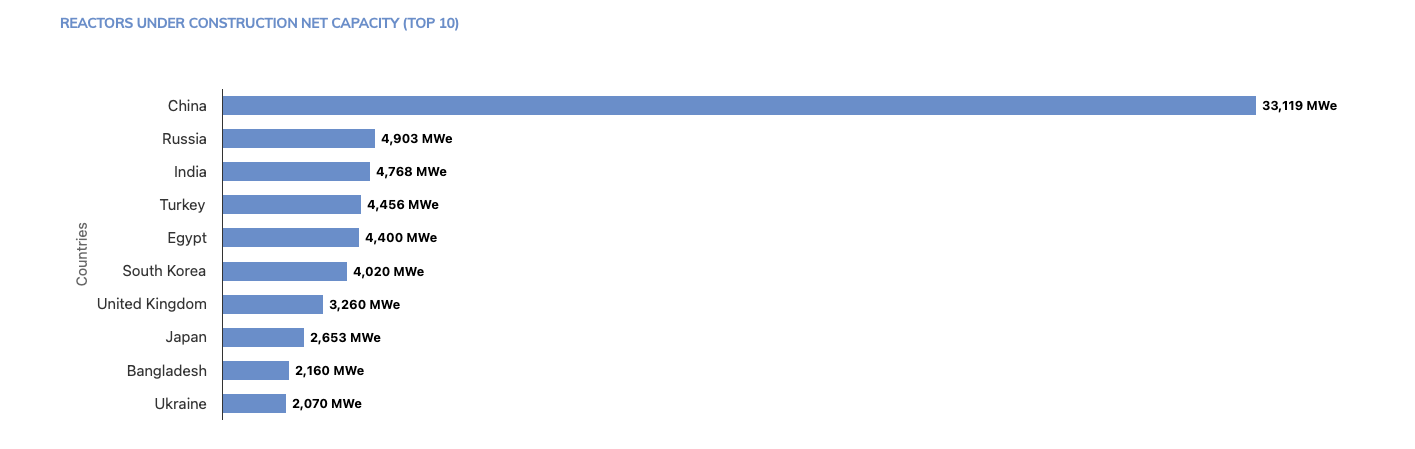
Compare Current U.S. Nuclear Plans with World

America has more operating nuclear plants than any other country. However, the average age of these is over 40 years. America’s nuclear fleet was built between 1960 and 1990. For NEW Nuclear, here is the chart by the World Nuclear Association:

The chart below is China’s current electricity generation by fuel, according to the EIA. Yes, it is 60% coal, 14% hydro, 18% renewables and 5% nuclear power for electricity generation as of this writing. The fact is, China is continuing to operate old and to also build new coal plants as required to power their economic and industrial growth. Yes, they also are building new renewables and nuclear for a Balanced generation portfolio. It is hard to criticize this approach to powering the future. America should do likewise.

Conclusions

  • President Trump’s Executive Orders which declared an electricity generation emergency are in fact, correct. America does have a crisis of the supply-chain to build the new 24/7 electricity generation capacity needed in the future. It will be difficult to build the needed generation capacity due to the hollowing out of the Supply-Chain
  • The destruction of reliable coal plants without replacing them in-kind has been wrong and reckless. This is the root cause of the electricity generation crisis.
  • Those policymakers that have engaged in the “War on Coal” are related to or aligned with advocates of Socialism and Communism. The Capital Research Center, General Robert Spaulding, Frank Gaffney and the Center for Present Danger China and others have linked foreign entities to the “Red-Green New Deal” that is at the root of the Self-Sabotage of our reliable forms of electricity generation through China’s “Unrestricted Warfare”.
  • The Shortages of electricity and resulting Rationing (aka Demand Response) will be worse during peak Demand periods, July-August and December-February
  • Building 150,000 MW of new electricity generation capacity that is dispatchable by 2030 will be difficult unless all proven 24/7 affordable electricity generation fuels are included, including coal, nuclear and gas.
  • The U.S. Supply-Chain for critical manufacturing of steam generators, transformers, pumps, feed water heaters, nuclear reactor pressure vessels, nuclear steam generators and other equipment has been harmed by U.S. businesses and government out sourcing too much manufacturing to China.
  • Building the electricity generation capacity needed will require much more training of talent in the workforce because, as the Supply-Chain of U.S. power equipment manufacturing has withered, many of the experienced craft persons and engineers have found other work or retired.

Respectfully,

Dick Storm, June 1, 2025

References and sources for further research:

  1. ICF Consulting, Electricity Demand ForecastReport: https://www.icf.com/news/2025/05/electricity-demand-expected-to-grow-25-percent-by-2030
  2. Dick Storm Probizblog, May 2, 2025: https://dickstormprobizblog.org/2025/05/02/clean-energy-crisis-2/
  3. The Challenge of Building 125,000 MW of new coal plants: https://dickstormprobizblog.org/2025/05/07/the-reality-of-building-125-gw-of-new-coal-plant-generation-capacity-then-and-now/
  4. POWER Magazine June 2006 Cover Story, Coal Fired Plant Capacity Continues to Increase : https://www.powermag.com/cover-story-coal-fired-electric-power-capacity-continues-to-increase/
  5. Global Energy Monitor Proposed Coal Plants Planned in 2007: https://www.gem.wiki/Proposed_coal_plants_in_the_United_States
  6. Global Energy Monitor (GEMS) https://www.gem.wiki/Category:Proposed_coal_plants_in_the_United_Stateshttps://www.gem.wiki/Category:Proposed_coal_plants_in_the_United_States
  7. GEMS, “What Happened to the 151 Coal Plants” updated by GEMS 2017: https://www.gem.wiki/What_happened_to_the_151_proposed_coal_plants%3F
  8. NETL Report on Status of New Coal Plants 2010: https://www.netl.doe.gov/projects/files/TrackingNewCoalFiredPowerPlants_010810.pdf
  9. GEMS-2021 Boom and Bust Status of World Coal Plants: https://globalenergymonitor.org/wp-content/uploads/2021/04/BoomAndBust_2021_final.pdf
  10. Oil Price.com 2012 report on 1200 Coal Plants being built worldwide: https://preprod.oilprice.com/Latest-Energy-News/World-News/1200-New-Coal-Plants-Planned-for-Construction-Around-the-World.html
  11. Capital Research Center update of 2010 of the Sierra Club “War on Coal”: https://capitalresearch.org/article/the-sierra-clubs-war-on-coal/
  12. IEFA Report U.S. on Track to Close Half of Total Coal Generation by 2026: https://ieefa.org/resources/us-track-close-half-coal-capacity-2026
  13.  Obama’s Carbon Mandate, 114th Congress, 2015: https://www.epw.senate.gov/public/_cache/files/3/8/386eb25d-b723-4ffd-9fcf-218425a33191/18EF72E5A9E08E51C8DD45F4B0DD29BD.epw-staff-report-obama-carbon-mandate.pdf
  14. B&W Technologies BWXT: https://www.bwxt.com
  15. Babcock & Wilcox Company, Akron, Ohio: https://www.babcock.com/home/thermal/steam-generators/utility-scale-boilers/
  16. U.S. Current Electricity Generation, Installed Capacity as of 2025 by America’s Public Power: https://www.publicpower.org/system/files/documents/Americas-Electricity-Generation-Capacity-2025-Update.pdf
  17. EPOCH Times article on President Trump’s EO on increasing new nuclear plant construction: https://www.theepochtimes.com/us/trump-signs-executive-orders-to-boost-us-nuclear-industry-5862550
  18. WNA Data Base of Nuclear Plants in the World: https://world-nuclear.org/nuclear-reactor-database/summary
    Power Magazine Commentary by Don Grace on lessons learned at Vogtle: https://www.powermag.com/what-was-learned-from-building-new-nuclear-reactors/
  19. Bechtel website on Vogtle and Nuclear Plant experience: https://www.bechtel.com/projects/vogtle-units-3-and-4/c
    U.S. Dept. of Energy Fact sheet on Vogtle: https://www.energy.gov/ne/articles/5-things-you-should-know-about-plant-vogtle
  20. Plant Vogtle Reactors, report by Stanford Univ. 2017: http://large.stanford.edu/courses/2017/ph241/vandegraaf2/
  21. TVA Infor on new SMR Permitting: https://www.theepochtimes.com/us/trump-signs-executive-orders-to-boost-us-nuclear-industry-5862550
  22. Vogtle Turbogenerator installed, May 2016 WNA News: https://www.world-nuclear-news.org/Articles/Generator-equipment-in-place-at-Vogtle-3 c
  23. Westinghouse Manufacturing in New Hampshire: https://info.westinghousenuclear.com/blog/nuclear-components-manufacturing 
  24. Westinghouse Low Enriched Uranium manufacturing in U.S. : https://worldbusinessoutlook.com/westinghouse-announces-the-reach-of-commercialization-of-leu-fuel-in-the-u-s/
  25. ICF Report, April 2025 on New Nuclear Plants: https://www.icf.com/insights/energy/nuclear-energy-growth-factors?utm_source=pdf&utm_medium=document&utm_campaign=3642_Electricity_DemandGrowth_Report
  26. China References-2025 EIA China Energy: https://www.eia.gov/international/overview/country/CHN
  27. Energy, Security and Freedom article by Thomas J. Shepstone and Doug Sheridan on the 2022 Charade & Corruption of Green Energy: https://open.substack.com/pub/energysecurityfreedom/p/enough-of-the-spin-and-pr-speak-lets?r=kv1a9&utm_campaign=post&utm_medium=web&showWelcomeOnShare=false
  28. The Coming Electricity Reliability Crisis and the Importance of Coal, Sept. 12, 2024:  https://dickstormprobizblog.org/2024/09/12/the-electricity-reliability-crisis-and-the-importance-of-american-coal/
  29. The Kingdom of Heaven Runs on Righteousness, The Kingdom of Earth Runs on Energy, Oct. 3, 2024:  https://dickstormprobizblog.org/2024/10/03/heaven-runs-on-righteousness-earth-runs-on-energy/
  30. The Rise and Fall of Nations from the perspective of nuclear power systems manufacturing: https://dickstormprobizblog.org/2023/08/15/the-rise-fall-and-rise-again-of-nations-and-the-realities-of-energy/
  31. Thomas J. Shepstone posting on Substack of,  “Energy Matters If You Value the Life You Now Have and Don’t Want to Live Under Socialism“: https://open.substack.com/pub/energysecurityfreedom/p/energy-matters-if-you-value-the-life?r=kv1a9&utm_campaign=post&utm_medium=email
  32. CommitteePresentDangerChinaInsideourwires: https://presentdangerchina.org/webinar-inside-our-wires-the-ccp-has-penetrated-our-electric-grid-will-xi-destroy-it/
  33. China References-2025 EIA China Energy: https://www.eia.gov/international/overview/country/CHN
  34. Dick Storm Blog, “Threats to the U.S. Grid: Threats to the Electric Grid,  (Most threats, self-inflicted) March 15, 2024:  https://dickstormprobizblog.org/2024/03/15/threats-to-the-grid-electricity-reliability/
  35. Visual Capitalist on Industrial Growth of China and U.S. : https://www.voronoiapp.com/economy/-Industrial-Production-in-China-Up-37-Since-2019–4873
  36. Committee for Present Danger China: https://presentdangerchina.org
  37. China Transformers with hidden “Backdoors” for Cyber Attack: Texas, 2021: https://texasscorecard.com/commentary/waller-chinese-backdoor-threatens-next-texas-blackout/
  38. Industrial Cyber:  https://industrialcyber.co/threats-attacks/chinese-transformers-in-critical-electric-sector-confirmed-by-two-us-administrations/
  39. WSJ on Houston Transformer from China being taken to Sandia Labs for Inspection, 2020: https://www.wsj.com/articles/u-s-seizure-of-chinese-built-transformer-raises-specter-of-closer-scrutiny-11590598710
  40. CBN Report 2022 on Risk of Chinese Transformers to our Grid: https://cbn.com/news/us/cyber-pearl-harbor-how-china-built-backdoor-threat-could-take-down-us-electric-grid
  41. Energy Supply-Chain Risks- Lawfare Media- 2020: https://www.lawfaremedia.org/article/energy-grid-supply-chain-risks-and-us-china-entanglement  
  42. Utility Dive on Vulnerability of Grid to Chinese Transformers April- 2023: https://www.utilitydive.com/news/chinese-supply-chains-for-critical-infrastructure-threaten-the-us-power-gri/644505/
  43. Center for Security Policy Sept. 2021: https://centerforsecuritypolicy.org/houston-has-a-problem-chinese-backdoor-threatens-next-texas-blackout/
  44. Power Transformer News, May 2023: https://www.powertransformernews.com/2023/03/28/extent-of-chinese-made-components-in-u-s-electrical-grid-still-unknown/
  45. POWER Magazine, June 2024 on Power Transformers long lead times: https://www.powermag.com/the-transformer-crisis-an-industry-on-the-brink/
  46. Utility Dive article on long lead times (80-120 months for large high voltage transformers) Feb. 2025 : https://www.utilitydive.com/news/electric-transformer-shortage-nrel-niac/738947/
  47. Wood Mackensie report on large Transformers, April 2025: https://www.woodmac.com/news/opinion/supply-shortages-and-an-inflexible-market-give-rise-to-high-power-transformer-lead-times/
  48. InfluenceWatch on NRDC: https://www.influencewatch.org/non-profit/natural-resources-defense-council-nrdc/ (see the section on connections to the Chinese)
  49. InfluenceWatch on Sierra Club: https://capitalresearch.org/article/influencewatch-friday-5-24-2024/
  50. InfluenceWatch on Energy Foundation: https://www.influencewatch.org/non-profit/energy-foundation/
  51. InfluenceWatch on Energy Foundation China: https://www.influencewatch.org/non-profit/energy-foundation-china/
  52. NGOs and Nuke Power: https://capitalresearch.org/article/nuclear-energy-rich-climate-ngos-have-nuked-clean-power/
  53. Bident grants for anti-nuclear NGOs: https://capitalresearch.org/article/biden-administration-approved-485-million-for-anti-nuclear-nonprofits/
  54. Robert Spaulding on China’s “Unrestricted Warfare” 2020 on YouTube: https://www.youtube.com/watch?v=PT8LRZAonQA
  55. WION, New Delhi- Gravitas, with Palki Sharma Upadhyay, About May 2021:     https://www.youtube.com/watch?v=IO86N0W0qco
  56. National security white paper marks China’s push for global order on its terms: https://economictimes.indiatimes.com/news/defence/national-security-white-paper-marks-chinas-push-for-global-order-on-its-terms/articleshow/121330816.cms?utm_source=contentofinterest&utm_medium=text&utm_campaign=cppst
  57. “Unrestricted Warfare” approach of the CCP to weaken America through non-kinetic means: https://archive.org/details/unrestricted-warfare
  58. The book, “Unrestricted Warfare” available on Amazon: Unrestricted Warfare: China’s Master Plan to Destroy America Paperback – November 10, 2015 by  Qiao Liang  (Author), Wang Xiangsui  (Author)
  59. U.S. War on Carbon Accomplishes Two Things, Weakens America, Enriches China, Jan. 30, 2021: https://dickstormprobizblog.org/2021/01/30/us-war-on-carbon-accomplishes-two-things/
  60.  Blue Planet in Green Shackles, What is Endangered, Climate or Freedom”: https://wp.me/p5DzAo-nD
  61. POWER Magazine on the surge in Gas Turbine sales, four year lead times, April 2025: https://www.powermag.com/gas-powers-boom-sparks-a-turbine-supply-crunch/
  62. President Trump’s Executive Orders on Electricity Generation and Grid Security/Reliability, Fact Sheet, April 2025: https://www.whitehouse.gov/fact-sheets/2025/04/fact-sheet-president-donald-j-trump-strengthens-the-reliability-and-security-of-the-united-states-electric-grid/