Category Archives: Fossil Fuels are Important

King Coal is Dead. Long Live the King!

Coal has been important to lift people from poverty to good lives for about 150 years. The Developed world made great progress from 1900 to present day thanks to reasonable cost coal power. The Electric Utilities once educated the public on power generation and “Living Better Electrically” Any of us born before 1950 can remember the Edison Electric Institute Mascot, “REDDY KILOWATT”. What a wonderful benefit that was for Humankind. As a high school student I actually knew where electric power came from and the basics of Thermal Power Plants.

Then ironically, about the time of the 1973-74 Arab Oil Embargo, I was working for Carolina Power and Light Company. A responsible and efficient Electric Utility headquartered in Raleigh, NC. I remember as a fact, CP&L cut the Public Relations Budget which included killing programs in schools to teach Home Economic Students the benefits of “Living Better Electrically”. Also, TV and Newspaper articles to explain the importance of electricity. So, what filled the void? The Environemntal Extremists filled the void. Then in the 1990’s Bill Clinton’s Presidency began the “War on Coal”. Later the war on coal morphed into the war on carbon.

Thank you Ron Clutz for writing your article. I will post a couple pictures of life without Fossil Fuels. As John Kerry flies around the world professing to save the Planet, I suppose this is what he and the Biden Administration wish for us to do, return to muscle power. This is preposterous considering we are well into the Digital and Space Age!

An Amish Teenage Girl with Team of Horses Plowing circa 1960

Glasgow, COP-26 Elitists and Special Interests Promote China First, America Last, Why? Because Energy Savvy Engineers Were Not Successful In Educating The Public and Politicians on the True Facts

Well, that is at least one reason we have such a mess of energy policy now.

Once a “War on Carbon”, Has now Morphed into a “War on Freedom”, “War on our Rights”, “War on Capitalism” and an assault on much of What “We the People” Have Worked Hard For. The clowns in Scotland are spending our tax dollars and restricting our freedoms as best they can. Essentially putting China and the rest of the world first, America last. All on our dime.

Meanwhile, U.S.A. High Gas Prices, Super Market Shortages, Inflation , Oil and Gas Jobs are Killed and Winter Energy Supplies may be limited. The American people did not vote for this

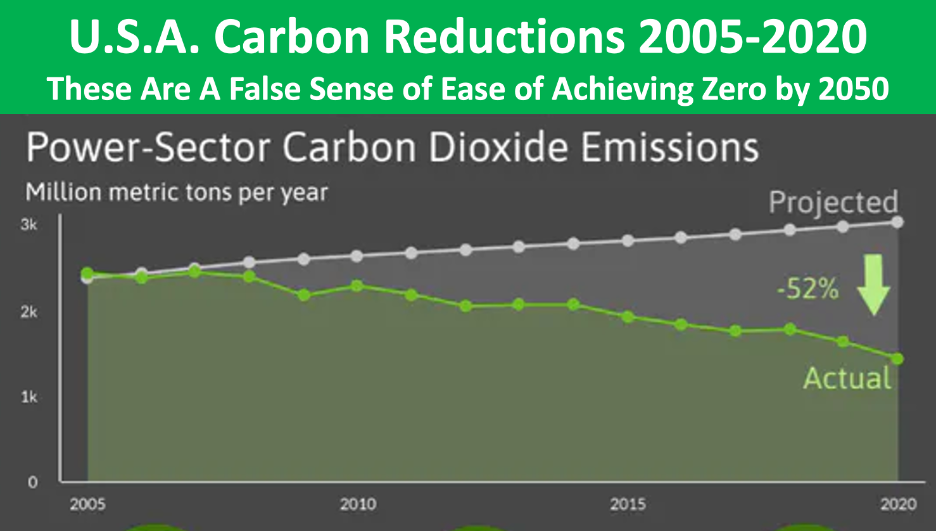
America has been a leader by example in reducing carbon. The U.S.A. has reduced our carbon emissions by over 50% since 2005. How? By releasing the power of free markets and American innovation. At the end of President Trump’s term, America was energy independent. He did that in four years only to have Joe Biden reverse his policies.

The War on Fossil Fuels is not new and the intentions have always been to raise energy costs so that “Green Power” will become competitive. Yes, the intentions of President Biden, John Kerry, Al Gore and the rest of the Green Extremists (Reminder, the War on Coal started in the Clinton-Gore Administration. Obama just continued and accellerated anti American energy policies Clinton-Gore began) The war on carbon is intended to make Exploration, Development, Production and use of oil, gas, coal and even nuclear, more expensive and harder to use. All of this as the world’s people still depend on Fossil Fuels and nuclear together for almost 90% of our total energy. How can our leaders be so ignorant and insensitive? Well, back in the 1990’s when bill Clinton started the “War on Coal”, I did my best to educate the public and the students of public schools and several Colleges on energy and electricity generation. I am proud of my efforts, small as they seem in the grand scheme of things. There is still a need for Energy Engineers to become active in PR for Energy!

I copied the Oct. 2011 Commentary(Below) from POWER Magazine’s web page. Kindly note my last line: I sure wish the readers of POWER and many other engineers took the suggestion to educate the public on energy and electricity generation more seriously. If we had, perhaps we would not have the mess we have in Washington today.

(From Oct. 2011)

Shaping America’s Energy Policy

America’s energy and environmental policies have been dysfunctional for decades. Obsessively moving toward “green” has made America weaker and has damaged our economy. During POWER’ s first 100 years (1882–1982), the magazine chronicled the U.S. growing into the strongest industrialized economy in the world. America designed and built products for the world using raw materials and energy from within our own borders. Now we are in a recession and the U.S. Environmental Protection Agency’s (EPA) “War on Coal” continues. Does anyone get the connection? Ever-worsening regulations are killing jobs by the thousands.

Past Turning Points in U.S. Energy Production

Remember when America took risks and led the world in energy innovation? Let’s review some of the past milestones.

The pace-setting power stations Eddystone and Philo are ultrasupercritical power plants that were designed in the 1950s. Hailed as the most efficient coal power plants in the world when they were launched, these plants were designed for over-40% thermal efficiency.

Then Admiral Hyman G. Rickover and President Dwight D. Eisenhower followed through on the “Atoms for Peace Initiative” to commercialize the success of the Navy nuclear propulsion systems, which were to be applied to electricity generation for peaceful purposes. The Shippingport nuclear power plant began operations in the early 1960s, and larger commercial nuclear plants were on the drawing boards. By the mid-1960s, it was said that nuclear power was such a technological breakthrough that “electricity will be too cheap to meter.” America went on to build more than 100 commercial nuclear plants, most of which are still operational. U.S. nuclear plants remain economical and have earned an enviable safety record.

Then came oil embargos, followed by volatile natural gas prices. The high oil and gas prices resulted in a surge in building new coal plants from 1975 to 1985. The nuclear fleet grew until 1978, when the Three Mile Island accident created a major setback. In recent years, nuclear power morphed into the politically correct, carbon-free fuel. However, the tsunami in Japan in March and the resurgence of anti-nuclear groups around the world seem to have once more stalled future nuclear plant development.

The Need for Energy Policies That Promote Our Economy

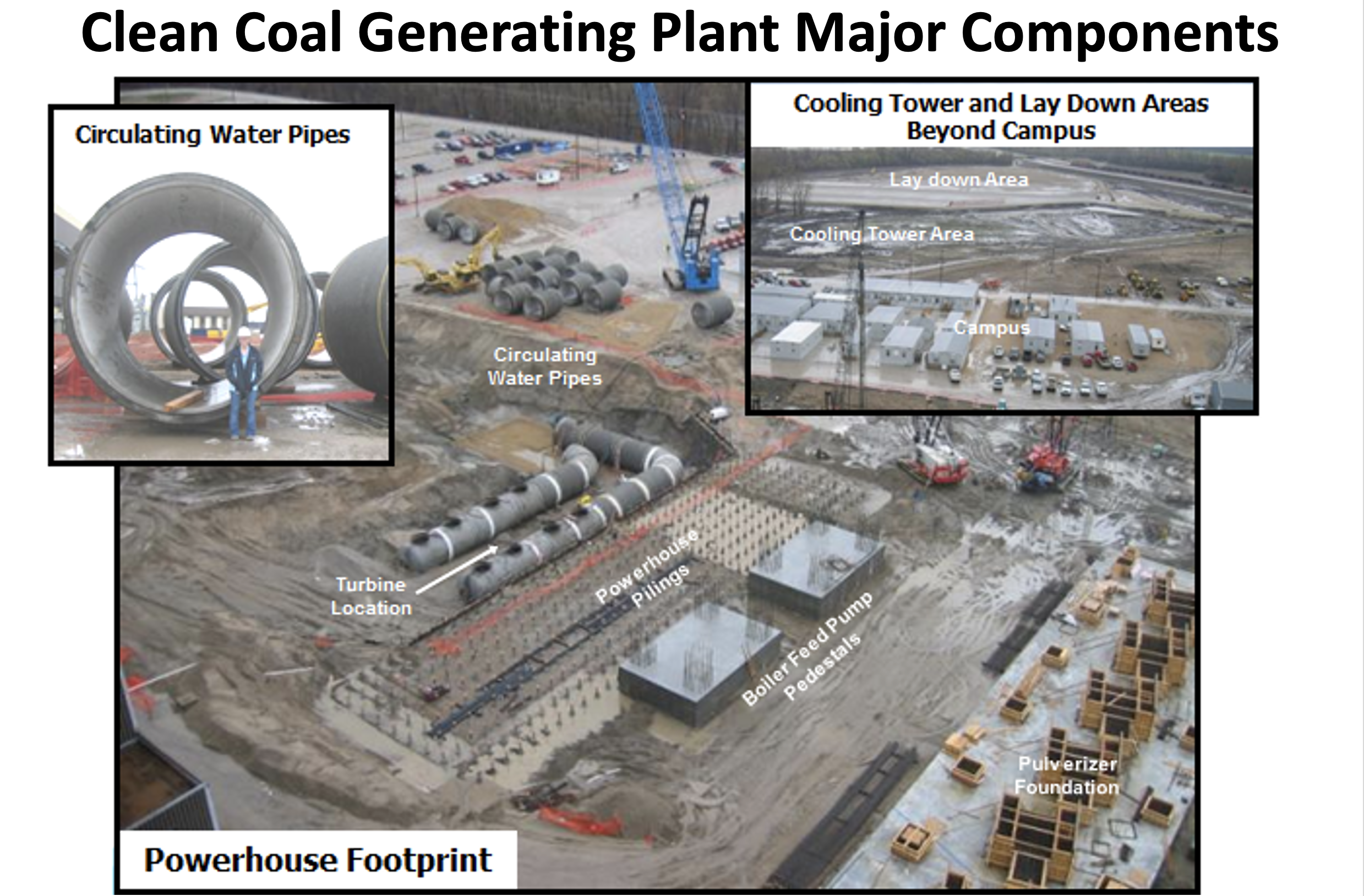
U.S. energy policy should promote the use of all fuels. America is the Saudi Arabia of coal. If mining permits, EPA regulations, and common sense energy policies were practiced, then power engineers could replace our aging coal plants with new clean coal plants exceeding 40% thermal efficiency. This would be an efficiency improvement of about 7 percentage points above the existing coal fleet.

It is absurd that environmental activists can shape the U.S. energy policy based on ideology alone, with little concern for keeping electricity prices reasonable and our economy growing. Why don’t environmental activists embrace new, more efficient clean coal plants? America should be replacing our aging fleet with new, more efficient, clean coal plants. Will we ever learn?

My concern is that the same type of political correctness that nearly killed nuclear power after Three Mile Island may harm the future of clean coal plants. If the U.S. rebuilt the aging 300+ GW coal fleet with all new, clean ultrasupercritical coal plants, it would employ well over three million Americans. Jobs and a strong America are related to the utilization of homegrown energy, including the mining of coal and raw materials; construction; and the production of steel, cement, copper wire, generators, boilers, balance-of-plant equipment, and environmental controls. Compare the number of jobs created to build, operate, and maintain new coal plants with the “green jobs” of erecting foreign-built windmills or solar power facilities.

If we want to restore economic prosperity and renew manufacturing in America, then we need reasonably priced electricity to supply power to manufacturing plants. Keeping electricity costs reasonable for residential consumption is nice, but to restore manufacturing jobs in America, reasonably priced wholesale electricity, which is available on a 24/7 basis, is needed. This point seems to be forgotten in the national dialog on America’s energy future.

Educating the American Public About Electric Power Production

I think each of us who understands power production has a responsibility to educate our friends, neighbors, and elected officials. There are millions of citizens who believe reasonably priced, reliable electricity is an entitlement. The right thing for human advancement is to use the God-given natural resources that have made “living better electrically” a way of life in the developed world.

In my opinion, we should build green power where it is practical and economic to do so, such as on the roofs of buildings and parking garages. I support the building of nuclear plants and combined cycle gas plants, where economically justified. Energy engineers understand that when the sun sets and the wind is calm, the U.S. needs reasonably priced, dispatchable power to energize what is left of America’s manufacturing might.

I urge the readers of POWER to do your part in educating the public and our elected officials on the true facts of how we can continue to “live better electrically” and keep America strong. I promise to do my part. Will you?”

— Richard F. “Dick” Storm  (was in 2011 ) CEO/senior consultant of Storm Technologies Inc. in Albemarle, N.C.

Reference:

  1. POWER Magazine, Oct. 2011 Commentary: https://www.powermag.com/shaping-americas-energy-policy/#.YYIdCBf0vsM.linkedin
  2. Ron Clutz, Science Matters, Climate Change is 75% Naturally Caused by IPCC Data: https://rclutz.com/2021/11/06/ipcc-data-rising-co2-is-75-natural/#like-22392

The War on Carbon, How it Came to be:

Climate Change has been going on since well before the Romans. Certainly well before coal was burned for power generation. Yet, the main stream news is fixated on Climate Change being the result of the Developed World’s use of Fossil Fuels over the last 100 years. The MSM has completely blown off the possibility that Climate Change is mostly Natural. I am a proponent for reasonable cost, abundant energy and the resultant improved quality of life. I am also interested in protecting the environment, and I love nature just as much as any environmentalist does. Reasonable cost Energy improves quality of life and is referred to by some as improving the “Human Developmet Index”. It concerns me that the most reasonable cost and proven sources of energy have become somewhat socially unacceptable. Such as coal, oil, gas and nuclear. Ironically, these four forms of energy are the one’s that provide about 90-96% of the Developed World’s energy. Many Financial Institutions are reluctant to loan money to Developers of mines, fossil fueled power stations or refineries. Even though there are still almost a Billion people on the planet that have limited or no access at all to electricity. Energy and Economic prosperity go together.

A slide from a recent course I presented. The data are from the UN, Our World in Data and ExxonMobil’s Outlook for Energy

So, this begs the question: Why would so many in the MSM, Entertainment, Politics, Education and the General Public be against the very things that make our high quality of lives possible? As I was thinking about this, it occurred to me that perhaps it would be helpful to remind folks of how we have arrived at this absurd place in history. Here are my thoughts and research of how the “War on Carbon” came to be. This is purely Politically Driven, not based on science or protection of the planet.

The UN Agenda 21

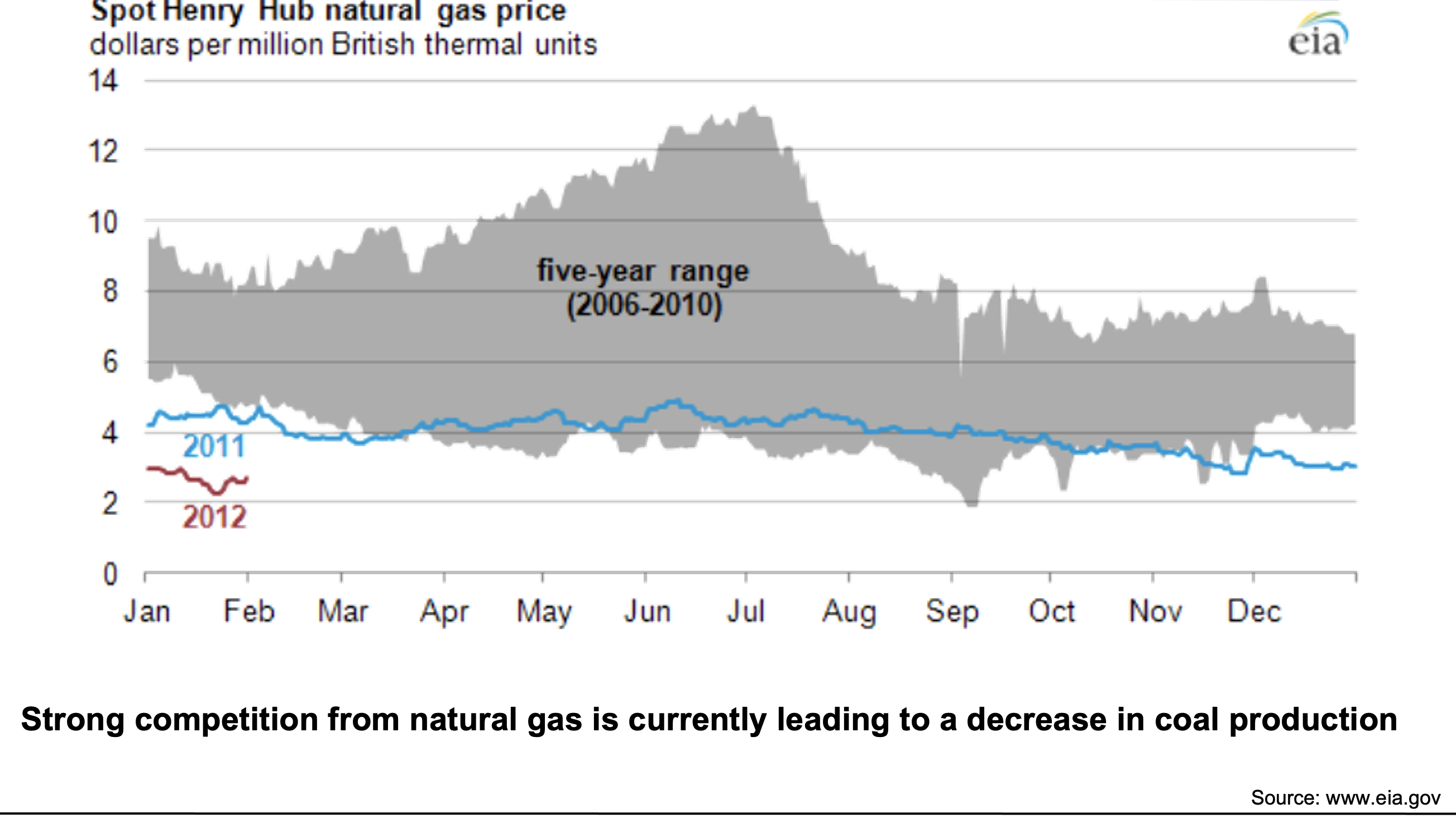
It was 1993 and Bill Clinton was President of the U.S.A. with Al Gore as Vice President. Executive Order #12858 was signed.(1) This is my understanding of the beginning of the “War on Coal”. The U.N. Agenda 21 began in a conference in Rio de Janeiro in 1992. It brought together concerns for our environment, Socialism, Secular Humanism, and the world banking cartels. U.S.A involvement began in 1992, with then good intentions, by President George H.W. Bush. Bush #41 referred to Agenda 21 as encompassing “Sacred Principles”. Then the good intentions deteriorated into viscious, effective and well funded attacks on coal. The cost to Americans was blunted due to the near simulateous successes of the Shale Gas Revolution which greatly increased production of Domestic natural gas and drove natural gas prices downward. In the short term, the low natural gas prices actually hurt coal power more than the extremists and Democrat’s smear campaigns. However, the damage was permanent with no new coal plants being built in the U.S.A. since about 2012. Many older coal plants have been irreversibly decommissioned and hundreds demolished. Many of these plants could have been operating now had they been maintained. I hate to say the Environmental Extremists have won, but it looks like they have. But, who benefits from the Environmental Extremists apparent success? In my view, the only beneficiaries are China, Russia and other adversaries of the U.S.A.

Now, natural gas prices are escalating and even the Left Leaning MSM talk of expected high energy bills in winter and possible energy shortages. Therefore, given this scenario, I thought it was timely to review, from my vantage point, just how this madness came to be.

War on Coal 1993-2012

The Democrat’s have hated coal for many years. The only reason I can rationalize their hate, is because the well funded Environmental Groups usually support Democrat’s. Here below is an excerpt from Wikipedia on the “War on Coal”(6)

“A goal of the Sierra Club is to replace coal with other energy sources.[31] Through its “Beyond Coal” campaign, the Sierra Club has set a goal to close half of all coal plants in the U.S. by 2017. American business magnate and former New York City mayor Michael Bloomberg donated $50 million to the Sierra Club’s anti-coal work in 2011, and announced another $30 million gift to Sierra’s Beyond Coal campaign in 2015.[32]The Beyond Coal campaign says 187 coal plants have been closed since 2010.[33] Other funders of the Sierra Club’s anti-coal campaign include the William and Flora Hewlett Foundation and the John D. and Catherine T. MacArthur Foundation.[34] The CEO of Chesapeake Energy, a natural gas company, donated $26 million to the Beyond Coal campaign between 2007 and 2010.[35]

The Sierra Club is also opposed to nuclear energy.[36][37] “

Then, piling on with the MSM and the environmental organizations comes the allying of the public schools and teaching (indoctrinating) extreme green policies to our teenagers many of which have now grown up to be adults.

In addition to demonizing of carbon in Public Schools the general public is bombarded with “Save the Planet” propaganda by entertainment personalities, and the  MSM.  Here is a short history of the War on Coal by Politico(7)https://www.politico.com/agenda/story/2015/05/inside-war-on-coal-000002/ 

The Democrat’s hated coal and then that hate has morphed into hate of all Fossil Fuels. The (D’s) are supported by Environmental organizations (4,5) that mostly, also hate nuclear. So, the Democrat’s and Environmentally (Like Bush 41, they have good intentions) conscious citizens tend to oppose the one carbon-free form of power that is efficient, reliable, proven and capable of Dispatchable operation at high-capacity factor. The generation (it has been 28 years since Clinton signed EO) of youth that were indoctrinated to hate coal and nuclear are now voters.

This is my summary of “How the War on Carbon” has brought us to Congress working on a Stupid and anti-American Path to Net Zero Carbon. A path that only benefits adversaries of the U.S.A. The best word I can think of to describe these policies is “Stupid”.

A better path would be to continue energy independence using Hydraulic Fracturing and production of all of America’s oil and gas, including pipelines for safe transport of oil and gas. Build many more new nuclear plants to produce more nuclear power generation for both electricity generation and for hydrogen production. Also, build new highly efficient coal plants with the future capability for CCUS (Carbon Capture, Utilization and Storage) Called HELE (High Efficiency Low Emissions)

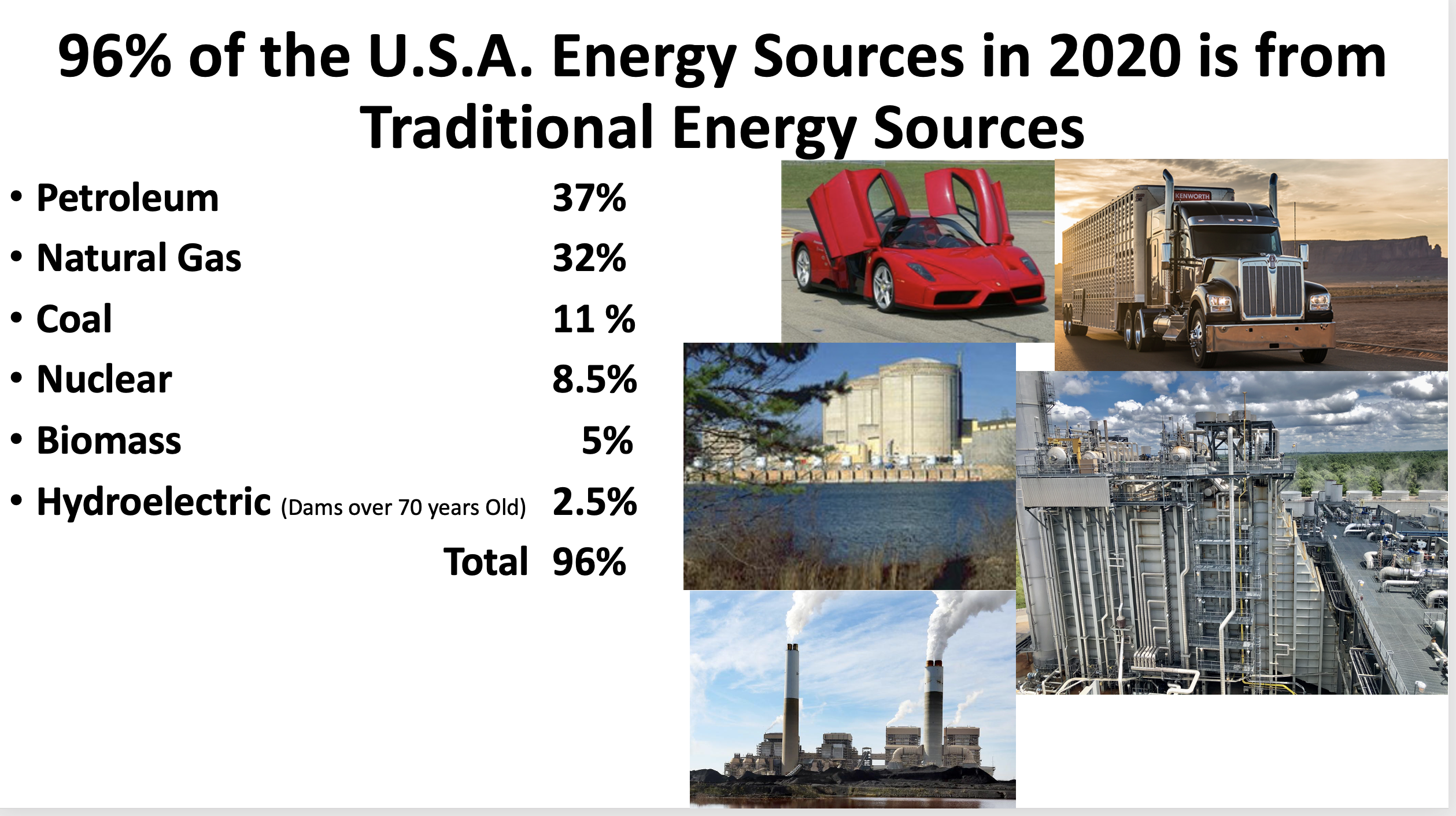
In closing, my view is that all forms of energy are important including; nuclear, coal, oil and gas. By the way, another reason that supports this is the fact that about 96% of America’s energy is provided by conventional energy as shown below. Disrupting the supply chain of Domestic energy will weaken America.

These views are my own and not those of any organization that I have been part of. I take full responsibility for these opinions and they are based on my personal experiences in the electric power industry over many decades.

Richard F. (Dick) Storm, PE

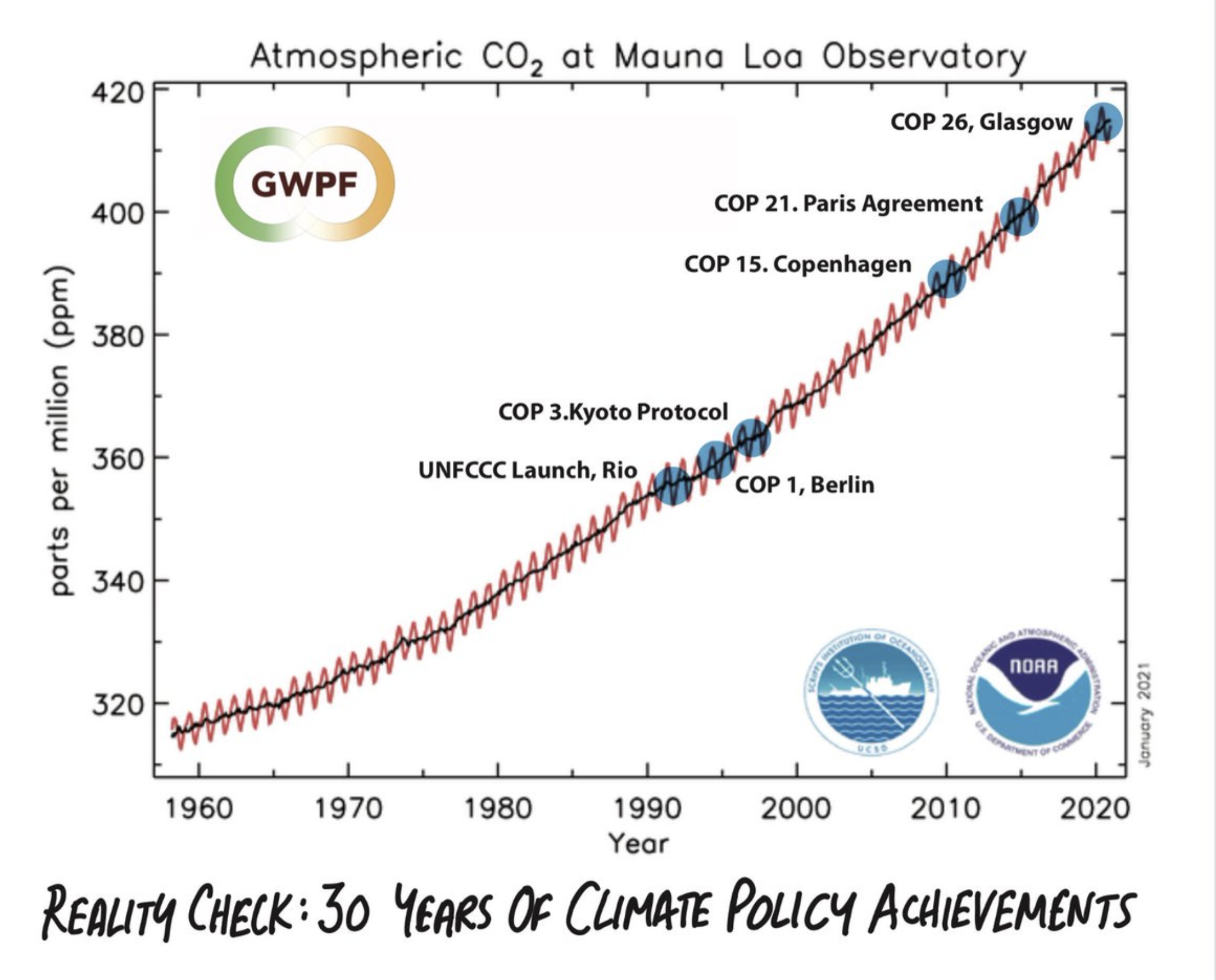
PS I just came across this post by the GWPF (Global Warming Policy Foundation) A reminder that all the meetings and hype are strictly Political, not about getting Results:

References:

  1. Living with Agenda 21, Surrendering Our Freedoms by Dr. H. Lawrence Zillmer, Copyright 2012
  2. U.N. Agenda 21 Info: https://sustainabledevelopment.un.org/content/documents/Agenda21.pdf
  3. U.N. Sustainable Development Report, 2021: https://sustainabledevelopment.un.org/content/documents/UN-DESA_Back_Common_Future_En.pdf
  4. Capital Research Center, Report on Climate Dollars https://www.climatedollars.org/full-study/a-short-history-of-global-warming-fears/
  5. The NEW Leviathan, Crown Forum, NY 2012 Check Appendix X and summary of $9 Billion in Assets
  6. Wikipedia, “War on Coal” https://en.wikipedia.org/wiki/War_on_coal
  7. Politico, “War on Coal” https://www.politico.com/agenda/story/2015/05/inside-war-on-coal-000002/
  8. War on Coal, Issues in Science and Technology: https://issues.org/real-numbers-president-obamas-war-on-coal/
  9. An Excellent video of some very smart Patriots, The Right Stuff Climate Team (Retired NASA Engineers): https://www.therightclimatestuff.com
  10. Donn Dears well written and practical articleshttps://ddears.com/donns-articles/
  11. Michael Shellenberger on John Shanahan Website. Solar Panels make more waste than nuclear: https://www.allaboutenergy.net/energy/238-energy/today/wind-and-solar/north-america/862-100-percent-renewable-energy-rested-on-a-lie-michael-shellenberger-environmental-progress-mark-jacobson-usa
  12. Armstrong Economics, Great article on CO2 and the politics of the “War on Carbon” aka, “Manmade Climate Change” https://www.armstrongeconomics.com/world-news/climate/3rd-attempt-to-publish-this-google-interferes/
  13. EPA New Source Review  Settlements Summaries: https://www.gem.wiki/EPA_Coal_Plant_Settlements
  14. EPA Settlements on NSR violations by WEPCO 2003: https://www.epa.gov/enforcement/wisconsin-electric-power-company-wepco-clean-air-act-civil-settlement 
  15. Dissertation on the Sierra Club Success of Beyond Coal Campaign 2020: https://www.proquest.com/openview/b734be1b4fa402463fbb2ee03a7993e5/1?pq-origsite=gscholar&cbl=18750&diss=y
  16. Inside the War on Coal Politico, The Agenda 2015: https://www.politico.com/agenda/story/2015/05/inside-war-on-coal-000002/
  17.  NRDC China Office: https://chinadevelopmentbrief.org/ngos/natural-resources-defense-council-nrdc/  
  18.  Government Accountability Office Report on Environmental Protection Agency–Application of Publicity or Propaganda and Anti-Lobbying Provisions EPA Lobbying, 2015: https://www.gao.gov/products/b-326944
  19. NRDC About us and link to IRS 990 Form: https://www.nrdcactionfund.org/about/
  20. Influence Watch, NRDC page: https://www.influencewatch.org/non-profit/natural-resources-defense-council-nrdc/
  21. Washington Examiner: Gina McCarthy CEO of NRDC: https://eelegal.org/washington-examiner-gina-mccarthy-and-nrdc-together-again/
  22. Wrong Kind of Green, NRDC and Source Watch: https://www.wrongkindofgreen.org/the-group-of-ten/natural-resources-defense-council/
  23. Bezos awards $100 million to NRDC : https://www.nrdc.org/media/2020/201116
  24. Bezos plans to give Billions to Environmental Org’s: https://www.cnbc.com/2021/09/20/jeff-bezos-pledges-1-billion-to-conservation-through-bezos-earth-fund.html
  25. Activist Facts,  Environmental Report (Follow the Money): https://www.activistfacts.com/organizations/19-natural-resources-defense-council/
  26. Washington Examiner 2013 EPA and Sue and Settle Lawsuits: https://www.washingtonexaminer.com/epas-back-room-sue-and-settle-deals-require-reform
  27. Activist Facts, Sierra Club, Beyond Coal, Beyond Gas, Nuclear :https://www.activistfacts.com/organizations/194-sierra-club/
  28. Mother Jones 2012, Sierra Club “War on Coal” update to kill 167 coal plants: https://www.motherjones.com/environment/2012/04/map-american-coal-plants/
  29. AEP Newsletter to employees and Retirees on Turk Plant Settlement: https://aepretirees.com/2011/12/22/aep-resolves-all-legal-challenges-against-turk-plant-plant-on-track-to-begin-commercial-operation-in-2012/
  30. PowerEngineering Articles on Turk and Duke Coal plant closures, 2/01/2012: https://www.power-eng.com/renewables/aep-resolves-all-legal-challenges-against-turk-plant/#gref
  31. Source Watch Brags on NRDC being responsible for forcing shutting down of Seven major coal plants in Texas in 2007: https://www.sourcewatch.org/index.php?title=Natural_Resources_Defense_Council#Support_for_coal_gasification
  32. Environmental Defense Fund: https://en.wikipedia.org/wiki/Environmental_Defense_Fund
  33. Influence Watch profile of EDF: https://www.influencewatch.org/non-profit/environmental-defense-action-fund/
  34. WUWT, Article, July 8, 2022, Green Communism, Eradicate the Energy Privilege of Rich Countries:  https://wattsupwiththat.com/2022/07/08/green-communism-eradicate-the-energy-privilege-of-rich-countries/

830,000 Btu’s per Day/Person

Lawrence Livermore Laboratory Energy Flows of the U.S.A. 2020

Congress and our President are in the process of forcing Net Zero Carbon, Green Energy on all of us. In my view what this will do is increase prices of energy, make our energy less reliable, make America less competitive and in general, harm our quality of life. In thinking about this and attempting to explain why I feel this way, it occurred to me that if all of the citizens knew where our energy comes from and how much we depend on it each day, perhaps more of us would pressure our Congressmen/Congreswomen to resist this foolishness. So, here is my stab at explaining where our energy comes from and why the “Green New Deal” is so harmful.

I have been involved in the energy business for many years and the one chart that explains energy flows best, is the DOE Sankey diagram above. This shows the sources of all of our energy and how it is used throughout the economy. I have been watching this for about 20 years and interestingly, the total U.S. energy use has held steady at about 100 Quadrillion Btu’s per year. In fact, I will show a graph below of the U.S. Energy use by year from 1950-2019.

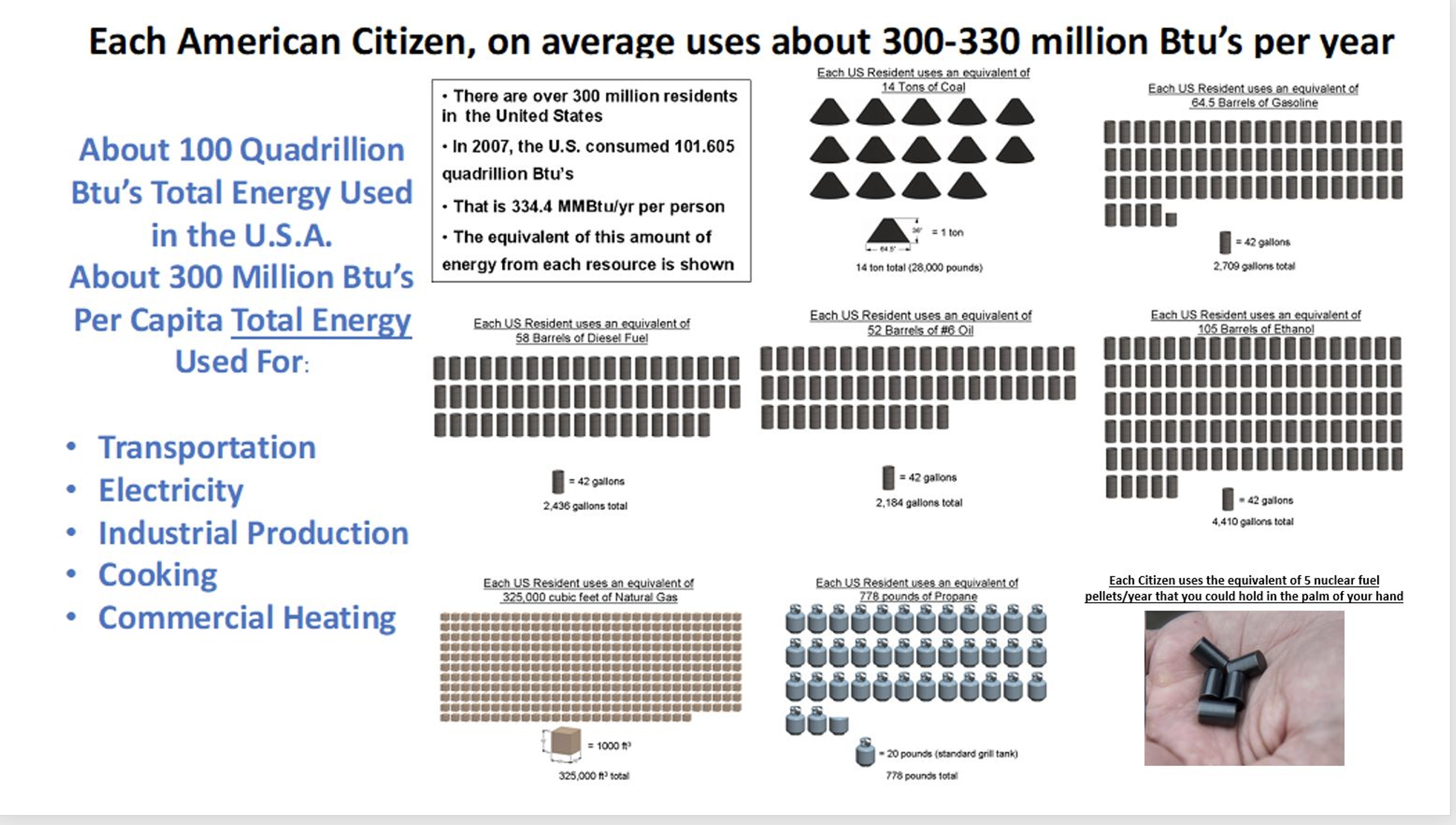
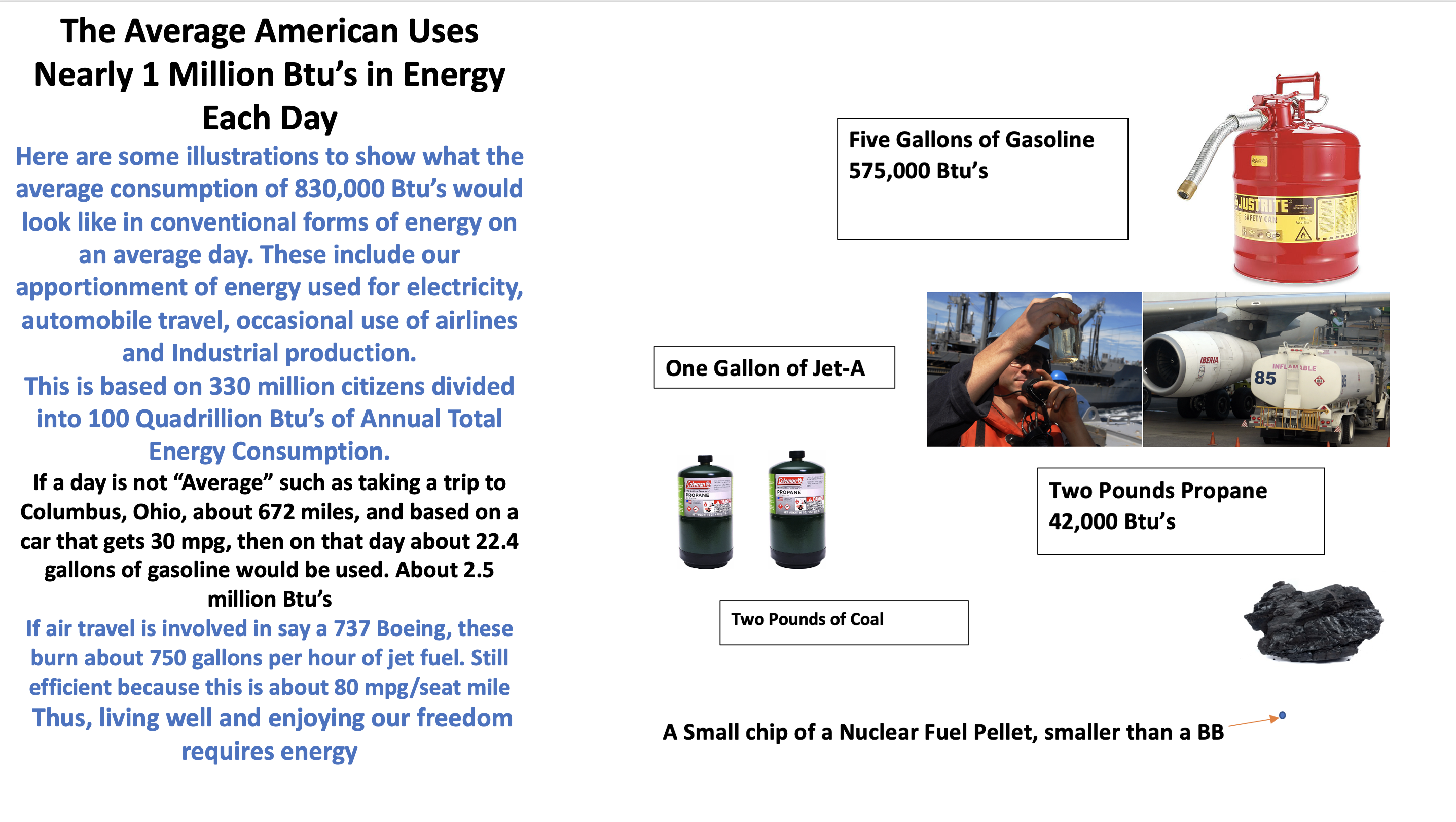
Where does the 830,000 to a million Btu’s per day come from? If we divide 100 Quadrillion Btu’s by the population of 330 million, then the per capita energy use is about 303 million Btu’s/person/year. Divide the 303 million Btu’s per person/year by 365 days and it comes out to about 830,000 Btu’s/day/person.

This is average and of course, a person living in a small condo that does little travel, will use less energy than a person who lives in a 2500 square foot home, owns a small fishing boat and travels the world. Lets say the latter example would use more than a million Btu’s per day. This energy could be in gasoline, natural gas, propane for the grill, electricity for HVAC of the home and for cooking. Included in the allottmant of per capita energy use is our share of industrial production, commercial buildings, shipments of goods and government use for the military. Below is an illustration of the forms of energy we might use each day.

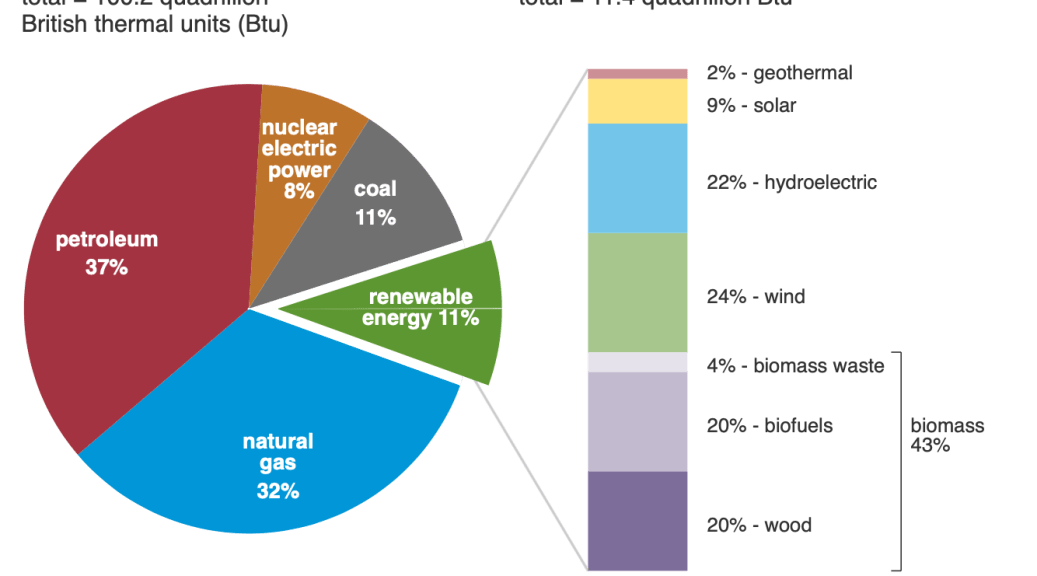
So what does this have to do with the “Green New Deal” and the Clean Energy Plan Congress is about to pass? Well, if we are accustomed to living productive lives using conventional energy sources such as outlined above, then how can we sustain our high quality of lives by substituting wind turbines and solar panels for the 96.2 Quadrillion Btu’s provided by conventional forms of energy? Note that on the first figure above, the Sankey diagram I have inserted the total wind and solar in 2019 provided 3.8% of our energy. Petroleum, natural gas, nuclear, coal, biomass, geothermal and old hydropower dams provided the other 96.2%

Let’s get to electricity. The total energy used in 2019 was 100 Quadrillion Btu’s and 37% of this was used to generate electricity. So if we look into the future of EV’s and eliminating the internal combustion engine, then the energy used for transportation will need to come from electricity. Lots more electricity. How does the “Net Zero 2050” proponents think they will get to zero carbon emissions? By windmills and solar. Lots of windmills and solar. Here is an illustration from the Princeton University Net Zero Path.

My opinion is that if this path is taken, it is totally impractical and harmful to America, our way of life and our national security.

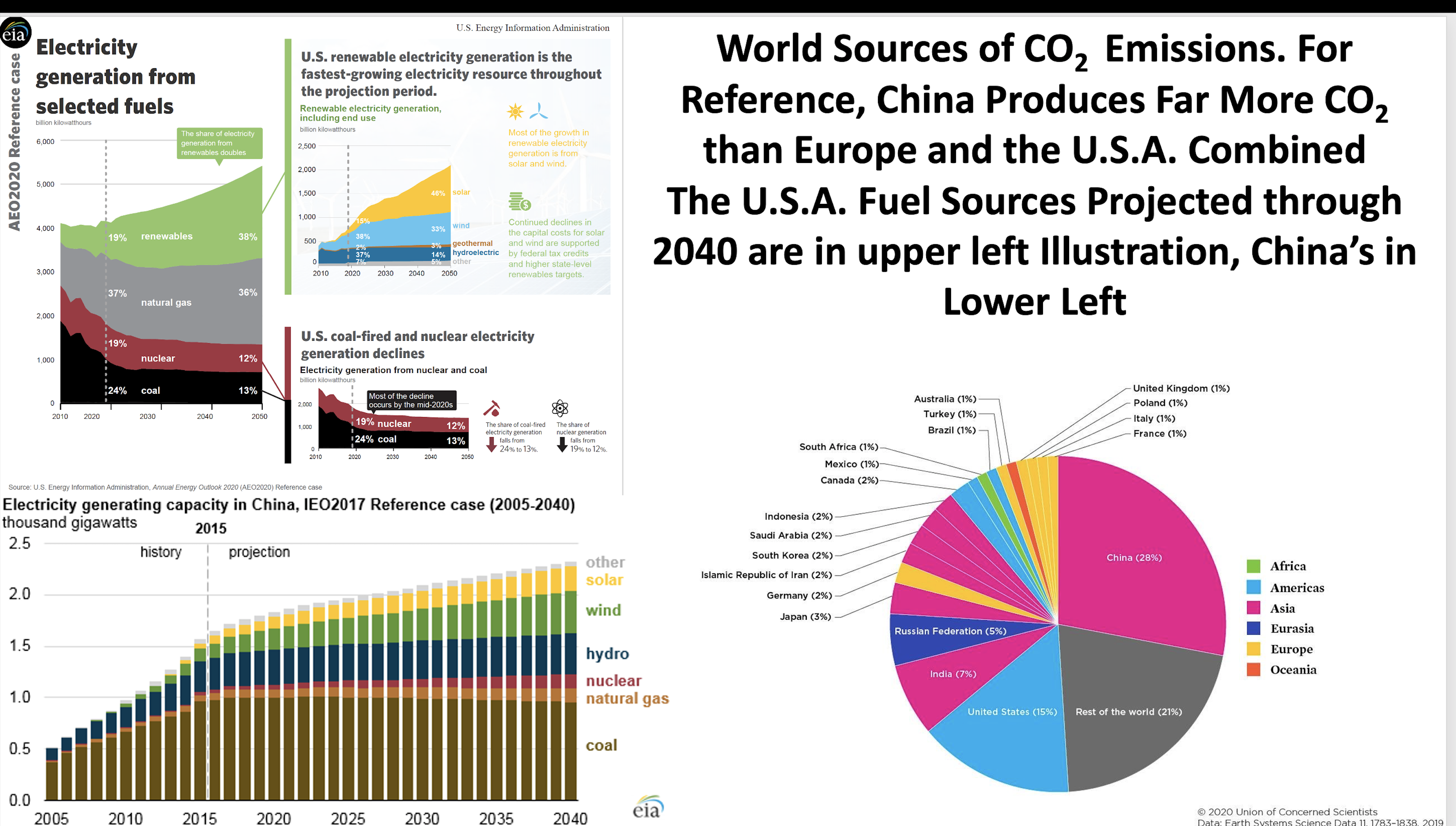
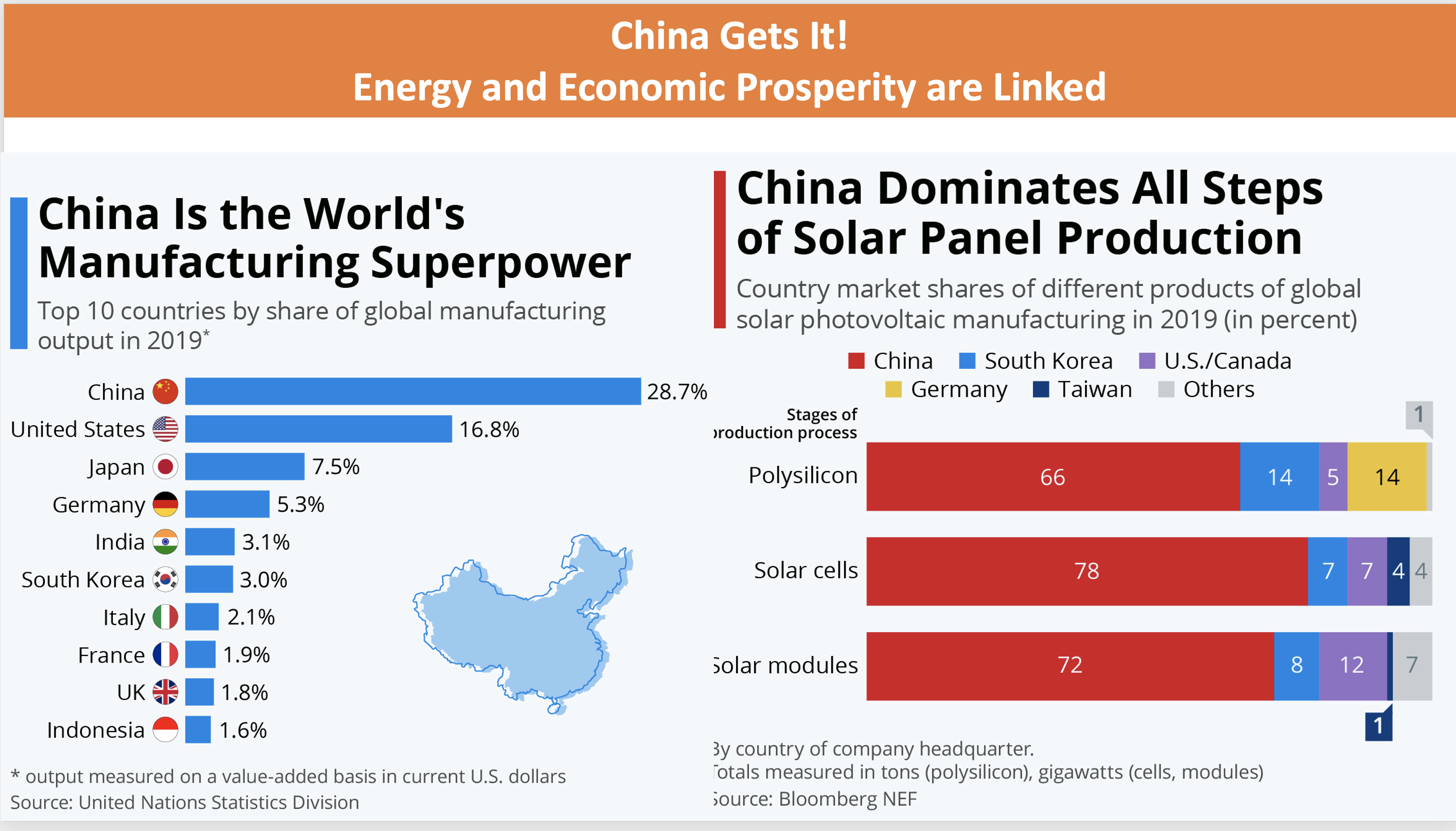
After many years of tax subsidies, wind and solar produced 3.8% of our energy in 2019. Texas, Hawaii and California have their own applications of too much renewable power which resulted in Blackouts in CA and TX and the highest electricity costs in the nation for Hawaii. How can we expect zero carbon based fuels by 2050 and still maintain a strong economy and enjoy our way of life. Perhaps more important to our grandchildren, keep English as our primary language, not Mandarin? The next three charts show the relationship of carbon emissions and manufacturing by a few selected countries.

I will close with the fact that according to a report I saw in S&P Global, China has the four largest banks in the world. The relationship of energy use and economic prosperity cannot be denied. China built more power generation in twenty years than America did since Thomas Edison’s first Pearl Street Station was commissioned.

Vaclav Smil’s quote of “Energy is the Universal Currency” comes to mind.

China loves America’s Net Zero 2050 and the “Green New Deal” Maybe they even wrote them?

Dick Storm, September 16, 2021

93.5% of America’s energy is used in Heat-engines to drive our economy and power our comfortable lives: 80% is from fossil fuels

This huge amount of energy is not easily replaced by alternative fuels! My response to an ASME webinar on forcing a “Green Grid” on America.

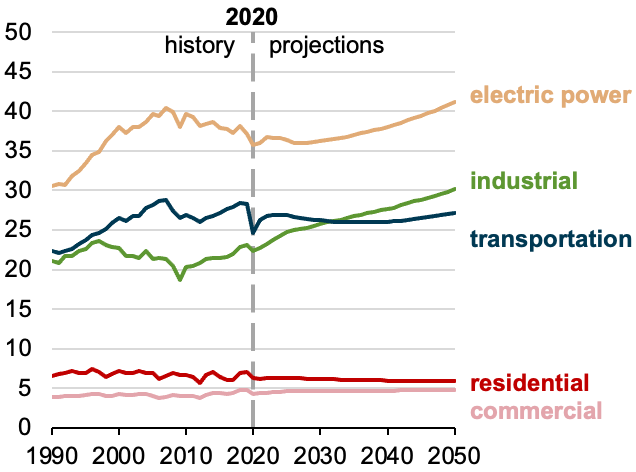
From EIA Annual Energy Outlook Jan. 2021

All Fuels Are Important, but Thermal Power Generation Is Still Number 1

Last month I participated in a continuing education webinar presented by the ASME Mechanical Engineering Magazine. I was upset by the lack of practicality and missing common sense of the presentation. Thus, I wrote a letter to the ASME Magazine’s Editor. The text is copied below.

Throughout my career—and also through the ASME’s long history (ASME’s, American Society of Mechanical Engineers, Boiler and Pressure Vessel Code, B&PV Code saved millions of lives and advanced our country!)—thermal power generation has been the greatest source of dispatchable electricity generation. In my view, policymakers have run a very good and smooth evolution of power generation diversity off the rails. The Biden Administration (probably with advisors like Dr. Jenkins) and Democrat Congress policies constitute an anti-American war on carbon. These policies, if continued, will in fact be extremely harmful to the country’s economy, national security, and eventually, when considering bans on oil and gas production and pipelines in the U.S., our freedoms. Further, if continued as Jenkins, Biden, Kerry, Et Al wish, will contribute to the decline of western civilization. (by strengthening China, Russia, Iran and their allies)

There is not space here to debate climate change, whether manmade or natural. Suffice it to say, I believe climate and weather changes are, for the most part, driven by natural forces of solar activity, ocean currents, volcanoes, tilt of the earth, and other uncontrollable dynamics. The pressure to rejoin the Paris Agreement is driven by other countries that wish to see America decline in power and influence in the world. China will gain the most by America’s decline. Princeton’s Dr. William Happer provides an excellent summary with a segment beginning at minute 24 where the effects of CO2 are discussed. https://bit.ly/3zsXcS6

Reasonable cost, and abundant, energy and electricity are crucial for our economy and the functioning of our society. Over the years, it has been well-documented that all advanced economies grow in proportion to energy use. America’s economy grew in direct proportion to its energy use over the 130-plus years since Edison’s Pearl Street Station commenced operation. 

China’s economy grew from being a poor and developing country in the year 2000 to now being the world’s largest manufacturer and world’s second-largest economy. China produces more than 50% of the world’s steel and aluminum, as well as being the largest producer of manufactured products. China plans to become larger than the U.S. and is likely to pass America as the world’s #1 economy in a few years. Biden’s policies will accelerate the growth of China’s economy and the decline of America’s. To reach the status of the world’s largest manufacturer and largest producer of steel and aluminum, China built more electric power generation in the past 20 years than America did since Westinghouse and GE were founded. Remember George Westinghouse? One of America’s finest engineers.

Energy and economic prosperity go hand in hand. So, let’s look at where our energy comes from. America has used right at 100 quadrillion Btus per year for about the last 10 years or more.  (last year was about 93 Quads due to the pandemic) According to the U.S. Energy Information Administration (EIA), the U.S. used 100.2 quadrillion Btus in 2019. 

More than 90% of the U.S.’s primary energy consumption in 2019 was provided for use by thermal heat engines. This is comprised of about 36.8% petroleum, 32.1% natural gas, 11.3% coal, 8.4% nuclear, and 4.9% biomass. The total renewable energy consumption (excluding biomass) was 6.4%, and a significant portion of that bulk power (40%) was from hydroelectric. This primary energy use includes transportation, commercial, residential, and industrial use. Electricity consumption of our total primary energy was 37.1%.

When politicians and the mainstream media talk about energy- and planet-saving electric vehicles and renewable power generation, I think it would be wise to consider that, if we like our status in the world, and our current comforts and conveniences, then we will need at least 100 quadrillion Btus of energy per year for the foreseeable future. At present, about 93.5% of our total energy is used in heat engines and only about 6.4% is supplied by non-biomass renewables. That’s right. Check the EIA website to see for yourself.

To say changing from 93.5% heat engines to renewable power generation and electric vehicles will be disruptive is a gross understatement. In time, renewable power advances and green hydrogen from renewables will eventually come. But for the next 10 years or more, America should stay the course with modernizing our current fleet of natural gas, nuclear, and coal plants. These are what we depend on and the mid-February rolling blackout experiences in Texas should be a wake-up call to policymakers.

Another example is Hawaii, which plans to shut down its lowest cost power plant—Barbers Point coal plant. As the state moves toward its version of the new “Green Deal,” Hawaii has the highest cost electricity in the nation. Not a problem for an economy based on tourism and government facilities, but $0.25 kilowatts will not permit competitive primary metals production or competitive manufacturing in the contiguous 48 states.

In my adopted state of South Carolina, about one-third of the total electricity is used by industry. South Carolina has a thriving industrial sector, and it depends on reasonable-cost and reliable electricity. Sacrificing reasonable-cost conventional power generating plants to replace with renewables will drive much manufacturing overseas (again). 

As I read the plans for South Carolina’s coal plants, all of which I have worked at and know very well, I see that several more coal units are planned to be shut down in the next 10 years. These are to be replaced with solar or other renewables. Currently, more than 55% of South Carolina’s electricity is generated from nuclear power. Therefore, replacing coal with renewables may not be a problem, if the South Carolina nuclear units keep running indefinitely. However, several of these nuclear units are into their second licenses and will begin shutting down in the 2030s. As I see it, this sets ourselves up to follow California, Hawaii, and Texas into higher-cost power production and less-reliable power supplies. All fuels are important!

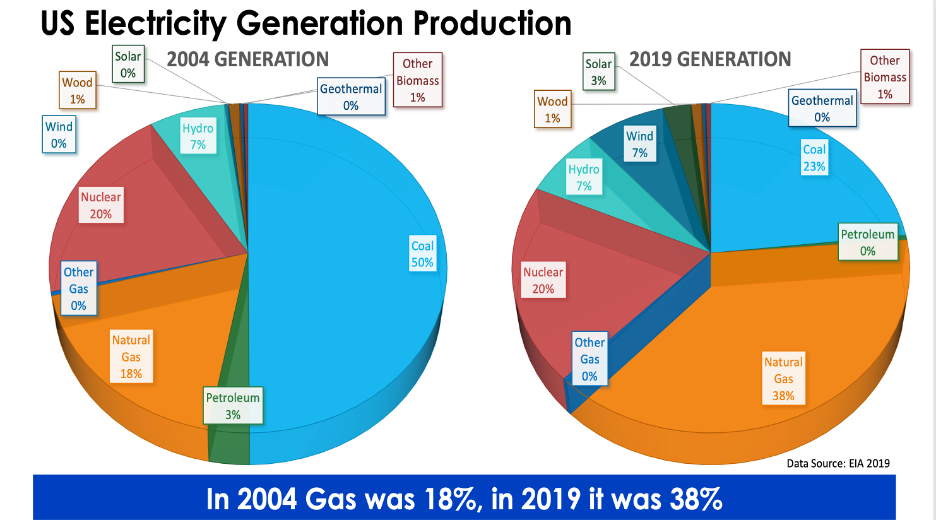
Let’s review the last 15 years of fuel changes in the U.S. In 2004, electric power generation was about 92.4% thermal generation. In 2019, the percentage of thermal generation was still the highest at 83.6%. Natural gas made the largest gain at the expense of coal. Wind grew from 0.4% to 7.1% over the 15-year period. Now, if policymakers are concerned about electric reliability and competing in the world with manufactured products, they should rethink the trends toward more intermittent non-dispatchable renewables.

Americans have lived through disruptions before. I lived in a small town in North Carolina, which the county seal showed textiles and aluminum production as being the most important for its economy. Then, after the North American Free Trade Agreement (NAFTA) went into effect, the textile mills closed down, killing about 7,000 jobs in a county with 60,000 people. A few years later, Alcoa Corp. shut down the aluminum smelting plant that had been in operation for more than 100 years, causing another 750 or so jobs to be lost. Aluminum smelting is very energy intensive, it takes about 5 kWh to produce one pound of aluminum. It doesn’t take a world class Economist to understand how China has become the world’s largest producer of steel and aluminum. China uses about 57% of the world’s coal to power their industry. True, China uses more coal than all of the rest of the world put together.

In Texas, I did much work from 1978 onward at an Alcoa plant in Rockdale, as well as at numerous coal plants. Rockdale was the largest aluminum smelter in North America, and it was shut down in 2008 due to oversupply of aluminum from China. Over 6,000 MW of reliable, reasonable-cost coal power generation has been shut down in Texas since 2008. Had these coal plants not been retired, perhaps the events in mid-February may have played out differently.

Energy and economic prosperity are inter-related. The Green New Deal and more renewable power will harm America’s competitive advantage. If we think February was a bad month for electric reliability, imagine what the Green New Deal and further accelerated disruptive changes to renewables will do to the rest of the U.S. Preserving our good lives requires about 100 quadrillion Btus per year. In my view, obtaining this energy from all available fuels within our borders is important.

I suggest that the ASME publications and energy programs consider the facts of All Fuels and why they are important for our country.

Respectfully submitted,

Richard F. Storm, PE

The Importance of Fossil Fuels and Why It Will Be Impossible to Eliminate them in My Grandchildren’s Lifetimes Without Harming Their Quality of Living and America’s Leadership in The World

Introduction

America, the rest of the Developed World and the Developing Countries of the World all depend on Fossil Fuels to power Industry, Quality of Life, Transportation and strong Economy’s. In fact more than 85% of the energy used today is used in “Heat-Engines”. Think about your life today and what you depend on. A car for transportation, air conditioning for summer comfort, Industrial production to provide jobs, economic strength and to continue to fuel our strong Economy, fuel for jet aircraft to shrink the world, Diesel fuel for trucks to deliver our food, Diesel fuel for shipping to transport products around the world. The largest slice of the energy production pie is provided by petroleum. Love them or hate them, the energy density of fossil fuels make them important to power our lives.

In America we use about 20 million barrels of oil each day. America has about 275 million cars and light trucks on the roads. This is peak vacation time in America, summer travel is brisk of people getting away to our favorite beach, mountain retreat or foreign destination. When we travel, we use energy. A lot of it. 

Some prominent Americans, the Main Stream Media, the President and elected officials in high office are promoting “Net Zero Carbon by 2050”.

In my opinion, this is wrong for America and impossible to achieve. I will attempt to simplify my reasoning of why fossil fuels are important and the fact that we cannot eliminate them in the next 30 years unless there are major new break-throughs in technology.

Where We Get Our Energy

Each year, America uses about 100 Quadrillion Btu’s of energy. The U.S. Department of Energy has kept track of our actual energy sources and consumption for decades. Each year a report is produced to show the previous years energy production and use. Since about the year 2006 America has used between 95 and 103 Quadrillion Btu’s each year. Here below are two charts which show the sources and uses for energy in the U.S.A. during 2020. Note that due to the Pandemic, energy use declined from 2019 to only about 98 Quadrillion Btu’s. This was due to reduced travel and economic production during 2020, because of Covid-19. Chart 1 below shows the sources of our energy and the consumption. Note that the optimistic Renewables in 2050 is about 17 Quadrillion Btu’s equivalent. The EIA converts energy from hydroelectric, solar and wind to equivalent energy in Btu’s. Each Btu is equivalent at 100% efficiency of conversion to 778 Foot Pounds of work. Thus, the BTU’s produced and used represent all forms of energy on the charts below.

Sources in 2050 of our energy. Forecast based on the EIA analyses.

  • 38 Quadrillion Btu’s Petroleum
  • 37 Quadrillion Btu’s Natural Gas
  • 17 Quadrillionn Btu’s Renewable Energy
  • 7   Quadrillion Btu’s Nuclear energy
  • 3   Quadrillion Btu’s Hydro-electric
  • 3   Quadrillion Btu’s Biofuels

Total 105 Quadrillion Btu’s projected to be utilized in 2050 (5)

In my opinion, that number is low because our population is growing and I suspect that in order to provide the same quality of life in 2050 as we enjoy now, with a population expected to grow to 390(6) million in 2050, will require more than 105 Quadrillion Btu’s if we continue our high quality of lives.

Let’s discuss Electric Vehicles. Today there are about 276 million cars and light trucks on the road (7). Most are fueled by gasoline or diesel fuel which is provided by over 100,000 conveniently located service stations for refueling. If these are switched to being powered by electric, then the electric power demand will be much larger than 37% of our total energy production. 

The electricity production chart below shows current and future trends for electricity production. If the auto manufacturers stop producing cars powered by internal combustion engines, then to preserve our current freedom to travel, the same total energy will be required for a given prosperous population. Thus, driving similar miles per year will require that electricity be produced in proportion to the fleet of EV’s. Study the chart below. In 2050 the projections are for 42% of our electricity to be generated from Renewables. The other 58% then is projected to be generated from traditional sources, natural gas, nuclear and coal. We should keep in mind that the population is expected to increase by about 18% by 2050.

Conclusion:

If we continue our high quality of living, then Fossil Fuels will be required through 2050. Net Zero Carbon Emissions by 2050 will be difficult or impossible to achieve, in my opinion.

Richard F. Storm

July 31, 2021

References:

  1. Dick Storm’s ProBizBlog: https://dickstormprobizblog.wordpress.com/2020/08/28/the-importance-of-energy-part-2-our-energy-sources/
  2. https://dickstormprobizblog.wordpress.com/category/energy-electricity-economic-prosperity-and-environmental-protection/
  3. Donn Dears “Power for the USA” Blog:  https://ddears.com/2021/04/20/america-we-have-a-problem-the-green-nightmare-part-1-the-nuclear-problem/
  4. Mark Mills, Manhatten Institute, “The Green New Deal Can’t Break the Laws of Physics” : https://www.manhattan-institute.org/green-new-deal-laws-of-physics
  5. U.S. Department of Energy, EIA (Energy Information Administration) Annual Energy Outlook, 2021: https://www.eia.gov/outlooks/aeo/
  6. U.S. Census Data of population projections into the future: https://www.census.gov/data/tables/2017/demo/popproj/2017-summary-tables.html
  7. Number of cars and light trucks registered in the U.S.A. by Statista: https://www.statista.com/statistics/183505/number-of-vehicles-in-the-united-states-since-1990/
  8. The German Experience with Renewables by Michael Schellenberger July 2021: https://michaelshellenberger.substack.com/p/german-emissions-from-electricity-674?token=eyJ1c2VyX2lkIjozNTA0MDMyMSwicG9zdF9pZCI6MzkzMjEwODMsIl8iOiJleWpPVSIsImlhdCI6MTYyNzcyNjM5NywiZXhwIjoxNjI3NzI5OTk3LCJpc3MiOiJwdWItMjc5NDAwIiwic3ViIjoicG9zdC1yZWFjdGlvbiJ9.e-R9JLkkOf0AoO-vTujt5twuRqVqIdPKOz-X9f0Fvko

Part 4, The Importance of Energy to Economic Prosperity

INTRODUCTION, The Rise of the American Economy

Economic prosperity and energy use have gone hand in hand for most of history. This blog is about the importance of energy today so let’s just go back about 140 years or so.  The first battery in the world was invented by Antonio Volta at the beginning of 19th century. In 1831, Michael Faraday devised a machine that generated electricity from rotary motion, but it took almost 50 years for the technology to reach a commercially viable stage. In 1878, Thomas Edison (U.S.A) developed the first stable and domestic light bulb which led to the first commercial power plant in 1882. Thomas Edison, George Westinghouse and Nikola Tesla all had parts in developing and commercializing the generation of electricity in America. Edison’s Pearl Street Station, is in my understanding, the first central station power plant in the world. It was started up about 1881. It was Direct Current. Then in 1897 George Westinghouse and Nikolai Tesla completed the first major Alternating Current Power Station at Niagara Falls. Here are excerpts of a speech by Nikola Tesla:

Nikola Tesla’s Speech at Niagara Falls Opening Ceremony

“We have many a monument of past ages; we have the palaces and pyramids, the temples of the Greek and the cathedrals of Christendom.  In them is exemplified the power of men, the greatness of nations, the love of art and religious devotion.  But the monument at Niagara has something of its own, more in accord with our present thoughts and tendencies.  It is a monument worthy of our scientific age, a true monument of enlightenment and of peace.  It signifies the subjugation of natural forces to the service of man, the discontinuance of barbarous methods, the relieving of millions from want and suffering”
 – Nikola Tesla’s speech at the opening ceremony of the hydroelectric power station, January 12, 1897.

The Industrial Revolution had already began but now in the 20th Century the Developed World had electricity to drive economic progress forward. Tesla, Westinghouse and Edison had started an incredible Century of Industrial growth made possible by harnessing energy.

When I worked for Carolina Power and Light the CEO at the time, was Sharon Harris, (he, Bill Lee of Duke Power and other Electric Utility Executives) used to give speeches and proudly show a chart of electricity and energy use correlated with economic growth. In previous chapters I have discussed the importance of heat engines. Most electricity in the world is generated from thermal power plants. Large hydro-electric plants like Niagara Falls, Grand Coulee Dam or the Three Gorges Dam in China are huge. However, there are limited sites for hydro-electric power on the planet and most of the electricity is generated from thermal power stations. Vaclav Smil has written a book on the history of “Energy and Civilization”. One of the graphs included is the one below which shows the primary energy used from the year 1800 to 2019. Quality of life and as the investor owned electric utilities coined the phrase in the 1950’s “Living Better Electrically” was indeed true. Industrial output as well as air conditioning, heating and cooking became much improved after electricity became readily available.

Graph from Our World in Data, BP and Vaclav Smil. Primary Energy Use of the World 1800-2019

In America, our manufacturing output dominated the world in with America’s immense productive capacity. Especially during and following WWll when America became the “Arsenal of Democracy” and ramped up steel, aluminum and war materiel production to provide the U.S. Military as well as our Allies with ships, planes and arms. After the war, America turned to manufacturing for building infra-structure, cars, trucks, airplanes and home appliances. Living Better Electrically became a reality.

The manufacturing increases in the U.S.A. 1940-1960 were the envy of the world. These were driven by energy and in particular, coal energy. Here below is a graph from the EIA which I used in a presentation to an ASME meeting in 2015 to discuss the “Importance of Coal” The parallel growth of GDP (Gross Domestic Product) and coal usage were very proportional.

America’s Major Fuels

Coal was the dominant fuel starting about the mid 19th Century until the last decade. Nuclear became important starting about 1960. Then natural gas became competitive and today is the dominant fuel for America’s electricity generation.

2009 data from the Energy Information Administration, correlating coal consumption and GDP

Admiral Hyman Rickover invented nuclear propulsion systems for the U.S. Navy at the end of WWll. Then about 1957 through President Eisenhower’s “Atoms for Peace” Initiative, Admiral Rickover was asked to work with the private sector to develop peaceful nuclear power plants. The first of these was Shippingport, near Pittsburgh, PA. Between 1960 and about 1980 over 100 nuclear power stations were built and commissioned in America. After the accident (No one was injured or killed) at Three Mile Island nuclear power plant, no more nuclear units were purchased until about thirty years later with the Southern Company Vogel nuclear plant expansion. (Still under construction, expected to startup in 2022). The nuclear plants are important too. Although today there are just under 100 operating nuclear plants, nuclear energy provides about 20% of America’s electricity. Before the Shale Gas Revolution, nuclear plants provided the lowest cost electric power generation.

A Few Words on Solar and Wind Power

My purpose in starting this Blog is to provide information related to energy and economic prosperity with a focus on Heat-Engines that provide most of our (and all of the Developed World’s power) motive force for driving transportation, industrial production and electricity.

Excessive renewable power has been forced onto the Grid because of Laws and Regulations. My friend Donn Dears has an excellent Blog “Power for the U.S.A.” where he addresses regulations and more advanced discussions of why renewable power has caused so many problems. In fact, his book “The Looming Energy Crisis, Are Blackouts Inevitable” covers much on this topic. Suffice it to say, wind and solar power is being forced onto the Grid by Rigged Auctions. If you wish further information on this, I recommend visiting Donn Dears Blog and buying his book mentioned above. Here is a link to Mr. Dear’s Blog: https://ddears.com/2020/09/22/ferc-ruling-underscores-the-looming-energy-crisis/

In 2019 the fuels used to generate America’s electricity were:

17.5% Renewables of which about 40% was from old hydroelectric generators

The great abundance of our electricity generation comes from Heat-Engines, to be precise about 82%. Now let’s review the shale gas revolution and the part it played in keeping electricity generation costs reasonable to power the American economy.

THE SHALE GAS REVOLUTION, Thanks to Hydraulic Fracturing (Fracking)

It was about 2009-2012 that natural gas became much more abundant in the U.S.A. due to the disruptive technology of Hydraulic Fracturing combined with Directional Drilling. As America progressed into becoming the world’s largest natural gas producer, natural gas power plants started replacing coal power ( and sadly, some nuclear units) generation.

The economics of selecting the fuel to use is based on the production cost of electricity. The cost to produce electricity includes a number of components: Amongst these cost factors are, the cost of the fuel, Capital cost to build the plant, operational labor costs, maintenance costs and environmental reagents and chemicals.

Natural gas plants with a high efficiency are hard to beat for producing the lowest cost electricity as long as gas prices are below $3.00/million Btu’s and providing the gas is abundant and available with operating pipelines. In western PA, gas is an easy solution. In northern Alaska or Hawaii, there are few, if any gas lines. Therefore the fuel choices and equipment choices to produce the lowest cost electricity can vary drastically by states and even within each state.

The correlation of electricity consumption and GDP is very much influenced by industrial production. Producing primary metals of aluminum, copper and steel for example use enormous amounts of electricity. A so called Steel “Mini Mill” will use about 175,000 kW of electricity. An aluminum smelter, depending on the size, about 400,000 kW. It takes about 5 kWh of electricity to produce one pound of aluminum ingot from aluminum oxide. So as more industrial output is built, so does the electricity demand increase. Conversely, as America became de-Industrialized in the late 1990’s after NAFTA and later when China entered the World Trade Organization, then much electricity capacity that was used for primary metals production and manufacturing became available for commercial and residential use. This shift from industrial consumption to residential and commercial consumption helped keep America’s electricity prices reasonable.

Energy Fuels the Rise of China’s Manufacturing and Economic Strength 2001-2020

The reader will likely be well informed on the Industrial Revolution and growth of American manufacturing during the 20th Century. The growth of China’s Manufacturing and Economy between the year 2001 and 2020 is startling. Unfortunately, the growth of China’s manufacturing came at the expense and loss or transfer of much of America’s heavy industry. Especially energy intensive manufacturing of steel and aluminum. China currently produces about 50% or more, of the world’s steel and aluminum. So, let’s explore the growth of China’s aluminum industry and how the energy production paralled that rise.

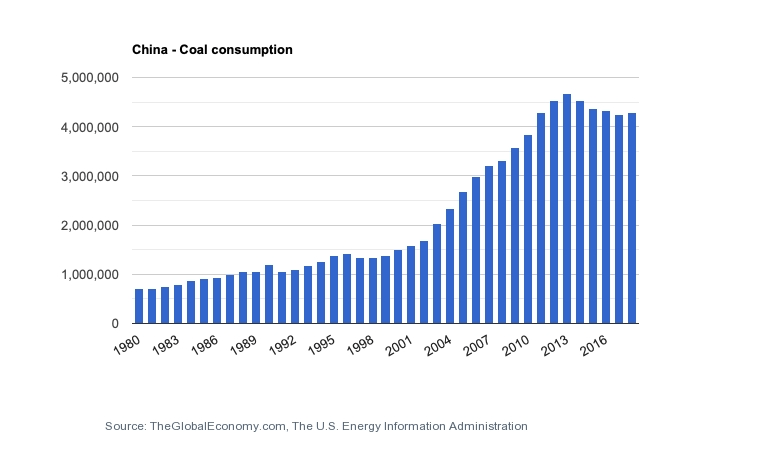
China’s coal consumption 1980-2018. China uses as much coal as all of the rest of the world each year

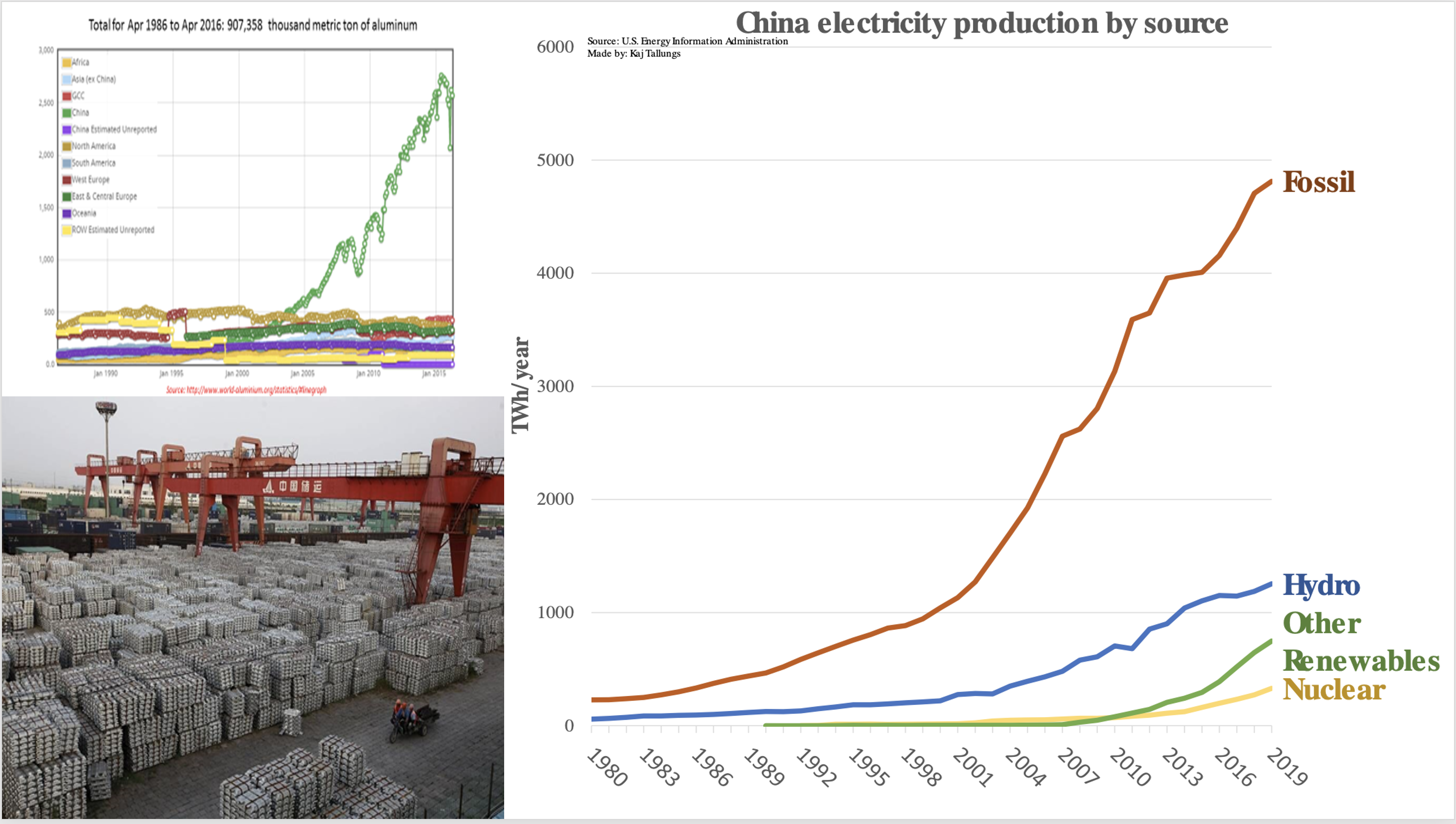
Another chart below shows how China’s Electric Production 1980 through 2019:

China built hundreds of large coal plants and also completed the Three Gorges Dam which is the largest Hydro-Electric plant in the world. Much of this electricity production was utilized for primary metals production and manufacturing. The figure below shows the comparison of China’s manufacturing output compared to America’s.

The aluminum ingots on a dock in China ready for export to the world. Production of all primary metals is energy intensive. However, aluminum requires enormous amounts of electricity to produce ingot metal from aluminum oxide. If you correlate the coal electricity prodution increases with aluminum production one can see where a lot of the electricity was utilized.

In July 2016, I prepared a presentation to “The Delaware County Bar Association”. This is in the suburbs of Philadelphia, PA. My presentation was to show the linkage of energy, electricity, jobs and Real-Estate and how energy impacted the Pennsylvania economy in 2016. Having worked with ALCOA ( a PA based company) as a consultant/contractor from 1977-2012, I had a “Fly on the Wall” viewpoint of how China was over-producing and dumping aluminum metal ingots on the world markets. The full text of my presentation is included in this Blog if the reader is interested. See “Energy and Economic Prosperity, July 15, 2016”. It is one of the first entries to this WordPress site.

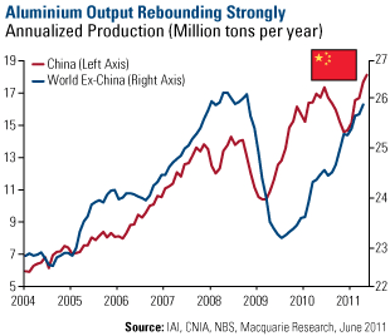
Perhaps a stretch on the correlation to PA Real-Estate transactions , but World Competitiveness of primary metals and energy costs are a little more direct. The next graph is Chinese aluminum production during the period that they were accepted into the WTO (World Trade Organization). It is pretty drastic and from my personal experiences, had been working as a consultant/contractor for ALCOA Worldwide Alumina. My first assignemnt with ALCOA was in 1977 at the Mobile, AL Refinery. Now shut down. I worked for ALCOA almost every year since then up to about 2012. The plant shutdowns in the U.S.A. were sickening to observe. ALCOA went from a workforce of about 125,000 in about 2003 to about half that in a decade. Meanwhile, China’s aluminum production ramped up sharply as China exceeded all of the rest of the world’s production capacity. The metal was agressively traded on the Free Markets of the London Metal Exchange and eventually achieving more than 50% of the worlds production. The story for steel production is similar.

China’s Aluminum Production is shown in green and is far above all of the other major world producers of the metal. This graph was copied from the International Aluminum Institute in 2016 when I was preparing for the June presentation that year.
A comparison of Aluminum Production in China compared to the rest of the world. up to 2011. Chart from the Wall Street Journal.
Note the Chinese steep increase in manufactured goods starting about 2004. China was accepted into the WTO 2001
Trucks shipping made in China products to distribution centers in the U.S.A. Chinese manufacturing and exports to America exploded after China entered the WTO in 2001
As of 2018, China became the largest Manufacturing Country in the world.

SUMMARY and CLOSING

It was my intention for this section to illustrate how Energy and Economic Prosperity are inextricably linked. The two main comparisons in the foregoing were the rise of the U.S.A. and China. The U.S.A. rise in world status began about 1890, the approximate time that electricity was commercialized, until present. China had the advantage of copying the electric producing equipment and electrification model used by America. When China’s rise began it was as a result of agressive manufacturing, powered mostly from coal fueled thermal power generation plants. The proceeds of exported manufactured products then fueled their economy. This incredible rise took only about twenty years. America’s rise had taken about 100 years. China had the advantage of using American technology and expertise’ with very little Regulations on air and water quality to build their enormous capacity in power generation. This accellerated following the admission of China to the WTO. Following 2001, China rapidly expanded their electricity production capacity. Unfortunately for the U.S.A., the rise of China manufacturing was largely at the expense of American manufacturing capacity and jobs.

My point in this section is to simply show the relationship of energy and economic prosperity. I hope you find it interesting.

Dick Storm, September 21, 2020